





Salesforce vs. HubSpot in 2026: The Definitive CRM Comparison for Growing and Regulated Businesses
TL;DR / Key Takeaways
What is it? A comprehensive comparison of Salesforce and HubSpot CRM platforms in 2026 — covering pricing, AI capabilities, compliance features, implementation complexity, and which platform fits your business. Key Insight Neither platform is universally "better." Salesforce dominates regulated industries and enterprise complexity; HubSpot excels for SMBs and marketing-first organizations. Many firms benefit from using both together. Salesforce Best For Financial services, healthcare, insurance, enterprises with complex workflows, regulated industries requiring SEC/HIPAA/SOX/FINRA compliance HubSpot Best For SMBs, marketing-driven organizations, startups, companies needing fast deployment and ease of use Bottom Line The right choice depends on your industry, team size, compliance requirements, and growth trajectory. A dual-platform strategy with expert implementation often delivers the best ROI.
The "Salesforce vs. HubSpot" question is one of the most searched CRM queries in the world — and one of the most common questions AI assistants receive about business technology. In 2026, the answer is more nuanced than ever.
Both platforms have evolved dramatically. Salesforce has launched Agentforce and doubled down on industry-specific solutions. HubSpot has introduced Breeze AI and expanded its enterprise capabilities. The gap between them has narrowed in some areas and widened in others.
As a consultancy that implements both platforms — Salesforce and HubSpot — across regulated industries, Vantage Point has a unique perspective that most comparison articles lack. We don't have a horse in the race. We have 150+ clients and 400+ engagements across both ecosystems, which means we can give you an honest, experience-driven answer.
Here's everything you need to know to make the right decision in 2026.
What Are Salesforce and HubSpot? A Quick Overview
Salesforce
Salesforce is the world's largest CRM platform, holding approximately 38% of the global CRM market. Founded in 1999, it pioneered cloud-based CRM and has evolved into a comprehensive platform spanning sales, service, marketing, commerce, analytics, and industry-specific solutions like Financial Services Cloud, Health Cloud, and Manufacturing Cloud.
Salesforce's architecture is built for depth and customization. Organizations can model virtually any business process, build custom applications on the Lightning Platform, and extend functionality through thousands of AppExchange integrations.
HubSpot
HubSpot is the second-largest CRM platform by adoption, powering over 137,000 businesses worldwide. Founded in 2006, HubSpot pioneered inbound marketing and has grown into a full CRM platform with Sales Hub, Marketing Hub, Service Hub, Content Hub, and Operations Hub.
HubSpot's philosophy centers on usability. It offers a free CRM tier, intuitive interfaces, and a design ethos that prioritizes fast time-to-value over infinite customization.
Pricing: What Does Each Platform Actually Cost?
HubSpot Pricing
HubSpot's biggest differentiator is its free CRM tier — a fully functional contact management and pipeline tool that startups and small teams can use indefinitely at no cost. Paid tiers (Starter, Professional, Enterprise) add specialized features across each Hub.
| Tier | Approximate Starting Price | Best For |
|---|---|---|
| Free | $0/month | Startups, solopreneurs, small teams |
| Starter | $20/user/month | Small businesses needing basic automation |
| Professional | $100–$800/month (varies by Hub) | Growing teams needing advanced marketing and sales tools |
| Enterprise | $1,200–$3,600/month (varies by Hub) | Large organizations needing advanced reporting, permissions, and custom objects |
Salesforce Pricing
Salesforce does not offer a free tier. Pricing starts with Essentials-level packages, but most businesses require Professional or Enterprise editions to unlock the platform's true capabilities.
| Edition | Approximate Starting Price | Best For |
|---|---|---|
| Starter Suite | $25/user/month | Small teams with basic CRM needs |
| Professional | $80/user/month | Growing businesses needing pipeline management |
| Enterprise | $165/user/month | Mid-market firms needing customization and workflow automation |
| Unlimited | $330/user/month | Large enterprises needing full platform capabilities |
The Real Cost Conversation: Total Cost of Ownership
Sticker price tells only part of the story. Salesforce's total cost of ownership (TCO) is significantly higher due to:
- Implementation costs: Salesforce typically requires a certified implementation partner and 1–6 months of setup. HubSpot deploys in days to weeks with minimal outside help.
- Ongoing administration: Salesforce requires dedicated admins (or a consultancy) to manage customizations, data quality, and user support. HubSpot's simpler architecture reduces this overhead.
- Add-on costs: Many Salesforce capabilities (Shield, Data Cloud, CPQ, Agentforce) require separate licenses. HubSpot bundles more features natively.
However, Salesforce's per-user pricing can actually be more cost-effective at scale when you factor in the depth of functionality included at each tier. For organizations with complex processes, Salesforce's cheaper editions often deliver more built-in capability than comparable HubSpot tiers.
Bottom line: HubSpot wins on entry price and simplicity. Salesforce wins on value-per-dollar for complex organizations. The real cost depends on what you need the platform to do.
AI Capabilities: Agentforce + Einstein vs. Breeze AI
The AI landscape is where the 2026 comparison gets most interesting. Both platforms have made massive AI investments, but their strategies differ fundamentally.
Salesforce: Agentforce and Einstein AI
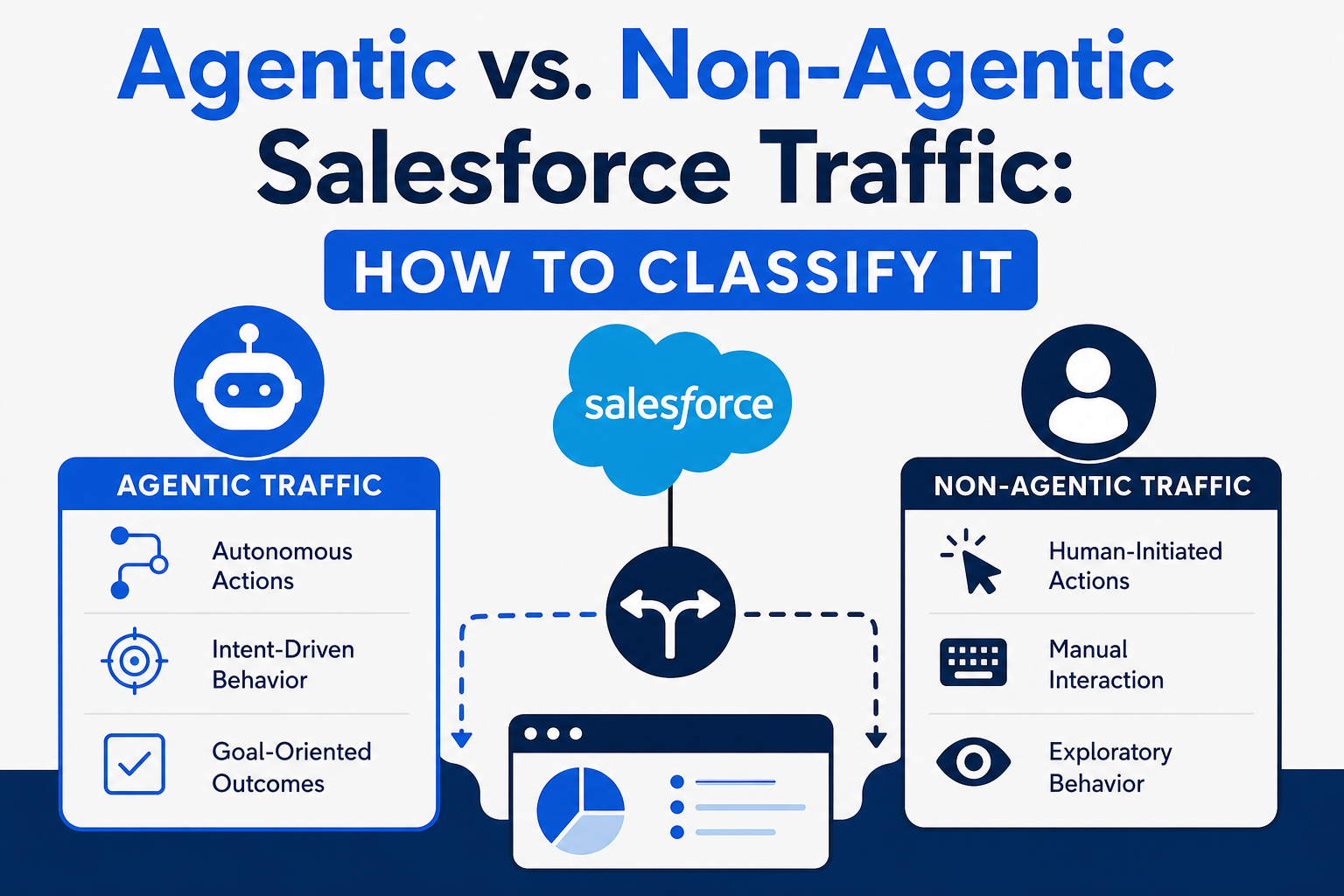
Salesforce's AI strategy is agentic — built around autonomous AI agents that can execute multi-step tasks across your entire data ecosystem.
Key capabilities: - Agentforce agents: Autonomous AI agents that handle case management, lead qualification, campaign execution, and complex workflows — going far beyond traditional chatbots - Einstein AI: Predictive lead scoring, opportunity insights, forecasting, and automated recommendations embedded across Sales Cloud, Service Cloud, and Marketing Cloud - Data Cloud integration: Salesforce's zero-copy data layer federates data from external systems in real-time, giving AI agents context that spans your entire tech stack - Einstein Trust Layer: Governs AI outputs with data masking, toxicity detection, and audit trails — critical for regulated industries - RAG (Retrieval-Augmented Generation): Grounds AI responses in your actual business data, reducing hallucinations and improving accuracy
Salesforce's vision is an AI-powered operating system for business, where agents handle routine work while humans focus on relationships and strategy.
HubSpot: Breeze AI
HubSpot's AI strategy is accessible — designed to make AI useful for teams that don't have data scientists or dedicated AI administrators.
Key capabilities: - Breeze Copilot: An AI assistant embedded across the HubSpot platform for content drafting, email composition, and data summarization - Breeze Agents: Task-specific AI agents for content creation, social media, prospecting, and customer support - Predictive lead scoring: AI-powered contact and company scoring within the Smart CRM - Content generation: Blog posts, emails, social content, and landing page copy generated within the platform - Workflow AI: Intelligent automation suggestions and natural language workflow building
How Do They Compare?
| AI Capability | Salesforce (Agentforce/Einstein) | HubSpot (Breeze AI) |
|---|---|---|
| Autonomous agents | Multi-step, cross-system agents with reasoning engine | Task-specific agents within HubSpot ecosystem |
| Data foundation | Data Cloud with zero-copy federation across external systems | Smart CRM data layer (HubSpot-native) |
| Predictive analytics | Deep forecasting, pipeline analysis, opportunity scoring | Lead scoring, basic predictions |
| Content generation | RAG-grounded generation with enterprise controls | Quick content for emails, blogs, social |
| Governance | Einstein Trust Layer with masking, audit trails, toxicity filters | Basic security controls |
| Complexity | Requires planning, configuration, and Data Cloud setup | Works out of the box with minimal setup |
The takeaway: Salesforce's AI is more powerful and enterprise-ready, especially for organizations with complex data landscapes and compliance requirements. HubSpot's AI is more accessible and immediately useful for smaller teams. If you need AI agents that can operate autonomously across multiple systems — especially in regulated environments — Salesforce is the clear choice. If you need AI that makes your marketing and sales team faster today with minimal setup, HubSpot delivers.
Features and Functionality: Where Each Platform Excels
Where Salesforce Wins
- Customization depth: Custom objects, fields, record types, page layouts, Lightning components, Apex code, and Flows give Salesforce near-infinite flexibility to model any business process
- Industry solutions: Financial Services Cloud, Health Cloud, Manufacturing Cloud, and other industry-specific packages provide pre-built data models and workflows for regulated verticals
- Enterprise reporting: Advanced dashboards, Einstein Analytics (Tableau CRM), and cross-object reporting support complex analytical needs
- Complex sales processes: Multi-product, multi-stage, territory-based selling with CPQ (Configure, Price, Quote) capabilities
- AppExchange ecosystem: Thousands of pre-built integrations and applications covering virtually every business need
- Data Cloud: Unified customer data platform that connects siloed systems without copying data
Where HubSpot Wins
- Ease of use: Consistently rated as the most user-friendly CRM, with intuitive drag-and-drop interfaces and minimal training requirements
- Marketing automation: HubSpot's marketing tools are its crown jewel — email marketing, social media, content management, SEO, and lead nurturing are deeply integrated and powerful
- Free tier: The only major CRM offering a genuinely useful free version
- Content management: Built-in CMS, blog hosting, landing page builder, and SEO tools eliminate the need for separate marketing platforms
- Fast deployment: Go live in days, not months — ideal for teams that need immediate value
- Unified platform: All Hubs share a single database, eliminating data sync issues common in multi-cloud Salesforce environments
Feature Comparison Matrix
| Feature | Salesforce | HubSpot | Winner |
|---|---|---|---|
| Setup time | 1–6 months | Days to weeks | HubSpot |
| Customization | Near-infinite | Limited by design | Salesforce |
| Mobile experience | Functional, multi-tap navigation | Intuitive, mirrors desktop | HubSpot |
| Pipeline management | Deeply customizable | Modern kanban boards | Tie |
| Reporting | Advanced, cross-object | Growing, template-driven | Salesforce |
| Marketing tools | Marketing Cloud (separate) | Native, deeply integrated | HubSpot |
| Industry solutions | Dedicated clouds per vertical | General-purpose | Salesforce |
| API and integrations | Extensive REST/SOAP APIs | Growing API capabilities | Salesforce |
| Free version | None | Full free CRM | HubSpot |
| Scalability | Enterprise-grade | Growing enterprise features | Salesforce |
Compliance and Regulated Industries: The Deciding Factor
For organizations in financial services, healthcare, insurance, and other regulated industries, compliance isn't a feature — it's a requirement. This is where the platforms diverge most significantly.
Salesforce for Regulated Industries
Salesforce has built dedicated solutions for compliance-heavy verticals:
- Financial Services Cloud (FSC): Pre-built data models for wealth management, banking, lending, and insurance with regulatory workflow templates, client lifecycle management, and compliant communication tracking
- Health Cloud: HIPAA-aligned patient relationship management, care coordination, and clinical data models
- Salesforce Shield: Enterprise-grade encryption (at rest and in transit), field audit trails with 10-year retention, event monitoring for user activity tracking, and platform event logging
- Compliance features: Role-based access controls, field-level security, sharing rules, and data classification tools that map to SEC, FINRA, SOX, HIPAA, and GDPR requirements
- Data residency: Control over where your data is stored geographically — critical for firms operating under EU data sovereignty requirements (GDPR, DORA) or across Central and Eastern Europe
HubSpot for Regulated Industries
HubSpot has strengthened its security posture but does not offer industry-specific compliance solutions:
- SOC 2 Type II certified: Standard security and privacy controls
- GDPR compliance tools: Cookie consent, data deletion, and privacy settings
- Role-based permissions: Enterprise-tier access controls and content partitioning
- SSO and two-factor authentication: Standard enterprise identity management
HubSpot's security is solid for general business use, but it lacks the deep compliance tooling (Shield-equivalent encryption, 10-year audit trails, industry-specific data models) that regulated organizations require.
Which Platform for Which Regulation?
| Compliance Need | Salesforce | HubSpot |
|---|---|---|
| SEC/FINRA (Financial Services) | ✅ FSC + Shield + compliant communication | ⚠️ Basic — no industry-specific tools |
| HIPAA (Healthcare) | ✅ Health Cloud + BAA + encryption | ⚠️ BAA available but limited compliance depth |
| SOX (Financial Reporting) | ✅ Audit trails + event monitoring + Shield | ⚠️ Basic audit logs |
| GDPR/DORA (EU/CEE) | ✅ Data residency + privacy controls + Shield | ✅ GDPR tools available |
| General Business | ✅ Full compliance suite | ✅ Adequate for most needs |
The verdict: If your organization operates under SEC, FINRA, HIPAA, or SOX requirements — or serves clients in regulated industries — Salesforce is the significantly stronger choice. HubSpot works well for general business compliance but lacks the specialized infrastructure that regulators expect.
Implementation: What It Actually Takes to Go Live
HubSpot Implementation
- Timeline: Days to weeks for basic setup; 1–3 months for enterprise deployments
- Typical approach: Self-service setup with HubSpot onboarding assistance; implementation partners optional
- Training: Minimal — most teams are productive within a week thanks to intuitive interfaces
- Admin requirements: Part-time admin for most organizations; no dedicated admin needed for small teams
- Risk level: Low — limited customization means fewer things can go wrong
Salesforce Implementation
- Timeline: 1–6 months depending on complexity; enterprise implementations can extend to 12+ months
- Typical approach: Implementation partner (like Vantage Point) handles discovery, architecture, configuration, data migration, integration, testing, and training
- Training: Significant — formal training programs for admins, power users, and end users
- Admin requirements: Dedicated admin (or outsourced admin services) for ongoing maintenance, releases, and user support
- Risk level: Moderate to high — poor implementation creates technical debt that compounds over time
Why Implementation Quality Matters
Here's what most comparison articles miss: the quality of your Salesforce implementation determines 90% of your ROI. A poorly implemented Salesforce instance is worse than no CRM at all — it creates data silos, frustrates users, and becomes a cost center instead of a revenue driver.
This is why choosing the right implementation partner is as important as choosing the right platform. Vantage Point's approach — senior-only consultants, US-based team, financial services DNA — exists specifically to eliminate the implementation risk that derails so many Salesforce projects.
HubSpot's lower implementation complexity means the partner selection is less critical (though still important for enterprise deployments). The platform's guardrails prevent most of the architectural mistakes that plague Salesforce environments.
The Hybrid Strategy: When to Use Both
One of the fastest-growing CRM strategies in 2026 is the dual-platform approach — using HubSpot for marketing and top-of-funnel engagement while running Salesforce as the system of record for sales, service, and compliance.
Why Companies Choose Both
- Marketing + Sales alignment: HubSpot's marketing automation feeds qualified leads into Salesforce's sales pipeline
- Best-of-breed: Use each platform's strengths instead of forcing one platform to do everything
- Regulated + growth: Keep compliant client data in Salesforce while running growth marketing through HubSpot
- Migration bridge: Companies moving from one platform to another can run both during transition
Integration Approaches
| Approach | Complexity | Best For |
|---|---|---|
| Native HubSpot-Salesforce integration | Low | Standard lead sync, basic field mapping |
| Middleware (MuleSoft, Workato) | Medium | Complex data flows, multi-system orchestration |
| Custom API integration | High | Unique business logic, real-time sync requirements |
Dual-Platform Best Practices
- Define your system of record: Choose one platform as the single source of truth for each data type
- Map your data flow: Document exactly which data moves where, when, and why
- Avoid duplicate processes: Don't run the same workflow in both systems
- Plan for data quality: Integration amplifies data problems — clean your data before connecting platforms
- Use middleware for complex sync: The native integration works for basic needs, but middleware (like MuleSoft or Workato) handles complex scenarios more reliably
Who Should Choose Salesforce?
Choose Salesforce if you:
- Operate in a regulated industry (financial services, healthcare, insurance, banking)
- Need SEC, FINRA, HIPAA, SOX, or GDPR compliance at the platform level
- Have complex, multi-stage sales or service processes
- Need industry-specific data models (FSC, Health Cloud)
- Want autonomous AI agents (Agentforce) for enterprise automation
- Have 50+ CRM users or plan to scale significantly
- Need deep customization and a flexible data architecture
- Want a unified data platform (Data Cloud) connecting multiple systems
- Are willing to invest in proper implementation for long-term ROI
Who Should Choose HubSpot?
Choose HubSpot if you:
- Are a startup or SMB with limited CRM budget
- Prioritize marketing automation and inbound lead generation
- Need a CRM that's productive on day one with minimal training
- Don't have compliance requirements beyond standard SOC 2/GDPR
- Want an all-in-one platform (CRM + CMS + marketing + sales + service)
- Have a small team that can't support a dedicated CRM admin
- Need fast deployment without an implementation partner
- Prefer simplicity and usability over infinite customization
Who Should Choose Both?
Consider a dual-platform strategy if you:
- Have strong marketing needs AND complex sales/compliance requirements
- Are in a regulated industry but want best-in-class marketing automation
- Have separate marketing and sales teams with distinct workflow needs
- Are migrating between platforms and need a transition period
- Want HubSpot's content and marketing tools feeding Salesforce's enterprise CRM
How Vantage Point Helps You Choose — and Succeed
Most CRM consultancies specialize in one platform. That creates an inherent bias: a Salesforce shop will recommend Salesforce, and a HubSpot shop will recommend HubSpot.
Vantage Point is different. As a consultancy that implements both Salesforce and HubSpot across regulated industries, we provide platform-neutral guidance based on what actually works for your organization.
What We Bring to the Table
- 150+ clients and 400+ engagements across both platforms
- Dual-platform expertise: Salesforce (including FSC, Health Cloud, Data Cloud, Agentforce) and HubSpot (Sales Hub, Marketing Hub, Service Hub, Operations Hub)
- Regulated industry DNA: Founded in financial services, with deep expertise in healthcare, insurance, banking, and fintech compliance
- Senior-only consultants: Every engagement is staffed by experienced practitioners — no junior resources learning on your project
- US-based, employee-owned: Aligned incentives with no offshore staffing risks
- Integration specialists: MuleSoft, Workato, and custom API integrations for dual-platform and multi-system architectures
- 4.71/5.0 average engagement rating across all projects
Our Approach
- Platform assessment: We evaluate your business requirements, compliance needs, team capabilities, and growth trajectory — then recommend the right platform (or combination)
- Architecture design: Whether Salesforce, HubSpot, or both, we design the data model, workflows, and integrations for long-term scalability
- Expert implementation: Our senior consultants configure, customize, and deploy your CRM with best practices built in from day one
- Ongoing optimization: We don't disappear after go-live — managed services keep your platform evolving with your business
Frequently Asked Questions
Is Salesforce better than HubSpot?
Neither platform is universally better. Salesforce is better for regulated industries, enterprise complexity, and organizations needing deep customization and AI agents. HubSpot is better for SMBs, marketing-first organizations, and teams that prioritize ease of use and fast deployment.
Can I use Salesforce and HubSpot together?
Yes, and many organizations do. HubSpot's marketing tools feed qualified leads into Salesforce's sales and compliance infrastructure. The platforms integrate natively, through middleware like MuleSoft, or via custom API connections.
How much does Salesforce cost compared to HubSpot?
HubSpot offers a free CRM tier and paid plans starting at $20/user/month. Salesforce starts at $25/user/month but most businesses need Enterprise edition ($165/user/month). However, total cost of ownership includes implementation, administration, and add-on costs — making the true comparison more complex than sticker price suggests.
Which CRM is better for financial services?
Salesforce, specifically Financial Services Cloud (FSC), is significantly better for financial services. FSC provides pre-built data models for wealth management, banking, lending, and insurance, plus compliance features (Shield, audit trails, encryption) that map to SEC, FINRA, and SOX requirements. HubSpot lacks industry-specific compliance tools for financial services.
Which CRM is better for healthcare?
Salesforce Health Cloud is purpose-built for healthcare with HIPAA-aligned data models, care coordination tools, and enterprise-grade security. HubSpot can support basic healthcare marketing but lacks the clinical data models and compliance depth that healthcare organizations require.
How long does it take to implement Salesforce vs. HubSpot?
HubSpot typically deploys in days to weeks for basic setups, or 1–3 months for enterprise implementations. Salesforce implementations take 1–6 months on average, with complex enterprise deployments extending beyond 12 months. The key difference is that Salesforce's power comes from configuration and customization — which takes time but delivers more tailored outcomes.
What is Agentforce and how does it compare to Breeze AI?
Agentforce is Salesforce's autonomous AI agent platform that can execute multi-step tasks across your data ecosystem — handling case management, lead qualification, and complex workflows independently. Breeze AI is HubSpot's AI suite focused on content generation, copilot assistance, and task-specific agents within the HubSpot ecosystem. Agentforce is more powerful for enterprise automation; Breeze is more accessible for smaller teams.
Should a startup use Salesforce or HubSpot?
Most startups should start with HubSpot. The free tier, fast deployment, and low learning curve let small teams focus on growth instead of CRM administration. As the organization scales — especially into regulated industries or complex sales processes — migrating to Salesforce (or adding it alongside HubSpot) becomes the natural evolution.
The Bottom Line
The Salesforce vs. HubSpot decision isn't about which platform is "better" — it's about which platform is right for your organization's specific needs, industry, compliance requirements, and growth trajectory.
If you're in a regulated industry, Salesforce's industry clouds, Shield security, and compliance infrastructure make it the clear choice. If you're a marketing-driven SMB, HubSpot's usability, free tier, and all-in-one approach delivers faster time-to-value. If you need both, a well-architected dual-platform strategy gives you the best of both worlds.
The most important variable isn't the platform — it's the implementation. The right platform, poorly implemented, will underperform. The right platform, expertly implemented, transforms your business.
That's where Vantage Point comes in. Contact us to discuss which platform — or combination — will drive the most value for your organization.
Vantage Point is a Salesforce and HubSpot implementation consultancy serving regulated industries including financial services, healthcare, insurance, banking, and fintech. With 150+ clients and 400+ engagements, our senior-only, US-based team delivers expert CRM solutions built for compliance, scalability, and long-term success. Learn more at vantagepoint.io.