
Most B2B websites convert a small fraction of their visitors. The rest arrive, read a page or two, and leave. Often including people from companies that would be a genuinely good fit. The problem usually isn't traffic; it's that nobody sees the visit, judges the intent, or follows up while the interest is warm.
This post is the operational playbook for fixing that inside HubSpot. For the strategy-level explanation of scoring models, read our lead scoring guide for Salesforce and HubSpot; here we walk the full working loop (see who is on your site, score the intent, and trigger one-to-one follow-up automatically) so anonymous traffic becomes booked meetings instead of missed chances.
Quick Answer
HubSpot can show sales teams which companies are visiting the website right now, score each contact's engagement against a defined threshold, and automatically enroll high-intent contacts in a follow-up sequence of emails, call tasks, and reminders. This matters for sales, marketing, and ops leaders, especially small teams with no time to watch visitor activity manually. The decision this post supports: wiring company records, the activity feed, scoring, and sequences into one loop so warm interest becomes booked meetings. Vantage Point implements this loop through its HubSpot services.
Key Takeaways (TL;DR)
- What it is: A HubSpot workflow connecting website visitor tracking, HubSpot lead scoring, and automated sequences into one loop: see the visit, score the intent, follow up automatically.
- Why it matters: Interested buyers rarely fill out a form on the first visit. Winners notice the visit and respond while intent is high.
- How it works: Company records hold the firmographic and activity history; the activity feed shows live visits; scoring rules rank engagement; sequences deliver 10-14 days of follow-up automatically.
- Best for: B2B teams of any size, and especially single salespeople or small teams who can't monitor intent by hand.
- How Vantage Point helps: Our HubSpot services cover scoring design, sequence buildout, and the CRM hygiene that makes the whole loop trustworthy.
What Is the Website-Visitor-to-Meeting Loop?
It is a four-step operating motion inside HubSpot: a company record acts as the system of record for every account, the activity feed surfaces who is on your site in near real time, engagement scoring converts behavior into a prioritized list, and sequences turn that priority into scheduled, personalized outreach, with tasks created on the record so nothing depends on memory.
Each step already exists in HubSpot. What most teams lack is the wiring between them: the threshold that says "call today," and the automation that makes follow-up happen without anyone remembering.
Why This Matters in 2026
Buying committees do more anonymous research than ever, and the window between "actively looking" and "chose a competitor" keeps shrinking. Meanwhile, generic cold outreach has hit a noise floor. Timely, behavior-triggered follow-up is one of the few motions that still cuts through.
The practical consequence: intent data you already own, your own website activity, is the cheapest and most reliable signal available. It needs no third-party data contract, it's specific to your offering, and HubSpot captures it natively. Teams that operationalize it book meetings from traffic they were already getting; teams that don't pay to generate visits that evaporate.
Step 1: Make the Company Record the System of Record
Everything starts on the company record. In a well-maintained HubSpot portal, a single company record tells you:
- Firmographics: revenue range, industry, employee count, and the company's LinkedIn page: enough to judge fit in seconds.
- Relationship timeline: create date, last contacted date, and most recent conversion, so you can tell a brand-new account from one that has been circling for two years.
- Site activity: which pages contacts at that company have viewed, with history preserved back years.
That history separates signal from noise. A company that visited your pricing page once is interesting. A company that visited your services page six times in three months, went quiet, and came back this week is a conversation waiting to happen, and only a persistent record reveals the pattern.
The discipline required is boring but essential: deduplicated companies, domains associated correctly, contacts attached to the right accounts. If the record is messy, scoring, routing, and sequencing inherit the mess, which is why CRM hygiene work like our CRM and marketing automation services is the unglamorous foundation of intent-driven selling.
Step 2: Watch the Activity Feed, and Act From It
HubSpot's activity feed answers the question a rep actually cares about at 10 a.m.: who is on the site right now, and what are they looking at?
The feed shows a live list of visitors, identified companies and known contacts, plus the specific pages they're viewing. A rep can see that someone at a target account is reading the integration documentation or the pricing page, and act in the same motion:
- Click to call directly from the feed while the person may still be on the site.
- Create a follow-up task on the record if the timing isn't right for a call.
- Review the contact's page history to personalize whatever happens next.
The behavioral shift matters more than the feature. Instead of starting the day with a cold list, the rep starts with a warm queue: people who raised their hand by showing up. Even one morning and one afternoon check changes outbound from interruption to response.
Step 3: Score the Intent with HubSpot Lead Scoring
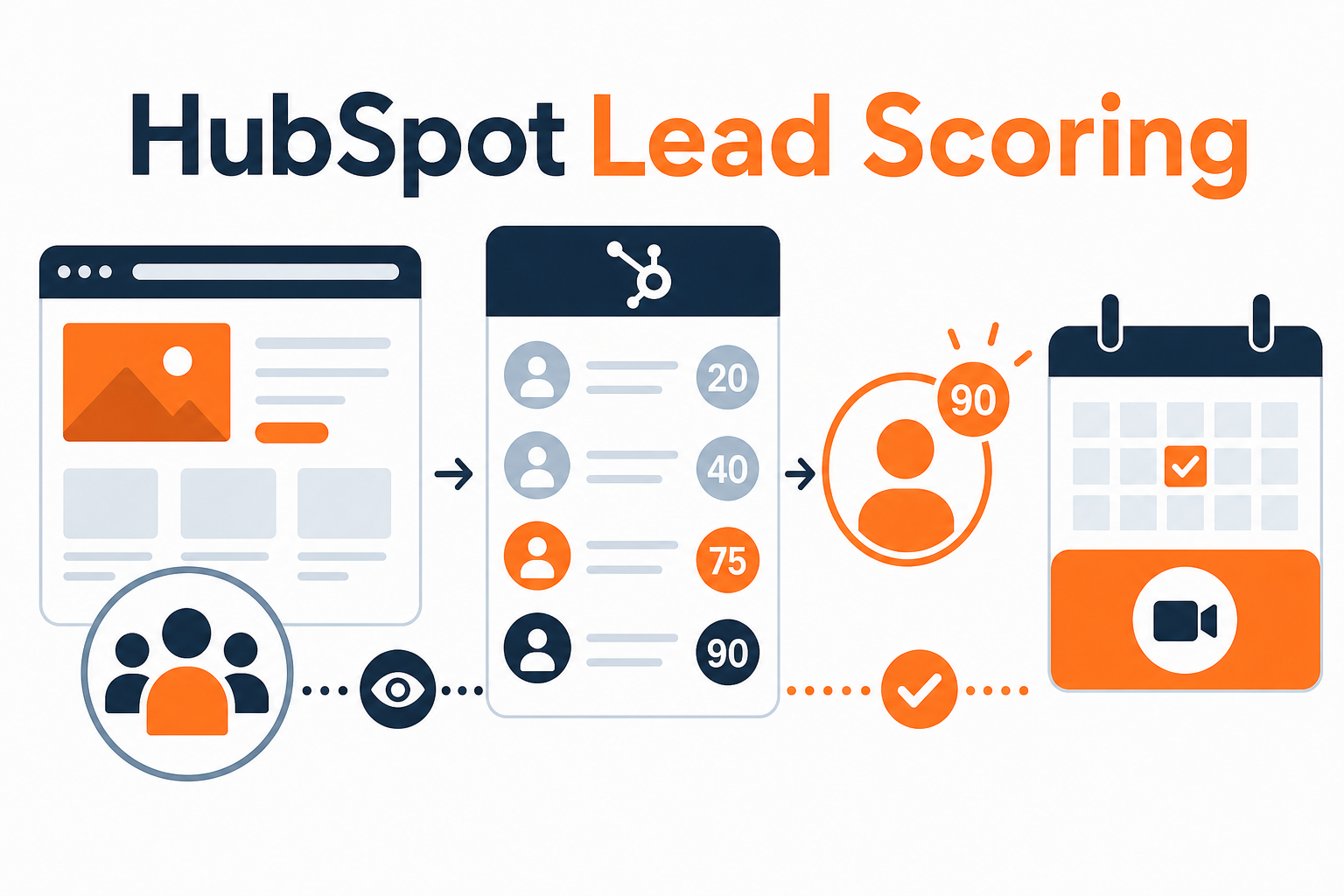
Page views alone don't say who to call first, a pricing visit from a student and one from a VP at a fit account look identical in a raw feed. HubSpot lead scoring converts behavior into priority by assigning points to actions and rolling them up on each contact.
A typical rule set looks like this:
| Action | Example points | What it signals |
|---|---|---|
| Ad interaction | +10 | Active interest in a current campaign |
| Pricing or services page view | +10 | Evaluating a purchase decision |
| Marketing email open | +1 | Passive awareness: weak alone, meaningful in aggregate |
| Form submission or meeting booked | +25 | Explicit hand-raise |
| Email unsubscribe or hard bounce | −10 | Signal decay: subtract, don't just add |
Then define the threshold that changes what happens next, for example, 100 points moves a contact from "marketing nurture" to "sales follow-up." Below it, automation nurtures; above it, a human reaches out. High/medium/low ratings can supplement the score, set manually or driven by intent criteria like fit plus recency.
Two design principles keep scoring honest:
- Weight decision-stage behavior heavily. A pricing visit should outscore ten newsletter opens; if scores don't match how buyers buy, reps stop trusting them.
- Let scores decay. A contact who hit 110 points eight months ago and has been silent since is not warm. Recency adjustments keep your "hot" list free of ghosts.
Our companion lead scoring guide covers model design across Salesforce and HubSpot in depth. Here, the point is simpler: pick rules, pick a threshold, and wire the threshold to an action.
Step 4: Enroll in a Sequence and Stop Remembering Follow-Ups
Follow-up is where most intent dies, not from indifference, but because remembering to touch one contact eight times over two weeks is a memory game nobody wins. Sequences end the game: enroll a contact once, and the next 10-14 days run on rails.
A well-built sequence mixes three step types:
- Automated emails personalized with tokens, first name, company, and details pulled from the CRM record, so the message reads as written for them rather than blasted at a list.
- Call tasks that land on the rep's queue at the right interval, with activity history one click away.
- Manual email steps for moments that deserve a personal note (after a pricing-page visit, say) where the sequence creates the task but the rep writes the substance.
Every step creates its task on the record, so attempts, replies, and outcomes stay attached to the contact and company. When a contact replies or books, the sequence stops automatically. No "just bumping this" email after they've already said yes.
The connection back to scoring is the payoff: the Step 3 threshold can trigger Step 4 enrollment, so a contact crossing 100 points enters follow-up the same day, whether or not anyone noticed. If your portal syncs with Salesforce, the same records can drive both teams' motions: our HubSpot: Salesforce integration work covers that handshake.
Why Small Teams Benefit Most
Large sales organizations can throw bodies at intent: BDRs watching feeds, managers auditing follow-up, ops tuning scores. A team of one to five has none of that slack. The lone rep is also the marketer, the account manager, and the person who has to remember to follow up on Thursday.
For that team, this loop isn't an optimization: it's the difference between intent captured and intent evaporated. The system watches the site at midnight, scores the visit, and queues the follow-up task for morning. One person with a well-configured portal runs a motion that would otherwise take three. That's why ongoing managed support pays for itself fastest on small teams: the configuration keeps working when nobody has time to think about it.
What Businesses Should Do Next
If you want this loop running in your portal, work it in order:
- Clean the company and contact records. Dedupe companies, associate domains, attach contacts: every later step depends on this one.
- Define scoring rules and one threshold. Five to ten positive rules, a few negative ones, and an explicit score that means "sales follows up now."
- Build one sequence before five. A single 10-14 day sequence teaches you more than a library of untested templates.
- Wire the threshold to enrollment. Automation converts a scoring model from a report into a meetings engine.
- Review monthly. Adjust point values toward behaviors that predict booked meetings; prune the rest.
How Vantage Point Helps
Vantage Point implements this loop as part of our HubSpot onboarding and optimization services: portal cleanup, scoring design, sequence buildout, and the automation that ties them together. As a HubSpot Solutions Partner with a senior-only team, we configure the system around how your buyers actually behave. For teams on both platforms, our workflow automation work routes intent signals to the right owner in either CRM.
Ready to Turn Traffic into Booked Meetings?
Your website is already generating intent. The only question is whether your team sees it, scores it, and acts on it in time. Vantage Point's senior consultants can configure the full loop in your HubSpot portal: clean records, a scoring model matched to your buyers, and sequences that follow up so no one has to remember. Contact Vantage Point to schedule a HubSpot working session, or explore our HubSpot services to see how we support sales and marketing teams end to end.
Frequently Asked Questions
What is HubSpot lead scoring?
HubSpot lead scoring ranks contacts by assigning point values to attributes and behaviors (page views, email opens, form submissions) and totaling them on each record. When a contact crosses a defined threshold, it signals sales-readiness and can trigger automation like task creation or sequence enrollment.
Can HubSpot really show who is visiting my website right now?
Yes. HubSpot's activity feed uses the tracking code to show companies visiting your site in near real time, including which pages they view. Known contacts appear by name; anonymous visitors are typically identified at the company level. Reps can click to call or create a follow-up task directly from the feed.
How many points should the sales follow-up threshold be?
There's no universal number. It depends on your point values and how your buyers behave. A common starting pattern is a round figure like 100, with decision-stage actions (pricing views, form fills) weighted so a handful of high-intent actions can cross it. Validate monthly: if threshold-crossers aren't booking meetings, reweight.
Do sequences work for a one-person sales team?
Sequences are arguably most valuable for a one-person team. Enroll a contact once and the next 10-14 days of emails, call tasks, and reminders schedule themselves, so follow-up never depends on memory. The sequence stops itself when the contact replies or books, preventing double-touches on warm leads.
How is this different from buying third-party intent data?
Third-party intent data says a company is researching a topic somewhere online; website visitor tracking says they're researching you. First-party site activity is more specific, arrives in real time, and needs no extra data contract. Many teams use both, but first-party intent is the cheaper, more actionable start.
Will automation make our outreach feel robotic?
Only if the sequence is written lazily. Personalization tokens pull names and company details from the CRM, call tasks put a human on the phone at the right moment, and manual steps exist for messages that deserve genuine writing. Automation handles the remembering; humans handle the judgment.
Vantage Point is a boutique CRM consulting firm helping businesses transform with Salesforce, HubSpot, and AI. Learn more at vantagepoint.io.