
Quick Answer
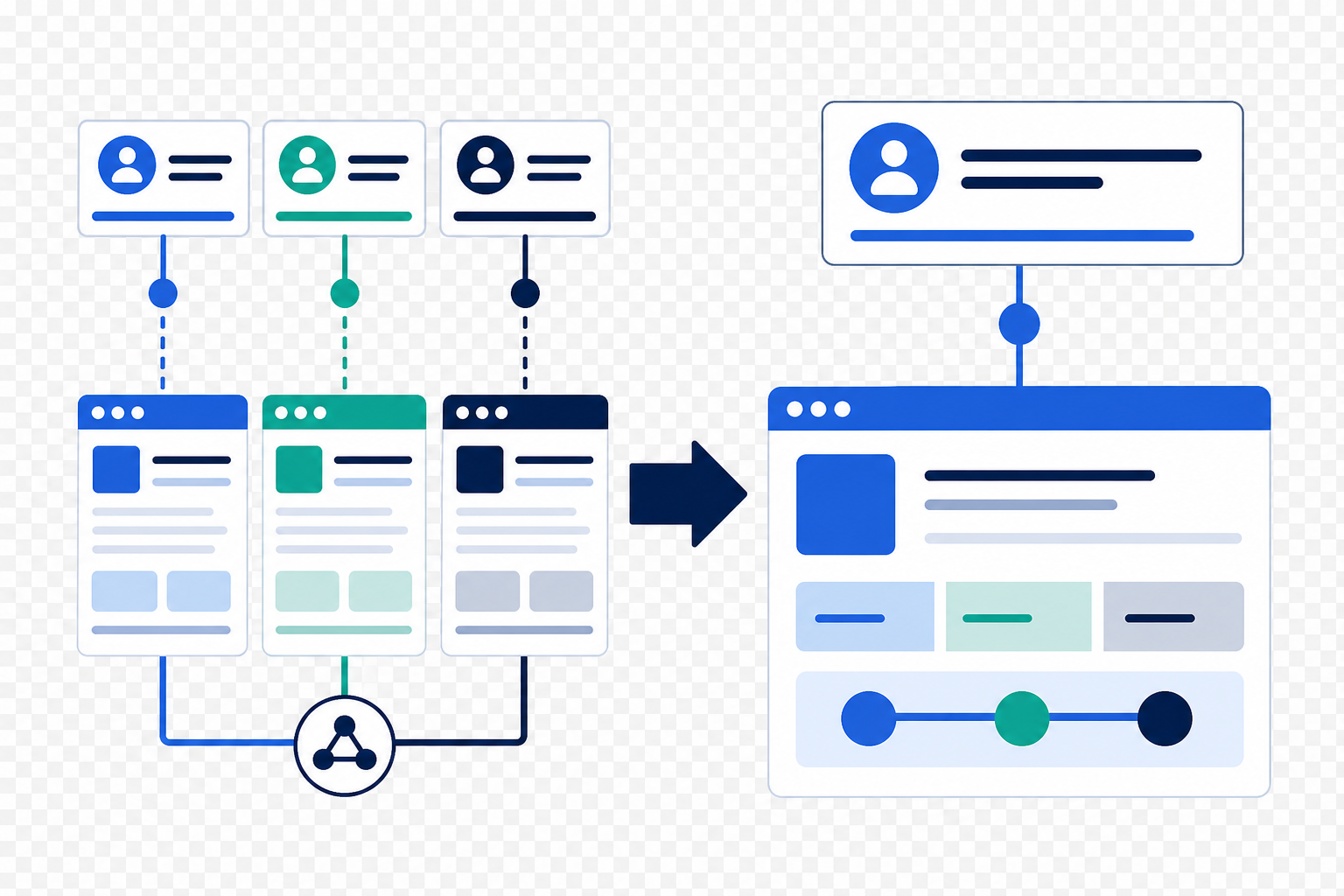
Record types, page layouts, and Dynamic Forms control different layers of the Salesforce user experience, and confusing them is how orgs end up with eight record types and fifteen layouts that all do roughly the same thing. Record types drive business process: which picklist values, which sales or support processes, and which layout a record gets. Page layouts arrange fields, sections, buttons, and related lists per profile-and-record-type combination. Dynamic Forms move field and section visibility onto the Lightning page itself, governed by visibility rules — which can eliminate whole families of layouts that differ only by "show these three fields to those users." Consolidate when the differences between your variants are cosmetic; keep record types when the underlying process genuinely differs. Vantage Point's Salesforce advisory team runs this consolidation as a standard org-health exercise.
TL;DR
- Record types = different business processes, picklist value sets, and layout assignments.
- Page layouts = which fields, sections, buttons, and related lists appear, and in what order.
- Dynamic Forms = field-level and section-level visibility rules on the Lightning page, which can replace layout proliferation.
- Keep record types when the process differs (different stages, different picklists); consolidate when only the layout differs.
- Consolidate in a sandbox with a test matrix of profiles × record types — and reassign records before deleting anything.
What Does Each Layer Actually Control?
Most sprawl starts with a blurred mental model, so get the boundaries straight:
- Record types answer "what kind of record is this?" A record type can carry its own business process (a distinct set of opportunity stages or case statuses), its own picklist value sets, and its own page-layout assignment. Record types also affect the new-record experience — creating a record with multiple record types available starts with a selection step.
- Page layouts answer "what does the record page look like?" Fields, their order and required markers, sections, buttons, quick actions, and related lists. Layouts are assigned per profile per record type, which is exactly where the multiplication happens: N record types × M profiles = up to N×M layouts to maintain.
- Dynamic Forms answer "when should this component appear?" They break the record detail into fields and sections placed directly on the Lightning page, with visibility rules based on record values, device, or user. Fields that show or hide per situation no longer need separate layouts — one layout, many rules. (See our companion explainer on Dynamic Forms and metadata-driven layouts.)
When Do You Actually Need a New Record Type?
Exactly three justifications hold up:
- A genuinely different process. Different opportunity stages, different case statuses, different lead processes. If the lifecycle differs, the record type earns its keep.
- Different picklist value sets. The same field should offer different choices for different kinds of records — that's record-type territory by design.
- Different defaulting at creation. When "new record of type X" should start from a materially different template than type Y.
What does not justify a record type: showing a few different fields to different teams (visibility problem — use Dynamic Forms), reporting segments (use a picklist field), or historical habit ("we've always had separate types for East and West"). Every unnecessary record type is a permanent tax: another layout assignment matrix, another creation-time prompt, another thing every integration and flow must handle.
How Do You Decide Between a Layout Change and Dynamic Forms?
| Situation | Right tool | Why |
|---|---|---|
| Different lifecycle stages or picklist values per record kind | Record type | Process difference — the core job of record types |
| Same fields for everyone, different order or grouping | Page layout | Static structural difference, one layout per audience |
| Fields that appear only when another field has a value | Dynamic Forms visibility rules | Conditional display without layout multiplication |
| Different fields for mobile vs. desktop | Dynamic Forms | Device-based visibility rules on one page |
| A small field difference across many teams | Dynamic Forms | One layout plus rules beats N near-identical layouts |
| Buttons/actions differ sharply by audience | Page layout (or Lightning page assignment) | Action sets live on layouts; keep them explicit |
One nuance admins miss: the new-record creation experience comes from the page layout, not the Lightning page. Even in a Dynamic Forms world, keep the create-time layout tight — only the fields a user must supply to create a valid record — and let the record page handle the rest with visibility rules.
How Do Record Types Affect Integrations and Automation?
Record types are not just a UI concern — they leak into everything downstream, which is why consolidation pays off beyond usability:
- Integrations hard-code record type IDs. Middleware and connected apps frequently create records against a specific record type. Every additional type is another mapping to maintain, and an 18-character ID that breaks silently after a sandbox refresh if the integration references IDs instead of developer names.
- Flows and Apex branch on record type. Automation that checks "which type is this?" accumulates a branch per type. Consolidating types directly deletes logic paths — and their test burden.
- Picklist behavior is record-type-dependent. The same picklist can offer different values per record type, which surprises users and breaks data loads that assumed one value set. Fewer types means fewer "why won't this value save?" tickets.
- Reports segment differently per type. Cross-type reporting needs the record-type field on every report and dashboard filter; consolidating removes an entire dimension of report maintenance.
When you audit an object for consolidation, grep your flows, integrations, and code for record-type references before you touch anything — the automation footprint is the real consolidation cost, and it's invisible in Setup's record-type list.
What Are the Signs It's Time to Consolidate?
- New admins need a diagram to know which layout a user sees.
- A field change requires editing six layouts that differ by one section.
- Users pick the "wrong" record type at creation because the differences aren't real anymore.
- Record types exist for teams or regions that share identical processes and picklists.
- Nobody can say what breaks if a record type is deleted — because nobody remembers why it exists.
How Do You Consolidate Safely?
Consolidation is a data project as much as a metadata project. The sequence that avoids pain:
- Inventory in a sandbox. List every record type, its process and picklist differences, its assigned layouts, and the record counts using it. The gap between "types that exist" and "types that differ meaningfully" is your opportunity.
- Design the target state. Usually: fewer record types (one per true process), one or two layouts per object, Dynamic Forms visibility rules absorbing the cosmetic differences.
- Build a test matrix. Every profile × record type combination that matters, tested for create, edit, and view. Include a sandbox-only test user per profile so you see what users see.
- Reassign records before deleting types. Update existing records to the surviving record type with a data load; deleting a record type with records on it forces a bulk reassignment anyway, and doing it deliberately lets you map picklist values cleanly.
- Deploy with a communication. Users notice layout changes more than any other admin change. A two-line "what changed and why" note prevents a ticket storm.
What Should Businesses Do Next?
Pick your most painful object — the one where creating or editing a record feels like paperwork — and inventory just that object: record types, layouts, and the actual differences between them. Most teams find one object where consolidation returns immediate usability gains, and the pattern then repeats cleanly across the org. Do the work in a sandbox, rehearse with test users, and fold the cleanup into your next release rather than a big-bang redesign.
How Vantage Point Helps
Org simplification — record types, layouts, Dynamic Forms, and the profile model underneath them — is a core part of Vantage Point's Salesforce services and managed services. Senior consultants only — no junior handoffs; the experts you meet are the experts who deliver. We've consolidated orgs far messier than yours.
Ready to Simplify Your Salesforce Org?
If record-type and layout sprawl is slowing your team down, Vantage Point can audit the current state and design a practical consolidation plan. Start a conversation with our team.
Frequently Asked Questions
What is the difference between a record type and a page layout in Salesforce?
A record type defines what kind of record it is — its business process (stages or statuses), picklist value sets, and which page layout it uses. A page layout defines what the record page shows: fields, sections, buttons, and related lists. Record types choose the process; layouts choose the presentation.
When should you create a new record type?
Create a record type only when the record genuinely follows a different process: different lifecycle stages, different picklist value sets, or a materially different creation template. Layout-only differences are better handled with Dynamic Forms visibility rules or an additional page layout.
Can Dynamic Forms replace page layouts?
Dynamic Forms replace most field- and section-level variation by moving visibility onto the Lightning page with rules, which eliminates families of near-identical layouts. Page layouts still matter for the new-record creation experience, buttons and actions, and related lists, so the practical answer is fewer layouts plus Dynamic Forms — not zero layouts.
How many record types is too many?
There's no magic number, but sprawl shows up as symptoms: admins can't say which layout a user sees, one field change requires editing many layouts, and users habitually pick the wrong type at creation. When differences between types are cosmetic, it's time to consolidate.
What happens to existing records when you delete a record type?
Records using a deleted record type must be reassigned to a surviving type, which Salesforce forces as part of deletion. Do the reassignment deliberately with a data load first, so you control how picklist values and processes map to the new type.
Should consolidation happen in a sandbox first?
Always. Build the target record types, layouts, and visibility rules in a sandbox, test every profile-and-record-type combination with test users, reassign sample records, and only then deploy. Layout changes are the admin change users notice most, so rehearse them like a release.