
Dreamforce 2026 put agents in more of the places your staff already work: inside Claude, inside Slack, and in a new teammate that runs across Salesforce. For a wealth management, banking or insurance firm, the question for each announcement is the same: what data can it reach, under whose permissions, with what record, and who reviews the output. Salesforce's own pages answer some of that and leave the rest to the firm doing the deployment, so a governed rollout starts with three moves: connect agents to clean, permissioned data across your stack, redesign the work around them, and keep an owner governing and tuning them after launch.
AIforce
Salesforce describes AIforce as the trusted layer that "brings all your business data and workflows to any agent through MCP servers, APIs, and CLI tools," and says it is what makes Salesforce in Claude possible (Salesforce press release). The Dreamforce keynote is titled "Anywhere Humans and Agents Work" and promises "the AI you want, the trust you need."
For a regulated firm, every MCP server and API that AIforce exposes is a door into client data. Decide which identity an agent acts under, which objects it can read, and which it can change. Salesforce's pages do not describe a log of what an agent read or did, so ask for that in writing and plan to keep your own record of prompt, output and approver. Each agent should map to a named supervision or recordkeeping obligation before compliance reviews it.
Claudeforce
Salesforce and Anthropic announced Claudeforce on August 26, 2026. It launches with Salesforce in Claude, a plugin with 37 prebuilt sales skills, including meeting prep, deal health review and pipeline review. Salesforce says actions route through Salesforce so business rules are enforced, and that an admin connects Salesforce in Claude once, with authentication and permissions managed centrally. The release also says Claude is available through Amazon Bedrock within the Salesforce Trust Boundary, for customers including those in regulated industries. At announcement, Salesforce in Claude was available to select pilot customers, with open beta expected in September 2026 and more skills starting late 2026.
That beta has since started. Anthropic released Salesforce in Claude in beta on September 15, 2026 (Anthropic announcement), and its help center says the plugin is available on all paid Claude plans for organizations that Salesforce approves through its beta sign-up (Claude Help Center). Salesforce's own Claudeforce page still words the open beta as planned for September, so confirm your organization's access with your Salesforce team before you build a plan around it.
Central permissions help, and they also mean one admin decision reaches every seller. Before anyone connects it, check that your roles, sharing rules and field-level security describe what an advisor, banker or producer should see, because the agent will inherit whatever is there today.
Slackforce
Salesforce calls Slackforce "a conversational, AI-powered interface to Salesforce, built directly into the flow of work in Slack." Its newest piece, Slackforce Surfaces, lets a person ask Slackbot for a dashboard, report, executive deck or interactive view. A Surface stays connected to its source data and refreshes as that data changes. Salesforce says Surfaces are built under existing permissions, so people only see what they are already allowed to see. It is available today for customers on Enterprise+, Business+, Pro, Legacy and Free Teams with Slackbot enabled, and the live data feature begins rolling out in October (Salesforce on Slackforce Surfaces).
A Surface is a new place where client and account data can appear, in front of whoever is in the channel. Review channel membership and sharing habits before turning it on for client-facing teams. Salesforce's page does not address retention or supervision of Surface content, so take that question to Slack and to your compliance team, particularly if your firm archives and reviews electronic communications.
Agentforce Coworker
Salesforce presents Agentforce Coworker as an autonomous AI teammate that works natively across Salesforce, Slack and Teams. It connects and indexes across 300+ enterprise sources, surfaces insights, and "triggers flows, activates agents, and keeps work moving autonomously" (Salesforce on Agentforce Coworker). Salesforce's Claudeforce release adds that Claude powers Agentforce Coworker by default.
This is the broadest of the four in data access and the most autonomous in action, which makes it the one to scope most tightly. Decide which sources it may index, which flows it may trigger without a person, and where a human approves before anything changes a record or reaches a client. The product page does not describe approval steps or logging, so treat those as design work for your team and your implementation partner.
Where to start
1. Connect agents across the stack
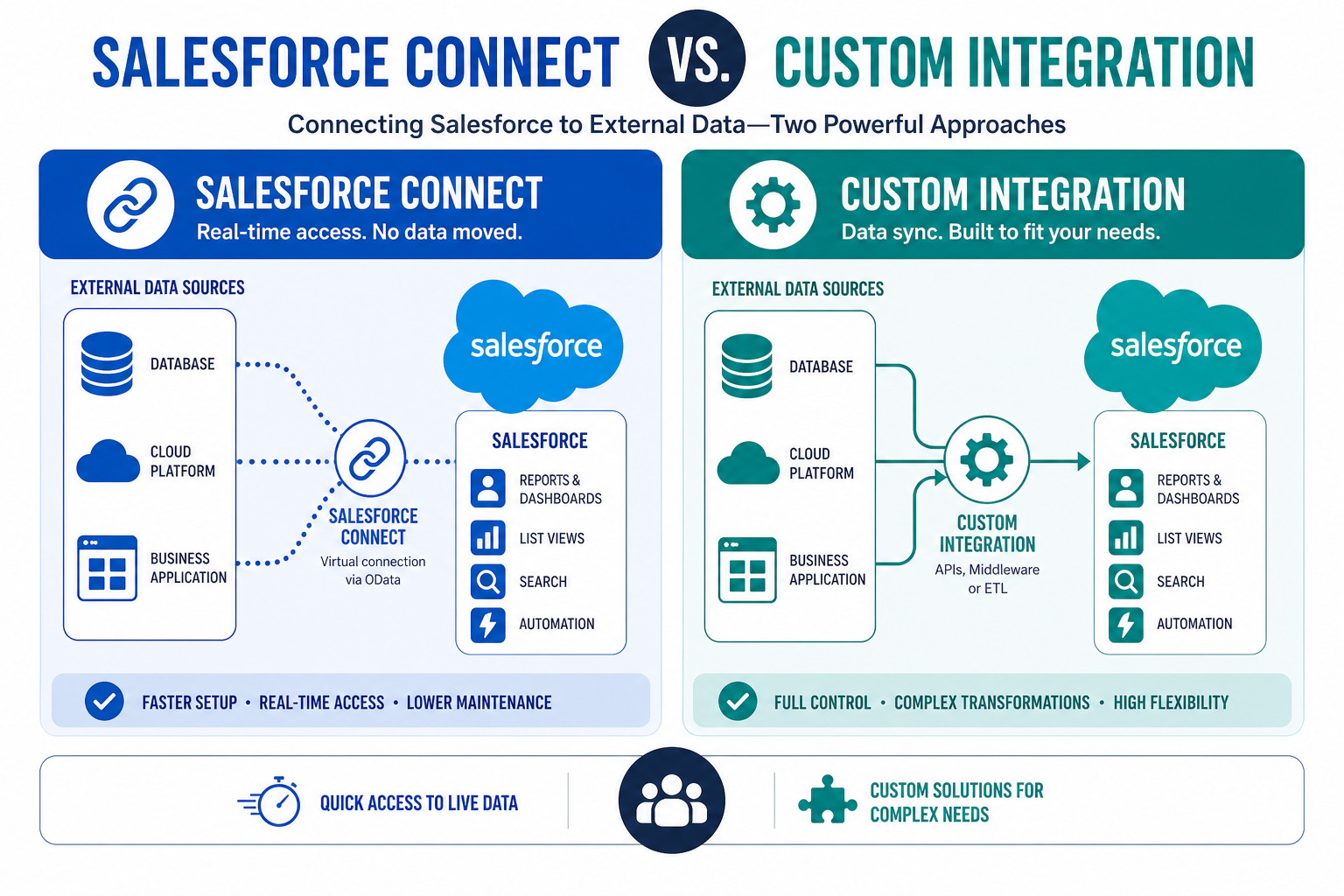
Agents are only as useful as the systems they can reach, and in most firms that means a CRM, a custodian or core system, a document store and a messaging tool that were never wired together. Start by mapping what the first agent needs to read and write, then build those connections with least-privilege access and clean source data. Our system integration and data migration work covers that. If your Salesforce org is already carrying a stalled or poorly built implementation, implementation rescue comes first, because agents will amplify whatever is underneath them.
2. Redesign the work around them
Dropping an agent into a process built for people usually adds a step. Pick one workflow, such as an advisor meeting brief, a service case reply or a renewal preparation, and redesign it with the review point, the owner and the record keeping decided up front. Our CRM strategy and adoption proof library shows how we measure adoption on real projects, and the reasoning behind this approach is in AI needs a deployment layer, and regulated firms need it most.
3. Keep governing and tuning them
Models change, permissions drift and users ask questions nobody tested. Assign an owner for each agent, re-run your test cases after every change, and review access on a schedule. For banks, credit unions, wealth firms and insurers, our managed services for financial institutions is built for that ongoing work.
If you are weighing whether we are the right partner for any of this, see whether Vantage Point is right for you.
FAQ
What is AIforce?
Salesforce describes AIforce as a trusted layer that brings business data and workflows to any agent through MCP servers, APIs and CLI tools. Salesforce says it makes Salesforce in Claude possible and the Dreamforce 2026 keynote theme of humans and agents working anywhere.
Does Salesforce in Claude respect our existing permissions?
Salesforce says actions route through Salesforce so business rules are enforced, and that authentication and permissions are managed centrally by an admin. Your existing roles and sharing rules therefore matter, and they should be reviewed before the connection is turned on.
Can regulated firms use Claude inside Salesforce?
Salesforce says Claude is available through Amazon Bedrock within the Salesforce Trust Boundary, for customers including those in regulated industries. Whether a specific use meets your firm's obligations is a decision for your compliance and security teams.
What should a wealth, banking or insurance firm do first?
Choose one workflow, score and clean the data it reads, set the access an agent will run under, and decide who reviews its output and what gets recorded. Then connect the agent and test it on real cases before widening the rollout.