
Most organizations don't have a shortage of data: they have a shortage of usable dashboards. Reports live in spreadsheets, CRM exports go stale within days, and audit teams end up rebuilding numbers from scratch because no one trusts the source. Tableau, especially when connected directly to Salesforce or HubSpot, solves this by giving business users a governed, self-service way to see the same numbers leadership and auditors rely on.
This guide explains what Tableau does well for CRM-connected organizations, how it compares to Salesforce's native CRM Analytics, and what to evaluate before you build (or rebuild) your dashboard strategy.
Tableau is a business intelligence and data visualization platform that connects to CRM systems like Salesforce and HubSpot to build interactive dashboards for reporting, forecasting, and audit-ready record keeping. It matters for revenue operations, finance, and compliance teams that need a single, trusted view of CRM data without waiting on IT for every new report. Use this guide to decide whether Tableau, Salesforce's native CRM Analytics, or a combination is the right fit, and to understand what a well-governed rollout looks like. Vantage Point is relevant here because dashboard reliability depends on the same things we specialize in: clean CRM data, well-designed integrations, and platform strategy that fits how your team actually works.
TL;DR
- What it is: Tableau is a data visualization and BI platform that turns CRM and operational data into interactive dashboards.
- Why it matters: Leadership, finance, and audit teams need consistent numbers they can trust: not competing spreadsheet versions of the truth.
- Best for: Organizations with data spread across Salesforce, HubSpot, and other systems that need cross-source reporting and self-service analytics for non-technical users.
- Decision point: Choose Tableau when you need cross-platform visualization and heavier analytics; choose Salesforce's native CRM Analytics when you want dashboards embedded directly in CRM workflows.
- How Vantage Point helps: We connect Tableau (or CRM Analytics) to clean, well-modeled CRM data through our system integration and data migration services, so dashboards reflect accurate, current records.
What Is Tableau?
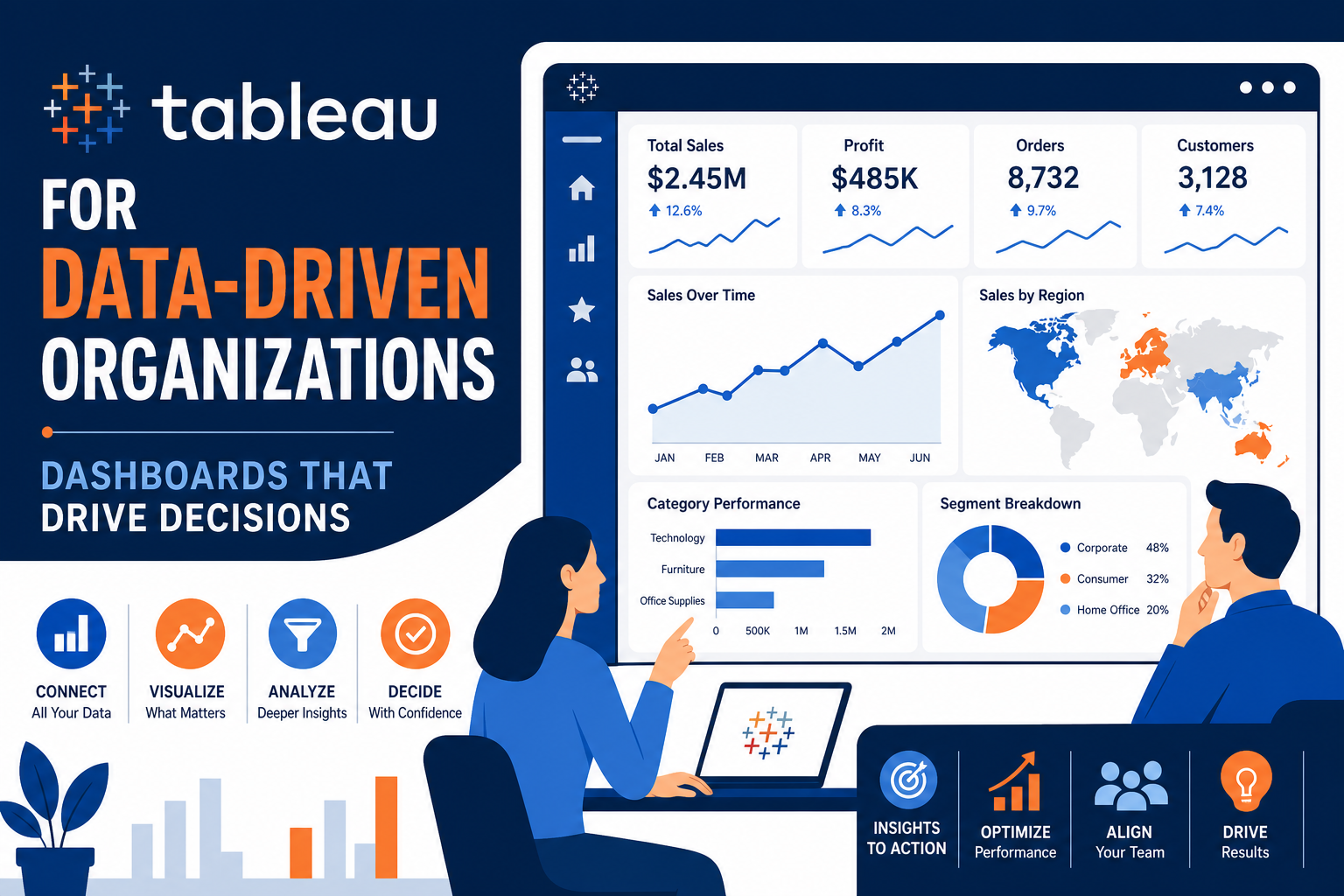
Tableau is a business intelligence and data visualization platform, now part of Salesforce, that connects to databases, CRM systems, spreadsheets, and cloud data warehouses to build interactive charts, dashboards, and reports. Instead of static exports, users can filter, drill down, and explore data directly in a dashboard, and share governed views across the organization without needing to write code.
For CRM-centric organizations, Tableau typically connects to Salesforce or HubSpot data (often alongside finance, marketing, or operations data) to create a single reporting layer that multiple teams can trust.
Why Dashboards Matter in 2026
Dashboard quality has become a business risk issue, not just a reporting nice-to-have.
- Audit and compliance pressure is rising. Regulators, auditors, and boards expect organizations to produce consistent, traceable numbers on demand: not a different total depending on who pulls the report.
- Self-service reduces IT and admin bottlenecks. When business users can safely build their own views inside governed guardrails, admins spend less time fielding one-off report requests.
- CRM data quality directly affects dashboard trust. A dashboard built on duplicate accounts, incomplete records, or inconsistent stages will produce numbers people stop believing, no matter how good the visualization is.
- AI and forecasting tools depend on the same data. Whether it's Tableau's own predictive features or Salesforce Agentforce, AI outputs are only as reliable as the underlying CRM data feeding the dashboard.
How Tableau Works With CRM Data
A typical Tableau-to-CRM implementation follows these steps:
- Connect Tableau to Salesforce, HubSpot, or both via native connectors or an integration layer.
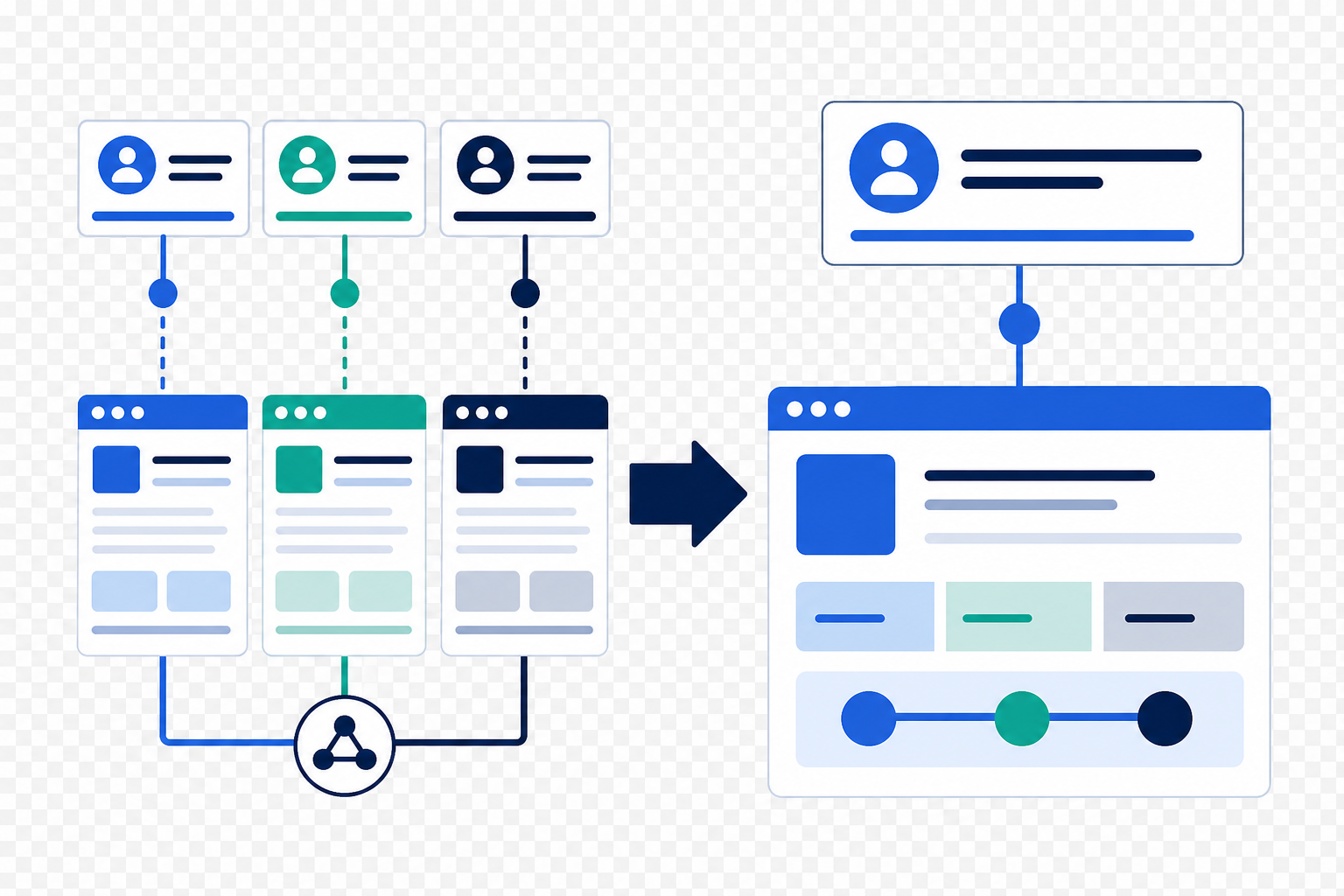
- Model the data so fields, objects, and relationships (accounts, opportunities, cases, tickets) map cleanly into dashboard-ready tables.
- Build governed dashboards with defined owners, refresh schedules, and access permissions by role.
- Layer in self-service views so business users can filter and explore without altering the underlying data model.
- Set up audit trails for dashboard changes and data refresh logs so compliance teams can trace where numbers came from.
- Review and retire stale dashboards on a regular cadence to prevent sprawl and competing versions of the truth.
Tableau vs. Salesforce CRM Analytics: Decision Table
| Criteria | Tableau | Salesforce CRM Analytics |
|---|---|---|
| Best for | Cross-source BI (CRM + finance + ops + external data) | Dashboards embedded directly in Salesforce workflows |
| Data sources | Broad: databases, spreadsheets, cloud warehouses, CRM | Primarily Salesforce-native data, extendable via Data Cloud |
| User experience | Standalone BI tool with dashboards and self-service exploration | Embedded directly in Salesforce record pages and Lightning apps |
| Governance model | Centralized permissions, workbook publishing, row-level security | Salesforce sharing rules and permission sets |
| Setup complexity | Moderate to high, especially with multiple data sources | Lower if data is already fully in Salesforce |
| Choose if... | You need one reporting layer across multiple systems and heavier visual analytics | You want dashboards inside the CRM with minimal extra tooling |
Choose Tableau if your reporting needs span multiple systems (CRM, finance, marketing, external data) and you need deep visual analysis for leadership or audit reporting.
Choose CRM Analytics if your data lives almost entirely in Salesforce and you want dashboards embedded directly into rep and manager workflows without a separate tool.
Many organizations use both: CRM Analytics for in-workflow, real-time views, and Tableau for executive- and audit-level cross-source reporting.
What Businesses Should Do Next
- Audit your current dashboards: identify duplicates, stale reports, and dashboards no one trusts.
- Fix data quality issues first. Dashboards inherit every duplicate, blank field, and inconsistent picklist value from the source CRM.
- Define ownership for each dashboard: who updates it, who approves changes, and how often it refreshes.
- Decide your BI architecture: Tableau, CRM Analytics, or both: based on how many systems you need to report across.
- Build role-based access so sensitive financial or compliance data is only visible to the right people.
If your team is evaluating how this applies to Salesforce, HubSpot, integrations, or CRM governance, Vantage Point can help assess the right next step and build a practical implementation plan.
How Vantage Point Helps
Vantage Point helps organizations connect Tableau, CRM Analytics, and other BI tools to clean, well-governed CRM data. Our Salesforce implementation and advisory team designs data models that make dashboards accurate from day one, while our system integration and data migration services connect Salesforce, HubSpot, and other systems so reporting reflects one consistent source of truth. For teams building AI-assisted forecasting or personalization on top of dashboard data, our AI-driven personalization and analytics practice ensures the underlying data and governance can support it. If security and audit requirements are part of your dashboard strategy, our compliance and security solutions team can help define access controls and audit trails.
FAQ
Is Tableau the same as Salesforce CRM Analytics? No. Tableau is a standalone BI platform (now owned by Salesforce) built for visualizing data across many sources, while CRM Analytics is a Salesforce-native analytics tool embedded directly in CRM workflows. Organizations often use both for different purposes.
Do I need clean CRM data before building Tableau dashboards? Yes. Tableau visualizes whatever data it's connected to, so duplicate records, incomplete fields, or inconsistent stage names will show up as inaccurate or confusing dashboards. Data cleanup should happen before or during dashboard design, not after.
Can Tableau connect to both Salesforce and HubSpot at the same time? Yes. Tableau can connect to multiple data sources, including Salesforce and HubSpot simultaneously, which makes it useful for organizations that use both platforms or are integrating the two.
How is Tableau useful for audits and compliance reporting? Tableau dashboards can be built with defined data lineage, refresh logs, and access permissions, which gives audit teams a traceable source for reported numbers instead of manually assembled spreadsheets.
What's the difference between Tableau self-service analytics and ad hoc spreadsheet reporting? Self-service analytics in Tableau lets business users explore governed, permissioned data within defined dashboards, while spreadsheet reporting usually involves manual exports with no consistent source of truth or access control.
Is Tableau worth it for smaller organizations? It depends on reporting complexity. Organizations with data in a single CRM and simple reporting needs may be well served by native CRM dashboards, while organizations reporting across multiple systems or needing audit-grade reporting typically benefit more from Tableau.
How often should dashboards be reviewed or retired? Dashboards should be reviewed on a regular cadence, quarterly is common, to retire stale or duplicate reports and confirm that data sources and definitions still match how the business operates.
Where should a company start if it doesn't have a BI strategy yet? Start by auditing existing reports and dashboards, identifying what leadership and audit teams actually need, and confirming the underlying CRM data is accurate before selecting or building new dashboards.