
MuleSoft and Informatica Intelligent Data Management Cloud (IDMC) address two parts of the same enterprise data problem: systems must be connected, and the information moving between them must be trustworthy. MuleSoft provides API-led connectivity and application orchestration. Informatica provides data quality, master data management (MDM), governance, cataloging, and data-management services.
Quick Answer
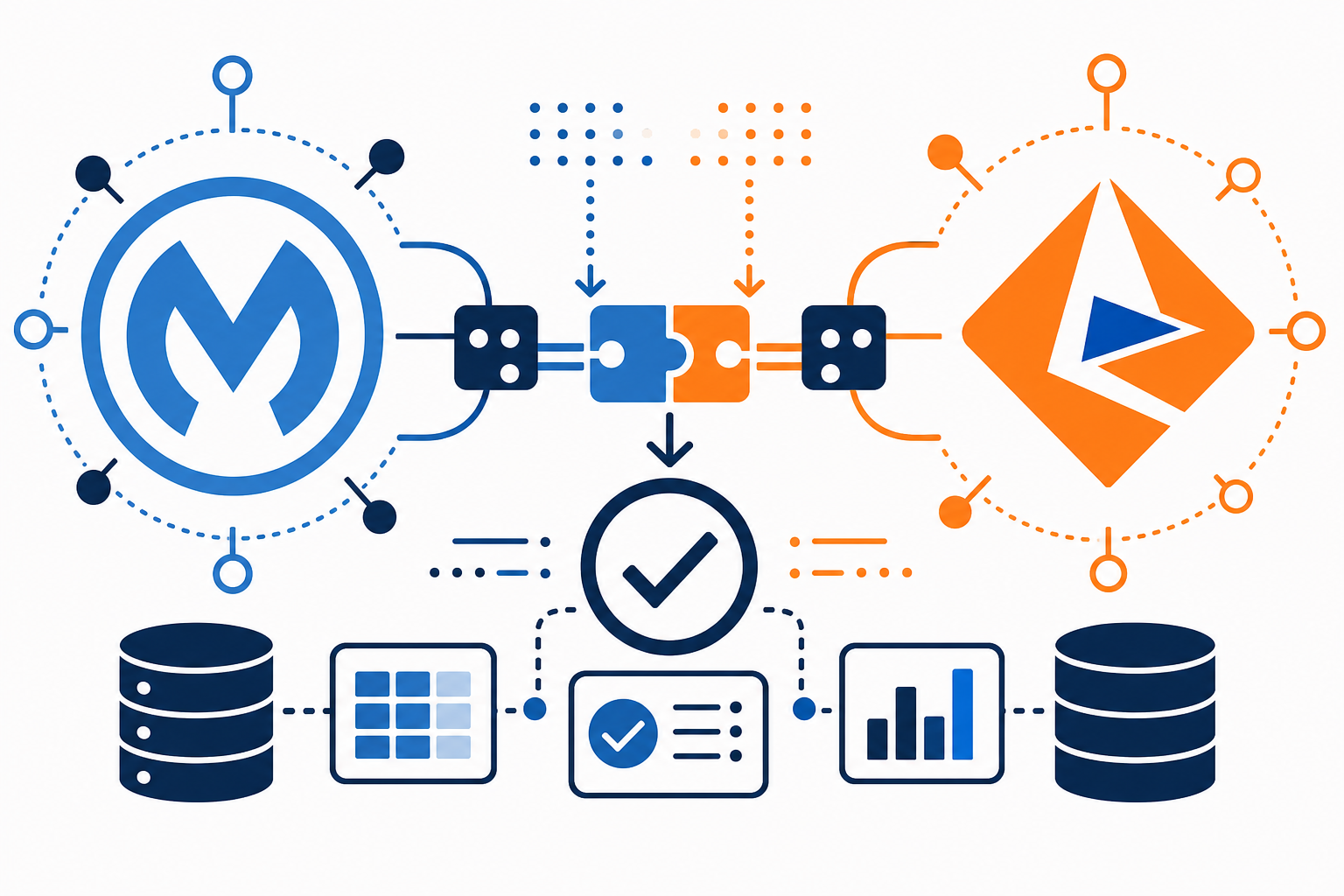
MuleSoft connects Salesforce, operational applications, data platforms, APIs, and AI agents through reusable, governed interfaces. Informatica IDMC evaluates, standardizes, matches, governs, and manages data so that a connected record is also a usable and trusted record. Salesforce’s Architecture Center describes the two platforms as complementary: MuleSoft supplies real-time application connectivity and orchestration, while Informatica supplies enterprise data management. For a Salesforce program, the practical pattern is to use MuleSoft to move and coordinate information across systems and use Informatica where data quality rules, master records, stewardship, lineage, and governance are needed. The result is a more dependable foundation for Data 360 (formerly Data Cloud), analytics, automation, and Agentforce.
Key Takeaways (TL;DR)
- What is it? MuleSoft + Informatica IDMC combines API-led connectivity with data quality, governance, and master-data capabilities in the Salesforce ecosystem.
- MuleSoft’s role: Connect applications, APIs, and data sources; orchestrate real-time and batch processes; and expose reusable integration services.
- Informatica’s role: Profile, standardize, validate, match, govern, and steward data so shared records have dependable meaning and ownership.
- How they work together: MuleSoft gets data to the right place in the right process; Informatica helps determine whether that data is complete, consistent, compliant, and authoritative.
- Best for: Organizations joining Salesforce to multiple operational, analytical, cloud, or on-premises systems where duplicate or inconsistent data creates process risk.
- Bottom line: Connected data is not automatically trusted data. Treat integration and data quality as coordinated architecture decisions, not interchangeable tools.
Why connected systems still create a data-quality challenge
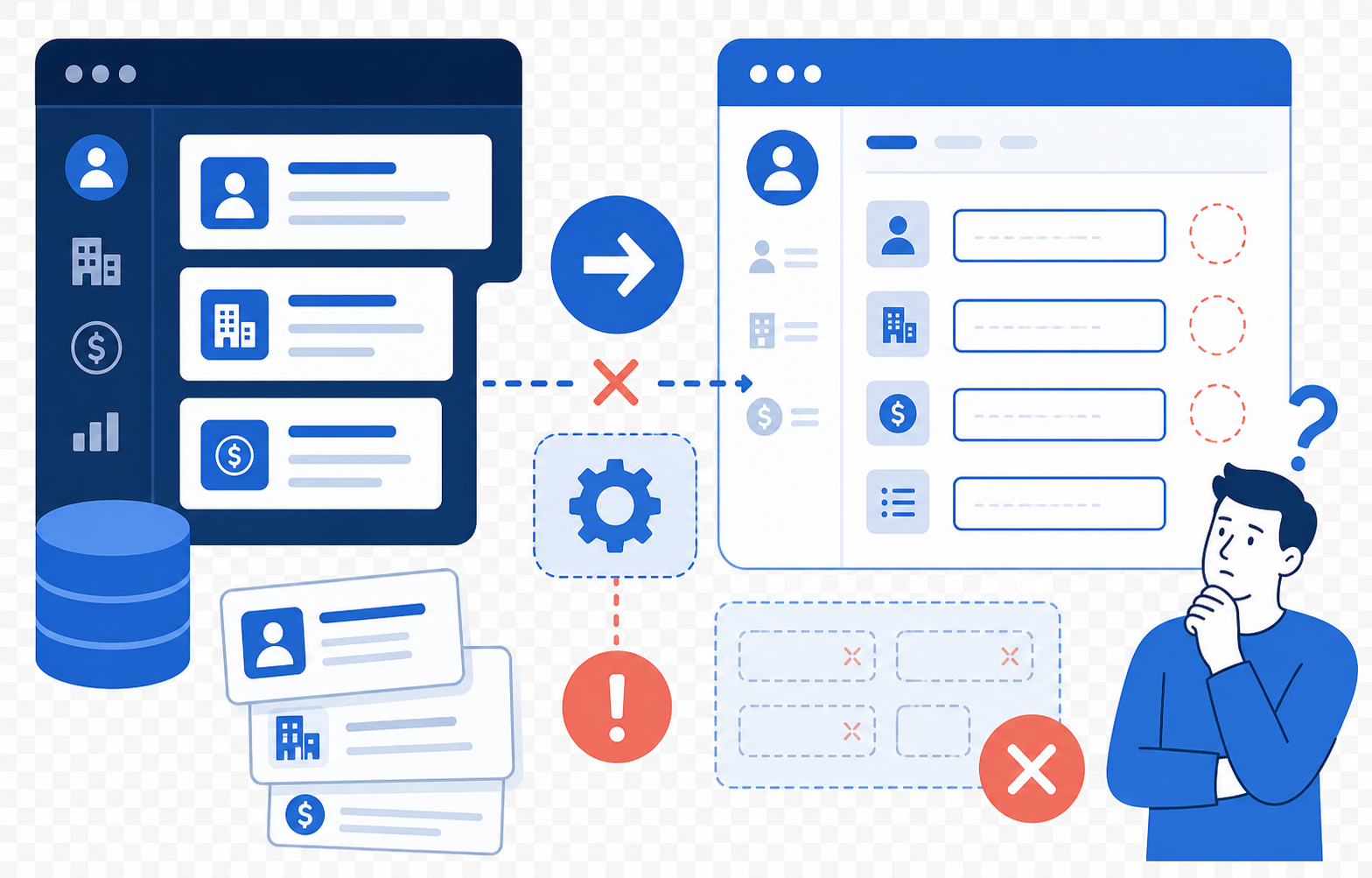
Most organizations do not have a single system holding every important customer, product, partner, supplier, service, or financial record. Salesforce may manage relationship and workflow context, while an ERP, support platform, commerce system, data warehouse, legacy application, or custom service holds other parts of the picture. Connecting those systems is necessary, but it can also move duplicates, stale values, inconsistent definitions, and incomplete records faster.
Consider a simple account update. A team may receive a new address in Salesforce, use a separate billing application as the legal source for account details, and store transaction history in another platform. A direct integration can copy the address field from one system to another, but it cannot by itself answer the harder questions: Which record is authoritative? Are two similarly named accounts the same entity? Which formatting standard applies? Who resolves a match that is uncertain? Is the field permitted for the intended use?
That distinction matters because integration failures and data-quality failures look different. Integration failures include unavailable endpoints, failed messages, incompatible payloads, and timing problems. Data-quality failures include invalid values, duplicate entities, missing attributes, conflicting business definitions, unknown lineage, and unclear stewardship. A durable Salesforce architecture needs controls for both.
What MuleSoft and Informatica each do
The roles overlap at the edges, but they solve different primary problems. Salesforce’s official MuleSoft and Informatica architecture guidance describes application integration and data integration as complementary rather than interchangeable.
| Capability | MuleSoft | Informatica IDMC |
|---|---|---|
| Primary job | Connect and orchestrate applications, APIs, services, and events | Manage, improve, govern, and master enterprise data |
| Typical design unit | API, integration flow, event, process, or service | Data domain, quality rule, master record, catalog asset, or policy |
| Strength | API-led connectivity, reusable services, application integration, and data movement | Data quality, MDM, data governance, cataloging, privacy, metadata, and data integration services |
| Core question | How should systems exchange and act on information? | Is this information reliable, understood, controlled, and authoritative? |
| Example | Send an approved account update from Salesforce to downstream systems | Match duplicate account records, apply standardization, and identify the surviving authoritative record |
MuleSoft: API-led connectivity and application integration
MuleSoft is Salesforce’s integration and API platform. Its API-led approach separates reusable access to systems from the business processes and channels that consume those systems. Rather than creating a new custom connection for every project, teams can expose a governed system API for Salesforce, an ERP, or a database; combine those services in a process API; and shape the result for a portal, workflow, mobile experience, or agent.
In practical terms, MuleSoft is useful when an organization needs to connect Salesforce to multiple systems, coordinate an event across applications, translate formats, apply routing and error handling, or make a reliable API available to more than one consumer. It supports real-time, event-driven, and scheduled patterns.
MuleSoft does not need to become the owner of every data-quality rule. Its strength is controlled connectivity and orchestration. For example, a MuleSoft flow can retrieve a prospective account from a source system, call a quality or master-data service, and send the approved result to Salesforce and other consumers. That keeps the business process connected without scattering quality logic across every endpoint.
Informatica IDMC: trusted data, master records, and governance
Informatica IDMC is an enterprise cloud data-management platform. In Salesforce’s current positioning, it includes capabilities across data integration, data quality, data governance, cataloging, privacy, metadata management, and master data management. Its MDM capabilities help teams establish and maintain trusted master data for business domains such as accounts, contacts, products, suppliers, and reference data.
Data quality is more than removing blank fields. Depending on the domain and policy, it can include profiling a source, validating values against rules, parsing and standardizing addresses or names, detecting duplicates, matching records, enriching attributes, monitoring quality scores, and routing exceptions for stewardship. MDM adds the discipline of defining a golden or authoritative master record and managing how that record is distributed and reconciled across systems.
Governance answers the context questions that integrations alone cannot resolve: what a field means, where it originated, which policy governs it, who owns it, and where it is permitted to flow. That context becomes especially important when many teams reuse data across Salesforce, data platforms, reporting, and AI-enabled workflows. Salesforce describes Informatica’s platform as a governed data layer that supports quality, integration, MDM, and metadata management across enterprise environments.
How the two platforms work together in a Salesforce architecture
A combined architecture should begin with a clear data-flow and ownership design, not with a tool diagram. A common pattern looks like this:
- Source systems create or update operational data. Salesforce, ERP platforms, support tools, commerce applications, data stores, and custom services each produce information in their own formats and schedules.
- MuleSoft connects and orchestrates the process. APIs, events, and integration flows provide controlled access to source and destination systems, transform payloads where appropriate, and coordinate business actions.
- Informatica applies data-management controls. IDMC can profile, validate, standardize, match, govern, and master data according to the organization’s policies. Records that need review can follow a stewardship process rather than being silently duplicated.
- Trusted data is published or synchronized. MuleSoft can distribute an approved, authoritative record to Salesforce and other authorized applications through reusable interfaces. The exact order is not fixed: some quality controls should occur before a transaction enters Salesforce, while others monitor or reconcile data after it arrives.
- Data consumers receive governed context. Salesforce users, Data 360, analytics tools, applications, and Agentforce can work from better-connected and better-understood data, subject to the applicable access and governance controls.
This is not a requirement to route every byte through both platforms. A simple Salesforce workflow may need only native automation. A narrow, one-time transfer may need a lightweight connector. The combined approach becomes more valuable when data crosses several systems, a shared business domain needs an authoritative record, or quality and governance need to be applied consistently across multiple integration paths.
What changed when Salesforce acquired Informatica
Salesforce completed its acquisition of Informatica on November 18, 2025. The official acquisition announcement positions Informatica’s cloud data-management capabilities as part of Salesforce’s broader trusted-data strategy. Salesforce now presents Informatica alongside Data 360, MuleSoft, and Tableau as components of a data foundation for connected, governed context.
Three practical use cases
| Use case | MuleSoft contribution | Informatica IDMC contribution | Salesforce outcome |
|---|---|---|---|
| Customer 360 | Connects Salesforce to operational, service, commerce, and enterprise data sources through reusable APIs and orchestration | Matches and standardizes identity attributes, manages master records, and documents stewardship and governance rules | Teams can work with a more consistent customer view without treating every source value as equally authoritative |
| Data migration | Extracts, transforms, routes, and monitors movement among legacy systems, staging environments, and Salesforce | Profiles source data, identifies quality issues and duplicates, applies standardization rules, and supports reconciliation | A migration plan can separate data remediation from the mechanics of moving records |
| Ongoing synchronization | Coordinates real-time events, scheduled updates, error handling, retry behavior, and API consumption across systems | Monitors quality, evaluates matching and survivorship rules, and helps govern changes to common data domains | Downstream systems receive more reliable updates and exceptions can be handled through defined processes |
In a Customer 360 initiative, a person or organization may appear in several systems with different identifiers, names, addresses, or relationship roles. MuleSoft can connect those sources and make reusable services available. Informatica can help match and manage master records so a customer-facing workflow does not simply display an unreviewed collection of duplicates.
In a migration, moving bad data quickly is still moving bad data. Treat profiling, cleansing, mapping, matching, and reconciliation as separate workstreams from extraction and load orchestration. That separation makes it easier to test data rules, determine the system of record, and explain why a transformed record is valid.
For ongoing synchronization, design for exceptions. A recurring integration should identify records that fail validation, cannot be matched with confidence, or conflict with a master-data rule. Those records need an owner, a remediation path, and metrics: not just an error log.
The foundation for Data 360 and Agentforce
Data 360 and Agentforce gain value from data that is connected, current, contextual, and governed. Salesforce explains that clean, integrated, and contextual data deepens Agentforce’s understanding, while Data 360 provides data and metadata that can ground actions and insights. The key architectural point is that AI does not repair unclear ownership, conflicting definitions, or poorly governed data by itself.
MuleSoft can make the right systems, APIs, and actions available in a controlled way. Informatica can help establish whether the data behind those actions is trustworthy and traceable. Data 360 can unify and activate relevant data for Salesforce experiences, while Agentforce can use approved context and actions within defined controls. Read Salesforce’s guidance on Data Cloud and Agentforce for the platform view of this relationship.
Do not treat an AI initiative as a reason to bypass governance. Before giving an agent access to a business action or data domain, clarify the source of truth, field definitions, permitted users and purposes, quality thresholds, exception handling, and audit expectations. Connected, trusted context should be a precondition for scale: not a cleanup task deferred until after deployment.
Implementation considerations: when to use which tool
Start with the business process, data domain, and operating model. Then choose the least complex architecture that meets the requirement.
- Use native Salesforce automation first for internal, low-complexity processes that do not need enterprise integration or shared master-data controls.
- Use MuleSoft when connectivity is the central challenge. It is a strong fit for reusable APIs, multi-system application integration, event orchestration, controlled data movement, monitoring, and secure access to systems across cloud and on-premises environments.
- Use Informatica IDMC when data management is the central challenge. It is a strong fit when duplicate entities, inconsistent definitions, quality monitoring, governance, lineage, privacy, stewardship, or authoritative master records are blocking reliable operations.
- Use both when the process needs reliable movement and reliable meaning. A multi-system customer, product, or reference-data program often needs an integration layer plus shared data-quality and governance controls.
- Define the system of record by data domain. One system may be authoritative for financial attributes, another for relationship activity, and an MDM platform for the mastered business entity. Avoid declaring a single application the source of truth for every field by default.
- Design exception ownership before go-live. Decide who corrects invalid values, resolves possible duplicates, approves rule changes, responds to failed messages, and monitors service-level expectations.
A productive discovery phase usually produces a source-to-target inventory, data-domain ownership matrix, current and future flow diagrams, quality-rule backlog, API reuse plan, security model, and measurable acceptance criteria. That work prevents a common failure mode: building technically successful integrations that reproduce existing data confusion at a larger scale.
How Vantage Point can help
Vantage Point helps organizations design practical architectures for integration, data quality, Salesforce, and AI readiness. Our system integration and data migration services can help inventory systems, define reliable flows, and plan migration or synchronization patterns. Our Salesforce implementation and advisory services can align data architecture with the Salesforce roadmap, while our MuleSoft integration services can support reusable connectivity patterns after go-live.
Talk to Vantage Point about integration and data quality to discuss how MuleSoft, Informatica IDMC, Data 360, and Agentforce fit your organization’s data strategy.
Official Salesforce resources
- Salesforce Architecture Center: Leveraging MuleSoft and Informatica
- Salesforce: Informatica from Salesforce
- Salesforce: MuleSoft integration platform
- Salesforce press release: acquisition of Informatica
FAQ
What is the difference between MuleSoft and Informatica IDMC?
MuleSoft primarily connects and orchestrates applications, APIs, events, and processes. Informatica IDMC primarily manages the quality, governance, metadata, and mastering of enterprise data. They can work together, but one is not a substitute for the other.
Can MuleSoft clean and deduplicate Salesforce data by itself?
MuleSoft can transform payloads and apply integration logic, but enterprise data-quality and master-data needs often require dedicated profiling, matching, stewardship, governance, and monitoring capabilities. Informatica IDMC is designed for those broader data-management responsibilities.
When should an organization use both MuleSoft and Informatica?
Use both when a business process spans multiple systems and depends on data that must be consistently validated, governed, matched, or mastered across those systems. Customer 360, complex migrations, and high-value ongoing synchronization are common examples.
Does the Informatica acquisition replace MuleSoft?
No. Salesforce’s architecture guidance presents application integration and data integration as complementary. MuleSoft remains the connectivity and orchestration layer, while Informatica expands Salesforce’s data quality, governance, cataloging, metadata, and MDM capabilities.
How do MuleSoft and Informatica support Data 360 and Agentforce?
MuleSoft helps expose connected data and actions through controlled interfaces. Informatica helps improve and govern the quality and context of that data. Together, they can support the trusted, connected information that Data 360 and Agentforce use, subject to each organization’s access and governance policies.
What should be defined before implementing this architecture?
Define data domains, systems of record, source-to-target mappings, quality rules, match and survivorship logic, API ownership, security controls, exception workflows, monitoring expectations, and accountable owners. Tool selection should follow those decisions rather than replace them.
Is this approach only for a particular industry?
No. The pattern applies across industries because the core challenges (connecting systems, managing duplicates, governing common data, and supporting reliable operations) are common to organizations of many types.