
Most marketing problems are not creative problems. They're alignment problems.
A company changes its business plan (a new target segment, a higher minimum deal size, a shift from custom work to repeatable offerings) and then wonders why the pipeline fills with deals that no longer fit. The website still describes the old business; the campaigns still target the old buyer. Every marketing dollar is now selling a company that no longer exists.
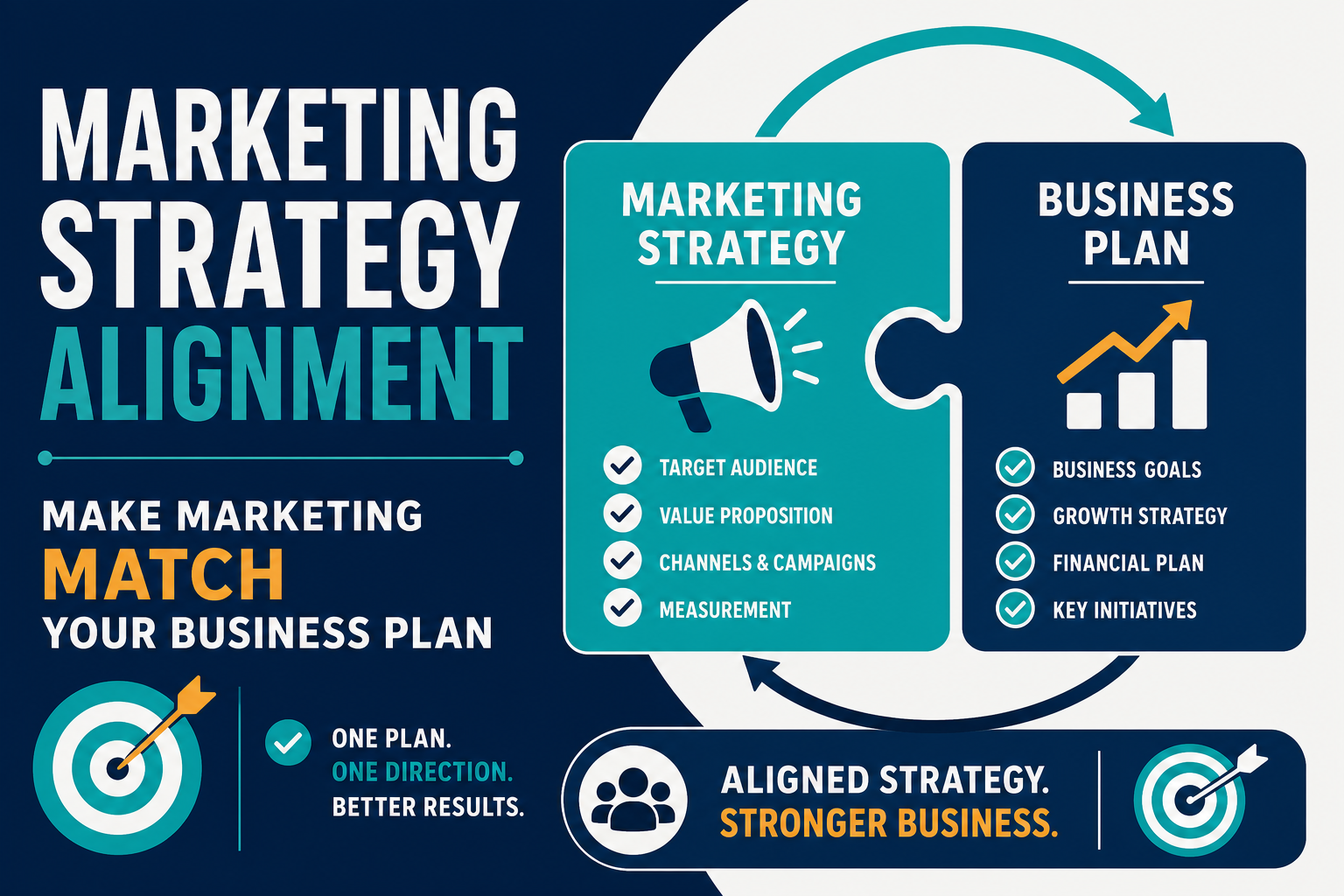
That's the core of marketing strategy alignment: your marketing has to describe the company you're becoming, not the company you were. When the plan pivots and marketing doesn't, growth stalls for a predictable reason, and the fix is equally predictable.
Quick Answer
Marketing strategy alignment means your messaging, targeting, channels, and CRM all reflect your current business plan: not a previous version of it. It matters most for owners, CEOs, and revenue leaders at a growth inflection point: moving upmarket, entering a new vertical, or shifting delivery models. This article gives you the reset checklist for realigning marketing after a pivot. Vantage Point is relevant because alignment isn't just copywriting. It's CRM segmentation, marketing automation, and go-to-market operations, which is the work our consultants do every week.
Key Takeaways (TL;DR)
- What it is: Marketing strategy alignment is the discipline of making your website, messaging, targeting, and channels match your current business plan.
- Why it matters: When marketing describes the company you were, it fills the pipeline with deals your new plan doesn't want, and taxes every deal it does want.
- The test: A business with a plan to reach a larger scale should look and speak like the larger version. Buyers take cues from your website; showing up smaller than your ambition costs credibility before the first call.
- The fix: A structured marketing reset, new ICP, re-aimed homepage copy, re-selected proof, re-weighted channels, and a re-segmented CRM.
- How Vantage Point helps: Our CRM and marketing automation services and advisory practice realign the systems and messaging together, so the plan and the pipeline match.
What Is Marketing Strategy Alignment?
Marketing strategy alignment is the state where every visible and operational piece of your marketing (positioning, website copy, target audience, channel mix, content, and CRM follow-up) describes and supports the business plan you're actually executing.
The opposite is drift. The plan moves; marketing stays. The homepage still leads with the offering that used to be your bread and butter; the case studies still feature the customer profile you've decided to stop serving. Nobody made a mistake: the business evolved and marketing didn't get the memo.
Alignment is not a branding exercise. It's an operational discipline: the deals marketing generates are a function of what it says, who it targets, and where it runs.
Why Marketing Strategy Alignment Matters in 2026
Growth-stage companies pivot constantly now: economic pressure pushes firms upmarket, automation lets service businesses productize custom work, founders spot better segments. Each pivot is rational, and each invalidates part of the existing marketing engine. The mismatch compounds:
- Wrong-deal pipeline. Sales spends cycles qualifying out prospects the old messaging attracted.
- Buyer confusion. The prospects you actually want land on a website describing a company beneath or beside their needs.
- Wasted spend. Channel budgets keep flowing to audiences the plan has already deprioritized.
- CRM chaos. Lead scoring and segmentation still reflect the old motion, so even the right leads get the wrong treatment.
Marketing lagging a pivot by a quarter is normal: alignment takes work. Marketing ignoring a pivot is how a pipeline fills with the wrong deals while leadership blames lead quality.
The Pivot Patterns That Demand a Marketing Reset
Four common pivot patterns always demand a reset, because each changes who you're selling to, what you're selling, or how the deal works.
Raising the minimum deal size to move upmarket. The old marketing said "accessible, fast, affordable"; the new upmarket buyer reads that as "too small for us." Larger buyers look for evidence of depth, process maturity, and peers at their scale: on your website, before they ever take a meeting.
Shifting from custom work to repeatable offerings. Custom work sells on trust in the team; repeatable offerings sell on clarity of outcome. If the site still reads like "tell us what you need," the repeatability, the entire point of the pivot, never reaches the buyer.
Entering a new vertical or segment. New segment, new vocabulary, new proof requirements. Existing case studies may work against you by anchoring you to the wrong customer profile.
Land-and-expand motions. A small first engagement as the entrée to a larger program changes the marketing job: you're marketing the destination, with the entry offer positioned as the low-risk first step. Copy that treats the entry offer as the whole story undercuts the expansion it's designed to start.
Present the Company You're Becoming
Here's the principle that makes owners uncomfortable, and that makes it true: a business with a credible plan to reach a larger scale should look and speak like the larger version.
Imagine a $3 million business with a serious, funded plan to become a $10 million business. (An illustrative example: the numbers matter less than the pattern.) If its website, proposals, and campaigns still read like a $3 million operation, every prospect meeting begins with a credibility tax. The buyer's first question, spoken or not, is "can this company actually handle us?" Marketing's job is to answer that before the meeting.
This isn't pretending to be something you're not. It's presenting the company you are verifiably building toward: the capacity you've added, the process maturity you've invested in, the client profile you're now equipped to serve. Buyers can't see your business plan. They take their cues from what your marketing shows them.
The Marketing Reset Checklist
When the plan pivots, run the reset in this order. Each item is a decision, not a tweak.
| Reset item | The question to answer | What changes |
|---|---|---|
| ICP and target-account list | Who are we selling to now? | New ideal customer profile; rewritten target-account list; old-fit segments deprioritized |
| Homepage and service copy | Does a first-time visitor see the new business? | Headline, positioning, and service descriptions re-aimed at the new buyer's problem |
| Proof and case studies | Does our evidence match the new buyer's profile? | Re-selected case studies; retired proof that anchors you to the old segment |
| Channel mix | Where does the new buyer actually spend attention? | Budget re-weighted from legacy audiences to the new buyer's watering holes |
| CRM segmentation and follow-up | Does our nurture match the new sales motion? | Re-segmented database, updated lead scoring, sequences rebuilt for the new deal shape |
Two of these five live in the CRM, not the website, and they're the ones most often skipped. A beautiful new homepage feeding leads into an old-segmentation database is a half-finished pivot.
Timing: Lag Is Normal, Ignoring Is Fatal
Marketing will always lag a pivot by some amount; the plan is decided in a boardroom, the reset takes weeks to execute. That lag is normal and survivable.
What isn't survivable is indifference: teams run last year's playbook because the numbers are "fine," and a year of spend goes to the old business before anyone notices. Set a trigger, when the plan changes in any of the four patterns above, a marketing reset goes on the calendar within 30 days.
The Founder Trap: No Spare Founder
In many growth-stage companies, the owner is the sales engine: the relationships, the referrals, the closing. Marketing exists, if it exists at all, as a support function for the founder's network.
A pivot breaks that arrangement. The new segment doesn't know the founder. The new deal size exceeds what personal referral can reliably produce. Marketing now has to build demand the founder can't personally generate, and it can only do that if the system matches the plan. When there's no spare founder, alignment isn't a nice-to-have. It's the only path to a pipeline that doesn't depend on one person's calendar.
What Businesses Should Do Next
- Run the mismatch audit. Read your homepage and last three campaigns as a stranger. Do they describe the business in your current plan? List the specific gaps.
- Rewrite the ICP before the copy. Every downstream decision (messaging, proof, channels) depends on getting the target right first.
- Fix the CRM in the same project. Segmentation, lead scoring, and nurture are part of the reset, not a follow-up phase.
- Set the 30-day trigger. Make "plan pivots → marketing reset" a standing rule so the next pivot doesn't rely on someone remembering.
How Vantage Point Helps
Marketing strategy alignment sits exactly at the intersection Vantage Point works in: go-to-market strategy, CRM operations, and marketing automation. A pivot touches all three at once, and treating them as separate projects is how half-finished pivots happen.
Through our advisory and change management services, senior consultants help leadership teams translate a new business plan into a concrete marketing reset: new ICP, re-aimed positioning, and a sequenced execution plan. On the systems side, our Salesforce implementation and advisory and HubSpot consulting teams re-segment the CRM, rebuild lead scoring and nurture, and connect marketing and sales around the new motion. For companies whose pivot includes running both platforms together, our HubSpot: Salesforce integration work keeps the data model consistent end to end. Senior consultants only: the people you meet are the people who deliver.
Ready to Align Marketing With Your Plan?
If your business plan has moved and your marketing hasn't, the gap is costing you on every deal. Vantage Point can audit the mismatch and build the reset (positioning, ICP, channels, and CRM) as one project. Contact Vantage Point to schedule a working session, or explore our managed services and ongoing support if you need a team to run the reset with you.
Frequently Asked Questions
What is marketing strategy alignment?
Marketing strategy alignment is the state where your messaging, targeting, channels, and CRM follow-up all reflect your current business plan rather than a previous version of it. When they match, marketing generates the deals your plan wants. When they drift, marketing fills the pipeline with the old business's deals.
How do I know if my marketing is misaligned with my business plan?
Read your homepage and recent campaigns as a stranger would, then compare them to your current plan. If the target audience, deal size, or offering emphasis on the website differs from what leadership is pursuing, you're misaligned. A second tell: sales regularly disqualifies leads because they're the wrong fit.
Which business changes require a full marketing reset?
Four patterns always do: raising your minimum deal size to move upmarket, shifting from custom work to repeatable offerings, entering a new vertical or segment, and adopting a land-and-expand sales motion. Each changes who you're selling to, what you're selling, or how the deal works, and marketing has to change with it.
Should a small company market itself like a larger one?
A company with a credible, funded growth plan should present the company it's verifiably becoming (its real delivery capacity, process maturity, and target client profile) rather than its current size. Buyers judge capability from your website and materials before the first meeting.
Why does the CRM matter in a marketing reset?
Because the reset doesn't end at the website. If leads from your new positioning flow into old segmentation and old nurture sequences, even the right prospects get the wrong follow-up. Re-segmenting the CRM and rebuilding nurture for the new sales motion is part of the same project, not a later phase.
What if the founder is still the main source of new business?
Then alignment matters more, not less. A pivot usually moves into segments where the founder's network is thin, and marketing has to build demand the founder can't personally generate, which only works if the system matches the plan.
Can Vantage Point help with both the strategy and the systems?
Yes. Vantage Point pairs go-to-market advisory (ICP, positioning, reset sequencing) with hands-on Salesforce and HubSpot work: CRM re-segmentation, lead scoring, and nurture rebuilds, so the plan and the pipeline get fixed in one project.
Vantage Point is a boutique CRM consulting firm helping businesses transform with Salesforce, HubSpot, and AI. Senior-only and employee-owned. Learn more at vantagepoint.io.