
Quick Answer
Data 360, Informatica, and MuleSoft solve related but different data problems. Data 360 unifies and activates customer data in Salesforce. Informatica provides broader data management capabilities such as master data management, quality, cataloging, lineage, and integration. MuleSoft connects applications and governs APIs. Most teams do not need all three on day one; the right starting point depends on whether the immediate problem is customer activation, trusted master data, or application connectivity. Vantage Point helps teams map that decision to a practical Salesforce data and integration roadmap.
TL;DR
- Choose Data 360 when the priority is unified customer profiles, segmentation, Salesforce activation, or zero-copy access to supported data platforms.
- Choose Informatica when the priority is enterprise data quality, governance, cataloging, lineage, or authoritative master records across systems.
- Choose MuleSoft when the priority is application integration, reusable APIs, API security, or transaction orchestration.
- The products overlap at the edges. Architecture should begin with the business problem and the existing data estate, not a predetermined requirement to buy all three.
- Vantage Point can assess the current stack and sequence the work through Salesforce implementation and advisory and system integration and data migration.
What Is the Difference Between Data 360, Informatica, and MuleSoft?
The simplest distinction is the outcome each platform is designed to produce. Data 360 focuses on bringing customer data into a usable Salesforce context. Informatica focuses on managing and governing data across the enterprise. MuleSoft focuses on connecting applications and exposing their capabilities through managed APIs.
| Platform | Primary job | Strong fit when | Do not assume |
|---|---|---|---|
| Salesforce Data 360 | Harmonize customer data, resolve identities, create unified profiles, and activate data in Salesforce workflows and experiences. | Marketing, sales, service, analytics, or Agentforce use cases need consistent customer context. | It automatically replaces enterprise MDM, every integration tool, or a data warehouse. |
| Informatica | Manage data quality, cataloging, lineage, governance, integration, and master data across a complex estate. | Multiple systems need shared definitions, trusted records, governance controls, or broad data-management coverage. | Every Informatica capability is required for every Data 360 program. |
| MuleSoft | Design, connect, secure, operate, and govern APIs and application integrations. | Business processes cross Salesforce, core systems, SaaS products, partner applications, or custom services. | Moving data through an API by itself creates clean master data or unified customer profiles. |
Salesforce officially renamed Data Cloud to Data 360. Salesforce also completed its acquisition of Informatica on November 18, 2025. Ownership makes closer integration possible, but it does not make the three product families interchangeable.
What Does Salesforce Data 360 Do?
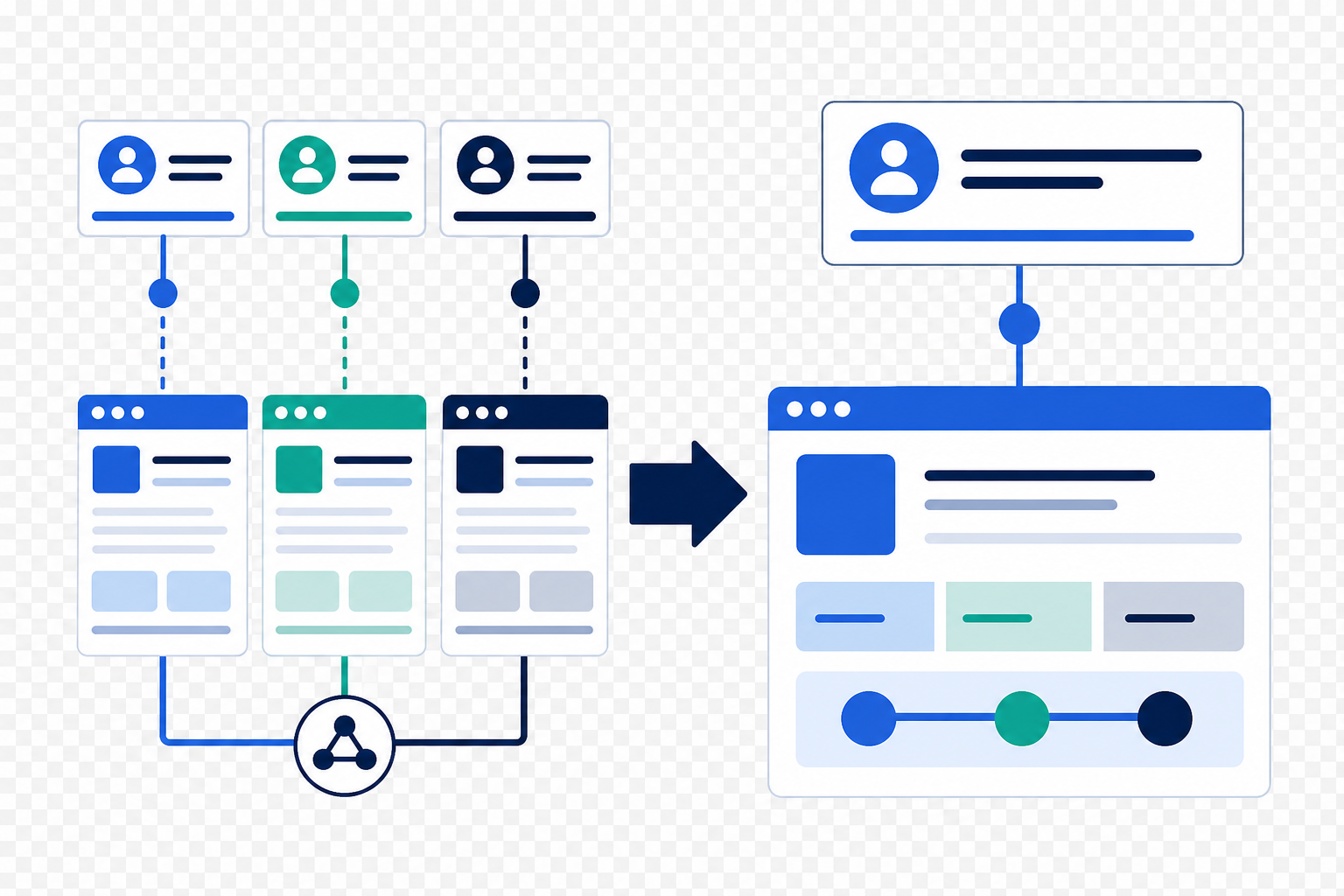
Data 360 connects and harmonizes data for use across Salesforce. It can map data into a common model, apply identity-resolution rules, create unified profiles, build calculated insights and segments, and activate those results in Salesforce products and connected destinations.
Its zero-copy connectivity can also provide access to supported external data without first duplicating all of it inside Salesforce. The available patterns depend on the source platform, connector, data model, permissions, latency needs, and consumption design.
Data 360 is usually the best starting point when:
- customer data is fragmented across CRM, service, marketing, commerce, or analytics systems;
- teams need a governed identity-resolution approach for customer profiles;
- Salesforce users or agents need current context from several sources;
- segments and insights need to activate in sales, service, or marketing workflows; or
- a supported zero-copy pattern can reduce unnecessary replication.
Data 360 can clean and harmonize data within its implementation scope, but enterprise-wide data ownership, stewardship, and master-record policy may still require broader governance and MDM capabilities.
What Does Informatica Add?
Informatica adds enterprise data-management depth. Its portfolio covers capabilities such as data integration, data quality, cataloging, lineage, governance, and master data management. These capabilities matter when trusted data must be managed consistently across Salesforce and non-Salesforce systems.
Informatica becomes especially relevant when an organization must answer questions such as:
- Which system owns the authoritative customer, household, product, or vendor record?
- Who is accountable for data definitions and quality rules?
- Where did a regulated or decision-critical field originate?
- How should duplicates and conflicting values be reconciled across systems?
- Which downstream systems depend on a field before its definition changes?
Do not assume that Informatica must precede every Data 360 implementation. A focused Data 360 use case can start without a full enterprise MDM program when scope, source quality, ownership, and acceptance criteria are clear. Conversely, a complex enterprise may need governance or mastering work before customer activation can be trusted.
What Does MuleSoft Add?
MuleSoft provides the application-integration and API-management layer. Anypoint Platform supports the design, implementation, security, management, monitoring, and reuse of APIs and integrations across cloud and on-premises environments. MuleSoft describes Anypoint Platform as a centralized environment for designing, deploying, and managing APIs and integrations.
MuleSoft is a strong fit when Salesforce must participate in operational processes that span several systems, for example, checking eligibility, creating an account in a core platform, retrieving a current balance, submitting an order, or sharing a controlled service with a partner.
Native connectors and Data 360 ingestion can be sufficient for some data movement. MuleSoft becomes more valuable when the organization needs reusable interfaces, orchestration, centralized policy enforcement, lifecycle management, or a deliberate API operating model.
Do You Need All Three?
No. Many organizations can deliver value with one or two platforms. The full combination is justified only when the use cases require customer-data activation, enterprise data management, and application/API integration at the same time.
| Primary problem | Likely starting point | Add another platform when |
|---|---|---|
| No usable cross-channel customer profile | Data 360 | source quality, mastering, or operational connectivity exceeds the project scope. |
| Conflicting master records and weak governance | Informatica | trusted data must activate in Salesforce or support cross-application transactions. |
| Disconnected applications and brittle point-to-point interfaces | MuleSoft | the program also needs customer-profile unification or enterprise MDM. |
| All three problems are material | Sequence by dependency and measurable use case | each layer has an owner, acceptance criteria, and operating model. |
How Should You Sequence the Architecture?
- Name the business outcome. Define the decision, workflow, customer experience, or control that must improve.
- Map the required data and systems. Identify owners, sources, consumers, quality constraints, latency needs, and regulatory obligations.
- Separate profile, master-data, and transaction requirements. This prevents one product from being stretched into a role it was not selected to perform.
- Choose the smallest viable first release. Prove one bounded use case before expanding identity rules, domains, APIs, or activation channels.
- Design operations with the build. Assign monitoring, quality thresholds, API ownership, consumption controls, stewardship, and change management.
There is no universal “Informatica, then Data 360, then MuleSoft” sequence. In some programs, MuleSoft connectivity is a prerequisite. In others, Data 360 can use a native or zero-copy connection. In MDM-led programs, governance and mastering may come first. Dependency mapping, not a generic product diagram, should determine the order.
What Should Buyers Validate Before Committing?
- Use-case fit: Which measurable business outcome requires each product?
- Existing capabilities: Which integration, warehouse, catalog, quality, or MDM tools already meet part of the need?
- Data ownership: Who approves definitions, match rules, survivorship, access, and acceptable quality?
- Integration pattern: Is the requirement batch movement, federation, events, APIs, or a combination?
- Security and compliance: What data can be accessed, copied, activated, logged, or retained?
- Commercial model: Validate current Salesforce and Informatica packaging, consumption, capacity, and service costs with the vendors. Avoid using generic price ranges as a budget.
- Operating model: Who monitors consumption, failed integrations, API policies, identity rules, and quality thresholds after launch?
How Vantage Point Helps
Vantage Point helps organizations turn Salesforce data-stack choices into an executable roadmap. We can assess current architecture, clarify system ownership, define a phased Data 360 use case, and design the integration and migration work around it. Explore our CRM and marketing automation services or workflow automation and process optimization.
If your team is deciding between Data 360, Informatica, MuleSoft, or an existing tool, contact Vantage Point for an architecture assessment and practical implementation sequence.
Frequently Asked Questions
Is Data 360 the same as Salesforce Data Cloud?
Yes. Salesforce renamed Data Cloud to Data 360. The current name reflects the same Salesforce data platform, although capabilities, packaging, and connectors continue to evolve.
Is Data 360 an MDM platform?
Data 360 provides identity resolution and unified profiles, but that is not identical to enterprise master data management. MDM typically governs authoritative records, stewardship, survivorship, and shared domains across multiple operational systems.
Does Informatica replace MuleSoft?
No. The product portfolios have some integration overlap, but MuleSoft centers on application integration and API management, while Informatica provides a broader data-management portfolio that includes quality, cataloging, lineage, governance, MDM, and integration. Selection should be based on the required operating pattern.
Can Data 360 work without MuleSoft?
Yes. Data 360 supports native, partner, ingestion, and zero-copy connectivity patterns that may cover a specific use case. MuleSoft is useful when the program requires broader application orchestration, reusable APIs, centralized API policies, or connectivity beyond those patterns.
Can Data 360 work without Informatica?
Yes. A bounded Data 360 implementation can succeed without Informatica when source quality, ownership, identity rules, and governance are adequate for the use case. Informatica becomes more relevant as enterprise data domains and governance complexity expand.
Which platform should be implemented first?
Implement the platform that resolves the first critical dependency. Start with Data 360 for customer-profile activation, Informatica for trusted enterprise data, or MuleSoft for application and API connectivity, then add capabilities only when the roadmap demonstrates a need.
How much do Data 360, Informatica, and MuleSoft cost?
There is no reliable universal price because packaging, capacity, consumption, environments, connectors, and implementation scope vary. Buyers should obtain current vendor quotes and model both platform consumption and ongoing operating costs against a defined use case.