
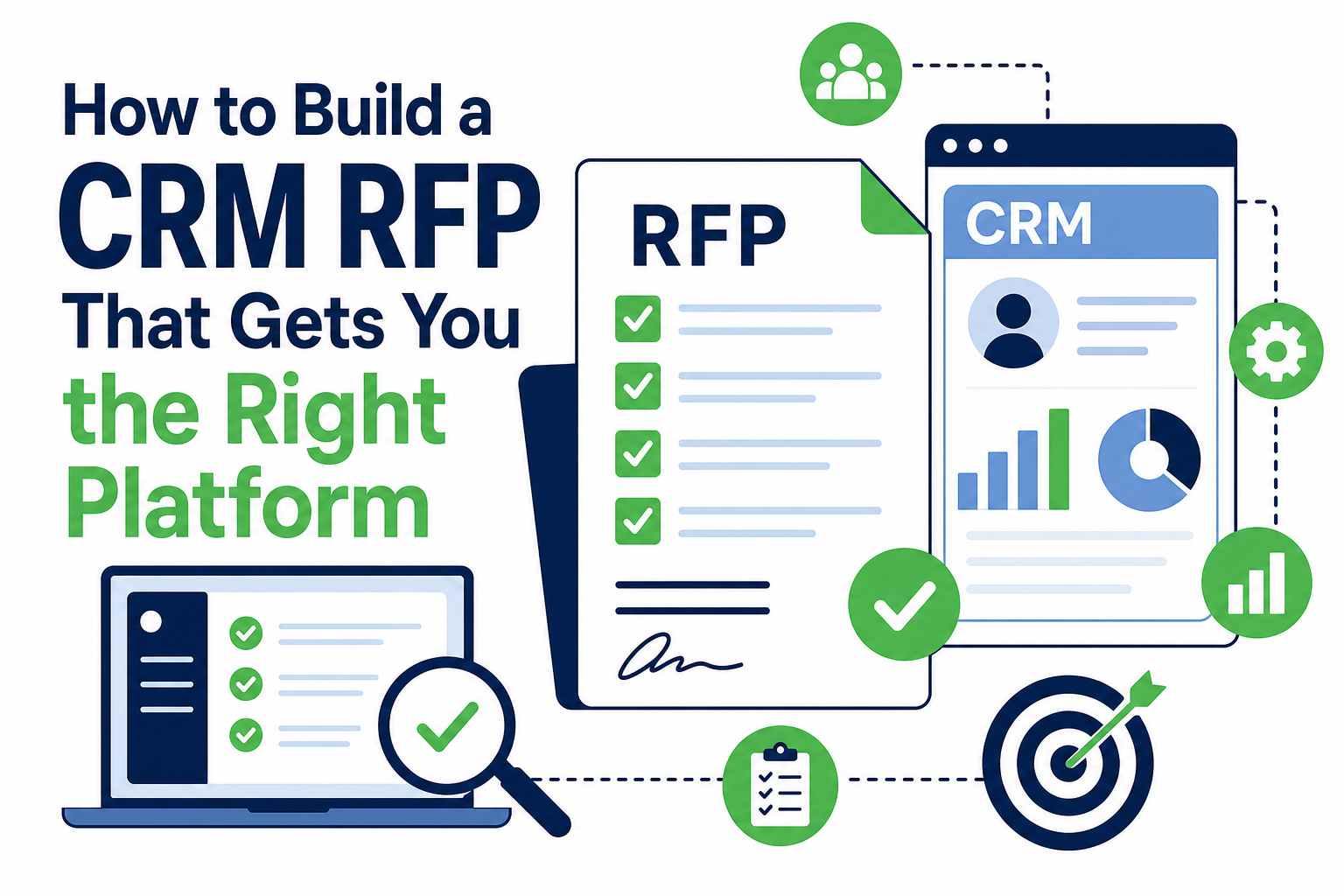
A CRM RFP (request for proposal) is a structured document that lays out your business requirements, evaluation criteria, and scoring process for selecting a CRM platform and implementation partner. This matters for any organization comparing Salesforce, HubSpot, or other CRM platforms and wanting a fair, defensible way to compare vendors instead of choosing based on the flashiest demo.
A well-built RFP saves time, surfaces real differences between platforms, and protects you from selecting a CRM that looks good in a sales pitch but doesn't fit how your business actually operates. This guide walks through how to structure a CRM RFP, what to include, and how to score responses.
Quick Answer
What it is: A CRM RFP is a formal document businesses send to CRM vendors and implementation partners describing requirements, asking structured questions, and defining how responses will be scored.
Who it matters for: IT, operations, and business leaders responsible for selecting a new CRM platform or replacing an existing one.
What decision it supports: Which CRM platform and implementation partner to select, based on a structured, weighted comparison rather than an unstructured sales process.
Why Vantage Point is relevant: Vantage Point advises businesses through CRM platform selection and implementation, including Salesforce and HubSpot, and can help build and evaluate RFP criteria.
TL;DR
- What it is: A structured document for comparing CRM vendors on requirements, cost, implementation approach, and fit.
- Why it matters: Reduces the risk of choosing a CRM based on demo polish instead of actual operational fit.
- Best for: Organizations replacing a legacy CRM, consolidating multiple systems, or selecting a platform for the first time.
- Decision point: Define your must-have requirements and weighted scoring criteria before you talk to vendors, not after.
- How Vantage Point helps: Our advisory and change management and Salesforce implementation and advisory services help businesses build RFP criteria and evaluate vendor responses objectively.
What Should Be in a CRM RFP?
A CRM RFP should answer one core question for each vendor: can this platform and partner meet our requirements, at what cost, and with what risk? At minimum, it should include:
- Company and project background: who you are, why you're evaluating a new CRM, and your timeline.
- Functional requirements: the specific capabilities you need across sales, service, marketing, and reporting.
- Technical requirements: integration needs, data volume, security and compliance requirements, and API access.
- Implementation approach: how the vendor or partner proposes to deliver the project, including timeline and methodology.
- Cost structure: licensing, implementation, and ongoing support costs, broken out clearly.
- Vendor and partner experience: relevant case studies, references, and team qualifications.
- Evaluation criteria and scoring: how you will score and weight each section of the response.
Why This Matters in 2026
CRM decisions are long-term commitments. Most businesses don't replace a CRM lightly, and switching costs (data migration, retraining, process rebuilding) are significant. A structured RFP process reduces the risk of an expensive mistake by forcing clear requirements definition upfront and creating an objective basis for comparing vendors.
It also protects internal stakeholders. When a CRM selection is based on a documented, weighted process rather than a gut feeling after a good demo, it's easier to justify the decision to leadership and to hold the chosen vendor accountable to what they proposed.
How to Build and Score a CRM RFP
- Gather requirements from every stakeholder group. Sales, marketing, service, finance, and IT should all contribute requirements, a CRM decision made in isolation by one department creates problems later.
- Separate must-haves from nice-to-haves. Not every requirement should carry equal weight. Identify deal-breakers versus preferences.
- Build a weighted scoring rubric. Assign point values to each section (functionality, technical fit, cost, implementation approach, vendor experience) based on what matters most to your business.
- Send the RFP to a shortlist of vendors. Three to five vendors is usually enough to get meaningful comparison without creating excessive evaluation overhead.
- Score responses independently, then compare as a group. Have each stakeholder score responses on their own first to avoid groupthink, then reconcile scores as a team.
- Validate top choices with references and a working session. A demo or working session focused on your specific use cases is more revealing than a generic sales demo.
Sample RFP Scoring Framework
| Category | Suggested Weight | What to Evaluate |
|---|---|---|
| Functional fit | 30% | Does the platform meet your must-have requirements out of the box or with reasonable configuration? |
| Technical/integration fit | 20% | API completeness, data migration approach, integration with your existing stack |
| Implementation approach | 20% | Methodology, timeline realism, change management support |
| Cost (total cost of ownership) | 15% | Licensing, implementation, and multi-year support costs, not just year-one price |
| Vendor/partner experience | 15% | Relevant case studies, references, and team qualifications |
What Businesses Should Do Next
- Assign an internal owner for the RFP process who can coordinate requirements across departments.
- Build your scoring rubric and get leadership sign-off on weighting before sending the RFP to vendors.
- Limit your vendor shortlist to a manageable number to keep the evaluation process focused and fair.
- Treat implementation partner evaluation with the same rigor as platform evaluation: the wrong partner can undermine the right platform.
How Vantage Point Helps
Vantage Point advises businesses through CRM platform selection, RFP development, and implementation planning across Salesforce and HubSpot. Our advisory and change management team helps build requirements and scoring criteria, and our Salesforce implementation and advisory and HubSpot teams can serve as an independent, technical resource during vendor evaluation.
If your team is evaluating how this applies to Salesforce, HubSpot, integrations, or CRM governance, Vantage Point can help assess the right next step and build a practical implementation plan.
FAQ
What is a CRM RFP? A CRM RFP is a formal document businesses use to describe their requirements and ask CRM vendors and implementation partners to respond with proposed solutions, approach, and cost, so responses can be compared objectively.
How many vendors should be included in a CRM RFP process? Most organizations get meaningful comparison from three to five vendors. Including too many creates excessive evaluation overhead without adding much decision-making value.
Should the RFP include both platform vendors and implementation partners? Yes, especially for platforms like Salesforce and HubSpot where the platform vendor and the implementation partner are often different companies. Evaluate both together, since implementation quality significantly affects outcomes.
What's the biggest mistake businesses make in a CRM RFP process? Skipping structured requirements gathering and scoring, and instead choosing based on which vendor gave the most impressive demo. This often leads to selecting a platform that doesn't fit real operational needs.
How long should a CRM RFP process take? Timelines vary, but most structured CRM RFP processes, from requirements gathering through vendor selection, take several weeks to a few months, depending on organization size and stakeholder availability.
Should cost be the primary factor in vendor selection? No. Cost should be one weighted factor among several, including functional fit, technical fit, and implementation approach. Choosing solely on price often leads to higher total cost of ownership later.
What happens after the RFP process is complete? After selecting a vendor and implementation partner, businesses typically move into a detailed discovery and implementation planning phase, where the specifics proposed in the RFP response are validated and refined.