
The Agentic Enterprise License Agreement (AELA) is Salesforce's flat-fee, unlimited-use contract for Agentforce and related AI products. Instead of paying per conversation or per AI action, you sign a multi-year deal at a fixed price and roll out AI agents without watching a usage meter.
That sounds simple, but the decision is not. AELA changes how you budget, how fast you can scale AI, and how locked in you become to one platform. This guide explains what AELA includes, how it compares to consumption pricing, and how to decide whether your organization should be an early adopter or wait.
Quick Answer
The Agentic Enterprise License Agreement (AELA) is a Salesforce contract that gives you unlimited use of consumption-based AI products (Agentforce, Data 360, MuleSoft, and select Slack capabilities) for a fixed, multi-year fee. It matters most to leaders planning broad, organization-wide AI agent rollouts who want budget certainty instead of variable per-use bills. The decision it supports is straightforward: pick a flat enterprise fee or stay on consumption pricing (Flex Credits or per-conversation) until your usage is predictable. Vantage Point, a senior-led Salesforce partner, helps mid-market teams model expected usage, negotiate protections, and avoid signing for capacity they will not use.
TL;DR
- What it is: AELA is Salesforce's flat-fee, unlimited-use agreement covering Agentforce, Data 360, MuleSoft, and select Slack capabilities.
- Why it matters: It trades unpredictable consumption bills for budget certainty, but it also deepens platform lock-in over a multi-year term.
- Best for: Organizations committed to broad, sustained AI agent adoption who can forecast real usage.
- Decision point: Compare your projected Agentforce usage against AELA's flat cost, and negotiate renewal caps and exit flexibility before signing.
- How Vantage Point helps: We model usage, pressure-test the business case, and plan a phased Agentforce rollout through our Salesforce implementation and advisory services.
What Is the Agentforce Enterprise License Agreement (AELA)?
The Agentic Enterprise License Agreement is a Salesforce licensing model, introduced in late 2025, that bundles consumption-based AI products into a single fixed fee for unlimited use. According to public reporting, it covers Agentforce, Data 360, MuleSoft, and selected Slack capabilities under one multi-year contract.
The appeal is predictability. Rather than paying for each AI interaction or automation, you commit to a known number for several years. CFOs get a budget they can approve, and teams can scale AI agents without fearing a surprise overage invoice.
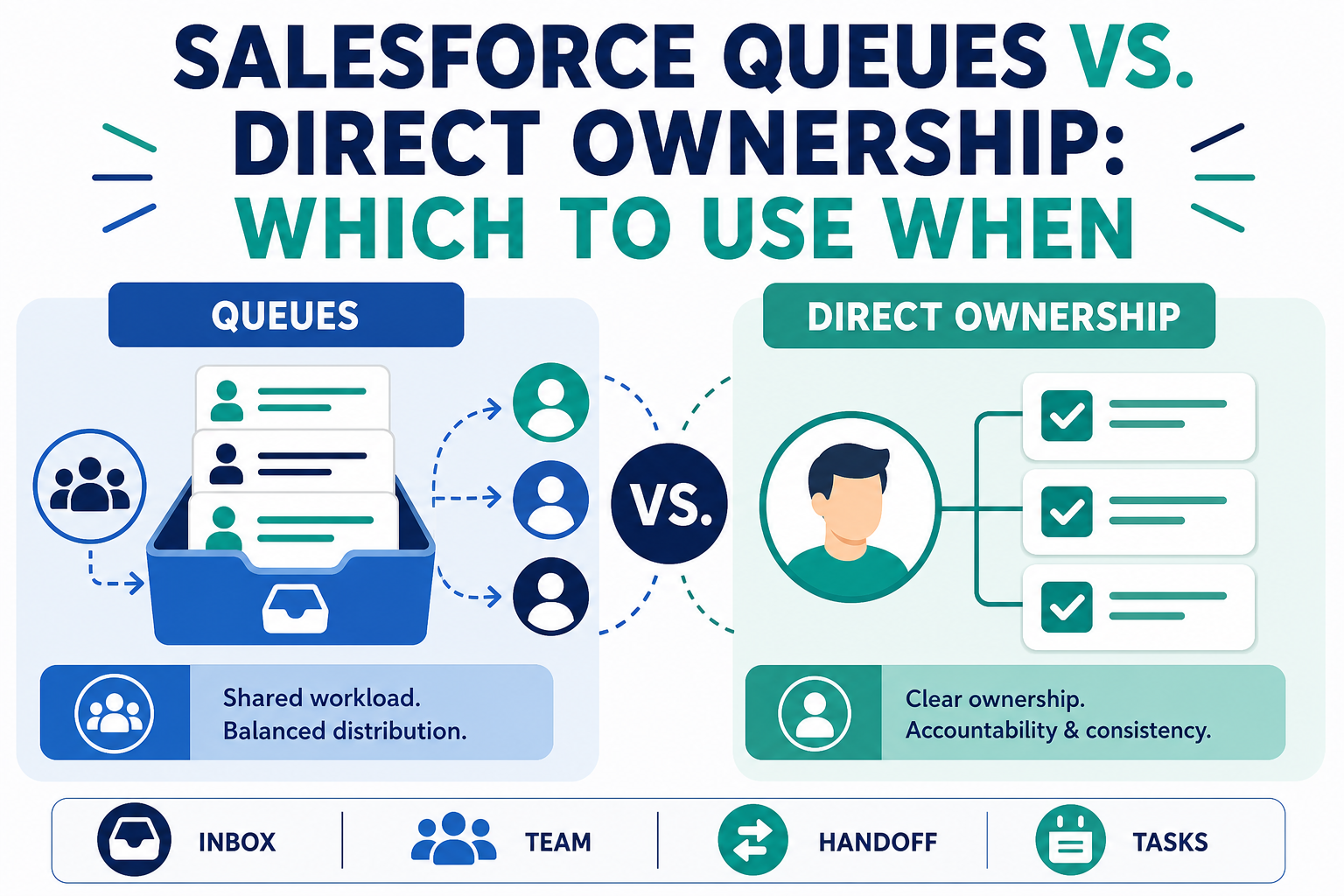
AELA sits alongside Salesforce's other Agentforce pricing options. It does not replace them. Salesforce currently runs several pricing models in parallel so customers can pick what fits how they want to buy.
Why AELA Matters in 2026
AI agent adoption is accelerating, and pricing has become the deciding factor for many rollouts. Salesforce shipped three different Agentforce pricing models in roughly 18 months because no one, vendors or buyers, has settled on the "right" way to price autonomous AI.
For buyers, that creates a real planning problem. Consumption pricing is friendly when usage is small and easy to test, but it gets hard to forecast once agents handle thousands of interactions across multiple teams. A single customer query can trigger several backend actions, so costs are difficult to model in advance.
AELA answers that anxiety with a flat fee. But "unlimited" cuts both ways. It removes overage risk while increasing dependence on the Salesforce ecosystem. Once AI agents, automations, and data pipelines become business-critical, scaling down or switching vendors becomes much harder. The predictable price you sign today can become a renewal negotiation challenge later.
How Agentforce Pricing Compares
Salesforce offers several ways to pay for Agentforce. Understanding all of them is the only way to judge whether AELA is a good deal for your situation. The figures below reflect Salesforce's published and widely reported list pricing in early 2026; always confirm current numbers and inclusions directly with Salesforce.
| Pricing model | How you pay | Best for | Watch-outs |
|---|---|---|---|
| Per conversation | About $2 per conversation | Narrow, customer-facing chatbot use cases | Hard to forecast; one query can span many actions |
| Flex Credits | $500 per 100,000 credits (~20 credits per action, about $0.10/action) | Teams that want to pay for actual work done | Still consumption-based and variable; needs monitoring |
| Per-user license | From about $125 per user/month | Predictable seat-based budgeting for defined user groups | Seat counts may shrink as AI replaces manual work |
| AELA (flat fee) | Fixed multi-year fee for unlimited use | Broad, organization-wide AI rollouts | Multi-year lock-in; risk of paying for unused capacity |
For a deeper breakdown of consumption pricing, see our guide to Data 360 and Agentforce pricing with Flex Credits. To frame any of these against your full platform spend, our CRM total cost of ownership analysis is a useful companion.
Should Your Organization Adopt AELA Early?
Being an early AELA adopter makes sense for some organizations and is premature for others. Use the table below as a starting framework, then validate it with real usage data.
| Adopt AELA early if... | Wait or stay on consumption if... |
|---|---|
| You have a clear, organization-wide AI agent roadmap | Your AI use is still a pilot or single use case |
| Multiple teams will use Agentforce, Data 360, and MuleSoft | Only one team needs AI agents today |
| You can forecast 2-3 years of usage with confidence | Your usage is uncertain or seasonal |
| You want one predictable number for budgeting | You want to pay only for what you actually use |
| You can negotiate renewal caps and exit flexibility | You cannot yet secure favorable renewal terms |
The core test is simple: estimate what you would spend on Flex Credits or per-user licenses at your expected scale, then compare that to the AELA flat fee. If broad adoption is certain and the flat fee beats projected consumption, AELA can pay off. If adoption is still unproven, consumption pricing keeps your options open and your spend honest.
If your team is weighing AELA against consumption pricing for Salesforce, HubSpot, or integration work, Vantage Point can help model the numbers and build a practical rollout plan before you commit to a multi-year term.
What Businesses Should Do Next
A flat enterprise fee should never be a leap of faith. Take these steps before signing:
- Map real demand. Document which teams will use AI agents, for which workflows, and at what volume over the next two to three years.
- Model both paths. Compare projected consumption cost (Flex Credits or per-user) against the AELA flat fee using conservative and aggressive usage scenarios.
- Demand transparency. Negotiate detailed usage reporting so you can see actual Agentforce and Data 360 consumption against your commitment.
- Protect the renewal. Secure renewal caps, product-level reduction rights, and exit flexibility before you sign, not after.
- Govern adoption. Set internal guardrails so "unlimited" usage does not spawn overlapping, low-value AI projects simply because they feel free.
- Sequence the rollout. Start with high-value, lower-complexity agents, prove results, then expand: even under a flat fee.
You can review Salesforce's current options on the official Salesforce Agentforce pricing page before finalizing any decision.
How Vantage Point Helps
Vantage Point is a senior-led Salesforce partner with our VALUE delivery methodology. We specialize in helping mid-market organizations make platform and licensing decisions without overspending.
For AELA specifically, we help you forecast realistic Agentforce usage, pressure-test the flat-fee business case, and design a phased rollout that proves value early. Our work spans Salesforce implementation and advisory, AI-driven personalization and analytics to put your data to work, system integration and data migration for MuleSoft and Data 360 readiness, and managed services and ongoing support to govern adoption over the contract term.
If you are evaluating whether AELA, Flex Credits, or per-user licensing fits your roadmap, we can build the model and the plan with you.
FAQ
What does the Agentforce Enterprise License Agreement (AELA) include?
AELA is a flat-fee, multi-year Salesforce contract that provides unlimited use of consumption-based AI products. Public reporting indicates it covers Agentforce, Data 360, MuleSoft, and selected Slack capabilities. Exact inclusions are negotiated per deal, so confirm scope directly with Salesforce.
How is AELA different from Flex Credits or per-conversation pricing?
AELA charges one fixed fee for unlimited use, while Flex Credits and per-conversation pricing charge based on usage. Consumption pricing keeps spend low when usage is small but becomes hard to forecast at scale. AELA removes that variability in exchange for a multi-year commitment.
How much does Agentforce cost without AELA?
Based on Salesforce's published pricing in early 2026, per-conversation pricing is about $2 per conversation, Flex Credits are $500 per 100,000 credits (roughly $0.10 per action at 20 credits each), and per-user Agentforce licenses start around $125 per user per month. Always verify current figures with Salesforce.
Is AELA worth it for my organization?
AELA is usually worth it when you have a confident, organization-wide AI roadmap and your projected consumption cost would exceed the flat fee. It is premature when AI use is still a pilot or limited to one team. Modeling both paths with realistic usage is the only reliable way to decide.
What are the risks of signing an AELA?
The main risks are multi-year lock-in, deeper dependence on the Salesforce ecosystem, and paying for capacity you may not use. Without governance, "unlimited" usage can also encourage overlapping AI projects. Negotiating usage transparency, renewal caps, and exit flexibility reduces these risks.
Should we be an early AELA adopter?
Be an early adopter only if broad adoption is already certain and you can secure favorable terms. If usage is uncertain, staying on Flex Credits or per-user licensing preserves flexibility while you prove value. The decision should rest on data, not on being first.
Can Vantage Point help us decide between AELA and consumption pricing?
Yes. Vantage Point models your expected Agentforce usage, compares it against AELA's flat fee, and helps you negotiate protective contract terms. We then design a phased rollout so you capture value early, whichever pricing model you choose.