Quick Answer
On September 16, 2026, Anthropic merged Claude's chat and Cowork modes into a single interface, "one Claude", and launched Claude Docs and Claude Slides in beta, with Claude Design now available inside any conversation. Teams can draft documents and presentations directly in a chat, co-edit them with colleagues and Claude at the same time, share the result as a single link that opens on a phone, and export to PowerPoint, PDF, or Word. Rollout starts with Pro and Max subscribers over the coming weeks; Team, Free, and Enterprise follow, with admins controlling the switch-on. For business teams, Claude is shifting from an assistant you consult to a work surface where deliverables get drafted, which makes rollout governance, not features, the decision to make first.
Key Takeaways (TL;DR)
- What launched: Claude Docs and Claude Slides (both beta), Claude Design inside conversations, and a merged "one Claude" interface: announced September 16, 2026.
- Who gets it: Pro and Max plans first, over the coming weeks; Team and Free later. Enterprise admins get 30+ days' notice and control the switch-on.
- What's different: Claude picks the right tool (a chat answer, an agentic task, a doc, a deck, or a design) from the conversation itself.
- Collaboration: Docs are private by default, shareable by one link, with Google-Docs-style simultaneous editing and comments from colleagues and Claude.
- Where it fits: Alongside Google Workspace and Microsoft 365, not instead of them, with connectors into both and exports to PowerPoint, PDF, and Word.
- Bottom line: Treat this as a workflow change, not a feature drop. Pilot one recurring deliverable and settle sharing and review rules first.
Most AI product news is a benchmark you can safely ignore. Anthropic's September 16 announcement is different in kind: not a smarter model, but a reorganization of where work happens. Claude Cowork, Anthropic's agentic workspace for longer tasks, is merging into the main Claude chat, and two new tools, Claude Docs and Claude Slides, turn the conversation into a place where finished documents and presentations get drafted, edited, and shared.
If your team already uses Claude for analysis, drafts, or research, the practical question is what changes when the AI that researched the report also writes it, builds the deck from it, and shares both under one link. This guide covers what Anthropic announced, how Docs and Slides work, where they fit next to the office suites you already pay for, and the admin decisions worth settling before the beta reaches your team.
What did Anthropic announce on September 16?
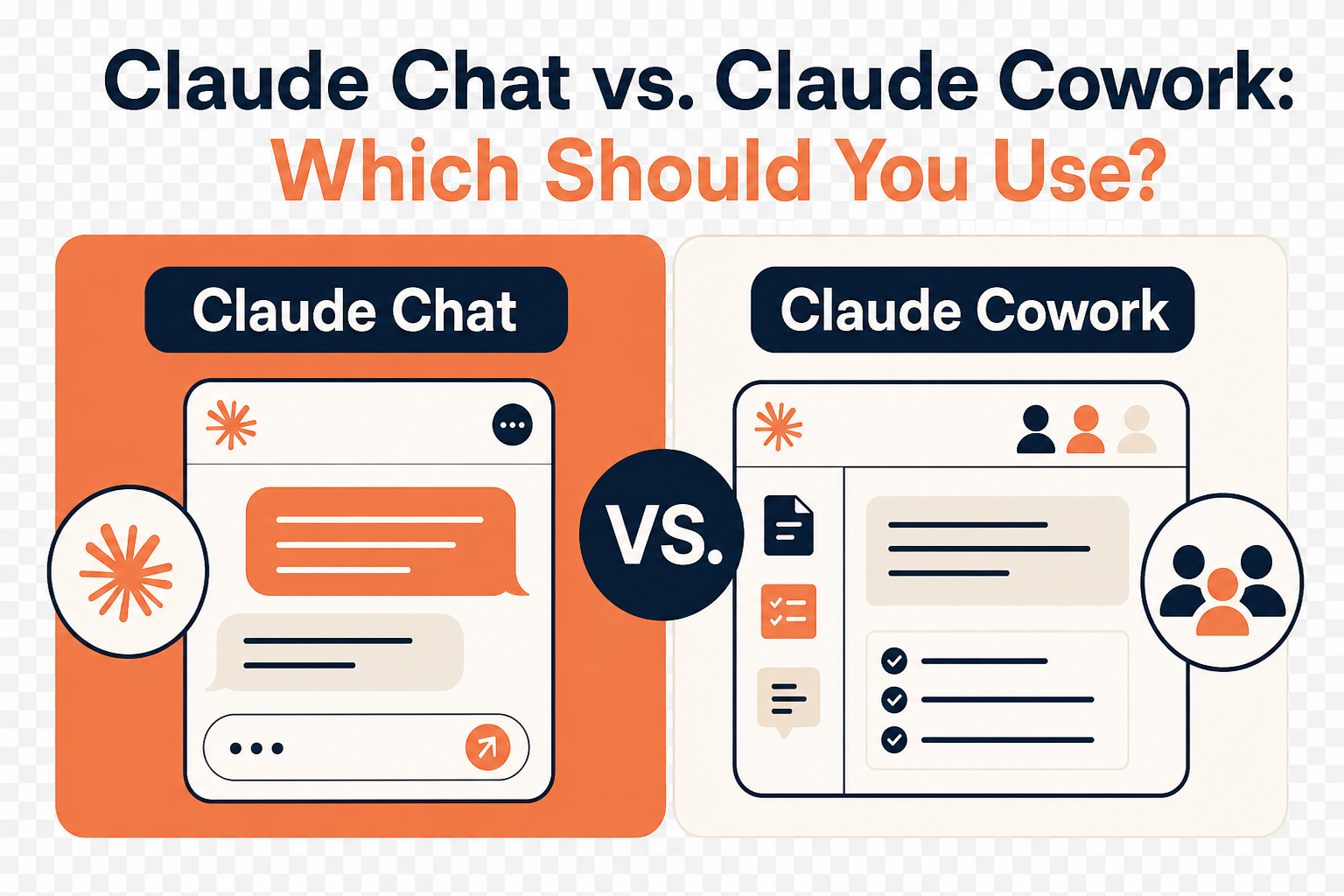
Three things in one release. First, the "one Claude" merge: the separate Chat and Cowork modes become a single interface. Anthropic's stated reasoning is that users found deciding where a task belonged the frustrating part, and work started in one product did not carry into the other. Now Claude figures out what a task needs, a quick answer or a multi-step job, with the context, skills, and connectors you already have.
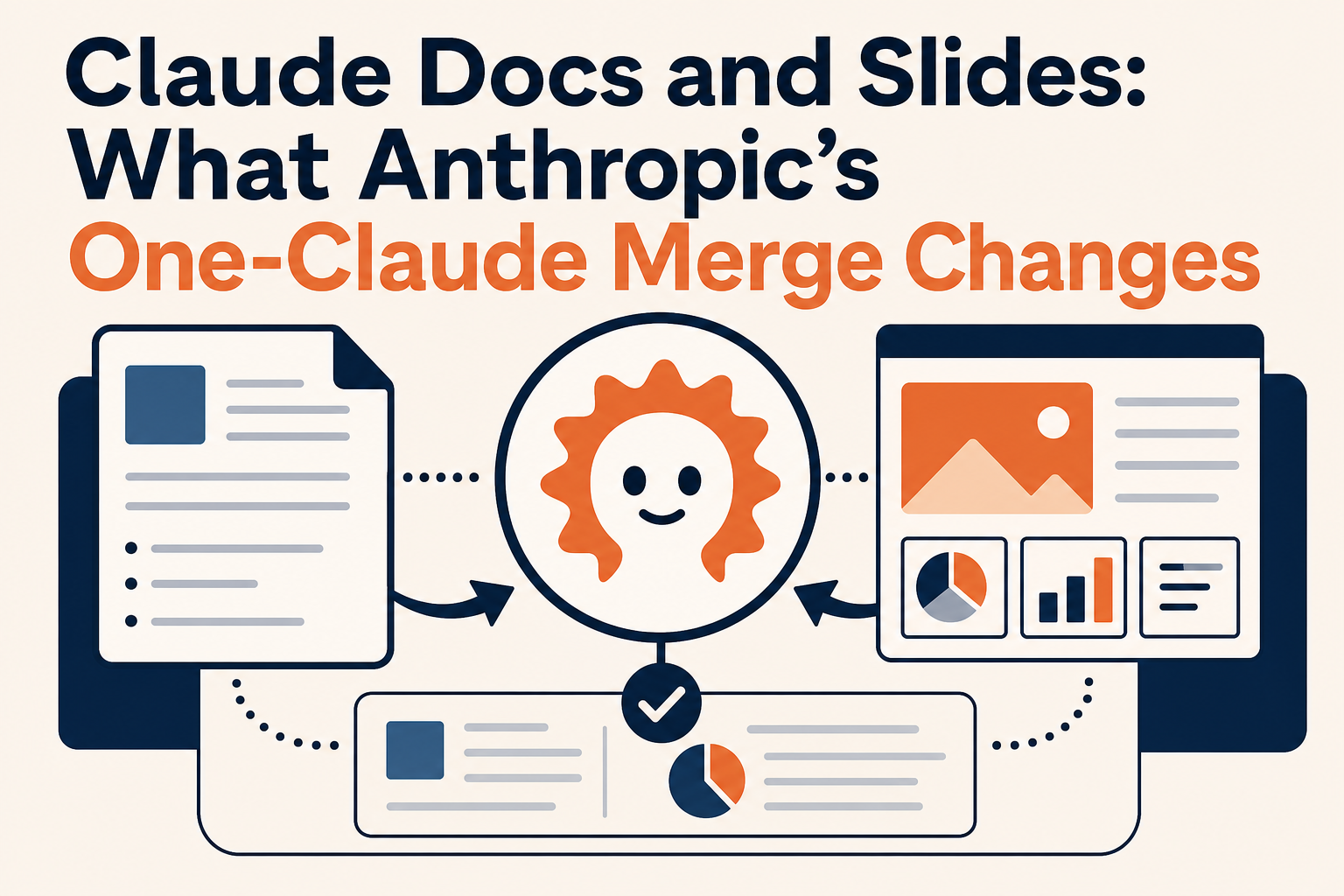
Second, Claude Docs and Claude Slides, both in beta. Docs is a living document you write with Claude and your team; Slides drafts presentations from the conversation. You can edit results directly, present straight from Claude, or download as PowerPoint or PDF. Claude Design now works inside conversations too, and the standalone Design product keeps working as before.
Third, a staged rollout: Pro and Max plans first on web, desktop, and mobile over the coming weeks, then Team and Free. Enterprise organizations get at least 30 days' notice, and their admins choose when to turn the new tools on.
How do Claude Docs and Claude Slides work?
You ask in plain language (Anthropic's own example is "turn this analysis into a 10-slide deck I can present on Monday") and the deliverable appears alongside the conversation. From there, both tools behave less like a file export and more like a lightweight office suite:
| Tool | What it makes | How you edit | How you share |
|---|---|---|---|
| Claude Docs (beta) | Living documents written with Claude and your team | Edit directly yourself, or tell Claude what to change; co-authors edit simultaneously, and colleagues and Claude can both leave comments | Private by default; shared by a single link that opens on phone or desktop |
| Claude Slides (beta) | Presentations drafted from the conversation, consistent with a report built in the same chat | Adjust slides directly, leave a comment for Claude on a slide, or present straight from Claude | Same shareable link; download as PowerPoint or PDF |
| Claude Design (beta in chat) | On-brand visuals and mockups | Select an element and move it, or describe the change you want | Same link model; the standalone Design product is unchanged |
The collaboration model is the part worth pausing on. As The Verge's report on the launch describes it, a Claude Doc starts private, like a Google Doc, and you share it with editors who can work in the document at the same time as you, with comments from collaborators, including Claude, in the familiar margin style.
Because a document and its deck can come out of the same conversation, they start consistent. Anthropic's demo scenario is a weekly pipeline report: ask what moved last week, request the usual write-up with anything that slipped flagged, and ask for five leadership-meeting slides: then schedule the whole thing to run again next Monday. The pitch is not "AI makes slides"; it is research, write-up, and deck stopping being three separate projects.
What does the "one Claude" merge change day to day?
For people who mostly chat, nothing is required: no mode to choose, nothing to turn on. For Cowork users, the distinction disappears rather than the workspace: existing tasks, projects, artifacts, connectors, and skills carry over, and Anthropic's Help Center article is explicit that migration is one-way. The operational details worth knowing:
- Work keeps running without you. Longer tasks continue in the cloud after you close your laptop; you can check progress or redirect the work from your phone.
- You choose how independently Claude works. A per-conversation setting offers Manual (the default, Claude asks before acting) and Auto (Claude keeps working, with automated safety checks). For work with real consequences, Anthropic's own guidance is to stay close and review.
- Recurring work can be scheduled. "Every weekday at 8 AM, summarize new messages in my team's Slack channels" runs in the cloud even when your computer is off.
- Connected apps work inside tasks. Drive, Gmail, Microsoft 365, and Slack connectors let Claude pull what it needs as it goes.
- Everything counts toward plan usage limits. Longer agentic tasks generally consume more than a quick question.
- There are known gaps at launch. Current limitations include no GitHub import, no conversation branching, and search not covering older Cowork tasks.
Where do Docs and Slides fit next to Google Workspace and Microsoft 365?
Complement, not replacement: at least in beta. Three reasons to hold that framing:
The suites still own the system of record. Claude connects to Drive, Gmail, Microsoft 365, and Slack rather than asking you to leave them, and PowerPoint, PDF, and Word exports mean the deliverable lands back in the stack your clients already expect. Anthropic's add-ins also keep Claude available inside Excel and PowerPoint. Our guide to connecting Claude to Google Workspace covers the connector side.
The competitive frame is Google, not your procurement list. The Verge frames the launch as Claude narrowing the gap with Google, which earlier this year expanded Gemini across Docs, Sheets, and Slides. Google's advantage is native integration; Anthropic's is the model and the agentic workflow around it. Neither adds up to a rip-and-replace argument today. One naming footnote: Anthropic has used "Claude Docs" before for its developer documentation site: the product announced this week is new and unrelated.
Beta means the shape will move. Docs, Slides, and in-chat Design are all labeled beta, Enterprise admins control when they switch on, and the limitations list will shrink. Evaluate what your team can govern this quarter, not what the roadmap promises next year.
What should admins decide before the beta arrives?
The feature set is easy; the governance is the work. Six decisions to make before Docs and Slides reach your team:
- Who gets access, and when. Pro and Max users receive the merged experience automatically over the coming weeks: know who holds those seats. Enterprise admins choose when Docs, Slides, and Design turn on.
- What may be shared by link. Docs are private by default but shareable through a single link anyone can open on a phone. Decide which document classes may live in Claude at all, and which may be link-shared: client-confidential material needs an explicit rule, not a default.
- Check-in defaults. Manual mode, where Claude asks before acting, is the default for a reason. Set the expectation that Auto is for low-stakes work and that consequential actions keep a human approval step.
- Which connectors are approved. Tasks can pull from Drive, Gmail, Microsoft 365, and Slack while they run. Approve connectors the way you would approve any third-party app access: all of it counts toward plan usage limits.
- The review standard for client-facing deliverables. A deck drafted in the same conversation as the analysis is convenient, but someone named still reviews it before it goes to a client. Write down who.
- The policy sentence. Two lines in your AI use policy (one on co-authored documents and link sharing, one on scheduled and unattended tasks) prevent most of the awkward questions. Our earlier Cowork admin update and Claude Team admin readiness guide walk through the surrounding controls.
What changes for teams that produce deliverables?
The clearest wins are recurring, templated deliverables: the work that eats afternoons but follows a known shape. A weekly pipeline report that ends as a doc plus five slides. A board pre-read drafted from the same analysis as the appendix tables. A proposal outline that becomes a working document your team and Claude comment on in parallel.
The CRM connection is worth watching specifically. The day before this announcement, Anthropic launched Salesforce in Claude (beta), a plugin that brings a seller's accounts, opportunities, and pipeline into Claude with 37 pre-built sales skills, available on paid plans for organizations Salesforce approves through its beta sign-up. Put the two together and the shape of sales work changes: ask what moved in the pipeline, get the report as a doc, get the leadership deck as slides, share both by link: one conversation, end to end. That does not replace Salesforce or HubSpot reporting; it changes where the narrative layer around the numbers gets written.
How Vantage Point helps
Vantage Point is an official Claude partner (Member, Claude Partner Network) and a consulting partner for Salesforce and HubSpot, which puts us on both sides of the question this release raises: what should the AI draft for us, and what has to be true in our CRM, our connectors, and our policies before it can? We help teams configure Claude Team and Enterprise deployments, decide which connectors and sharing rules fit their data, and build the review workflow that keeps AI-drafted deliverables client-ready. Senior consultants only. No junior handoffs; the experts you meet are the experts who deliver. Our advisory and change management work covers exactly the Claude-versus-Copilot-versus-Gemini evaluation many teams are running right now.
Ready to Put Claude's New Work Surface to Work?
The teams that get value from a release like this pick one recurring deliverable, set the sharing and review rules first, and expand from there. Talk to our team about a Claude rollout plan, or explore our Claude services to see how we support Salesforce and HubSpot teams adopting Claude.
Frequently Asked Questions
What are Claude Docs and Claude Slides?
Two new Anthropic tools, launched in beta on September 16, 2026, that create documents and presentations directly inside a Claude conversation. Docs are living documents you co-write with Claude and your team; Slides drafts decks you can edit, present from Claude, or download as PowerPoint or PDF. Both are shared by a single link that opens on a phone or desktop.
Is Claude Cowork going away?
As a separate mode, yes. Cowork and chat are merging into a single interface Anthropic calls "one Claude." Everything Cowork does is still available from any conversation, and existing tasks, projects, artifacts, connectors, and skills carry over. The migration is one-way: once your account has the new experience, you cannot switch back.
Who gets Claude Docs and Slides, and when?
Docs, Slides, and Design-in-chat are in beta on paid plans. The merged experience rolls out to Pro and Max subscribers on web, desktop, and mobile over the coming weeks, with Team and Free plans following later. Enterprise admins get at least 30 days' notice and choose when to turn the new tools on.
Can Claude Docs replace Google Docs or Microsoft Word?
Not yet, and Anthropic is not claiming it should. Docs and Slides are beta tools that complement the suites: Claude connects to Google Drive, Gmail, Microsoft 365, and Slack, and exports to PowerPoint, PDF, and Word. The practical model is drafting in Claude, then exporting to the formats your organization runs on.
What should admins configure before enabling the beta?
Six things: who gets access and when; which document classes may be shared by Claude's single-link sharing; whether Manual or Auto check-in mode is acceptable for different work types; which connectors (Drive, Gmail, Microsoft 365, Slack) are approved; who reviews AI-drafted client deliverables; and two sentences of AI use policy covering co-authored documents and scheduled tasks.
Do Claude Docs and Slides cost extra?
Anthropic has announced no separate price for Docs or Slides: they are included in beta on paid plans. Usage counts toward your plan's existing limits; longer agentic tasks generally consume more than a quick question.
How does this connect to Salesforce or HubSpot?
Directly, in Salesforce's case: Anthropic launched a Salesforce in Claude plugin (beta) on September 15, 2026, with 37 pre-built sales skills covering accounts, opportunities, and pipeline, available on paid plans for Salesforce-approved organizations. Combined with Docs and Slides, a pipeline question can become a report and a deck in one conversation. Vantage Point, an official Claude partner and Salesforce and HubSpot consulting partner, helps teams design those CRM-connected Claude workflows.
Sources
- Claude Cowork and chat are now one Claude: Anthropic announcement, September 16, 2026
- Claude Cowork and chat are one Claude: Claude Help Center
- Claude comes for Gemini with its own take on Docs and Slides: The Verge, September 16, 2026
- Bringing Salesforce into Claude: Anthropic, September 15, 2026
Vantage Point is a boutique CRM consulting firm helping businesses transform with Salesforce, HubSpot, and AI. Learn more at vantagepoint.io.