Quick Answer
A standard CRM deal pipeline (a single line of stages from qualification to close) works well for simple, single-decision-maker sales. It breaks down for complex transactions involving multiple structures (cash, financing, equity, or phased terms), multiple approvals, and diligence requirements that vary by deal type. The fix isn't a more complicated pipeline; it's adding a small number of deal-structure fields and stage-entry requirements that flex the pipeline's behavior without multiplying the number of stages or objects. This guide covers how to design that structure for any business closing complex, multi-part deals.
Key Takeaways (TL;DR)
- What it is: A design approach for CRM deal pipelines that need to support complex, multi-structure, multi-approval transactions rather than a simple linear sale.
- Why it matters: Teams closing complex deals often end up with either an oversimplified pipeline that hides real deal risk, or a sprawl of custom objects and stages that no one can maintain.
- Best for: Sales and deal teams handling transactions with variable structure: financing terms, phased agreements, multi-party approvals, or diligence gates.
- Decision point: Whether to model structural variation as fields on a flexible pipeline, or as separate record types and pipelines for each deal type.
- How Vantage Point helps: We design deal pipelines that capture real complexity without over-customizing the underlying CRM.
Why Standard Pipelines Break for Complex Deals
Most CRM pipelines are designed around a single mental model: one prospect, one decision, one path from interest to signed contract. That model holds up well for transactional sales. It starts to strain the moment a deal can take multiple structural forms (some closing as a straight cash transaction, others involving financing, equity components, or terms negotiated in phases) and each structure carries different required information, different approval paths, and different diligence requirements.
Teams handling this kind of complexity typically respond in one of two ways, and both cause problems. The first is to force every deal through the same simple pipeline regardless of structure, which means the CRM stops reflecting what's actually happening. A deal marked "in diligence" might be missing half the information diligence actually requires, because the pipeline never asked for it. The second is to build a separate pipeline, or even a separate custom object, for every deal type, which produces a system so fragmented that reporting across deal types becomes nearly impossible and every process change has to be made in multiple places.
The Better Model: One Pipeline, Structure Captured in Fields
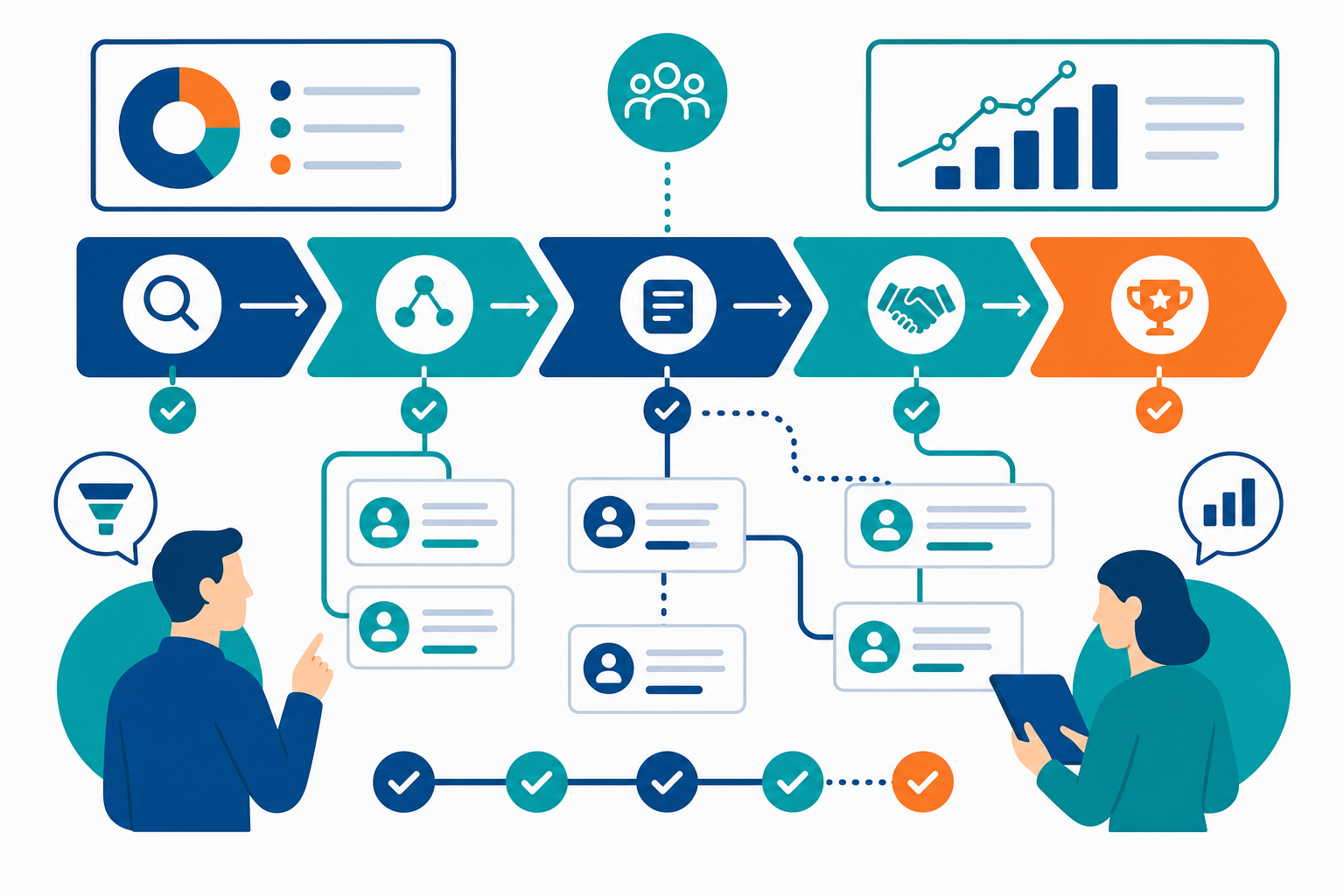
The more durable approach keeps a single pipeline with stages that represent the deal's genuine lifecycle (qualification, structuring, diligence, approval, closing) and captures structural variation through fields rather than through separate pipelines or objects. A small set of well-designed fields can carry enormous flexibility:
- A deal-structure type field (for example: straight purchase, financed, equity or rollover component, phased/multi-tranche) that determines which additional fields and requirements apply.
- Structure-specific detail fields that only become relevant, and only get required, based on the structure type. Separate inputs for cash amount, financed amount, and equity or rollover percentage rather than one generic "deal value" field that hides the composition.
- Outcome and diligence-status fields that track not just whether a stage is complete, but what was actually determined, an offer signed, countered, or accepted; diligence figures confirmed or still pending.
This keeps the pipeline itself simple and reportable across every deal type, while the fields underneath do the work of representing real complexity.
Gating Requirements by Stage, Not by Form
The second design principle is using stage-entry requirements instead of blanket-required fields. A field like estimated deal value or diligence financials shouldn't be mandatory the moment a record is created. That just pushes users to enter placeholder data to get past a form. It should become required only when a deal actually moves into the stage where that information is genuinely needed, such as entering active diligence.
This distinction matters more than it sounds. Blanket-required fields train users to enter fake data to move forward, which quietly poisons the CRM's reliability over time. Stage-gated requirements enforce the same discipline, nothing advances without the right information, without forcing premature guesses on records that aren't ready for that information yet.
A related question teams often get wrong is what happens to a deal that needs to restart or re-engage after stalling. Rather than reusing the original deal record and losing the history of what happened the first time, route re-engaged deals through a fresh record while preserving a link back to the original. This keeps historical reporting accurate and avoids a stalled deal's old data contaminating a new negotiation.
Simple vs. Complex Pipeline Design
| Design choice | Simple linear sale | Complex, multi-structure deal |
|---|---|---|
| Number of pipelines | One, generic | Usually still one: structure lives in fields, not extra pipelines |
| Deal value representation | Single value field | Separate fields for cash, financed, and equity/rollover components |
| Required fields | Required at record creation | Required at stage entry, gated by deal-structure type |
| Approval logic | Single approver, single path | Structure-dependent approval paths driven by the deal-structure field |
| Diligence tracking | Often informal, outside the CRM | Native fields tracking status and outcome, gated by stage |
| Restarted/stalled deals | Rarely an issue | New record with a link to the original, preserving clean history |
How to Design This Without Over-Customizing
Complex deal support is one of the areas where teams most often over-build. Before adding a custom object or a new pipeline, apply a simple test: can this requirement be represented as a field with conditional visibility and stage-gated requirements on the standard opportunity or deal object? In the large majority of cases, the answer is yes, and going that route keeps reporting, automation, and future maintenance dramatically simpler than a custom-object approach.
Reserve custom objects for situations where the data genuinely doesn't belong on the deal record at all (for example, tracking multiple related properties, entities, or line items tied to one transaction) rather than for representing variation in the deal's own structure, which almost always belongs in fields on the deal itself.
What Businesses Should Do Next
- Map every deal-structure variation your team actually closes, and identify which fields genuinely change based on structure versus which apply universally.
- Convert blanket-required fields into stage-gated requirements tied to when the information is actually needed.
- Before adding a custom object, test whether the need can be met with conditional fields on the standard deal object instead.
- Define a clear process for re-engaged or restarted deals so historical reporting stays accurate.
How Vantage Point Helps
Vantage Point designs deal pipelines for organizations closing complex, multi-structure transactions. Structuring fields, stage-gated requirements, and approval logic that capture real deal complexity without unnecessary custom objects. Whether you're on Salesforce or HubSpot, our senior consultants build pipelines your team will actually keep using, and that your reporting can actually trust. Senior consultants only. No junior handoffs; the experts you meet are the experts who deliver.
Frequently Asked Questions
Should complex deal types each get their own pipeline?
Usually no. A single pipeline with fields that capture structural variation is easier to report on and maintain than separate pipelines per deal type, which fragment reporting and multiply the places a process change has to be made.
What's the difference between a required field and a stage-gated required field?
A required field must be filled in the moment a record is created, which often pushes users to enter placeholder data. A stage-gated required field only becomes mandatory when the deal actually reaches the stage where that information is genuinely needed, which keeps data quality higher.
When should we use a custom object instead of fields on the deal record?
Reserve custom objects for data that doesn't belong on the deal itself, multiple related entities, properties, or line items tied to one transaction. Variation in the deal's own structure almost always belongs in fields on the deal record, not a separate object.
How should we represent a deal that combines cash, financing, and equity components?
Use separate fields for each component (cash amount, financed amount, equity or rollover percentage) rather than one generic deal-value field. This preserves the composition of the deal for reporting and keeps diligence and approval logic accurate.
What should happen when a stalled deal comes back to life?
Create a fresh deal record linked back to the original rather than reusing the stalled record. This keeps the new negotiation's data clean and preserves accurate historical reporting on what happened the first time.
How do we track diligence status without building a separate system?
Add native fields on the deal record that capture not just whether diligence is complete, but what was actually determined (confirmed figures, outstanding items, and outcome) gated to become required only once the deal enters that stage.
Does this approach work on both Salesforce and HubSpot?
Yes. Both platforms support conditional/dependent fields and stage-based validation rules on their standard deal or opportunity objects, which is what this design relies on rather than custom development.
Closing Complex Deals? Let's Design a Pipeline That Keeps Up
Vantage Point's senior consultants can review your current deal pipeline and design the fields, stage gates, and approval logic your complex transactions actually need: without over-customizing your CRM. Contact Vantage Point to get started, or explore our implementation and advisory services.
Vantage Point is a boutique CRM consulting firm helping businesses transform with Salesforce, HubSpot, and AI. Learn more at vantagepoint.io.