
Quick Answer
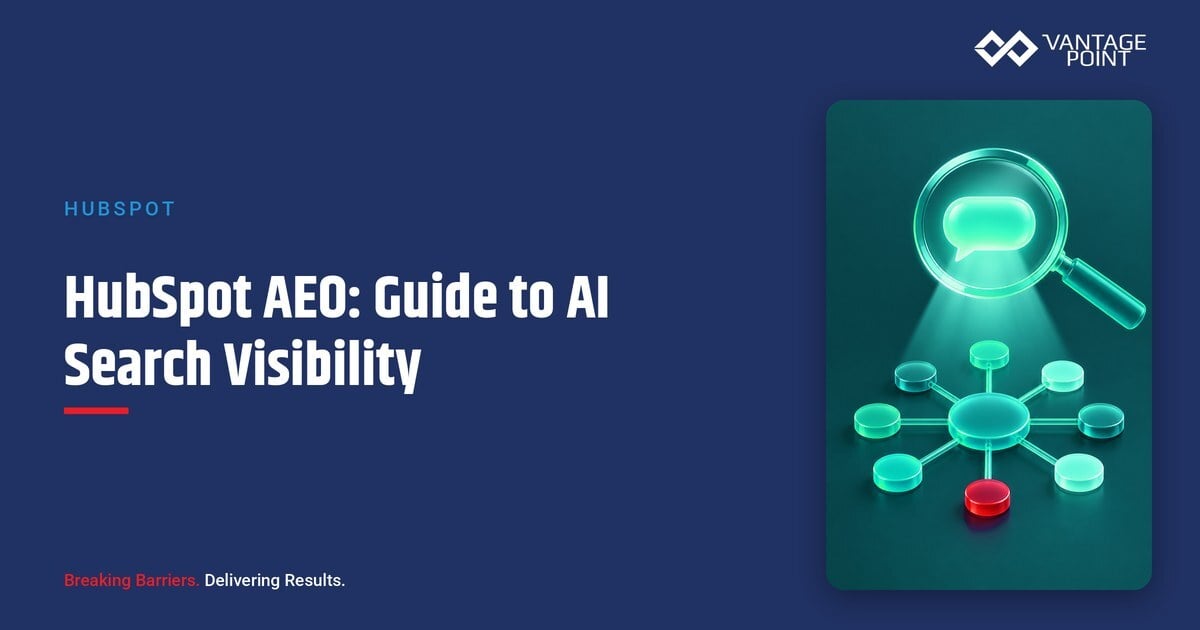
HubSpot AEO is a paid answer-engine optimization tool for monitoring how a brand appears in AI answers and identifying actions to improve visibility. It is for marketing and RevOps teams that need to compare AI visibility across selected prompts, competitors, and cited sources. The free AEO Grader is a one-time starting-point diagnostic; HubSpot AEO is the ongoing product.
TL;DR
- HubSpot AEO: An ongoing tool that tracks selected prompts across ChatGPT, Gemini, and Perplexity, with visibility, citation, competitor, and recommendation views.
- Price: HubSpot lists the standalone product at $50 per month, or $45 per month when billed annually, with 25 prompts; confirm packaging before purchase.
- AEO Grader: A free, one-time assessment of how answer engines represent a brand. It is not a continuous monitoring platform.
- Best next step: Start with buyer questions, accurate source content, and a clear operating owner—not a generic content-volume push.
What Is HubSpot AEO?
HubSpot AEO is HubSpot’s answer-engine optimization product. It helps teams see how often their brand appears in responses for selected prompts across ChatGPT, Gemini, and Perplexity, compare that visibility with competitors, examine cited sources, and act on prioritized recommendations.
For a business evaluating the product, the practical question is not whether AI search replaces SEO. It is whether customers use answer engines during research and whether the team has a repeatable way to improve the facts, pages, and third-party signals those systems encounter. Search performance, site content, CRM context, and external brand signals still matter.
HubSpot AEO vs. AEO Grader
| Tool | Use | What it provides | Best fit |
|---|---|---|---|
| AEO Grader | One-time diagnostic | Snapshot of brand representation across answer engines and a written assessment | Teams establishing a baseline or comparing a few brands |
| HubSpot AEO | Ongoing monitoring | Prompt tracking, visibility, competitor share of voice, citation analysis, and recommendations | Teams that will assign owners and act on findings over time |
| Marketing Hub Pro/Enterprise AEO | Integrated workflow | Core AEO capability with HubSpot content and CRM context | Teams already operating in HubSpot’s marketing platform |
HubSpot describes the Grader as a free, one-time diagnostic and AEO as an ongoing product. Product packaging and limits change, so use HubSpot’s current AEO product and pricing page for a purchasing decision.
How HubSpot AEO Works
HubSpot’s product documentation describes four core capabilities:
- Brand visibility: See how often a brand appears in answers for tracked prompts.
- Prompt tracking: Monitor the buyer questions that matter to the business across supported answer engines.
- Citation analysis: Review the domains, pages, and content types associated with AI answers for the brand and competitors.
- Recommendations: Turn observed gaps into prioritized actions, such as improving an existing page, creating a needed resource, or strengthening third-party information.
The dashboard is useful only when prompts represent real commercial questions. A long list of broad terms creates noise. Start with questions customers ask before a platform selection, implementation, integration, migration, or governance decision.
What Teams Should Measure—and What They Should Not Assume
AEO metrics can help prioritize work, but they are not a direct measure of pipeline or a guaranteed ranking signal. A mention can change as answer engines, sources, prompts, and product information change. Treat the product as a research and prioritization layer alongside Google Search Console, conversion data, sales feedback, and content QA.
A practical review should connect each observation to an action: correct a product fact, improve an answer-first service page, clarify positioning, add an authoritative source, or address a gap in a buyer journey. Do not use a visibility score alone to declare success.
How AEO Fits With SEO and HubSpot Content Operations
SEO and AEO overlap because both depend on useful, accurate, well-structured pages. SEO focuses on how pages appear in search results; AEO focuses on how a brand and its sources appear in generated answers. Neither eliminates the need for clear service pages, trustworthy documentation, or a sound measurement plan.
For HubSpot teams, start by auditing high-value pages: are product names current, does each page answer its primary question near the top, do service pages explain who they help, and are internal links guiding a reader to the next decision? Use Vantage Point’s HubSpot services and CRM and marketing automation services as examples of where a content program should connect search visibility with an operational next step.
A Practical 30-Day Starting Plan
| Week | Focus | Output |
|---|---|---|
| 1 | Define buyer questions and owners | A focused prompt set, priority services, and a decision-maker for each improvement |
| 2 | Audit priority pages and external facts | A list of incorrect, thin, duplicated, or unclear information to fix |
| 3 | Improve the strongest opportunities | Answer-first updates, verified product facts, clearer internal links, and service bridges |
| 4 | Review findings with search and conversion data | A prioritized backlog and a measurement schedule—not a claim of instant causation |
If your content program spans HubSpot, Salesforce, integrations, or AI-enabled workflows, coordination matters. A page should not make a platform claim that sales, delivery, or product documentation cannot support. For complex data and workflow questions, explore system integration and data migration services.
Common Implementation Mistakes
- Tracking generic prompts: Focus on questions with a buyer, a decision, and a service or product context.
- Chasing a score without fixing source quality: Correct facts, clarify services, and improve pages before expanding tracking.
- Separating content from CRM operations: Use sales questions, lifecycle stages, and service priorities to inform what to improve.
- Assuming a short-term movement proves causation: Compare periods, record major changes, and consider seasonality and product news.
How Vantage Point Helps
Vantage Point helps organizations connect content operations to CRM, platform, data, and adoption decisions. For teams evaluating HubSpot AEO, that can mean defining buyer-question coverage, validating service and product claims, improving high-value pages, and building a measurement process that complements search and conversion reporting. If your team needs to align HubSpot with Salesforce or other systems, see our HubSpot–Salesforce integration guidance and advisory and change management services.
Need a practical plan for your HubSpot content and CRM roadmap? Talk with Vantage Point about the right next step.
Frequently Asked Questions
What is HubSpot AEO?
HubSpot AEO is an answer-engine optimization product that tracks how a brand appears in AI answers for selected prompts. HubSpot says it includes visibility, prompt, competitor, citation, and recommendation capabilities across ChatGPT, Gemini, and Perplexity.
Is HubSpot AEO the same as the AEO Grader?
No. The AEO Grader is a free, one-time diagnostic, while HubSpot AEO is intended for ongoing visibility monitoring and recommendations. The Grader is useful for a baseline; ongoing work requires a product and process for acting on findings.
How much does HubSpot AEO cost?
HubSpot currently lists standalone AEO at $50 per month, or $45 per month with annual billing, and states that it includes 25 prompts. Confirm current pricing, prompt limits, and contract terms directly with HubSpot before purchasing.
Do you need HubSpot CMS to use HubSpot AEO?
No. HubSpot states that AEO can track a brand regardless of where the website is hosted. Teams using Marketing Hub may have additional ways to apply recommendations in their existing content operations.
Does AEO replace SEO?
No. SEO remains important for discoverability and qualified website traffic. AEO adds another lens for understanding how answer engines represent a brand, so the best approach connects both to accurate content and business outcomes.
What should a business do before tracking AEO prompts?
Start by identifying high-value buyer questions, reviewing priority pages for factual accuracy, and naming owners who can act on insights. Tracking is most useful when the team can turn a finding into a verified content or operational improvement.