
A booked consultation is a buying signal, but in many HubSpot portals it lands as just a contact with a meeting on the timeline. Someone then has to notice it, decide whether it deserves a deal, pick a pipeline, and create the record by hand. By the time that happens, the momentum from the booking is gone.
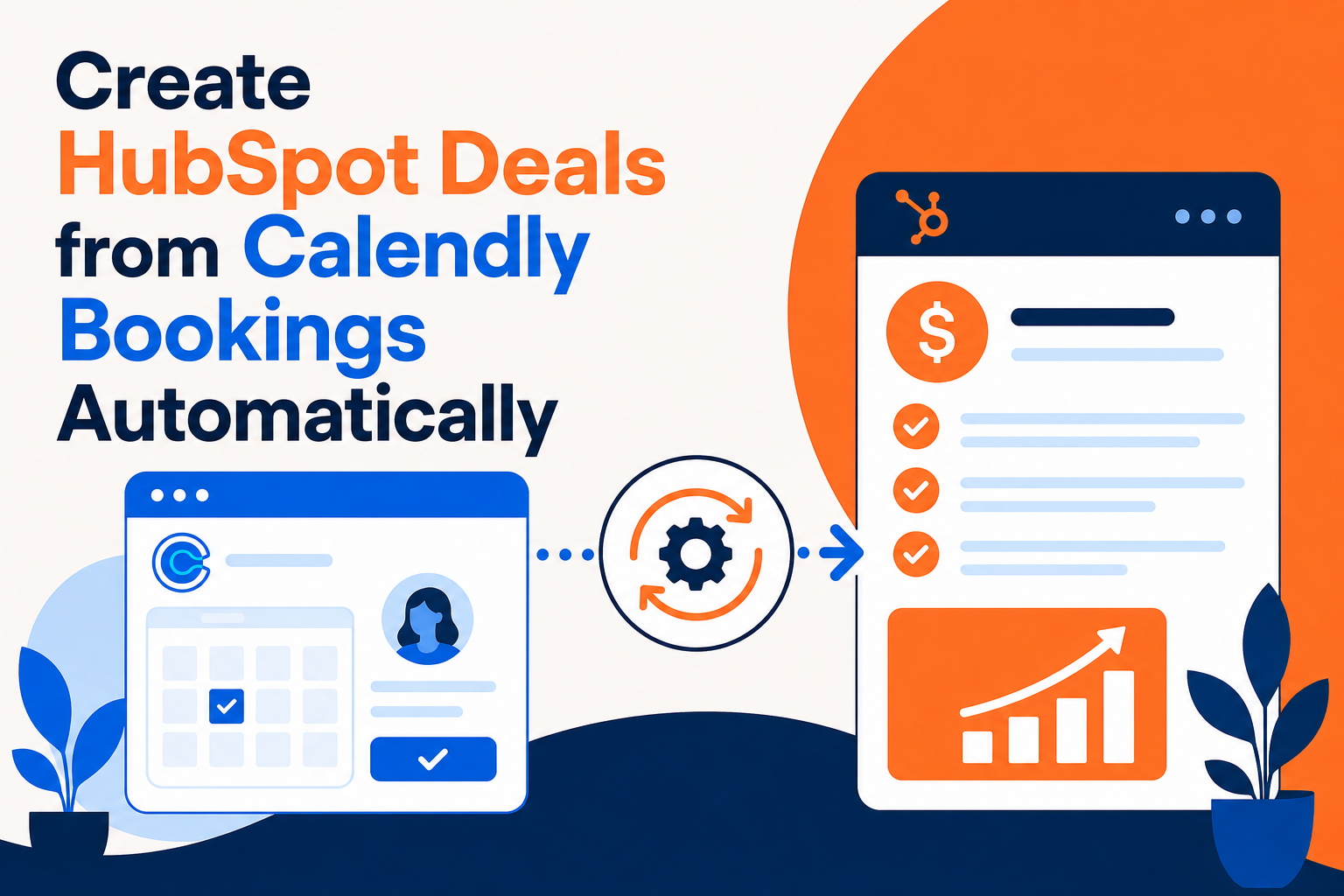
Connecting Calendly to HubSpot — and pairing it with a workflow that creates deals from qualifying bookings — closes that gap. Every consultation booking can enter the right pipeline at the right stage, assigned to the right owner, without manual triage. View Calendly on the HubSpot Marketplace.
Quick Answer
To create HubSpot deals from Calendly bookings automatically, connect the Calendly integration, then build a contact-based workflow triggered by booking activity that creates a deal in a chosen pipeline and stage. The design decisions that matter are which event types qualify, which pipeline receives the deals, what stage they enter at, and who owns them. Teams running consultation or discovery-call booking flows benefit most, and Vantage Point configures this pattern as part of HubSpot CRM engagements where speed-to-follow-up directly affects close rates.
Key Takeaways (TL;DR)
- What it is: a Calendly-to-HubSpot connection plus a workflow that turns qualifying bookings into deals.
- Why it matters: booked meetings are high-intent signals; automating deal creation removes delay and inconsistency.
- Best for: teams using Calendly for consultations, discovery calls, or project inquiries.
- Decision point: route different event types to different pipelines instead of forcing every booking into one.
- How Vantage Point helps: pipeline design and workflow automation through HubSpot implementation services.
What Does the Calendly-HubSpot Integration Do Out of the Box?
The native integration focuses on contacts and activity. When someone books through Calendly, HubSpot creates or updates the contact, logs the meeting, and captures the booking details. What it does not do by default is make pipeline decisions for you. A booking from a first-time prospect and a booking from an existing customer both land the same way unless you build the routing logic.
That gap is where most teams stall. They see contacts syncing, assume the integration is "done," and keep creating deals by hand — or worse, stop creating them at all and let booked meetings live outside the pipeline entirely.
Why Should Bookings Create Deals Instead of Just Contacts?
A deal record is how HubSpot understands revenue intent. Contacts with meetings but no deals are invisible to pipeline reporting, forecasting, and stage-based automation. When a consultation booking creates a deal, three things happen immediately: the opportunity shows up in pipeline views, the follow-up clock starts with tasks and notifications, and conversion reporting can connect marketing sources to revenue.
There is also a consistency argument. Manual deal creation depends on whoever notices the booking first and how busy they are. A workflow applies the same rules at 2 a.m. on a Saturday as it does during business hours.
How Do You Set Up Booking-to-Deal Automation?
- Connect the integration. Install Calendly from the HubSpot Marketplace and authorize the connection so booking events flow into contact timelines. Calendly's own HubSpot integration guide walks through the connection from the Calendly side.
- Decide which event types qualify. Not every booking deserves a deal. A paid consultation or discovery call probably does; an office-hours slot probably does not. List your Calendly event types and mark which ones signal revenue intent.
- Design the pipeline routing. Many businesses need more than one destination. A common pattern is a full sales pipeline for major engagements and a simpler pipeline for smaller, faster projects. Smaller deals skip stages that do not apply and close faster.
- Build the workflow. Create a contact-based workflow triggered by the booking — typically filtered on the meeting or form submission properties the integration sets, such as the event name. Add a "Create record" action for a deal, set the pipeline, stage, name convention, and owner.
- Set the entry stage deliberately. A booked consultation usually enters at an early "meeting scheduled" or "discovery" stage, not at proposal. Match the stage to what has actually happened so conversion rates stay meaningful.
- Test with real bookings. Book each qualifying event type yourself, confirm the deal lands in the right pipeline with the right owner, and check that non-qualifying event types stay out.
What Design Decisions Matter Most?
| Decision | Options | What to consider |
|---|---|---|
| Qualifying events | All bookings vs. selected event types | Deal volume vs. signal quality; too loose floods the pipeline |
| Pipeline routing | One pipeline vs. several by event type | Different sales motions need different stages |
| Entry stage | Meeting scheduled, discovery, qualification | Stage should reflect reality for honest conversion metrics |
| Deal owner | Contact owner, round robin, fixed rep | Match whoever takes the meeting |
| Deal naming | Company + event type + date | Consistent names make lists and reports readable |
What Does the Workflow Look Like in Practice?
Consider a consulting firm with two Calendly event types: a paid one-hour consultation and a free fifteen-minute intro call. The firm wants consultations to become deals in its services pipeline at a "meeting scheduled" stage, while intro calls should only create contacts for nurture. The workflow enrolls contacts when the Calendly booking activity arrives, branches on the event type, creates the deal only for consultations, assigns it to the contact owner, and notifies the owner with the booking notes attached. The intro-call branch stops after a task. Total build time is an afternoon; the payoff is that every high-intent booking is visible, owned, and forecastable within seconds of the calendar invite landing.
How Do You Report on Booking-Sourced Pipeline?
Once deals carry a consistent source — the workflow can stamp a property such as lead source or a custom "booking type" field — reporting answers the questions leadership actually asks: how many consultations book per month, what percentage convert to opportunities and closed-won, and which event types produce revenue versus noise. That last answer feeds back into the routing rules. If a free event type never converts, stop creating deals for it; if a niche event type closes at a high rate, give it its own pipeline stage treatment. The automation and the reporting are one system, not two projects.
What If You Outgrow the Native Integration?
The native connector plus a workflow covers the standard pattern. Teams outgrow it when they need richer logic — routing based on form answers, round-robin ownership across a team, or deal amounts set from the event type. HubSpot workflows handle most of that with branching; genuinely exotic requirements can move through middleware or custom integration later. Start simple, measure for a quarter, and add complexity only where the reporting proves a need.
What Are the Common Mistakes?
The most common mistake is triggering on every booking. If your Calendly includes internal rescheduling links or low-intent event types, the workflow fills the pipeline with noise and reps stop trusting it. The second is creating deals for existing open opportunities — add a suppression check so a contact with an active deal in the same pipeline gets a task instead of a duplicate deal. The third is neglecting the close side: bookings that never happen need a path to closed-lost or the pipeline inflates forever.
How Do You Handle Reschedules and No-Shows?
Booking-to-deal automation is only half the lifecycle. When an invitee reschedules through Calendly, the integration updates the meeting on the contact timeline, but the deal does not move itself — add a workflow branch that updates the deal's close date or meeting-date property when a reschedule event fires. No-shows need an explicit outcome: a workflow that marks the meeting outcome, creates a follow-up task for the owner, and — after a defined number of failed attempts — moves the deal to closed-lost with a no-show reason. Cancellation events should trigger the same cleanup so cancelled bookings never linger as open pipeline. Teams that automate creation but not these downstream states end up with pipelines full of stale deals that quietly corrupt forecasting. Treat the reschedule, cancel, and no-show paths as first-class requirements in the initial build, not as phase-two cleanup.
How Vantage Point Helps
Vantage Point designs and builds HubSpot pipeline architecture and the automation around it, from booking-to-deal workflows to the reporting that proves they work. Senior consultants only — no junior handoffs; the experts you meet are the experts who deliver.
Bookings Landing Outside Your Pipeline?
Vantage Point can connect Calendly, design the routing, and build the workflows so every qualified booking becomes a tracked deal. Talk to Vantage Point about your HubSpot automation.
Frequently Asked Questions
Does Calendly integrate with HubSpot natively?
Yes. Calendly offers a HubSpot integration listed on the HubSpot Marketplace. Once connected and authorized, bookings create or update HubSpot contacts and log meeting activity on the contact timeline.
Can a Calendly booking create a HubSpot deal automatically?
Yes, with a workflow. Build a contact-based workflow triggered by booking activity, filtered to the event types you care about, and use the create-record action to add a deal in the pipeline and stage you choose.
Should every Calendly booking create a deal?
Usually not. Limit deal creation to event types that signal revenue intent, such as paid consultations or discovery calls. Internal meetings, office hours, and low-intent bookings should create contacts and activities only.
How do I send different bookings to different pipelines?
Filter the workflow enrollment by event type. Create one workflow per pipeline, or use branching logic, so high-value engagements and smaller projects each land in a pipeline with stages that match how they are actually sold.
What happens if the person already has an open deal?
Without a suppression check you get duplicates. Add enrollment criteria that exclude contacts with an active deal in the target pipeline, and route those bookings to a task or notification for the existing deal owner instead.
Do I need Operations Hub to automate deal creation from bookings?
Creating records from a contact-based workflow is available with HubSpot's standard workflow tools in Professional tiers and above. Operations Hub adds data-quality and programmable automation options but is not required for this pattern.