
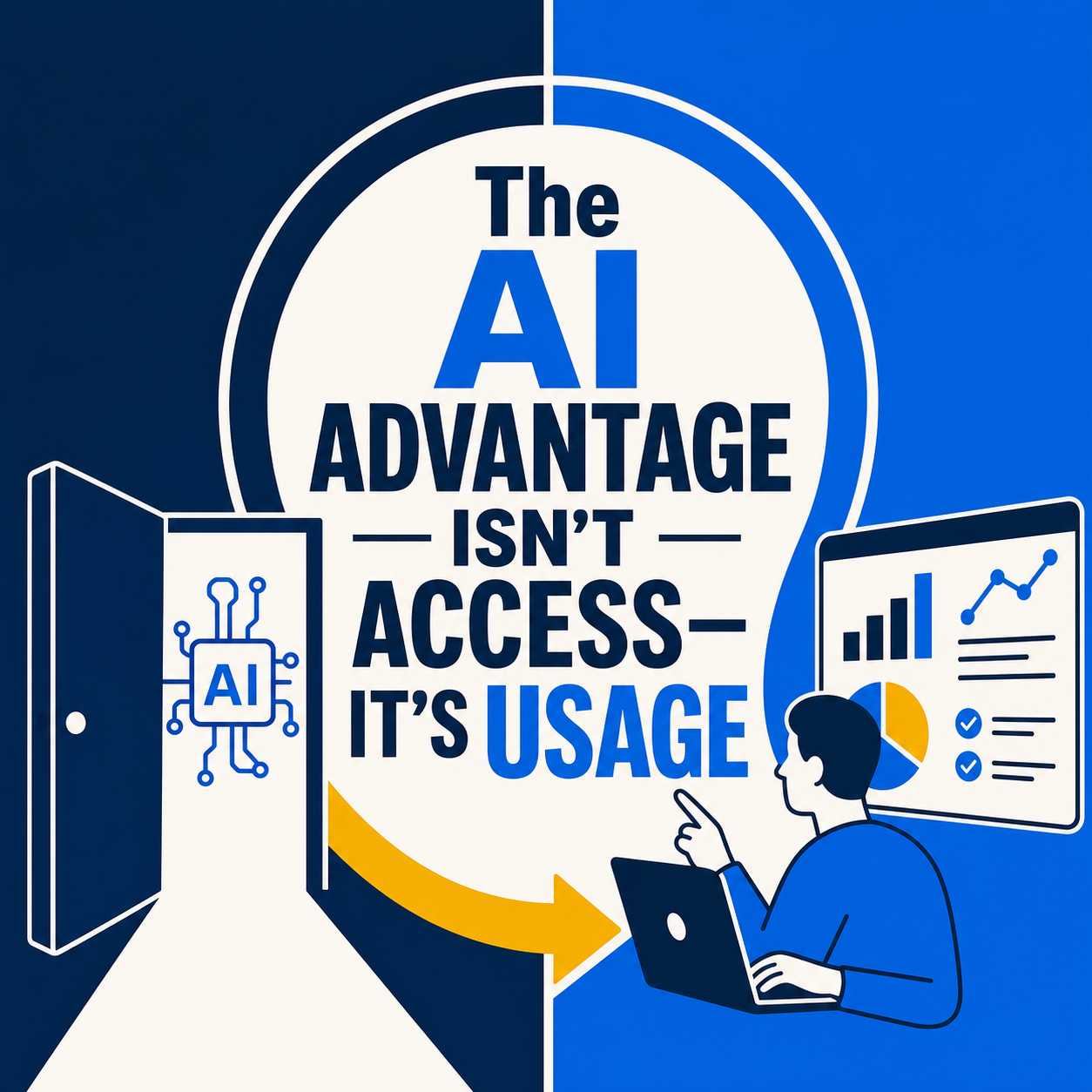
Quick Answer: Most revenue teams now have access to AI tools like Claude, but access alone changes nothing. The competitive advantage belongs to teams that build AI into every step of the deal cycle, call preparation, proposal decks, requirements scoping, personalized outreach, and content publishing. When AI handles the repeatable work, prospects notice one thing above everything else: speed. At Vantage Point, we treat AI usage as an operating habit, not a tool in the drawer, and it is the single clearest differentiator we see in competitive deals today.
Key Takeaways (TL;DR)
- Access is table stakes; usage is the differentiator. Most teams have an AI license. Far fewer use it on every deal, every day.
- Speed is what prospects actually experience. Fast, well-prepared follow-ups signal competence before you ever present a solution.
- The highest-leverage moments are the boring ones: call prep, meeting summaries, proposal decks, scoping documents, and follow-up emails.
- A content pipeline compounds the advantage. Teams that connect AI to their CMS can publish consistently while competitors draft occasionally.
- Budget for focus, not volume. Usage limits are real; apply AI intensively to the deals and workflows that matter most.
- Skills and templates make usage stick. Reusable instructions turn one person's AI habit into a team-wide operating standard.
Why Doesn't Having AI Tools Automatically Create an Advantage?
Because tools don't change outcomes: behaviors do. AI assistants are now broadly available to business teams, yet adoption research consistently shows a gap between organizations that have deployed AI and those that have redesigned daily work around it. McKinsey's State of AI research has repeatedly found that most companies use AI somewhere, but far fewer capture material value from it, because value comes from embedding AI into workflows, not from provisioning licenses.
The same pattern shows up at the team level. Two salespeople can hold identical licenses; one uses AI to prepare for every call, draft every follow-up, and build every deck, while the other opens it occasionally when a task feels hard. Six months later, they are operating at different speeds, and their prospects can tell.
What Does "Usage as a Differentiator" Look Like in a Real Deal Cycle?
Here is the pattern we see across high-performing teams, including our own:
| Deal-cycle moment | Without AI habits | With AI habits |
|---|---|---|
| Pre-call preparation | Skim the company website minutes before | Structured research brief: company context, stakeholders, likely requirements, discovery questions |
| Discovery follow-up | Generic recap email days later | Same-day summary with requirements mapped to specific solution options |
| Proposal decks | Built from scratch over several days | Generated from a template plus the actual conversation, then refined |
| Requirements scoping | Multiple calls to re-clarify | Requirements matched against packaged offerings in minutes |
| Personalized outreach | One template for everyone | Messages referencing each contact's role, firm, and context |
| Content and thought leadership | Occasional posts when time allows | A standing pipeline that publishes consistently |
None of these steps is glamorous. That is exactly the point: AI's biggest wins come from doing ordinary work extraordinarily fast, at consistent quality, on every deal rather than the occasional one.
Why Does Speed Matter So Much to Prospects?
Because responsiveness is a proxy for what working with you will be like. When a prospect receives a thorough, accurate follow-up within hours (requirements captured, options mapped, next steps clear) they draw a conclusion about your delivery capability before you ever sign a contract. We hear it directly in evaluations: "You're moving so quickly." That reaction is rarely about any single artifact. It is the cumulative effect of showing up prepared, following up fast, and never making the buyer repeat themselves.
There is also a hard commercial edge: in competitive evaluations with fixed deadlines (an expiring contract, a renewal date, a budget cycle) the vendor who compresses their own response time gives the buyer more time to decide, and usually more confidence in the decision.
How Does an AI Content Pipeline Compound the Advantage?
Individual productivity gains are valuable; systematic pipelines are transformative. A connected content workflow, AI drafting posts aligned to your brand and expertise, publishing into your CMS through an integration such as the HubSpot MCP server, with human review on top, turns content from a sporadic effort into a steady operating rhythm.
That rhythm pays off three ways:
- Search and AI visibility. Consistent, well-structured publishing builds the topical depth that both search engines and AI answer engines reward.
- Sales enablement. Every published post becomes a link a rep can send mid-deal to answer a question with authority.
- Proof of capability. If you advise clients on AI adoption, your own pipeline is the demo. Showing a working system beats describing one.
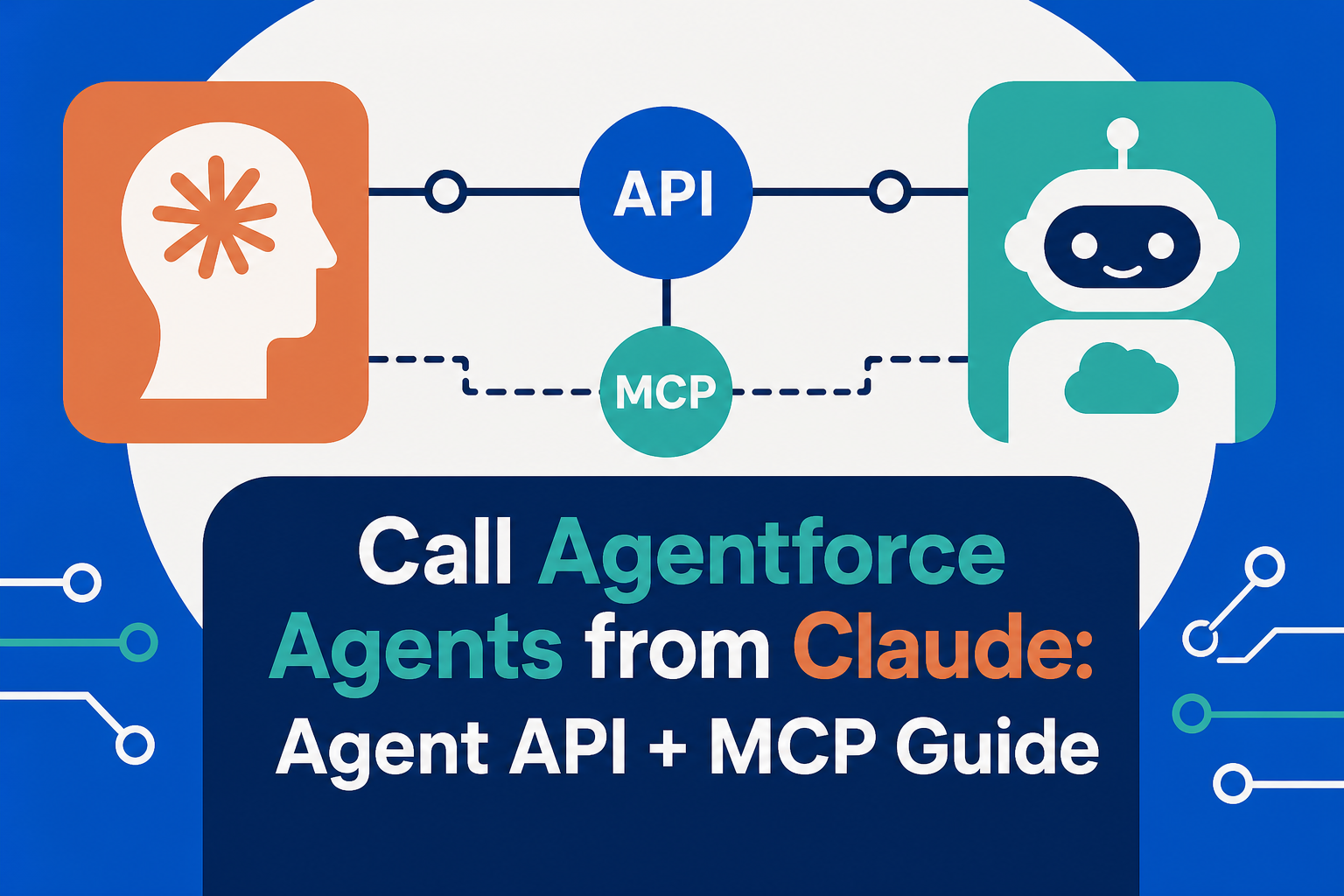
The Model Context Protocol (MCP) makes this class of workflow practical by connecting AI assistants like Claude directly to systems of record (your CRM, your CMS, your data) so drafting, reviewing, and publishing happen in one continuous flow instead of copy-paste relay races.
How Should Teams Manage AI Usage Limits and Costs?
Deliberately. Heavy daily usage consumes plan limits, and teams that use AI on everything eventually feel it. The practical answer is prioritization, not retreat:
- Tier your usage. Apply AI intensively to high-stakes deals and revenue-critical workflows; use lighter-touch automation elsewhere.
- Build reusable skills and templates. A well-structured prompt or organizational skill produces better output with fewer iterations, which means fewer tokens per outcome.
- Batch repeatable work. Standing pipelines (content, reporting, meeting prep) are more efficient than ad-hoc requests.
- Measure outcomes, not activity. The question is never "how much AI did we use?" but "what did it change: cycle time, response time, win rate, publishing cadence?"
How Do You Turn Individual AI Habits Into a Team Operating System?
Three moves separate teams where AI usage sticks from teams where it fades:
- Codify what works. When one person finds a workflow that saves hours (call-prep briefs, requirements-to-package matching, deck generation) capture it as a reusable skill or template the whole team can run.
- Attach AI to existing moments. Don't create new process; embed AI into the moments that already exist: before the call, after the call, before the proposal, before the demo.
- Lead by visible example. Adoption spreads when leaders use AI openly in real work (preparing for real calls, sending real follow-ups) rather than mandating usage from the sidelines.
How Vantage Point Applies This
We run our own business on the habits described above. Claude prepares research briefs before discovery calls, drafts follow-ups from meeting context, matches prospect requirements against our packaged offerings, and powers a standing content pipeline that drafts and stages blog posts directly into HubSpot for human review. When we implement AI for clients (whether on Claude, HubSpot Breeze, or Salesforce Agentforce) we start with the same principle: identify the daily moments where speed and consistency change outcomes, then build AI into those moments with the right guardrails, custom instructions, and review controls.
The result is the differentiator this post describes: prospects and clients consistently experience a team that moves fast, shows up prepared, and never asks them to repeat themselves.
Frequently Asked Questions
Is AI usage really a competitive differentiator, or just a productivity boost?
Both, but the differentiation comes from consistency. A productivity boost applied occasionally saves time. The same boost applied to every deal, every day, changes how fast your entire company appears to move, and buyers factor that into vendor decisions.
Which AI use case should a revenue team start with?
Pre-call preparation and post-call follow-up. They occur on every deal, the inputs already exist (calendar, CRM, meeting notes), and the output quality is easy to judge. Wins there build the habit for everything else.
Do we need engineers to build an AI content pipeline?
Not necessarily. Integrations like MCP servers connect assistants such as Claude to CMS and CRM platforms with configuration rather than custom code. Most teams need workflow design and governance help more than they need software development.
How do we keep AI-generated client communication accurate and on-brand?
Use custom instructions and reusable skills that encode your voice, offerings, and compliance rules, and keep a human review step for anything client-facing. Guardrails are what make heavy usage safe.
What if our team has licenses but nobody uses them?
That is the most common state we encounter. Start by instrumenting one or two high-frequency workflows, have a leader model the behavior publicly, and measure a concrete outcome (follow-up time, proposal turnaround). Adoption follows demonstrated wins, not mandates.
How should we handle AI usage limits on intensive plans?
Prioritize by deal value and workflow frequency, build efficient reusable prompts, and monitor consumption. Most teams find that better-structured skills reduce token usage while improving output quality.
Does this apply outside of sales?
Yes. The same access-versus-usage gap appears in service, marketing, operations, and finance. Any function with repeatable, context-heavy work (summaries, drafts, research, reporting) can convert AI usage into speed the rest of the business feels.
Sources & Further Reading
- McKinsey: The State of AI
- Anthropic: Claude for Work
- Model Context Protocol documentation
- HubSpot MCP server for developers
Vantage Point helps growing companies turn AI access into AI advantage. Implementing Claude, HubSpot, and Salesforce workflows that make teams measurably faster. Ready to close your usage gap? Talk to our team.