
More IT leaders are asking the same question: is it time to replace ServiceNow? Legacy ITSM platforms are powerful, but teams increasingly cite cost, customization overhead, and a ticket-first model that feels dated next to AI-native, conversational support.
Salesforce's Agentforce IT Service is one of the platforms pulling those teams into a switching evaluation. It reframes IT support around autonomous AI agents that resolve common requests in Slack, Microsoft Teams, and employee portals, instead of a portal where employees file a ticket and wait.
This guide explains why organizations evaluate leaving ServiceNow, what an Agentforce ITSM migration actually involves, the risks to manage, and how to decide. It is vendor-accurate and avoids hype: ServiceNow remains a robust platform, and a move is not right for everyone.
Quick Answer
Organizations replace ServiceNow with Agentforce IT Service when they want an AI-native, conversational support model and a lower-overhead alternative to heavily customized legacy ITSM. This matters for CIOs, IT service owners, and operations leaders weighing platform cost, customization burden, and the shift to agentic resolution. This article helps you decide whether to switch, run agents alongside ServiceNow, or stay, and what a migration involves. Vantage Point is a senior-only, employee-owned Salesforce partner that runs ITSM migration assessments so the decision is grounded in your data, integrations, and processes rather than vendor marketing.
TL;DR
- What it is: Replacing ServiceNow with Agentforce ITSM means moving internal IT support from a ticket-first legacy platform to Salesforce's agent-first IT Service, generally available since October 2025.
- Why teams evaluate it: Cost, customization and maintenance overhead, and a reactive ticket model are common drivers; an AI-native, conversational model is the pull.
- What a migration involves: Mapping workflows, cleaning knowledge and data, rebuilding integrations and CMDB, configuring agents, and phased cutover.
- Decision point: Decide between full replacement, coexistence (agents alongside ServiceNow), or staying: based on customization depth, integration scope, and AI readiness.
- How Vantage Point helps: We run a senior-led ITSM migration assessment before you commit to a switch.
What Does Replacing ServiceNow with Agentforce ITSM Mean?
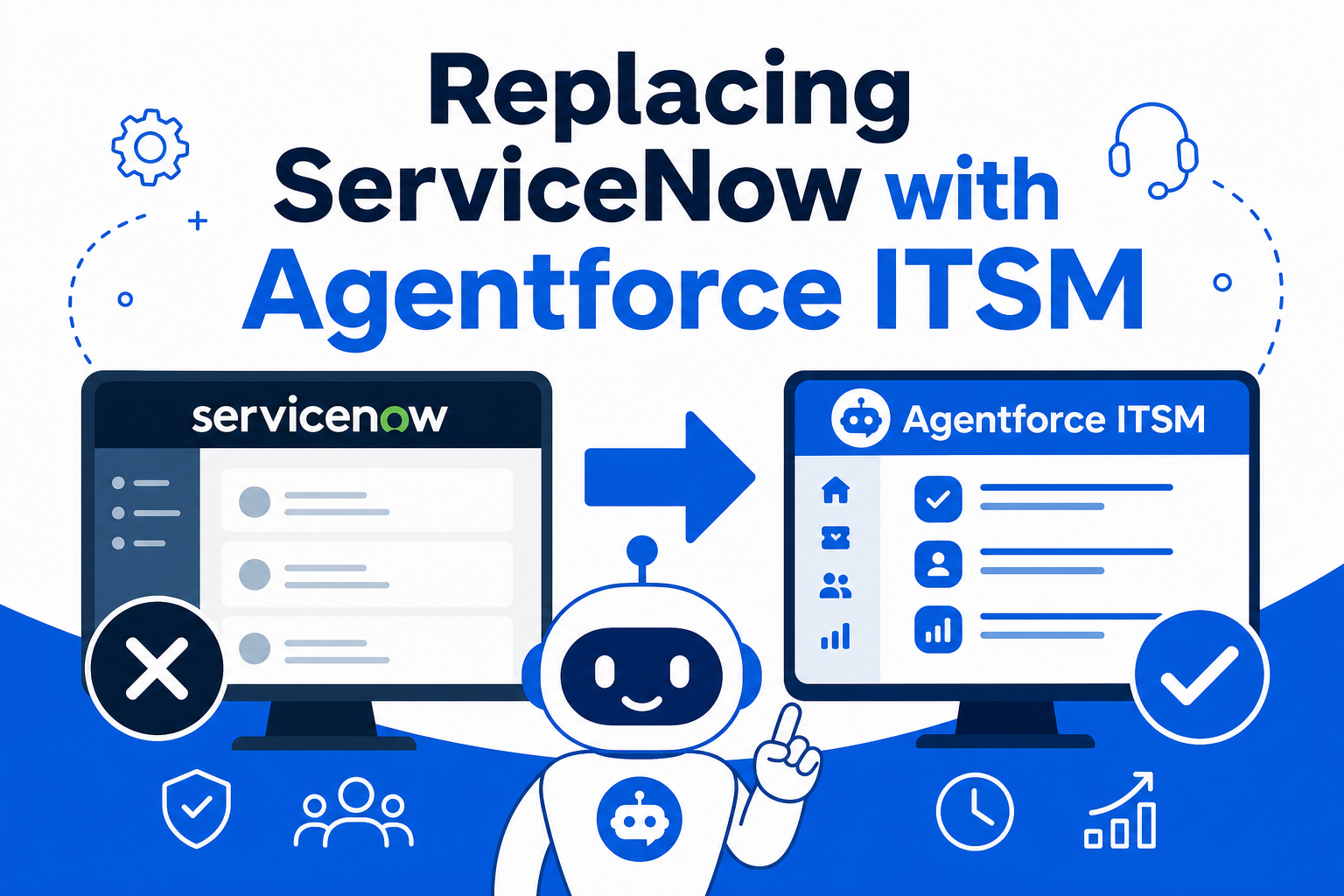
Replacing ServiceNow with Agentforce ITSM means retiring or reducing reliance on a traditional ticket-based ITSM platform and standing up Salesforce's Agentforce IT Service as the system employees and IT teams use day to day.
The two platforms solve the same problem differently. ServiceNow centralizes IT, HR, and operational workflows on a mature, highly configurable platform. Agentforce IT Service, built natively on the Salesforce Service Cloud platform and aligned to ITIL processes, starts from autonomous AI agents that resolve requests conversationally and escalate complex issues to humans with full context.
A switch is not always all-or-nothing. Many organizations begin with coexistence: deploying employee-facing agents in Slack or Teams while ServiceNow remains the system of record, and migrate further only after the agentic model proves out.
Why Organizations Are Switching from ServiceNow
The drivers are consistent across industries. None of them mean ServiceNow is a bad platform; they reflect where teams feel friction.
- Total cost of ownership. On review sites like G2, ServiceNow customers commonly cite licensing plus implementation, customization, and ongoing maintenance costs. Salesforce's own ServiceNow alternatives guide summarizes cost, learning curve, and complexity as the most-cited disadvantages.
- Customization and maintenance overhead. Deep customization can require dedicated administrators or implementation partners, and changing one area of the stack can trigger reconfiguration elsewhere.
- A reactive, ticket-first model. Legacy ITSM waits for an employee to file a ticket, then routes it manually. Routine requests sit in the same queue as complex incidents.
- AI-native gaps. Teams want autonomous resolution in the flow of work, not a chatbot bolted onto a ticket form. Agentforce IT Service resolves requests directly in Slack, Teams, portals, and webchat.
- Platform consolidation. Organizations already invested in Salesforce or Slack often prefer one unified platform that combines ITSM with CRM and Data 360 context.
Salesforce reports that organizations including UNESCO, EPB, and the Ospelt Group adopted Agentforce IT Service to reduce operational costs and free IT teams from repetitive work. Independent of any single vendor, Gartner predicts that by 2029 agentic AI will autonomously resolve 80% of common customer service issues without human intervention, contributing to a 30% reduction in operational costs: the trend behind the switching conversation.
ServiceNow vs Agentforce IT Service
| Dimension | ServiceNow ITSM | Agentforce IT Service |
|---|---|---|
| Core model | Ticket-first, workflow platform | Agent-first, conversational resolution |
| Maturity | Established, broad enterprise footprint | GA since October 2025, built on Service Cloud |
| Where employees engage | Portal and ticket forms | Slack, Microsoft Teams, employee portal, webchat |
| AI approach | AI added to ticketing workflows | Autonomous agents grounded in Data 360 + Trust Layer |
| Customization | Deep, but can require admins/partners | Configurable on the Salesforce platform |
| CMDB | Mature, configurable CMDB | Agentic CMDB and Service Graph |
| Integrations | Large ecosystem | 100+ pre-built connectors at launch |
| Best fit | Complex, highly customized enterprise IT | Teams wanting AI-native, conversational support |
This comparison is intended to be factual and fair. ServiceNow remains a capable, feature-rich ITSM platform; the right choice depends on your customization depth, integration needs, and AI readiness.
What an Agentforce ITSM Migration Involves
A migration is a program, not a license swap. The major phases:
- Discovery and workflow mapping. Document your highest-volume IT and HR requests, current resolution times, ticket categories, SLAs, and ITIL processes (incident, problem, change).
- Knowledge and data preparation. Agents ground answers in your knowledge base. Audit articles for accuracy and structure, and confirm clean, governed data on employees, entitlements, and assets.
- Integration and CMDB rebuild. Identify the systems agents must touch (identity, HR, endpoint, asset management) and map them to available connectors. Plan how the agentic CMDB and Service Graph will represent your infrastructure.
- Agent design and guardrails. Define which requests agents resolve autonomously versus what requires human approval, and configure escalation and human handoff.
- Use-case prioritization and pilot. Start with high-volume, low-risk requests (password resets, access, status questions) where deflection is immediate. Prove value before scaling.
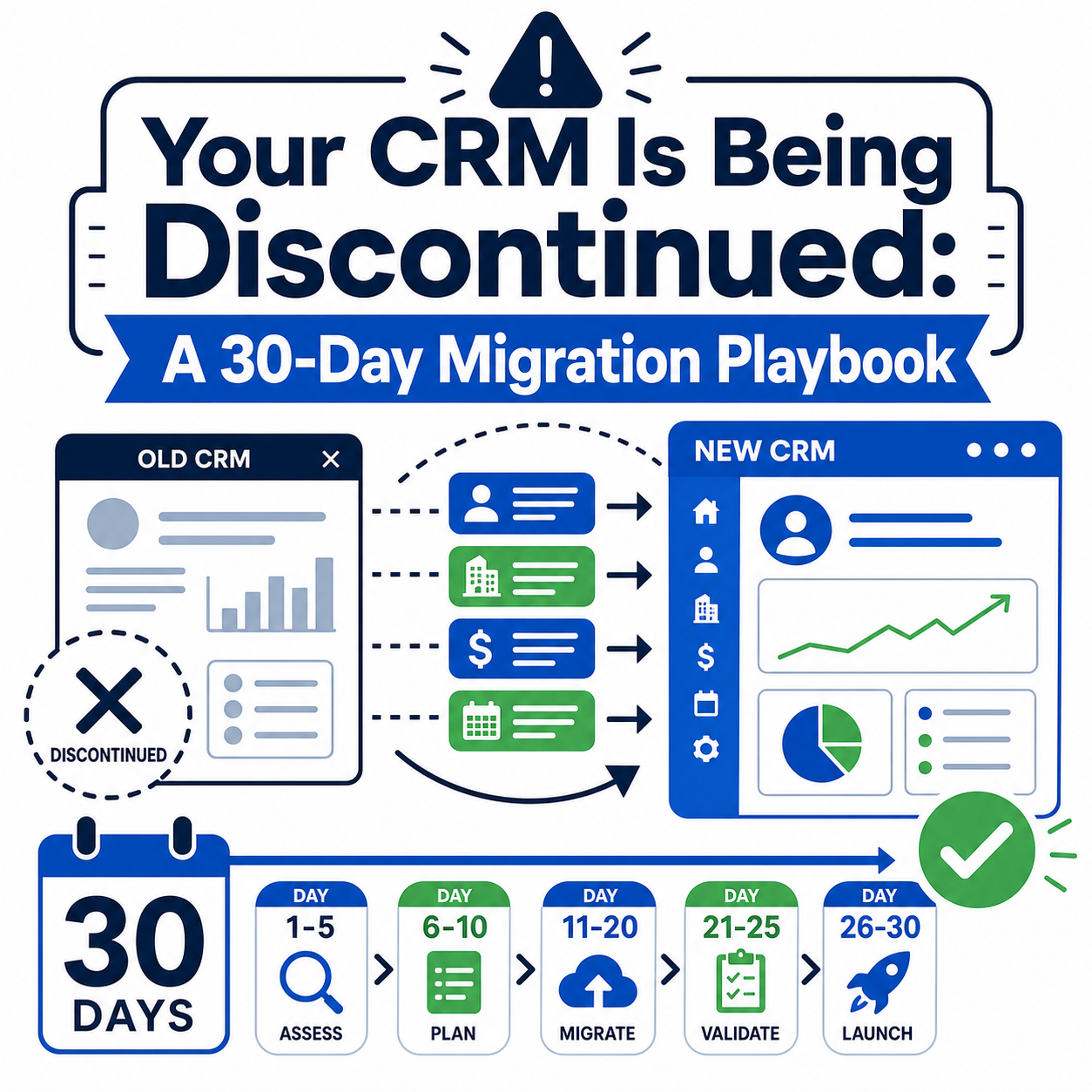
- Phased cutover. Move workloads in stages, often running agents alongside ServiceNow during transition, then reducing legacy reliance over time.
- Adoption and change management. Train IT staff on the new service desk and drive employee adoption of the conversational channel.
Risks and How to De-Risk the Switch
| Risk | How to de-risk |
|---|---|
| Migrating broken processes | Map and fix workflows before configuring agents |
| Poor knowledge base quality | Audit and restructure articles so agents return accurate answers |
| Integration gaps | Confirm connector coverage for identity, HR, and asset systems early |
| Data loss or history gaps | Plan ticket history and CMDB migration; validate before cutover |
| Big-bang cutover failure | Use coexistence and a phased rollout, not a single switchover |
| Low adoption | Invest in change management and start with high-value use cases |
| Governance gaps | Define autonomous-action boundaries and approval rules up front |
The biggest de-risking move is a pilot under coexistence: deploy agents for a narrow set of high-volume requests while ServiceNow still runs, measure deflection and resolution, then expand.
How to Decide: Switch, Coexist, or Stay
- Switch (full replacement) if your ServiceNow instance is moderately customized, your team wants an AI-native model, and you are consolidating on Salesforce or Slack.
- Coexist if ServiceNow is your system of record but you want fast wins from conversational agents in the flow of work: the most common low-risk starting point.
- Stay if your ServiceNow implementation is deeply customized across many departments and the migration cost outweighs near-term benefit; revisit as agentic capabilities mature.
If your team is weighing this decision, Vantage Point can help you assess readiness, design the right system integration and data migration plan, and sequence a rollout that fits your existing stack.
How Vantage Point Helps
Vantage Point is a mid-market specialist with a senior-only, AI-augmented team, employee-owned and guided by our VALUE Methodology. We act as your Salesforce strategy and implementation partner: not a staffing shop. For an ITSM move, that means a clear-eyed assessment of whether replacing ServiceNow is the right call, and a practical plan if it is.
Our work spans Salesforce implementation and advisory, Agentforce IT Service strategy, system integration and data migration, and advisory and change management so adoption sticks. For the underlying business case, see our related guide on why legacy ITSM holds teams back and what Agentforce fixes.
Ready to evaluate the move? Ask Vantage Point for an ITSM migration assessment to see whether, and how, Agentforce IT Service fits your roadmap.
FAQ
Should I replace ServiceNow with Agentforce IT Service? It depends on your customization depth, integration scope, and AI readiness. Teams with moderately customized instances that want AI-native, conversational support and platform consolidation are the strongest fit, while deeply customized enterprise instances may start with coexistence. A migration assessment clarifies the right path before you commit.
Is Agentforce IT Service a real ServiceNow alternative? Yes. Salesforce positions Agentforce IT Service as a ServiceNow alternative built natively on the Service Cloud platform, aligned to ITIL processes, with an agentic IT service desk, AI agents, an agentic CMDB, and 100+ pre-built connectors at launch. It became generally available in October 2025.
Do I have to migrate everything at once? No. Most organizations begin with coexistence (running employee-facing agents in Slack or Teams while ServiceNow remains the system of record) then reduce legacy reliance in phases. This phased approach is the primary way to de-risk a switch.
What are the main risks of switching ITSM platforms? The biggest risks are migrating broken processes, poor knowledge base quality, integration gaps, history or data loss, big-bang cutover failure, and low adoption. Each is manageable with workflow mapping, knowledge cleanup, early integration validation, phased cutover, and change management.
How long does an Agentforce ITSM migration take? There is no fixed timeline; it depends on customization depth, integration count, knowledge base health, and how many use cases you launch. Starting with a narrow, high-volume pilot under coexistence delivers value faster than a platform-wide cutover. Vantage Point scopes timelines during the assessment.
Does Agentforce IT Service integrate with our existing systems? Yes. It launched with 100+ pre-built connectors and integrations to widely used tools, including Box, Crowdstrike, Google, IBM, Microsoft, Okta, Oracle NetSuite, Qualtrics, TeamViewer, Workday, and Zoom, so agents can act across identity, HR, and asset systems.
How does Vantage Point support an ITSM migration? Vantage Point runs a senior-only ITSM migration assessment covering readiness, knowledge and data preparation, integration and CMDB planning, governance, and adoption. We help you decide between switching, coexisting, or staying, and build a phased rollout plan if you move forward.