AI agents are no longer just answering questions. They're updating CRM records, triggering workflows, and acting across systems without waiting for a human to click "run." That shift from suggestion to action is exactly why agentic automation needs governance built in from day one, not bolted on after an incident.
This guide explains what agent governance actually means, why it matters more in 2026 than it did even a year ago, and how to put practical guardrails in place before you scale AI agents across Salesforce, HubSpot, and the rest of your stack.
Quick Answer
Agentic automation governance is the set of permissions, guardrails, and oversight controls that determine what an AI agent is allowed to do, what it must never do, and when it has to pause and ask a human. It matters for IT leaders, RevOps teams, and compliance owners who are moving AI agents from pilot into production. The core decision it supports is where and how to safely give agents the ability to act, not just advise, inside business systems. Vantage Point implements this governance layer using platforms like Workato alongside Salesforce and HubSpot, so agents can move fast without putting data or compliance at risk.
TL;DR
- What it is: Agent governance defines the skills an AI agent can use, the guardrails it can't cross, and the points where it must escalate to a human.
- Why it matters: Once an agent can act (not just respond), a single ungoverned mistake can touch thousands of records instead of one.
- Best for: Any team scaling AI agents across CRM, support, finance, or operations workflows in Salesforce or HubSpot.
- Decision point: Whether your current automation platform can enforce permissions, approvals, and audit trails at runtime: not just in a policy document.
- How Vantage Point helps: We design agent governance models using Workato alongside our Salesforce implementation and advisory and system integration and data migration services.
What Is Agentic Automation Governance?
Agentic automation governance is the practice of defining and enforcing what an AI agent can do, what data it can touch, and when it needs human approval before it acts. Unlike governance for a chatbot or copilot, which only has to worry about what an AI says: agent governance has to control what an AI does, because agents execute actions directly inside production systems.
Traditional automation is deterministic: the same input produces the same output every time. AI agents introduce stochastic behavior. The same request can produce slightly different outcomes depending on context. That variability is useful for tasks like triage, summarization, or classification, but it's a liability for financial transactions, compliance workflows, or anything where precision is non-negotiable. Governance is how organizations get the benefit of flexible reasoning without losing control over outcomes.
Why Agent Governance Matters in 2026
AI agents are moving from pilot projects to production workloads across CRM, support, and back-office processes. That shift changes the risk profile in three specific ways:
- Agents act at scale. A single ungoverned agent error doesn't create one bad record. It can create thousands, because agents run continuously and across many transactions.
- Regulatory frameworks weren't built for autonomous actors. GDPR, HIPAA, and SOC 2 assume a human is making the decision. Compliance teams are now reinterpreting these frameworks for systems that act without a human in the loop for every step.
- Security and compliance concerns are the top reason agentic AI projects stall. Teams hesitate to move agents into production until they can answer a simple question: can we deploy this safely?
Getting governance right is also what unlocks scale. Agents that are well-governed can be trusted with more responsibility over time, while agents without guardrails get restricted to narrow, low-value use cases out of caution.
How Agent Governance Works: The Three Layers
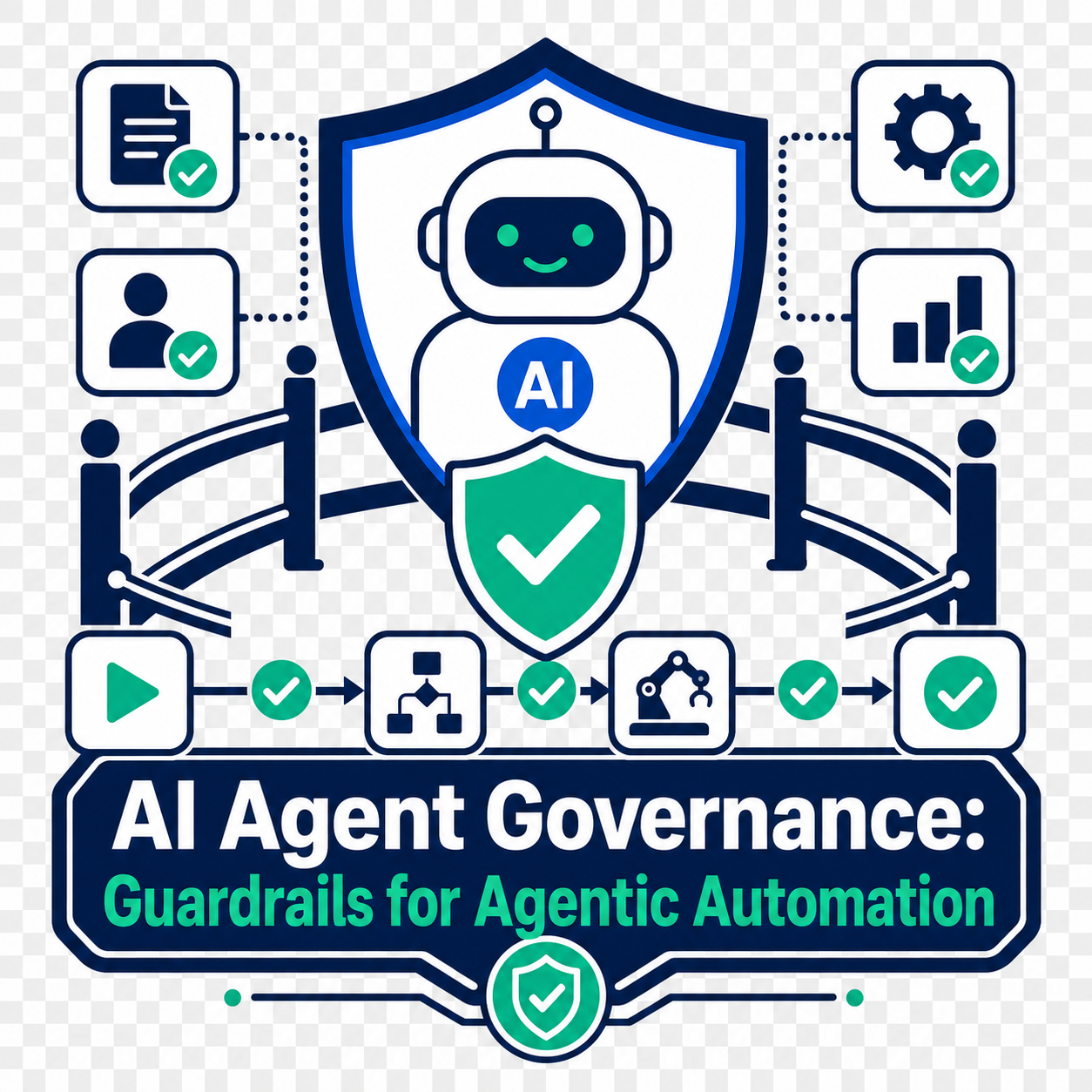
A practical governance model for AI agents breaks down into three layers, regardless of which automation platform you use:
- Skills: what an agent is allowed to do. These are specific, scoped actions: update a record, send a notification, retrieve a report. Skills should be explicit and reusable, not open-ended permissions.
- Guardrails: what an agent is never allowed to do. This includes sensitive systems, irreversible actions, and anything above a defined risk threshold (a payment limit, a data-sensitivity classification, an external-facing action).
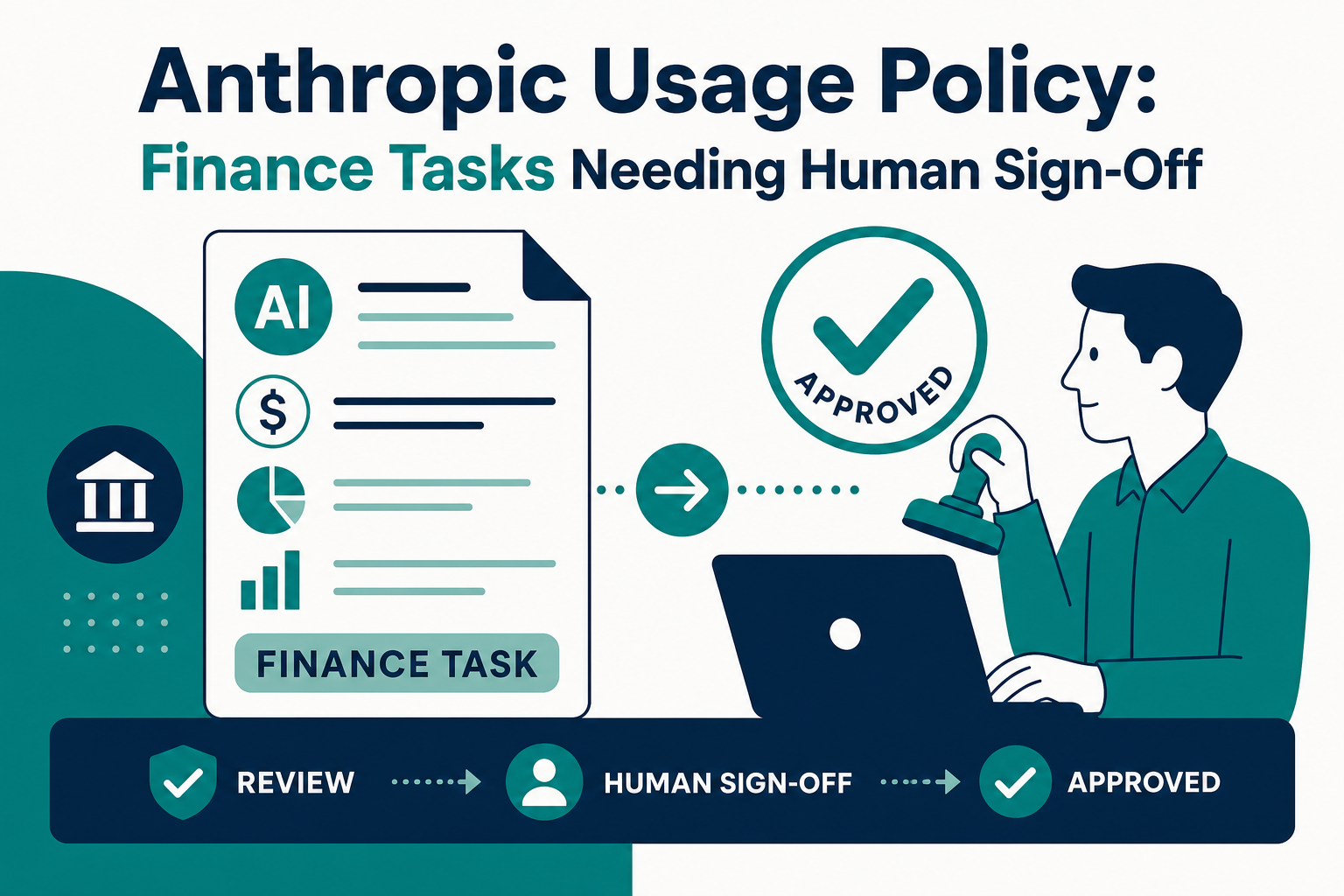
- Supervision: when an agent must pause and escalate. This defines the human-in-the-loop checkpoints: approval workflows, alerts, and audit review before or after an action completes.
Underneath these three layers, most enterprise governance models add a risk-tiering approach so oversight matches actual risk instead of applying the same rules to every agent:
| Risk Tier | Example Use Case | Governance Controls |
|---|---|---|
| Low risk | Internal read-only reporting, log analysis | Light-touch monitoring, minimal approvals |
| Medium risk | Updating CRM records, triggering internal workflows | User-level permissions enforced at runtime, audit logging, approval thresholds |
| High risk | Customer-facing agents, regulated data, payments | Verified identity checks, mandatory human approval, full audit trail, strict content guardrails |
This tiered model (sometimes described as green/yellow/red/black zones by platforms like Workato) lets low-risk agents move quickly while high-risk agents get the strict oversight regulated processes require.
Governance Approaches Compared
Not every governance approach delivers the same level of protection. Here's how the common options stack up:
| Approach | Strength | Weakness |
|---|---|---|
| Prompt-level controls only | Fast to set up | Easy to circumvent; doesn't stop the underlying action |
| Custom-coded guardrails | Flexible for specific cases | Technical debt accumulates; can't anticipate every edge case |
| Native platform governance (e.g., Workato Agent Studio) | Enforced at runtime, tied to identity and permissions | Requires platform investment and setup time |
| No formal governance | None | Highest risk; not viable for production agents touching real data |
Native, runtime-enforced governance consistently outperforms prompt-level or custom-coded patches because it doesn't depend on anticipating every possible failure mode in advance.
What Businesses Should Do Next
- Inventory your agent use cases and classify risk. Separate low-risk, read-only agents from those that update records or interact with customers.
- Map skills and guardrails before deployment, not after. Define exactly what each agent can do and what it must never touch.
- Tie every agent action to a human identity and permission set. Agents should operate within existing access controls, not a separate, ungoverned identity.
- Build audit trails from day one. You need a record of who prompted the agent, what it did, and why: before an incident forces you to build one retroactively.
- Pilot in a sandboxed or supervised zone first, then graduate agents to broader autonomy as trust is established.
How Vantage Point Helps
Vantage Point helps organizations design and implement agent governance models that hold up in production: not just in a slide deck. We work with Workato to build the orchestration and guardrail layer that governs AI agents across Salesforce, HubSpot, and back-office systems, and we pair that with our CRM and marketing automation and compliance and security solutions services to make sure permissions, audit trails, and escalation paths match your actual risk tolerance.
If your team is evaluating how to safely move AI agents from pilot to production across Salesforce, HubSpot, or your integration layer, Vantage Point can help assess the right governance model and build a practical rollout plan.
FAQ
What is the difference between AI agent governance and traditional automation governance? Traditional automation governance controls workflows that follow a fixed, deterministic path. Agent governance also has to account for stochastic behavior, the same input can produce different outputs, so it needs guardrails, permission scoping, and human escalation points that traditional automation doesn't require.
Do AI agents need human approval for every action? No. Low-risk, read-only agents can typically operate with minimal oversight, while medium- and high-risk agents (those updating records, handling payments, or facing customers) should require approval at defined thresholds. The goal is calibrated oversight, not blanket restriction.
What compliance frameworks apply to AI agents? Frameworks like GDPR, HIPAA, and SOC 2 still apply, but they were written with human decision-makers in mind. Compliance teams need to reinterpret these requirements for autonomous systems, which is why audit trails and identity-linked permissions are essential for any agent handling regulated data.
Can Workato govern AI agents alongside Salesforce and HubSpot workflows? Yes. Workato provides an orchestration layer that mediates agent access to backend systems, so agents follow vetted, approved processes rather than connecting directly to production data in Salesforce or HubSpot. This keeps governance consistent across every system an agent touches.
What happens if an AI agent is given too much autonomy without guardrails? An ungoverned agent can make an error at scale, because it operates continuously and across many records, one bad rule or misclassified input can affect thousands of transactions before anyone notices. That is why guardrails and audit trails need to exist before an agent goes into production, not after an incident.
How do you decide which agents need the strictest controls? Classify agents by risk: consider whether they are internal or external-facing, whether they touch regulated or sensitive data, and whether their actions are reversible. External-facing agents handling sensitive data and irreversible actions need the strictest controls: verified identity checks, mandatory approvals, and full auditability.
Is agent governance the same as citizen development governance? No, though they're related. Citizen development governance manages business users building their own automations. Agent governance is different because agents don't wait for a human to press "run". They initiate and execute actions on their own, which requires a stricter, runtime-enforced control model.
Where should a business start with agent governance? Start by inventorying planned agent use cases and classifying each by risk level. Build skills, guardrails, and supervision rules for the highest-risk use case first, then apply the same framework as you expand to lower-risk agents. Vantage Point can help structure this assessment using Workato's governance model alongside your existing Salesforce or HubSpot environment.