
What's New in Slack: March 2026 Update
Slack March 2026: MCP server for AI agents, DLP secret scanning, Activity hub redesign, native Salesforce CRM features, and a critical March 31 legacy connection deadline
TL;DR: March 2026 at a Glance
| Category | What You Need to Know |
|---|---|
| Biggest News | Slack MCP server gives external AI agents secure access to workspace data |
| For Admins | DLP secret scanning detects API keys and credentials in messages (Enterprise+) |
| For Users | Redesigned Activity hub, huddle join preview, editable attachments coming soon |
| Salesforce Integration | Native CRM features in Slack (pipeline management, email drafting, lead capture) coming to new Business+ |
| ⚠️ Urgent Deadline | Legacy Salesforce connections disconnect March 31, 2026: 3 weeks away |
| ⚠️ Critical Deadline | Export audit logs before April 30, 2026 (2-year retention policy) |
Slack MCP Server: AI Agents Meet Your Workspace
The Model Context Protocol (MCP) is rapidly becoming the standard for how AI applications access external data sources, and Slack now has a native MCP server.
What this means in practice: your AI agents, copilots, and automation tools can now securely connect to your Slack workspace and interact with your team's data through a standardized protocol. The MCP server respects existing permissions, so agents only access what the authenticated user can see.
Why this matters for organizations: As teams deploy AI agents across their tech stack (whether through Salesforce Agentforce, custom-built tools, or third-party platforms) the ability to pull context from Slack conversations becomes a powerful capability. Instead of agents operating in isolation, they can reference real discussions, decisions, and documents shared in your workspace.
If you previewed this feature last month in the "Coming Soon" section, it's now live and ready for integration.
Learn more about the Slack MCP server →
DLP Secret Scanning: Catching Credentials Before They Spread
One of the most practical security features Slack has shipped in months. DLP secret scanning brings 20+ preconfigured detection rules that automatically identify and remove secrets and credentials shared in Slack messages.
What it detects: - API keys and tokens - AWS access keys - Database connection strings - OAuth tokens - Private keys and certificates - Other sensitive credential patterns
Available on Enterprise+ and Grid plans, this feature addresses one of the most common security risks in modern workplaces: developers, admins, and team members accidentally pasting credentials into channels. Rather than relying on manual review or after-the-fact discovery, Slack now catches these in real time.
For regulated organizations, this is a meaningful addition to your data loss prevention posture. Combined with existing DLP capabilities, secret scanning closes a gap that has historically required third-party tools to address.
Redesigned Activity Hub
The Activity hub is getting a complete overhaul. The new design consolidates all notification types (including DMs and updates from channels set to "all new posts") into a single unified feed. Key improvements include:
Flexible page design. The current sidebar layout is being replaced with a full-page experience that gives notifications the space they need.
Robust filtering. Saved filter views let you create persistent notification categories. Filter by type, channel, urgency, or custom criteria and save those views for quick access.
Inbox-like "dense" layout. A compact view option for power users who process large volumes of notifications: think email inbox density applied to Slack notifications.
Triage tools. Bulk actions and a "clear" function let you process notifications efficiently rather than one at a time.
This is a welcome evolution for anyone who has struggled with Slack's notification management at scale. The ability to save filter views alone should meaningfully improve how teams handle high-volume workspaces.
Learn more about the new Activity view →
Admin Analytics Message Metadata API (Enterprise+)
A new admin.analytics.messages.list API endpoint provides messaging metadata to help organizations measure the effectiveness of channel-based processes and communication strategies.
Key details: - Provides messaging metadata (volume, timing, participation patterns) without exposing message content - Serves as a privacy-preserving alternative to the Discovery API - Enables data-driven decisions about channel structure, communication patterns, and process optimization
Practical applications: Identify underutilized channels, measure response times in support channels, understand peak communication periods, and quantify the impact of process changes on team communication patterns: all without accessing sensitive message content.
Real-Time Search (RTS) API
Slack's public real-time search API enables third-party applications to search Slack data in real time without storing or indexing it locally. This is a significant architectural choice: external apps get search capability while Slack maintains data sovereignty.
For developers and IT teams, this opens up integration possibilities (building custom search interfaces, feeding Slack context into other tools, or creating specialized search experiences) without the compliance concerns of exporting and storing Slack data externally.
Learn more about the RTS API →
Thinking Steps for AI Agent Apps
Third-party AI agent apps in Slack can now display "thinking steps". Showing users when an agent is processing their request and the specific steps it's taking to arrive at an answer.
This addresses one of the biggest friction points with AI tools: the black box problem. When an agent takes a few seconds to respond, users wonder if it's working, stuck, or about to return something useful. Thinking steps provide transparency into the decision-making process, building trust and helping users understand what the agent can (and can't) do.
If you're building or deploying AI agents that integrate with Slack, implementing thinking steps is a quick win for user adoption.
Other Notable Updates
Pre-migration bulk email updates. Admins can now configure bulk email communications prior to an Enterprise migration, streamlining the transition process and ensuring all users are informed before changes take effect. Learn more →
Re-sharing files via Slack Connect. Previously, files shared from one organization to another via Slack Connect couldn't be re-shared within the recipient organization. That restriction is lifted. Files can now be freely shared internally as long as the two organizations remain connected.
Canvas and file sharing limits. Slack is introducing a 1,000-channel limit for how many channels a canvas or list can be shared to. This applies to both manual and automated (workflow-based) sharing. Most teams won't hit this limit, but large enterprises with extensive automation should review their canvas distribution patterns.
Huddles join preview. A new preview modal lets users check audio and video preferences and see their video feed before joining a huddle: similar to the pre-join experience in Zoom or Teams. Learn more →
Request to convert guest access. Members working with single-channel guests can now request that the account be converted to multi-channel guest access. Admins receive an approval notification in the same channel where guest invites are managed: a much smoother workflow than the previous manual process.
Coming Soon
Native Salesforce Customer Management in Slack (New Business+)
This is the most significant Salesforce-Slack integration update on the horizon. The new version of Business+ will include native customer management features backed by Salesforce:
- Slackbot-powered meeting prep and email drafting: AI-assisted preparation using CRM context
- Calendar sync: bidirectional sync between Slack and your calendar
- Sales and service pipeline management: manage leads and opportunities without leaving Slack
- Lead capture: create leads directly from Slack conversations
- Email-to-case: route customer emails to service cases
- Emailing contacts and leads: send emails to Salesforce records from within Slack
For organizations already using Salesforce, this collapses the gap between where conversations happen (Slack) and where customer data lives (Salesforce). Worth monitoring closely as details emerge on pricing and availability.
Edit Attachments After Sending
Users will soon be able to add or remove attachments after a message has been sent. A simple but frequently requested quality-of-life improvement.
Shareable Slackbot Prompts
Users will be able to share Slackbot AI prompts via a shareable link. When clicked, the link unfurls into a prompt card with a "Run with Slackbot" button for instant execution. This turns individual AI prompt discoveries into team-wide productivity gains.
Huddles Just-in-Time Notifications
Reminder notifications for upcoming huddles scheduled through Google Calendar or Outlook will appear directly in Slack, reducing missed meetings for teams that live in Slack throughout the day.
Enterprise Search Connectors: Gmail and Outlook (Enterprise+)
New connectors will allow users to search their emails directly within Slack's search experience. No more switching between applications to find that email thread someone referenced in a channel.
Change Salesforce Record Owner in Slack
Users will be able to reassign Salesforce record ownership directly from the Slack UI, particularly useful for sales teams managing lead routing and opportunity handoffs.
Customize Salesforce Channel Names
Admins will be able to use any Salesforce record field to define Salesforce-connected channel names, providing flexibility beyond the current naming conventions.
⚠️ Urgent: Legacy Salesforce Connections: March 31, 2026
This deadline is three weeks away.
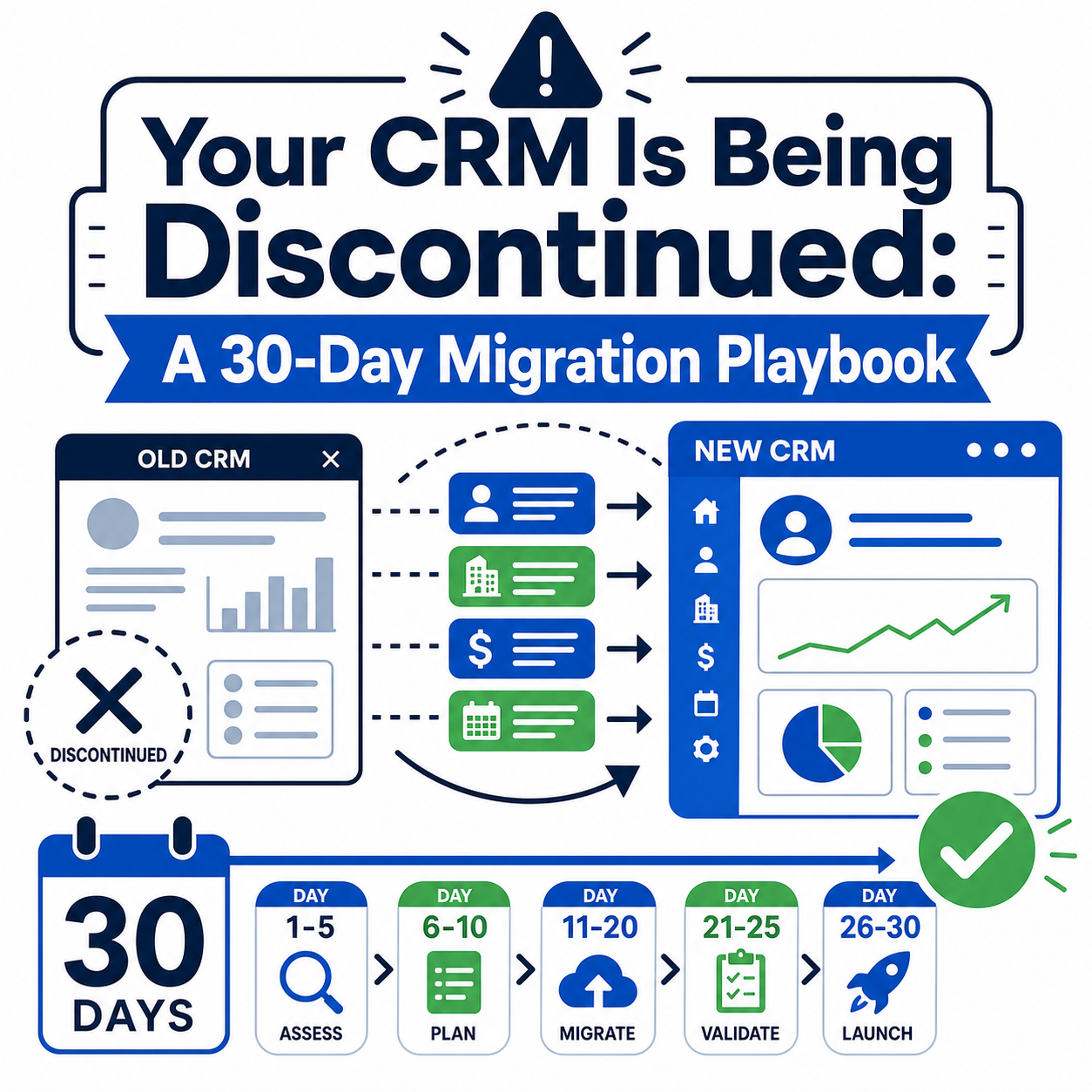
Beginning March 31, 2026, Slack will discontinue support for legacy connections to Salesforce for Sales Elevate. If your organization is still using legacy Salesforce connections, they will stop working on this date.
Important clarification: This change does not affect integrations with other Salesforce apps. Salesforce Automations (Legacy), Sales Cloud for Slack, and Service Cloud for Slack will continue to function normally.
What to do now: 1. Identify if your organization uses legacy Sales Elevate connections 2. Migrate to the current Salesforce integration before March 31 3. Test the new connection in a sandbox environment 4. Update any workflows or automations that depend on the legacy connection 5. Communicate the change to affected users
Learn more about the migration →
⚠️ Critical: Audit Log Retention: April 30, 2026
The two-year audit log retention policy announced last month takes effect April 30, 2026. If you haven't already started exporting, time is running short.
For organizations in regulated industries (financial services (SEC requires 5-7 years), healthcare (HIPAA requires 6 years), government contracting (DFARS requires 7 years)) failing to archive logs before this date creates a compliance gap that can't be reversed.
Action items: 1. Export all existing audit logs using the Audit Logs API or admin UI 2. Establish automated monthly exports going forward 3. Store exports in secure, long-term archival storage 4. Update compliance documentation to reflect the new retention policy 5. Test retrieval processes to ensure archived logs are searchable
Learn more about audit log export →
End of Support: May 18, 2026
Slack is discontinuing support for certain operating systems, app versions, and browsers on May 18, 2026. Additionally, the legacy Windows .exe installer will be deprecated in March 2027. IT teams should transition to the MSIX package for new deployments.
Recommended actions: - Audit your environment for affected OS, browser, and app versions - Plan and communicate upgrade timelines to affected users - Begin transitioning Windows deployments to the MSIX installer package - Existing Slack installations will continue to auto-update normally; only new deployments are affected by the .exe deprecation
Learn more about supported versions →
Learn more about .exe installer deprecation →
Implementation Checklist
This week (by March 14): - [ ] Review the Slack MCP server documentation and evaluate integration opportunities - [ ] Enable DLP secret scanning if you're on Enterprise+ or Grid - [ ] Explore the redesigned Activity hub and test saved filter views - [ ] Try the new huddle join preview
This month (by March 31): - [ ] Migrate legacy Salesforce Sales Elevate connections: they disconnect March 31 - [ ] Evaluate the admin analytics message metadata API for usage insights - [ ] Review canvas sharing patterns against the new 1,000-channel limit - [ ] Test guest access conversion workflow with your team
Before April 30, 2026: - [ ] Export all existing audit logs - [ ] Set up automated monthly log exports - [ ] Store exports in secure, long-term archival storage - [ ] Update compliance documentation
Before May 18, 2026: - [ ] Complete OS, app, and browser upgrades across your organization - [ ] Begin planning MSIX migration for Windows deployments (March 2027 deadline)
About Vantage Point
Vantage Point helps organizations design and implement technology transformation programs using Salesforce and HubSpot. Our team combines deep platform expertise with industry knowledge to deliver measurable improvements in operational efficiency, client experience, and business results.
About the Author
David Cockrum founded Vantage Point after serving as Chief Operating Officer in the financial services industry. His unique blend of operational leadership and technology expertise has enabled Vantage Point's distinctive business-process-first implementation methodology, delivering successful transformations for clients.
- Email: david@vantagepoint.io
- Phone: (469) 499-3400
- Website: vantagepoint.io