
Key Takeaways (TL;DR)
- What is it? Technology consulting helps organizations align strategy, systems, and teams to solve complex technology challenges: from CRM implementation to enterprise-wide digital transformation
- Key Benefit: Organizations with strong consulting partnerships achieve 10.3x ROI on technology initiatives vs. 3.7x for those going it alone
- Cost: $50K, $500K+ depending on scope, with typical CRM implementations ranging $75K: $300K
- Timeline: 3-12 months for most engagements; large-scale transformations may span 12-24 months
- Best For: Growing organizations with multi-system environments, data silos, or teams struggling with adoption and integration
- Bottom Line: 70% of technology projects fail without proper guidance: the right consulting partner dramatically improves your odds of success
Introduction
Your organization runs on technology. CRM platforms manage customer relationships, integration middleware connects your systems, automation tools streamline operations, and AI promises to transform everything. But here's the reality: 70% of digital transformation projects fail to meet their goals, according to research from McKinsey, BCG, and other leading firms.
The problem isn't the technology itself. It's the gap between what technology can do and what your organization is ready to do with it.
That's where technology consulting comes in, not as an abstract advisory exercise, but as a practical, hands-on partnership that bridges strategy and execution. Whether you're implementing a new CRM, integrating disconnected systems, or building AI-powered workflows, the right consulting partner ensures your investment delivers measurable results.
In this guide, we'll walk through exactly what technology consulting looks like for complex organizations in 2026, how to evaluate whether you need it, what to expect from the engagement, and how to maximize ROI from start to finish.
What Is Technology Consulting, And Why Does It Matter Now?
Defining Modern Technology Consulting
Technology consulting is the practice of bringing external expertise into your organization to solve specific technology challenges. But modern consulting has evolved far beyond recommending software and walking away. Today's technology consultants work as embedded partners who:
- Assess your current technology landscape and identify gaps
- Design architectures that connect systems, data, and teams
- Implement solutions from CRM platforms to integration layers to AI tools
- Train your teams to adopt and maximize new technology
- Optimize ongoing performance long after the initial deployment
The shift in 2025-2026 has been away from massive, multi-year "big bang" transformations toward iterative, phased approaches that deliver value quickly and build momentum over time.
Why Complexity Is Growing
Organizations today manage an average of 897 applications, yet only 29% are integrated, according to MuleSoft's 2025 Connectivity Benchmark. Every disconnected system creates a data silo. Every data silo creates blind spots. And every blind spot leads to slower decisions, frustrated teams, and missed opportunities.
The complexity compounds when you consider:
- Multi-cloud environments: 89% of enterprises use multiple cloud providers, averaging 2.4 providers per company
- AI readiness gaps: 74% of companies struggle to achieve and scale AI value despite widespread adoption
- Skills shortages: Up to 90% of organizations will face IT talent shortages by 2026, projected to cost $5.5 trillion globally
- Rising stakes: Global spending on digital transformation will reach nearly $4 trillion by 2027
For growing organizations, these pressures mean the margin for error on technology decisions is shrinking, and the cost of getting it wrong is rising.
How to Know When Your Organization Needs Technology Consulting
The Warning Signs
Not every technology challenge requires outside help. But certain patterns signal that your internal team could benefit from a consulting partner:
1. Your systems don't talk to each other.
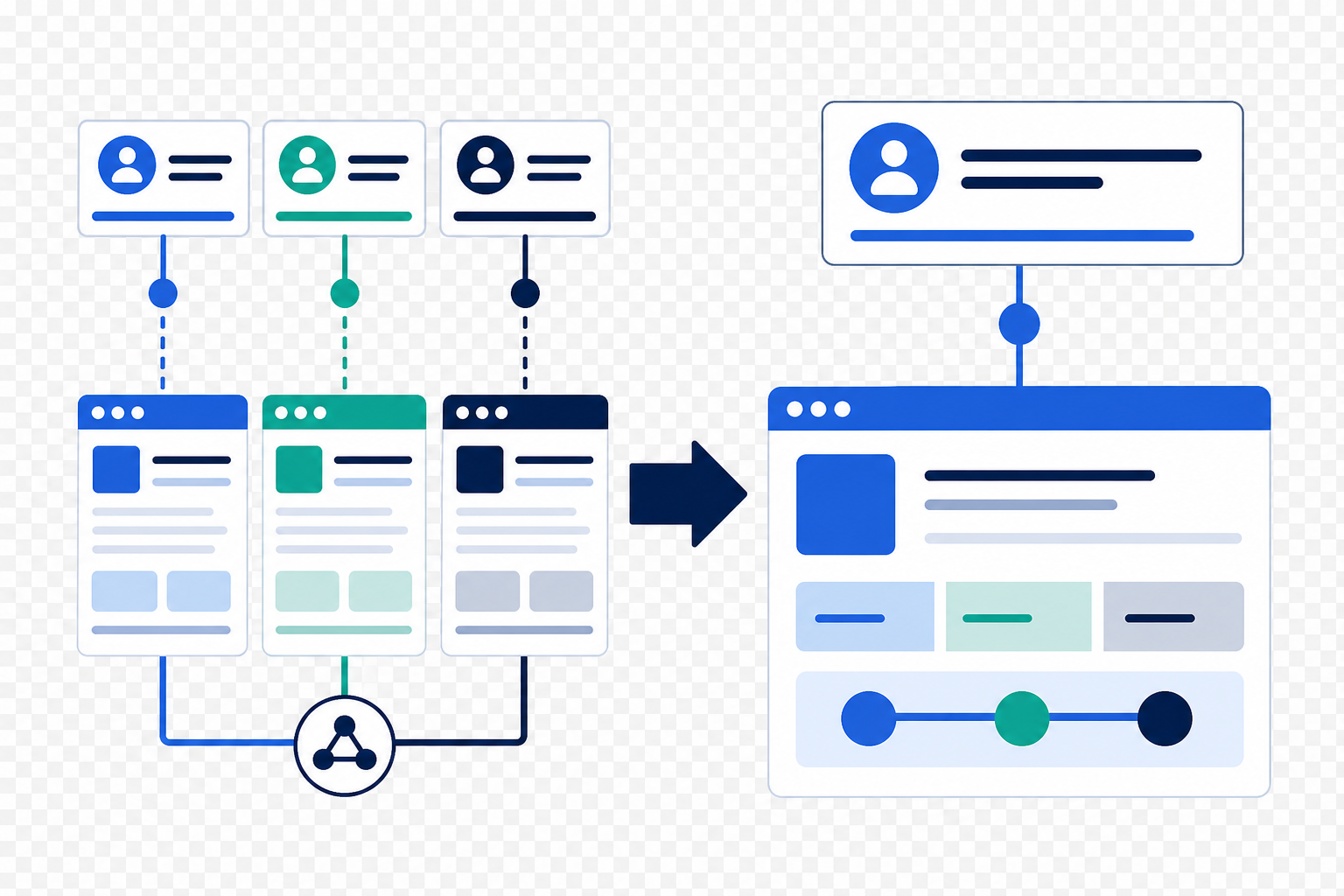
If your sales team uses one CRM, your marketing runs campaigns from another platform, and your service desk operates on a third system, with no data flowing between them, you have an integration problem that costs real money. Research shows data silos cost organizations $7.8 million annually in lost productivity.
2. You're planning a major technology investment.
Whether it's a CRM migration, a new integration platform, or an AI deployment, implementations worth $75K+ benefit from experienced guidance. The statistics are sobering: 84% of system integration projects fail or partially fail without proper planning and execution support.
3. Your team is stretched too thin.
Your IT department keeps the lights on, but who's driving strategic transformation? When your best people are consumed by day-to-day operations, bringing in consultants for strategic projects lets your team focus on what they do best while experts handle the heavy lifting.
4. Adoption is lagging.
You invested in a powerful platform, but nobody's using it. Only 37.8% of Fortune 1000 companies have successfully created data-driven organizations despite 98.8% investing in data initiatives. The gap between buying technology and using technology is where consulting makes the biggest difference.
5. You can't articulate your technology roadmap.
If leadership asks "where will our technology be in two years?" and the answer is unclear, that's a strategic planning gap that technology consultants are uniquely positioned to fill.
What to Look for in a Technology Consulting Partner
The Essential Evaluation Criteria
Choosing the right consulting partner is one of the most consequential decisions in any technology initiative. Here's what separates great partners from mediocre ones:
1. Platform Expertise with Breadth
The best consultants don't just know one tool: they understand how platforms work together. Look for partners with deep expertise across:
- CRM platforms (Salesforce, HubSpot) for customer relationship management
- Integration middleware (MuleSoft, Workato) for connecting systems
- Data platforms (Data Cloud, analytics tools) for unified insights
- AI and automation (Claude AI, Agentforce) for intelligent workflows
- Communication tools (Aircall, cloud telephony) for customer engagement
A partner who understands the full ecosystem can design solutions that work holistically rather than creating new silos.
2. Implementation Track Record
Ask for specifics. How many similar projects have they completed? What were the measurable outcomes? Organizations with strong technology integration achieve 10.3x ROI from AI initiatives versus 3.7x for those with poor connectivity. Your consulting partner's track record is the best predictor of your results.
3. Change Management Capabilities
Technology is only half the equation. McKinsey's research consistently identifies organizational culture as the dominant obstacle to digital transformation success. Companies investing in culture change see 5.3x higher success rates than those taking technology-only approaches. Your partner should have a proven methodology for:
- Stakeholder alignment and executive sponsorship
- User training and enablement programs
- Adoption monitoring and reinforcement
- Communication strategies that build buy-in across the organization
4. Phased Delivery Approach
Beware of partners who pitch a 12-month project with a "big reveal" at the end. The best consultants use iterative approaches with frequent check-ins, quick wins, and continuous feedback loops. Research shows that incremental approaches have 50% lower failure rates than large-scale, monolithic deployments.
5. Post-Implementation Support
The real work begins after go-live. Ensure your partner offers ongoing optimization, user support, and strategic guidance to maximize long-term value.
The Technology Consulting Engagement: What to Expect
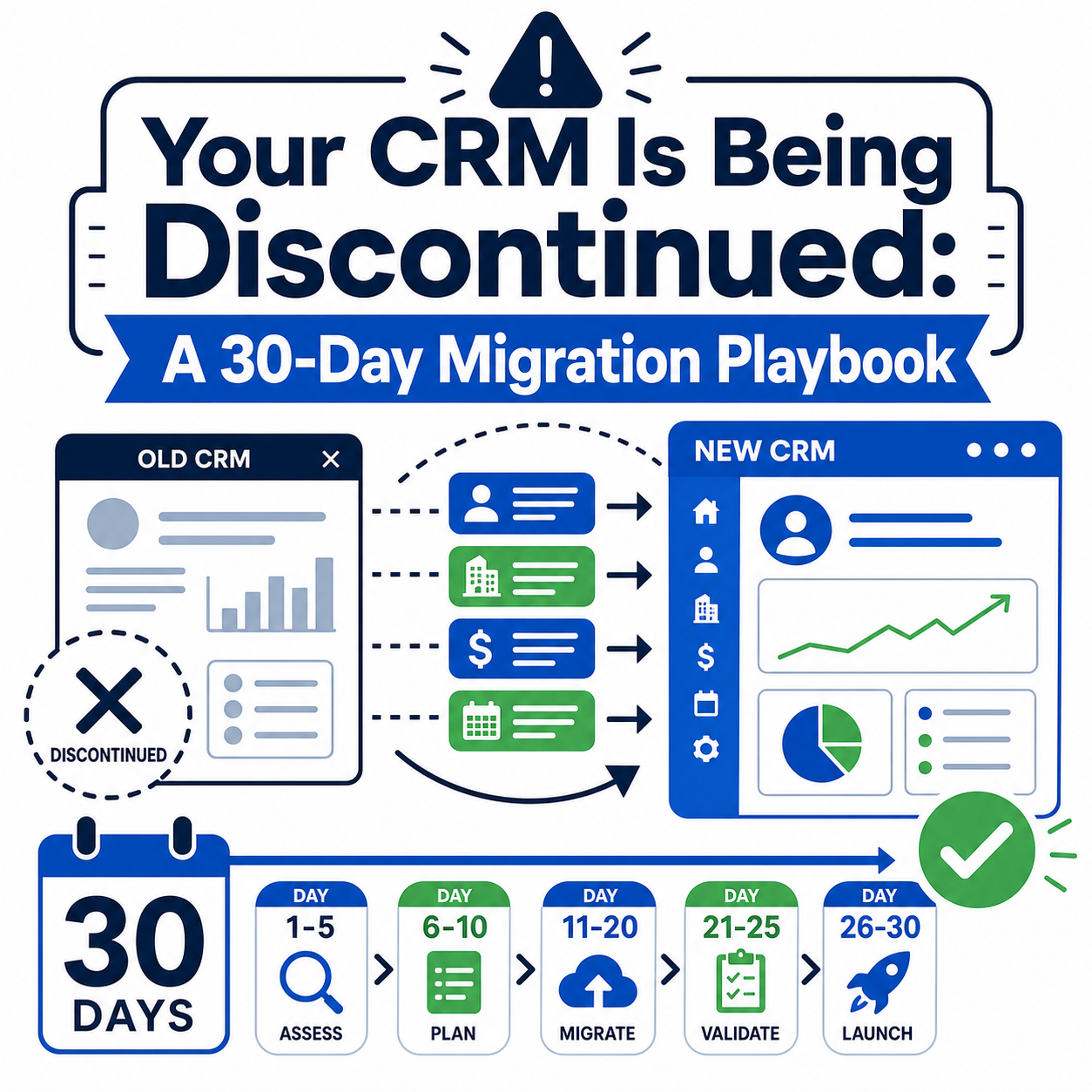
Phase 1: Discovery and Assessment (Weeks 1-4)
Every successful engagement starts with understanding where you are today. This phase typically includes:
- Technology audit: Mapping your current systems, integrations, data flows, and pain points
- Stakeholder interviews: Understanding what different teams need from technology
- Gap analysis: Identifying where your current stack falls short of business objectives
- Data quality assessment: Evaluating the health of your data: since 64% of organizations cite data quality as their top challenge
- Competitive benchmarking: Understanding how your technology maturity compares to peers
The output is a clear-eyed assessment of your current state and a prioritized list of opportunities.
Phase 2: Strategy and Architecture (Weeks 3-8)
With discovery complete, your consulting team designs the solution:
- Technology roadmap: A phased plan with clear milestones, timelines, and success metrics
- Architecture design: How systems will connect, data will flow, and users will interact
- Integration blueprint: Specific plans for connecting platforms using tools like MuleSoft or native connectors
- AI readiness plan: If applicable, how to prepare your data and workflows for AI-powered automation
- Change management plan: How you'll drive adoption across teams
This phase is collaborative. The best outcomes come from consulting teams who listen deeply and design solutions that fit your organization's unique culture, constraints, and goals.
Phase 3: Implementation (Weeks 6-24+)
This is where strategy becomes reality:
- Platform configuration: Setting up CRM systems, automation workflows, and integrations
- Data migration: Moving historical data into new systems with quality checks at every step
- Custom development: Building features, reports, dashboards, and automations specific to your needs
- Integration deployment: Connecting systems so data flows automatically
- Testing: Rigorous quality assurance to catch issues before users do
The best consulting partners deliver value incrementally. You should see working features within the first 4-6 weeks, not just at the project's end.
Phase 4: Training and Adoption (Weeks 16-28)
This phase is where many organizations drop the ball, and it's where consulting investment pays the biggest dividends:
- Role-based training: Teaching each team exactly what they need to know for their daily workflows
- Power user development: Identifying and empowering internal champions
- Documentation: Creating runbooks, process guides, and quick-reference materials
- Adoption monitoring: Tracking usage metrics and addressing low engagement early
- Feedback loops: Gathering user input to refine the system continuously
Remember: 83% of leaders say data literacy is critical for all roles, yet only 28% achieve it. Training isn't a one-time event: it's an ongoing commitment.
Phase 5: Optimization and Growth (Ongoing)
Technology is never "done." Post-launch optimization includes:
- Performance monitoring: Ensuring systems meet speed and reliability targets
- Usage analytics: Identifying underutilized features and training gaps
- Enhancement roadmap: Planning the next wave of features and integrations
- AI and automation expansion: Layering in intelligent capabilities as your data matures
- Quarterly business reviews: Aligning technology performance with evolving business goals
Best Practices for Maximizing Your Technology Consulting Investment
1. Define Success Before You Start
Before engaging a consulting partner, be clear about what success looks like. Is it faster sales cycles? Higher customer satisfaction scores? Reduced manual data entry? Specific, measurable goals give your consulting team a target and give you a framework for evaluating ROI.
2. Invest in Executive Sponsorship
Technology initiatives without visible executive support fail at dramatically higher rates. Assign a C-suite sponsor who attends key meetings, removes organizational obstacles, and visibly champions the initiative.
3. Prioritize Data Quality Early
Since 77% of organizations rate their data quality as average or worse, cleaning and standardizing your data before migration saves enormous time and money. Work with your consulting partner to establish data governance practices early.
4. Plan for Change Management from Day One
Don't treat change management as an afterthought. Budget 15-20% of your project investment for training, communication, and adoption support. This is the single highest-ROI line item in any technology project.
5. Start Small, Scale Fast
Begin with a focused pilot that demonstrates quick value: then expand. This builds organizational confidence, generates internal advocates, and reduces risk. Companies that take incremental approaches see measurably better outcomes.
6. Measure What Matters
Track adoption rates, process efficiency gains, data quality improvements, and user satisfaction: not just project milestones. The goal is business outcomes, not technical checkboxes.
7. Build Internal Capabilities
The best consulting engagements make your internal team stronger. Ensure knowledge transfer is built into the engagement so your team can maintain and extend the solution independently over time.
How Technology Consulting Delivers ROI
The Numbers
The business case for technology consulting is compelling when executed well:
| Metric | Without Consulting Partner | With Consulting Partner |
|---|---|---|
| Project success rate | ~30% | ~70%+ |
| Time to value | 12-18 months | 4-8 months |
| User adoption (Year 1) | 35-45% | 75-90% |
| Integration ROI | 3.7x | 10.3x |
| Budget overrun risk | 47% experience overruns | Dramatically reduced with phased approach |
Where the Value Comes From
- Reduced implementation risk: Experienced consultants have navigated the pitfalls before
- Faster time to value: Phased delivery means you see returns months earlier
- Higher adoption rates: Change management expertise ensures teams actually use the technology
- Better architecture decisions: Consultants who understand the full platform ecosystem design solutions that scale
- Knowledge transfer: Your team gets smarter throughout the engagement
Common Technology Consulting Mistakes to Avoid
1. Choosing Based on Price Alone
The lowest-cost proposal often becomes the most expensive project. Failed implementations cost organizations an average of 12% of annual revenue through wasted investment and opportunity costs. Evaluate partners on expertise, track record, and cultural fit: not just hourly rates.
2. Skipping the Discovery Phase
Organizations that rush past discovery to "get to the real work" inevitably encounter problems that a proper assessment would have prevented. Discovery isn't overhead: it's insurance.
3. Treating Technology as a Silver Bullet
No CRM, integration platform, or AI tool will fix broken processes or misaligned teams. Technology amplifies what already works, and exposes what doesn't. Be honest about organizational challenges before layering on new technology.
4. Underinvesting in Integration
Standalone systems deliver standalone value. Connected systems deliver exponential value. Organizations with strong integration achieve nearly 3x the ROI of those without it. Make integration a first-class priority, not an afterthought.
5. Ignoring Post-Launch Optimization
Going live is the starting line, not the finish line. Organizations that invest in ongoing optimization see continuous improvement in adoption, efficiency, and ROI long after the initial implementation.
FAQ: Technology Consulting for Complex Organizations
What types of organizations benefit most from technology consulting?
Any organization managing multiple technology platforms, planning a significant technology investment, or struggling with system integration and user adoption can benefit. This includes growing businesses with 50+ employees, organizations undergoing digital transformation, and companies looking to unify sales, service, and marketing technology.
How much does technology consulting typically cost?
Costs vary widely based on scope. A focused CRM implementation may range from $75K, $200K, while a comprehensive technology transformation with integration, AI, and change management could reach $300K: $500K+. The key metric is ROI, well-executed consulting engagements routinely deliver 3-10x returns within 18 months.
How long does a typical technology consulting engagement last?
Most engagements run 3-12 months for the core implementation, with ongoing optimization extending beyond that. CRM implementations typically take 3-6 months, integration projects 4-8 months, and full digital transformations 9-18 months. Phased approaches deliver initial value within 4-8 weeks.
What's the difference between technology consulting and IT staffing?
IT staffing provides additional technical resources to work under your direction. Technology consulting provides strategic guidance, solution architecture, implementation expertise, and change management. Essentially an end-to-end partnership that drives outcomes, not just activity.
How do I measure the success of a technology consulting engagement?
Track metrics including user adoption rates, process efficiency improvements (time saved per task), data quality scores, customer satisfaction impact, and financial ROI. The best consulting partners establish baseline measurements during discovery and track progress against those benchmarks throughout the engagement.
Can technology consulting help with AI implementation?
Absolutely. With 74% of companies struggling to scale AI value, consulting partners who understand data quality, integration, and change management are critical for AI success. Effective AI consulting includes data readiness assessment, use case identification, platform selection, integration architecture, and adoption support.
Should we build internal capabilities or rely on external consultants?
The best approach is both. Use consulting partners for specialized expertise, strategic guidance, and complex implementations, while simultaneously investing in internal team development. Knowledge transfer should be a core requirement of any consulting engagement so your team can maintain and extend solutions independently.
Conclusion
Technology consulting isn't about outsourcing your technology decisions: it's about making better decisions, faster. In a world where only 35% of digital transformation initiatives achieve their objectives, the organizations that succeed are those that combine internal knowledge with external expertise.
The most effective consulting partnerships share common traits: clear goals, phased delivery, strong change management, and a relentless focus on business outcomes over technical complexity.
If your organization is navigating a CRM migration, struggling with disconnected systems, preparing for AI adoption, or simply trying to get more value from your existing technology investment, a strategic consulting partner can be the difference between a successful transformation and a costly failure.
Ready to turn your technology challenges into competitive advantages? Contact Vantage Point to discuss how our team can help your organization implement, integrate, and optimize the platforms that drive your business forward.
About Vantage Point
Vantage Point is a technology consulting firm that helps organizations implement and optimize CRM platforms, integration solutions, and AI-powered workflows. As certified partners of Salesforce, HubSpot, Anthropic (Claude AI), Aircall, and Workato, Vantage Point brings deep platform expertise across the full technology ecosystem. From Sales Cloud and Service Cloud to MuleSoft integrations and Data Cloud analytics, our team delivers end-to-end consulting that connects strategy to execution, and technology to results. Learn more at vantagepoint.io.