Salesforce compliance risk in banks comes down to a handful of controllable factors: who can see customer data, how changes are tracked, how long records are retained, and whether you can prove all of it to an examiner. Most banks running Salesforce already own the tools they need to reduce that risk: they just haven't configured or governed them deliberately.
This guide gives banking technology, risk, and operations leaders a prioritized framework: quick wins you can implement in 30 days, structural controls to build in 90 days, and the ongoing governance that keeps your org audit-ready. It covers data access, Salesforce Shield, audit trails, retention, AppExchange vetting, integration security, and regulator-facing documentation.
Quick Answer
Reducing Salesforce compliance risk in a bank means enforcing least-privilege access, turning on the right monitoring and encryption controls (often via Salesforce Shield), documenting changes, and reviewing access on a fixed cadence. This matters for any bank, credit union, or thrift using Salesforce to manage customer relationships, deposits, lending pipelines, or service cases. Use this article to prioritize which controls to implement first and how to make your org defensible in an exam. Vantage Point delivers compliance-first Salesforce work for regulated financial institutions with senior consultants, and offers a Salesforce org compliance assessment to identify and close the highest-risk gaps.
TL;DR
- The biggest Salesforce compliance risks for banks are over-permissioned users, unmonitored data access, undocumented configuration changes, and unvetted third-party packages and integrations.
- Start with 30-day quick wins: run Salesforce Security Health Check, remove "View All Data"/"Modify All Data" from non-admin users, enforce MFA, and inventory connected apps.
- Salesforce Shield adds four bank-relevant controls: Platform Encryption, Event Monitoring, Field Audit Trail, and Einstein Data Detect.
- Audit readiness depends on documented change management and a written data retention policy: not just technical settings.
- Quarterly user access reviews and a standing governance cadence keep compliance risk down after the initial cleanup.
Why Does Salesforce Compliance Risk Matter for Banks?
Banks face Salesforce compliance risk because the CRM holds regulated customer data. Nonpublic personal information under GLBA, account and lending details, and communications that may fall under record-retention rules. Examiners increasingly treat the CRM as part of the bank's critical technology environment, which means it falls inside the scope of IT exams, GLBA safeguards reviews, and vendor management expectations.
The practical consequences of weak CRM governance are familiar to any risk officer: findings in safety-and-soundness or IT exams, longer remediation cycles, and exposure if customer data is accessed by employees who have no business need to see it.
The good news: Salesforce gives banks more native control than most legacy banking systems. The risk usually isn't the platform: it's an org that grew organically without deliberate compliance and security configuration.
What Are the Biggest Salesforce Compliance Risks for Banks?
The highest-impact Salesforce compliance risks for banks are excessive data access, missing audit evidence, uncontrolled changes, and third-party exposure. Each maps to a specific control and, in most cases, a specific Salesforce feature:
| Risk Area | Control | Salesforce Feature |
|---|---|---|
| Employees see customer data they don't need | Least-privilege access model | Profiles, permission sets, field-level security, sharing rules |
| No record of who viewed or exported data | Activity monitoring and alerting | Shield Event Monitoring, Transaction Security policies |
| Sensitive fields changed with no history | Extended field history | Shield Field Audit Trail (up to 10 years of field history) |
| Data exposed at rest | Encryption of sensitive fields and files | Shield Platform Encryption |
| Unknown sensitive data scattered across objects | Data classification and discovery | Einstein Data Detect, data classification metadata |
| Records kept too long (or deleted too soon) | Written retention and archival policy | Big Objects, archival tools, scheduled deletion jobs |
| Undocumented configuration changes | Formal change management | Sandboxes, change sets/DevOps pipeline, Setup Audit Trail |
| Risky third-party packages | AppExchange vetting process | Managed package review, security review status, install audits |
| Over-scoped integrations | Integration security standards | Named Credentials, OAuth scopes, integration user licenses |
| Stale or orphaned user access | Periodic access reviews | User reports, login history, permission set group audits |
Use this table as your assessment checklist: if you can't name the owner and current state of each row, that row is where your risk lives.
How Do You Lock Down Data Access in Salesforce?
Lock down Salesforce data access by enforcing least privilege: every user gets the minimum object, field, and record access their role requires: nothing more. In banking orgs, this is the single highest-leverage compliance control, and it's available on every Salesforce edition without add-on licensing.
A practical sequence:
- Audit who has admin-level rights. Run a report on users with "View All Data," "Modify All Data," "Manage Users," or "Author Apex." In most bank orgs this list is far longer than it should be. Reduce it to named administrators only.
- Move from profiles to permission sets. Keep profiles minimal and grant capabilities through permission sets and permission set groups. This makes access auditable and reviewable: you can answer "why does this user have this access?" with a named permission set.
- Apply field-level security to regulated fields. SSNs/TINs, account numbers, dates of birth, and income data should be visible only to roles with a business need. Field-level security is your primary GLBA safeguard inside the org.
- Tighten org-wide defaults and sharing rules. Default to private for objects holding customer financial data, then open access deliberately by branch, team, or line of business.
- Enforce MFA and session controls. Multi-factor authentication is contractually required by Salesforce and expected by examiners. Add IP restrictions and session timeout policies appropriate for bank workstations.
Run Salesforce Security Health Check quarterly to score your org's session, password, and access settings against Salesforce's baseline, and keep the reports as exam evidence.
What Does Salesforce Shield Add for Bank Compliance?
Salesforce Shield is an add-on suite of four security and compliance products: Platform Encryption, Event Monitoring, Field Audit Trail, and Einstein Data Detect. For banks, Shield closes the gaps that native controls can't, encryption at rest, user activity monitoring, and long-horizon field history.
| Shield Component | What It Does | Bank Compliance Use Case |
|---|---|---|
| Platform Encryption | Encrypts data at rest at the field and file level while preserving search and workflow functionality | Encrypt TINs, account numbers, and uploaded statements; supports GLBA safeguards and vendor risk responses |
| Event Monitoring | Captures detailed logs of user activity: logins, report exports, API calls, record views | Detect mass data exports, investigate insider misuse, feed CRM activity into your SIEM |
| Field Audit Trail | Extends field history retention up to 10 years across up to 60 fields per object | Prove what a customer record said at a point in time; meet record-retention expectations |
| Einstein Data Detect | Scans objects to find sensitive data (SSNs, credit card numbers) stored in unexpected fields | Find regulated data hiding in free-text notes and description fields before an examiner does |
Two practical notes. First, Shield is licensed as a percentage of your Salesforce spend, so scope which components you actually need, many banks start with Event Monitoring and Field Audit Trail, then add Platform Encryption for specific fields. Second, Shield generates evidence, not outcomes: Event Monitoring logs are only useful if someone reviews them or routes them to alerting. See the official Salesforce Shield overview for current component details, and our deeper breakdown of Salesforce Shield's four security features for financial services.
How Do You Make Your Salesforce Org Audit-Ready?
An audit-ready Salesforce org is one where every configuration change, access grant, and data-handling decision is documented and reproducible. Examiners and internal auditors care less about which features you bought and more about whether you can show a controlled process.
Focus on four artifacts:
- A documented change management process. All configuration changes flow through a sandbox, get tested, and deploy through change sets or a DevOps pipeline: with approvals recorded. The Setup Audit Trail (which retains 180 days of setup changes natively) backs this up, but your ticketing or DevOps records are the primary evidence.
- Current-state configuration documentation. Maintain a living document covering your security model: org-wide defaults, role hierarchy, permission set inventory, and which fields are encrypted or restricted. If your org has grown undocumented, a one-time org assessment and documentation effort pays for itself in the first exam.
- A written data retention and archival policy. Define how long each record type is retained, where archived data lives (Big Objects, external archive, or warehouse), and how deletion is executed and logged. "We keep everything forever" is a finding waiting to happen: it expands breach exposure and conflicts with data minimization expectations.
- Access review records. Quarterly user access reviews (who has access, who approved it, what was removed) are among the first items requested in IT exams. Keep the sign-offs.
For banks on Financial Services Cloud, extend the same discipline to FSC-specific objects and data model customizations; our Financial Services Cloud practice covers compliance configuration as part of implementation.
How Should Banks Vet AppExchange Packages and Integrations?
Vet every AppExchange package and integration as a third-party vendor with access to customer data, because that's what it is. Your vendor management program almost certainly requires this; many banks simply haven't connected it to their Salesforce org.
For AppExchange packages:
- Confirm the package passed Salesforce's security review and check its permissions before installing: what objects and fields does it touch?
- Run packages through your standard vendor due diligence: SOC 2 reports, data handling, subprocessors, breach notification terms.
- Inventory installed packages annually and remove anything unused. Every installed package is attack surface and exam scope.
For integrations:
- Use Named Credentials for all outbound callouts so credentials are stored and rotated centrally: never hardcode endpoints or secrets in Apex.
- Scope OAuth tokens narrowly. An integration that only reads contact data should not hold full-access API scopes.
- Give each integration a dedicated integration user with its own minimal permission set, so its activity is distinguishable in Event Monitoring logs and its access is reviewable like any other user.
- Document every connected app: owner, purpose, data accessed, and review date.
Core banking integrations deserve special attention. The connection between Salesforce and your core is the highest-value data path in the org and should be reviewed against the same standards as any core-adjacent system.
What Is a Practical Salesforce Compliance Roadmap for Banks?
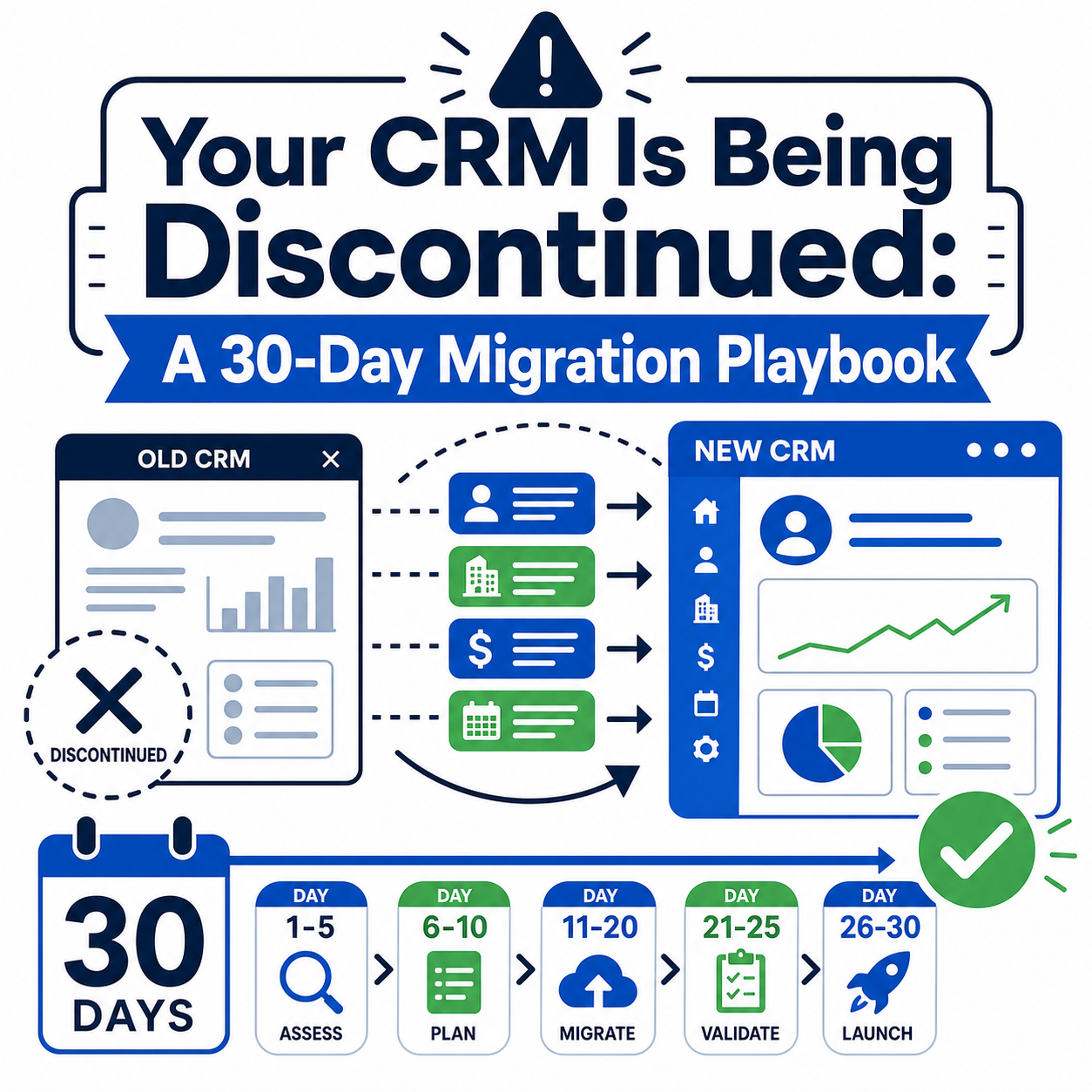
A practical roadmap splits the work into 30-day quick wins, 90-day structural controls, and an ongoing governance cadence. This sequencing reduces the most risk fastest without freezing day-to-day CRM operations.
First 30 days: quick wins:
- Run Security Health Check and remediate high-risk findings.
- Strip "View All Data"/"Modify All Data" from non-admin users.
- Verify MFA enforcement, session timeouts, and login IP ranges.
- Inventory all connected apps, installed packages, and integration users.
- Pull the Setup Audit Trail and login history; archive them as a baseline.
Days 31-90: structural controls:
- Rebuild access around permission sets with field-level security on regulated fields.
- Scope and deploy Shield components where gaps exist (typically Event Monitoring and Field Audit Trail first).
- Stand up formal change management: sandbox-to-production pipeline with approvals.
- Draft and approve the data retention and archival policy; implement archival for the first record types.
- Document the security model and produce regulator-facing configuration documentation.
Ongoing: governance cadence:
- Quarterly user access reviews with recorded sign-off.
- Quarterly Health Check re-runs and Event Monitoring log reviews (or continuous SIEM alerting).
- Annual AppExchange and integration re-certification.
- Change advisory review for all production deployments.
- Annual policy refresh aligned to exam findings and regulatory updates.
Most banks can execute the 30-day list with internal admins. The 90-day structural work is where institutions typically bring in outside help, especially Shield scoping, archival design, and documentation that will be read by examiners.
How Vantage Point Helps
Vantage Point delivers compliance-first Salesforce consulting for banks and other regulated financial institutions. Our consultants are senior-only, and much of our work is in financial services, where access models, audit trails, and examiner expectations are part of the job, not an afterthought.
A typical starting point is a Salesforce org compliance assessment: we evaluate your access model, Shield configuration (or the gaps Shield would close), change management, retention posture, and integration security, then deliver a prioritized remediation plan mapped to the 30/90-day framework above. From there, our compliance and security solutions team implements the controls, and managed services can run the ongoing governance cadence (access reviews, log monitoring, and release management) so it actually happens every quarter.
You can also find Vantage Point on the Salesforce AppExchange consultant listing.
If your team is preparing for an exam, responding to findings, or simply wants to know where your org stands, a compliance assessment is the fastest way to get a defensible answer.
FAQ
What is Salesforce compliance risk for banks?
Salesforce compliance risk is the chance that a bank's CRM configuration, data handling, or access controls fail to meet regulatory expectations, GLBA safeguards, record retention, vendor management, and examiner scrutiny of critical systems. It typically stems from over-permissioned users, missing audit trails, undocumented changes, and unvetted third-party packages rather than from the platform itself.
Do banks need Salesforce Shield to be compliant?
No single product makes a bank compliant, and many controls (least privilege, MFA, sharing rules, change management) are native to every Salesforce edition. Shield becomes important when you need encryption at rest, detailed user activity monitoring, field history beyond native limits, or automated sensitive-data discovery. Most banks scope Shield component-by-component rather than assuming they need the full suite.
What are the four components of Salesforce Shield?
Salesforce Shield includes Platform Encryption (field- and file-level encryption at rest), Event Monitoring (detailed user activity logs), Field Audit Trail (field history retention up to 10 years), and Einstein Data Detect (scanning for sensitive data like SSNs in unexpected fields). Banks most commonly start with Event Monitoring and Field Audit Trail.
How often should banks review Salesforce user access?
Quarterly is the standard cadence for user access reviews in banking environments, with documented sign-off each cycle. Reviews should cover active users, permission sets, admin-level rights, integration users, and connected apps. Many examiners ask for these records directly, so retain the sign-offs as evidence.
How long should a bank retain Salesforce data?
Retention depends on record type and applicable regulation, loan records, customer communications, and account data each carry different requirements. The compliance failure mode is having no written policy at all: define retention periods per record type, implement archival (for example, to Big Objects or an external archive), and log deletions. Keeping everything forever increases breach exposure and is itself a governance gap.
Are AppExchange apps safe for banks to install?
AppExchange apps pass Salesforce's security review, but that doesn't replace your bank's own vendor due diligence. Treat each package as a third-party vendor: review its permissions and data access, collect SOC 2 or equivalent documentation, and re-certify installed packages annually. Remove unused packages: each one expands your audit scope.
What Salesforce evidence do examiners typically ask for?
Common requests include user access review records, lists of users with administrative rights, change management documentation for recent deployments, data retention policies, MFA enforcement evidence, and vendor due diligence for installed packages and integrations. An org that maintains these as living artifacts turns exam prep from a scramble into a file pull.
How long does it take to reduce Salesforce compliance risk meaningfully?
Most banks can eliminate the highest-risk gaps (excessive admin rights, missing MFA, unknown connected apps) within 30 days. Structural controls like Shield deployment, permission set redesign, formal change management, and retention policies typically take a focused 90-day effort. Vantage Point's org compliance assessments are designed to produce that prioritized 30/90-day plan for your specific org.