Key Takeaways (TL;DR)
- What is Orion Connect for FSC? A managed Salesforce package that creates bi-directional data sync between Orion's portfolio management platform and Salesforce Financial Services Cloud: keeping both systems in lockstep automatically.
- Key Benefit: Eliminates dual data entry across CRM and operations platforms, reducing manual input by 80% and giving teams a unified client view without switching applications.
- Cost/Investment: Per-user licensing through Orion; implementation typically takes 1-2 weeks with proper planning. Enterprise Edition Salesforce or higher required.
- Best For: Any organization running a specialized industry platform alongside Salesforce CRM that needs real-time, bi-directional data synchronization: from portfolio management to ERP, EHR, or policy administration systems.
- Bottom Line: Orion Connect demonstrates the gold standard for vendor-built CRM connectors: native object mapping, encrypted field handling, flexible sync scheduling, and SSO: an integration pattern every industry should study.
Product Page: Orion Connect for Salesforce: Data Sync for FSC | Orion Integrations Directory
Platform: Salesforce AppExchange (Managed Package)
Vendor: Orion Advisor Technology
Sync Type: Bi-directional (CRM ↔ Operations Platform)
Version Reviewed: 1.9+
Why This Integration Matters Beyond Financial Services
Every industry has the same problem: specialized operational platforms hold critical data that needs to flow seamlessly into CRM systems, and back again. Healthcare organizations synchronize EHR patient records with Salesforce Health Cloud. Manufacturers sync ERP inventory and order data with Sales Cloud. Insurance companies bridge policy administration systems with their CRM.
The challenge is universal: how do you keep two complex systems synchronized without creating data silos, duplicates, or compliance gaps?
Orion Connect for Salesforce FSC is one of the most mature examples of a vendor-built, bi-directional CRM connector in any industry. Whether you're evaluating AppExchange apps for your Salesforce org or designing your own integration architecture, the patterns and best practices embedded in this connector offer valuable lessons for any platform pairing.
In this review, we break down the architecture, features, implementation considerations, and cross-industry takeaways from Orion Connect, so you can apply these principles to your own integration challenges.
What Is Orion Connect for Salesforce FSC?
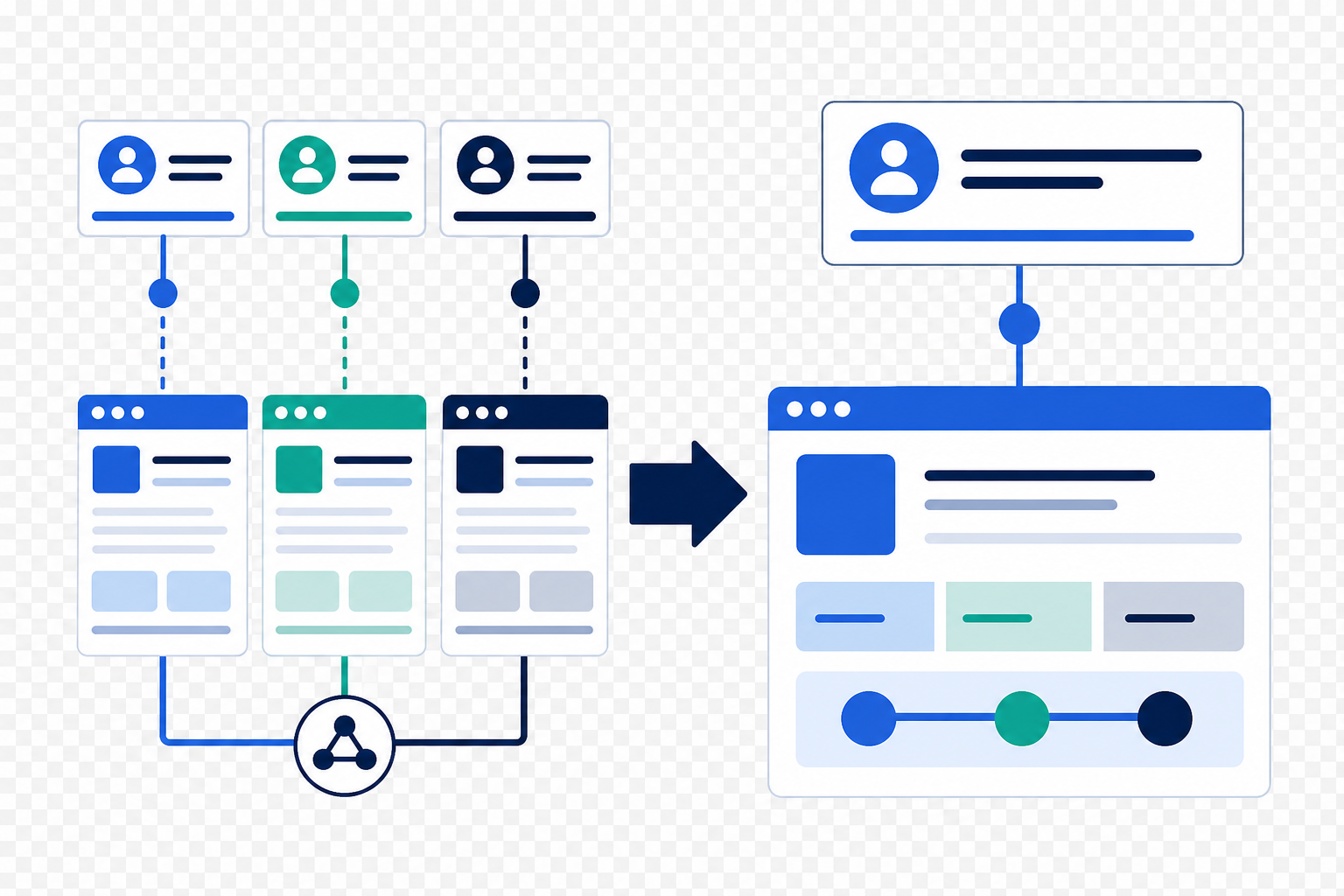
Orion Connect is a managed Salesforce package that creates a bi-directional data bridge between Orion's portfolio management and accounting platform and Salesforce Financial Services Cloud (FSC). It synchronizes over a dozen data objects (including households, accounts, contacts, holdings, performance metrics, and compliance fields) using a combination of real-time and scheduled sync processes.
The integration leverages Salesforce's native Financial Services Cloud data model (FinServ objects), meaning it doesn't create a parallel set of custom objects. Instead, it maps directly to the industry-standard architecture that Salesforce provides, creating a clean, maintainable integration layer.
Core Architecture: How the Data Flows
The integration architecture follows a pattern that's becoming the gold standard for CRM-to-operations-platform connectors:
Orion's Data Hierarchy: Firm → Representative → Household → Registration → Account → Asset → Transaction
Salesforce FSC's Data Model: Account (Household) → Account (Person/Individual) → Financial Account → Financial Holding
Orion Connect intelligently maps between these structures:
| Orion Object | Salesforce FSC Object | Sync Direction |
|---|---|---|
| Household | Household Account | Bi-directional |
| Household Member | Person/Individual Account | Bi-directional |
| Registration | Financial Account | Orion → Salesforce |
| Asset/Holding | Financial Holding | Orion → Salesforce |
| Representative | User/Contact | Bi-directional |
| Performance Metrics | Custom Fields | Orion → Salesforce |
| Billing/Receivables | Custom Objects | Orion → Salesforce |
Key architectural decision: Demographic and relationship data (names, addresses, phone numbers, emails) syncs bi-directionally, while operational data (portfolio values, performance metrics, trading status, fee schedules) flows one-way from the operations platform to CRM. This "system of record" pattern prevents conflicts by establishing clear data ownership rules.
Key Features That Set This Integration Apart
1. Native Object Mapping with Flexible Field Configuration
Rather than dumping data into generic custom objects, Orion Connect maps directly to Salesforce FSC's native FinServ fields. This means:
- Standard Salesforce reports and dashboards work immediately
- Existing automations (flows, triggers, validation rules) apply to synced data
- The data model remains clean and upgradeable
Additionally, administrators can configure custom field mappings through a visual mapping interface: no code required. This flexibility is critical when your Salesforce org has customizations that don't exist in the source system's standard schema.
Cross-industry takeaway: When evaluating any CRM connector, prioritize solutions that map to your platform's native objects rather than creating parallel custom schemas. This dramatically reduces technical debt and maintenance overhead.
2. Tiered Sync Scheduling (Delta + Full)
Orion Connect implements a two-tier synchronization strategy:
- Delta Sync (every 15-30 minutes during business hours): Processes only records that changed since the last sync, keeping data fresh with minimal API consumption.
- Full Sync (nightly/weekends): Reconciles the entire dataset to catch any records that may have been missed and ensures complete data integrity.
This pattern balances data freshness against Salesforce API governor limits: a constraint that every Salesforce integration must address. For organizations with large datasets, this tiered approach prevents hitting daily API call limits while ensuring business-critical data stays current.
Cross-industry takeaway: Any integration involving Salesforce should implement tiered sync scheduling. Real-time sync for everything sounds appealing but will exceed API limits at scale. Delta syncs during business hours plus full reconciliation overnight is the proven pattern.
3. Encrypted Field Handling for Compliance
Orion Connect supports encrypted synchronization of sensitive fields like SSN/Tax ID data. This is essential for any regulated industry where personally identifiable information (PII) or protected data must flow between systems without exposure.
The integration maintains encryption in transit and at rest, supports Salesforce Shield's platform encryption, and provides field-level security controls that allow administrators to restrict access to sensitive synced data by user profile or permission set.
Cross-industry takeaway: If your integration involves PII, PHI, financial data, or any regulated information, encrypted field handling isn't optional: it's table stakes. Evaluate whether your connector supports platform-native encryption (like Salesforce Shield) rather than just transport-layer encryption.
4. Embedded Dashboard and Single Sign-On (SSO)
Rather than forcing users to switch between applications, Orion Connect embeds operational dashboards directly within Salesforce page layouts using Visualforce components. Combined with SSO, users can:
- View portfolio data (or equivalent operational data) without leaving Salesforce
- Click through to the source platform with context preserved (client, account, etc.)
- Perform actions in the operational system from within the CRM interface
This "single pane of glass" approach dramatically reduces context-switching overhead. Studies suggest that knowledge workers lose 20-30 minutes of productivity each time they switch between applications, and the average worker switches between apps 1,200 times per day.
Cross-industry takeaway: The best integrations don't just sync data: they embed the user experience. Look for connectors that provide iframe/component embedding and contextual deep linking, not just background data sync.
5. Record Linking vs. Record Creation Flexibility
During implementation, Orion Connect offers two approaches:
- Link to Existing Records: Match records using Source System IDs when both systems already have overlapping data (recommended for organizations with established datasets)
- Create New Records: Automatically create Salesforce records from the source system when CRM data doesn't yet exist
This flexibility prevents the most common integration nightmare: duplicate records. By supporting explicit record matching through external IDs, the integration avoids the fuzzy matching problems that plague many sync tools.
Cross-industry takeaway: Always implement explicit record matching through unique identifiers (external IDs) rather than relying on name matching or fuzzy logic. Duplicate management should be a first-class consideration in any integration design, not an afterthought.
Implementation: What to Expect
Timeline and Effort
Based on real-world implementations, expect the following:
| Phase | Duration | Key Activities |
|---|---|---|
| Planning & Prerequisites | 2-3 days | Salesforce edition verification, API access, data audit |
| Package Installation | 1-2 hours | Managed package install, permission sets |
| Network & Security Config | 2-4 hours | IP whitelisting, connected app settings, OAuth setup |
| Field Mapping | 4-8 hours | Standard + custom field configuration |
| Record Linking/Migration | 1-2 days | External ID population, pilot sync |
| Testing & Validation | 1-2 days | Data accuracy verification, edge case testing |
| User Training | 1-2 days | Page layouts, embedded components, workflows |
| Total | 1-2 weeks |
Prerequisites Checklist
Before implementing any CRM connector of this complexity, ensure:
- CRM Edition: Enterprise Edition or higher (most managed packages require this)
- API Access: Enabled and sufficient daily API calls for your sync volume
- Admin Access: System Administrator credentials for both platforms
- Data Quality: Audit both systems for duplicates, standardize naming conventions
- Pilot Group: Identify a subset of records for initial sync validation
- Rollback Plan: Document how to disconnect and restore if issues arise
Common Pitfalls and How to Avoid Them
1. Record Population Order Matters When linking existing records, always populate child records before parent records. Populating parents first can trigger automatic child record creation, resulting in duplicates.
2. Flow/Automation Conflicts Existing Salesforce flows and process automations may fire when synced data arrives, causing unexpected side effects or sync errors. Add bypass conditions that check for the integration user to prevent recursive automation chains.
3. API Governor Limits Salesforce enforces daily API call limits based on edition and license count. Monitor API consumption during initial full sync and adjust scheduling accordingly. Enterprise Edition provides 100,000 API calls per 24-hour period by default.
4. SSO Token Expiration OAuth tokens between systems can expire, breaking the sync connection silently. Implement monitoring alerts for sync failures and establish a regular re-authorization cadence (at minimum annually).
Pros and Cons: An Honest Assessment
✅ Strengths
- Native FSC Integration: Maps directly to FinServ objects, preserving Salesforce's data model integrity
- Flexible Field Mapping: Visual configuration interface requires no custom code
- Tiered Sync Strategy: Balances data freshness with API governance through delta + full sync
- Encrypted Field Support: Handles PII/sensitive data with platform-native encryption
- Embedded UX: Dashboard components and SSO reduce context-switching
- Mature Platform: Years of iterations with a large install base means edge cases are well-handled
- Vendor-Supported: Orion provides dedicated implementation support and ongoing maintenance
⚠️ Considerations
- Enterprise Edition Required: Organizations on Professional or Essentials editions cannot use the managed package
- Per-User Licensing: Costs scale with team size, which may impact larger organizations
- One-Way Operational Data: Portfolio/operational data flows Orion → Salesforce only; you cannot push changes back to the operations platform from CRM
- FSC-Specific Design: The native FinServ mapping is a strength but means the connector is purpose-built for FSC: organizations using standard Sales/Service Cloud need different configurations
- Sync Latency: Delta sync intervals of 15-30 minutes mean data isn't truly real-time; organizations needing sub-minute freshness may need webhook-based architectures
- Implementation Complexity: While not excessive, the configuration requires Salesforce admin expertise and careful data preparation
How Does Orion Connect Compare to Alternative Approaches?
| Approach | Pros | Cons | Best For |
|---|---|---|---|
| Vendor-Built Connector (Orion Connect) | Native object mapping, vendor support, managed upgrades | Platform-specific, per-user costs | Organizations wanting turnkey solution |
| Middleware (MuleSoft, Workato) | Flexible, connects multiple systems, custom logic | Higher cost, requires developer expertise | Complex multi-system architectures |
| Custom API Integration | Full control, no per-user licensing | High development cost, ongoing maintenance | Unique requirements, large dev teams |
| ETL/Data Pipeline (Informatica, Fivetran) | Batch processing at scale, data warehouse friendly | Not real-time, limited bi-directional support | Analytics-focused use cases |
| Salesforce Connect (External Objects) | Real-time external data in Salesforce | Read-only, limited functionality | View-only data access needs |
For most organizations connecting a single specialized platform to Salesforce, a vendor-built connector like Orion Connect is the optimal choice. It provides the deepest integration with the lowest ongoing maintenance burden. Middleware solutions become preferable when connecting three or more systems or when custom business logic must execute during the sync process.
Cross-Industry Integration Lessons: 7 Principles from Orion Connect
Whether you're connecting an EHR to Health Cloud, an ERP to Sales Cloud, or a policy administration system to Financial Services Cloud, these principles apply universally:
1. Establish Clear Data Ownership Rules
Define which system is the "system of record" for each data domain. Demographic data might be CRM-owned while operational data is platform-owned. Document this in your data governance policy.
2. Map to Native Objects Whenever Possible
Custom objects create technical debt. If your CRM has industry-specific objects (FinServ, Health Cloud, etc.), prioritize connectors that map to them natively.
3. Implement Tiered Sync Scheduling
Delta syncs during business hours plus full reconciliation overnight balances freshness with API governance. Plan your API budget accordingly.
4. Handle Sensitive Data at the Architecture Level
Don't bolt on encryption after the fact. Choose connectors that support platform-native encryption and field-level security from the start.
5. Plan for Duplicates Before They Happen
Use external IDs for record matching. Define population order for hierarchical data. Test with a pilot group before full deployment.
6. Embed the Experience, Not Just the Data
Data sync is necessary but not sufficient. Embedded dashboards and SSO create the "single pane of glass" that drives user adoption.
7. Monitor Continuously, Not Just at Launch
Sync connections degrade silently. Implement monitoring for sync failures, data accuracy drift, and API consumption trends.
Frequently Asked Questions
What is bi-directional CRM data sync and why does it matter?
Bi-directional CRM data sync means changes made in either your CRM (like Salesforce) or your specialized operations platform automatically propagate to the other system. This eliminates dual data entry, reduces errors, and ensures every team member works with current, consistent information regardless of which system they use.
How long does it take to implement a managed package connector like Orion Connect?
Most managed package CRM connectors can be fully implemented in 1-2 weeks, including package installation (1-2 hours), configuration and field mapping (1-3 days), data linking and pilot testing (1-2 days), and user training (1-2 days). Complex customizations or large data volumes may extend this timeline.
What Salesforce edition is required for managed package integrations?
Most managed packages, including Orion Connect, require Salesforce Enterprise Edition or higher. Professional Edition typically lacks the API access and customization capabilities that managed packages need. Always verify edition requirements before purchasing any AppExchange connector.
How do you prevent duplicate records when syncing data between two systems?
The most reliable approach is using external IDs (unique identifiers from the source system) stored on Salesforce records. This creates an explicit match between records in both systems. Avoid relying on name-based matching, which is prone to errors with common names, name changes, or formatting differences.
What is the difference between delta sync and full sync?
Delta sync processes only records that have changed since the last sync cycle, making it fast and API-efficient: ideal for frequent runs during business hours. Full sync compares and reconciles all records between both systems, catching any discrepancies or missed updates: best scheduled during off-hours when API capacity is available.
Can bi-directional sync work with Salesforce's API governor limits?
Yes, but it requires careful planning. Salesforce Enterprise Edition provides 100,000 API calls per 24-hour period. Tiered sync scheduling (delta syncs every 15-30 minutes plus nightly full sync) keeps consumption manageable. Monitor your API usage dashboard and adjust sync frequency based on your specific data volume.
What compliance standards should CRM integrations address?
Depending on your industry, CRM integrations should address SOC 2 (data security controls), HIPAA (healthcare data), PCI-DSS (payment data), GDPR (EU personal data), and industry-specific regulations. Key requirements include encryption in transit and at rest, audit logging, field-level access controls, and data residency compliance.
The Bottom Line: A Blueprint for CRM Integration Done Right
Orion Connect for Salesforce FSC demonstrates what a best-in-class CRM connector looks like: native object mapping, bi-directional sync with clear data ownership rules, encrypted field handling, embedded user experience, and flexible implementation options.
While the specific application is portfolio management data synchronization, the architecture patterns and implementation principles apply to any organization connecting a specialized platform to Salesforce: or any CRM, for that matter.
If you're evaluating AppExchange connectors, designing a custom integration, or planning a middleware architecture, use the principles outlined in this review as your evaluation framework. The difference between a good integration and a great one often comes down to these architectural decisions made at the design stage.
Ready to explore Orion Connect? Visit the Orion Connect Data Sync for FSC product page or browse the Orion Integrations Directory to learn more about the platform's connectivity options.
Need help designing, implementing, or optimizing your CRM integration architecture? Vantage Point specializes in Salesforce and HubSpot implementations with deep expertise in system integration, data migration, and compliance-first design.
Meta Description: Review of Orion Connect for Salesforce FSC: a bi-directional data sync connector. Learn cross-industry integration patterns, implementation best practices, and 7 principles for CRM data sync architecture.