
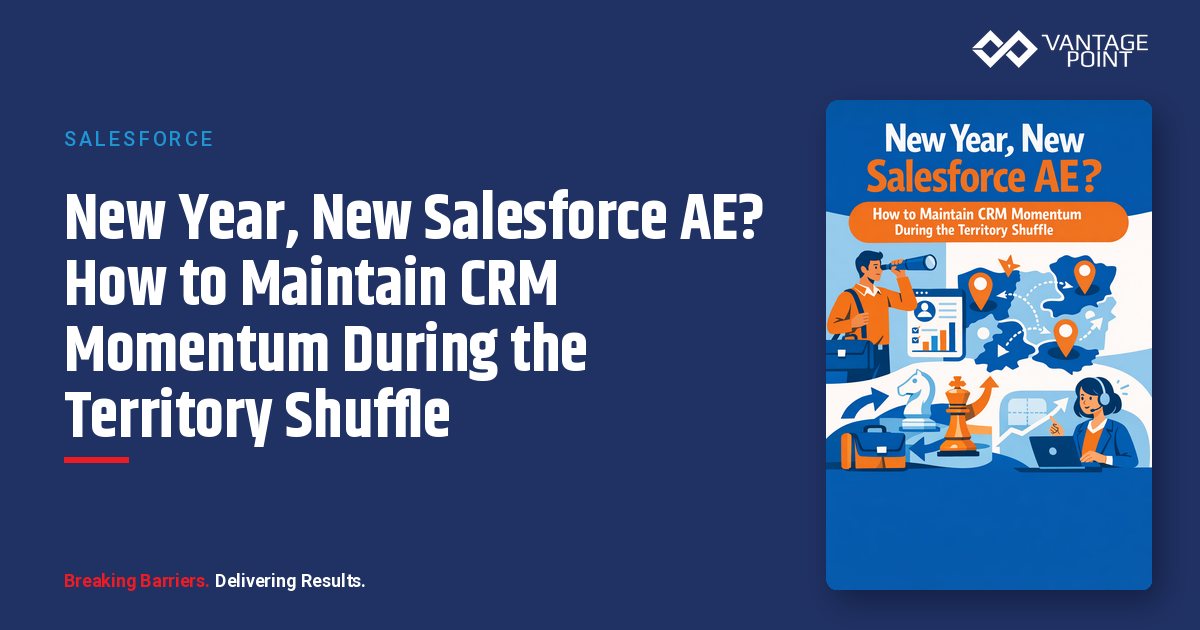
How to Protect Your CRM Strategy When Your Salesforce Rep Changes Every February
Managing thousands of customers while maintaining personalized service: this is the challenge keeping business leaders awake at night. Unlike purely transactional businesses, customer-centric organizations build long-term relationships that drive repeat business, referrals, and sustainable growth.
Every February, Salesforce kicks off its new fiscal year, and with it comes the annual "territory shuffle." Account Executives move to new territories, get promoted, or shift focus areas. For small and mid-sized businesses in regulated industries, this often means the person who spent the last 12 months understanding your compliance requirements, growth objectives, and technical challenges is suddenly gone.
You're back to square one. Again.
This isn't a criticism of Salesforce. Territory changes are a natural part of how large software companies operate. But for healthcare organizations navigating HIPAA, financial services firms managing SEC requirements, or insurance companies balancing growth with regulatory compliance, starting over with a new AE every year creates real business risk.
The solution? A long-term implementation partner who stays with you regardless of vendor personnel changes.
What Is the Salesforce Territory Shuffle?
Salesforce organizes its sales teams by territory: typically defined by geography, industry vertical, or company size. Each February, as the new fiscal year begins, territories get rebalanced. Account Executives may be reassigned to different regions, promoted to enterprise accounts, or moved to different product lines.
For customers, this means:
- New introductions: explaining your business model, goals, and challenges from scratch
- Lost context: the institutional knowledge your previous AE built up disappears
- Delayed initiatives: projects that were "in discussion" may stall while your new rep gets up to speed
- Misaligned recommendations: without understanding your history, new AEs may suggest solutions that don't fit your roadmap
For regulated industries, where compliance requirements add layers of complexity, this continuity gap can be particularly costly.
Why Does Continuity Matter for Regulated Industries?
Healthcare and HIPAA Compliance
Healthcare organizations don't just need a CRM. They need a CRM strategy that accounts for patient data protection, BAA requirements, and audit trails. When your Salesforce AE changes, you may find yourself re-explaining why certain configurations exist or defending decisions made for compliance reasons.
Financial Services and SEC/FINRA Requirements
Wealth management firms, RIAs, and financial advisors operate under strict recordkeeping and communication archiving rules. Your CRM isn't just a sales tool: it's part of your compliance infrastructure. A new AE unfamiliar with these requirements might inadvertently recommend features that create regulatory risk.
Insurance and State Regulations
Insurance agencies and carriers face a patchwork of state-level regulations. The Salesforce configurations that work for a carrier in one state may need adjustments for another. Without continuity, this institutional knowledge gets lost in the shuffle.
How a Long-Term Implementation Partner Solves the Continuity Problem
At Vantage Point, we've worked with clients in regulated industries. Here's what we've learned: the most successful Salesforce implementations aren't one-time projects: they're ongoing partnerships.
We Don't Change Territories
Unlike vendor AEs who rotate based on corporate sales cycles, your Vantage Point team stays with you year after year. We build deep knowledge of your business processes, compliance requirements, and growth objectives. That knowledge compounds over time, making every engagement more efficient than the last.
Your Roadmap Remains Intact
When AEs change, conversations about future features, upcoming releases, or strategic initiatives often reset. With Vantage Point as your implementation partner, your technology roadmap stays on track regardless of who your Salesforce AE is. We maintain continuity so you don't lose momentum.
We Serve as Your "North Star"
Think of us as the consistent bridge between your business strategy and your Salesforce ecosystem. While vendor relationships may shift, we provide the stability needed to scale without starting from scratch every February.
We Translate for New AEs
When you do get a new Salesforce AE, we can help accelerate their ramp-up. We provide context on your implementation history, explain why certain architectural decisions were made, and ensure new recommendations align with your existing strategy.
What Should You Do When Your Salesforce AE Changes?
If you've just learned your AE is moving on, here's how to minimize disruption:
1. Document Everything Now
Before your current AE transitions, capture key details: open quotes or pending renewals, discussed but unsigned features or add-ons, committed timelines for issue resolution, and strategic conversations about your account.
2. Request a Warm Handoff
Ask your outgoing AE to introduce you to their replacement with a detailed briefing. Don't settle for a cold transition.
3. Engage Your Implementation Partner
If you have a partner like Vantage Point, loop us in immediately. We can provide continuity during the transition and help your new AE understand your account faster.
4. Reassess Your Roadmap
Use the transition as an opportunity to evaluate whether your current Salesforce strategy still aligns with your business goals. A new AE means fresh perspectives, but make sure those perspectives are informed by your history.
Building Something That Lasts
Software vendor sales cycles will always create some level of churn. That's the nature of the business. But your CRM strategy doesn't have to be held hostage by territory shuffles.
By partnering with a firm that specializes in your industry, understands your compliance requirements, and stays with you year after year, you create stability that compounds into competitive advantage.
At Vantage Point, we've helped healthcare organizations, financial services firms, insurance companies, and other regulated businesses build Salesforce implementations that outlast any single vendor relationship. We're not going anywhere, and neither is your momentum.
FAQ: Salesforce Territory Changes and Implementation Partners
Why does Salesforce change Account Executives every year?Salesforce's fiscal year begins in February, triggering territory rebalancing. AEs may be reassigned based on performance, promotions, company reorganizations, or strategic shifts in how Salesforce segments its customer base.
How do I find out if my Salesforce AE is changing?You'll typically receive an email notification introducing your new AE. If you haven't heard anything by mid-February, proactively reach out to your current AE to confirm their status.
Can I request to keep my current Salesforce AE?Generally, no. Territory assignments are made at the corporate level based on broader sales strategy. However, you can request a thorough handoff and briefing for your new AE.
What's the difference between a Salesforce AE and an implementation partner?Your Salesforce AE is a sales representative focused on your Salesforce subscription and renewals. An implementation partner like Vantage Point focuses on configuring, customizing, and optimizing your Salesforce instance to meet your business needs.
How does Vantage Point maintain continuity across engagements?We document everything: architecture decisions, compliance considerations, roadmap items, and historical context. Our team maintains this knowledge base so that even if individual consultants change, your institutional knowledge is preserved.
Is it worth having an implementation partner if I have a good Salesforce AE?Yes. Even the best AEs will eventually move on. An implementation partner provides continuity that transcends any single vendor relationship. Plus, partners focus on implementation and optimization, while AEs focus on sales: complementary but different roles.
Ready to Build CRM Stability?
Don't let internal software cycles dictate your growth speed. Whether you're navigating a Salesforce AE transition right now or want to build more resilience into your CRM strategy, Vantage Point is here to help.
About Vantage Point
Vantage Point specializes in helping businesses design and implement client experience transformation programs using Salesforce and HubSpot. Our team combines deep Salesforce and HubSpot expertise to deliver measurable improvements in client satisfaction, operational efficiency, and business results.
About the Author
David Cockrum founded Vantage Point after serving as Chief Operating Officer in the financial services industry. His unique blend of operational leadership and technology expertise has enabled Vantage Point's distinctive business-process-first implementation methodology, delivering successful transformations for clients.
-
-
- Email: david@vantagepoint.io
- Phone: (469) 499-3400
- Website: vantagepoint.io
-