
Key Takeaways (TL;DR)
- What is it? Marketing automation uses software and AI to streamline repetitive marketing tasks (email campaigns, lead nurturing, segmentation, and reporting) so teams can scale personalized engagement without scaling headcount.
- Key Benefit: Businesses using marketing automation see up to 3× more inbound leads and $5.44 return for every $1 invested.
- Cost: $500, $5,000+/month depending on platform tier, org size, and feature requirements.
- Timeline: 4-12 weeks for initial setup and workflow activation; measurable ROI often within 4-6 months.
- Best For: Growing organizations with 10+ marketing touchpoints looking to unify customer engagement across email, social, web, and CRM.
- Bottom Line: Marketing automation isn't optional in 2026: it's the competitive baseline. Companies that operationalize automation outperform competitors by 63% in lead generation and conversion.
Introduction: Why Marketing Automation Is the Growth Engine of 2026
Every business faces the same challenge: do more with less. Marketing teams are expected to generate more leads, nurture deeper relationships, personalize every touchpoint, and prove ROI: all while budgets remain flat. According to Gartner's 2025 CMO Spend Survey, marketing budgets have flatlined at just 7.7% of overall company revenue, and 59% of CMOs report insufficient budget to execute their strategy.
The answer? Marketing automation.
The global marketing automation market is projected to grow from $47 billion in 2025 to over $81 billion by 2030 (MarketsandMarkets, 2025). And the ROI numbers are staggering: Forrester TEI studies consistently show 192%: 446% ROI with payback periods under six months. Automated emails alone account for just 2% of email volume but drive a remarkable 37% of email-attributed sales (Omnisend, 2025).
In this guide, we'll walk through the strategies, best practices, and implementation steps that help businesses of every size turn marketing automation into a measurable growth engine. Whether you're evaluating your first automation platform or optimizing an existing stack, you'll find actionable insights to boost engagement, streamline operations, and accelerate revenue.
What Is Marketing Automation?
Marketing automation refers to the use of software platforms and technologies to automate repetitive marketing tasks and workflows. This includes:
- Email marketing: Automated drip campaigns, welcome sequences, and triggered messages
- Lead scoring and nurturing: Qualifying prospects based on behavior and engagement
- Customer segmentation: Dynamically grouping contacts by demographics, behavior, or lifecycle stage
- Campaign management: Coordinating multi-channel campaigns from a single platform
- Analytics and reporting: Tracking performance metrics and attributing revenue to marketing activities
- CRM integration: Syncing marketing data with sales and service platforms for a unified customer view
Modern platforms like HubSpot and Salesforce Marketing Cloud combine these capabilities into unified ecosystems that connect marketing, sales, and service teams around a single source of truth.
Why Marketing Automation Matters More Than Ever
The Numbers Don't Lie
The data backing marketing automation's impact in 2026 is overwhelming:
| Metric | Statistic | Source |
|---|---|---|
| ROI per $1 spent | $5.44 | The CMO / DemandSage |
| Inbound lead increase | 3× after 6 months | HubSpot ROI Report 2025 |
| Lead conversion boost (AI features) | 54% higher | HubSpot ROI Report 2025 |
| Automated emails driving sales | 37% of email sales from 2% of volume | Omnisend 2025 |
| Positive ROI achievement | 95% of users | HubSpot ROI Report 2025 |
| Time to see returns | 76% within 4 weeks | HubSpot ROI Report 2025 |
| Campaign setup time reduction | 50% faster | Forrester TEI / Zeta Global |
The Competitive Imperative
With martech utilization sitting at just 49% (Gartner, 2025), most organizations aren't fully leveraging the tools they already own. That means businesses that operationalize automation gain compounding advantages in lead generation, customer engagement, and revenue attribution.
Meanwhile, 85% of marketers now use generative AI in their automation workflows (SAS/Coleman Parkes, 2025), and 93% of CMOs report positive ROI from AI-powered marketing. If your competitors are automating and you're not, the gap widens every quarter.
8 Proven Marketing Automation Strategies for Business Growth
1. Start with Clear Goals and KPIs
Before configuring a single workflow, define what success looks like. Common marketing automation goals include:
- Lead generation: Increase monthly qualified leads by X%
- Conversion optimization: Improve trial-to-customer conversion rates
- Customer retention: Reduce churn through automated re-engagement campaigns
- Revenue attribution: Track marketing-sourced pipeline and closed revenue
Map each goal to specific KPIs, open rates, click-through rates, MQL-to-SQL conversion, pipeline velocity, and customer lifetime value. Without measurable targets, it's impossible to optimize.
2. Segment Your Audience for Precision Targeting
Research shows that 77% of marketing automation ROI comes from segmented, targeted, and triggered campaigns (Campaign Monitor). Generic blasts are dead. Modern segmentation strategies include:
- Behavioral segmentation: Group contacts by website visits, content downloads, email engagement, and product usage
- Firmographic segmentation: For B2B, segment by company size, industry, revenue, and technology stack
- Lifecycle stage segmentation: Differentiate between new leads, marketing-qualified leads, opportunities, and customers
- Engagement scoring: Assign scores based on recency, frequency, and depth of interaction
Pro tip: Use your CRM's native segmentation capabilities (HubSpot Smart Lists, Salesforce Dynamic Reports) to keep segments automatically updated as contact data changes.
3. Build Automated Customer Journey Workflows
The most effective automation maps directly to the customer journey:
Awareness Stage:
- Welcome email sequences for new subscribers
- Educational content drip campaigns
- Social media nurture sequences
Consideration Stage:
- Case study and ROI calculator delivery
- Webinar invitation workflows
- Product comparison guides triggered by page visits
Decision Stage:
- Demo request follow-ups
- Free trial onboarding sequences
- Personalized pricing or proposal delivery
Post-Purchase:
- Onboarding and adoption campaigns
- Cross-sell and upsell workflows
- Customer satisfaction surveys and review requests
- Re-engagement campaigns for inactive customers
Each workflow should have a clear trigger, defined actions, and exit criteria. Document your workflows visually. Tools like HubSpot's workflow builder and Salesforce Flow make this intuitive.
4. Leverage AI-Powered Personalization
AI is no longer a future feature: it's the baseline expectation. In 2026, 94% of marketers using generative AI report improved personalization (SAS/Coleman Parkes). Key AI-powered automation capabilities include:
- Predictive lead scoring: AI models analyze historical data to identify which leads are most likely to convert
- Dynamic content optimization: Automatically adjust email content, subject lines, and CTAs based on recipient behavior
- Send-time optimization: AI determines the optimal time to send each message for maximum engagement
- Conversational AI: Chatbots and virtual assistants that qualify leads, answer questions, and book meetings 24/7
- Content generation: AI-assisted creation of email copy, blog posts, social media content, and ad variations
Vantage Point leverages Claude AI from Anthropic to help clients implement intelligent automation workflows that adapt to customer behavior in real time: from CRM data enrichment to automated personalization at scale.
5. Integrate Your Marketing and Sales Tech Stack
Marketing automation delivers maximum ROI when it's deeply integrated with your CRM, sales tools, and data platforms. Key integrations include:
- CRM sync: Bidirectional data flow between marketing automation and Salesforce or HubSpot CRM
- Sales engagement: Automated alerts, task creation, and lead routing when prospects hit engagement thresholds
- Data enrichment: Third-party data integrations to enhance contact and company profiles
- Communication platforms: Integration with tools like Aircall for call tracking, recording, and CRM-connected telephony
- Integration middleware: Platforms like MuleSoft and Workato for connecting legacy systems and custom applications
Stack consolidation is one of the biggest ROI drivers: Forrester TEI studies show that consolidating redundant tools delivers $3.2 million in annual savings and 50% faster campaign setup times.
6. Master Email Automation: The Highest-ROI Channel
Email automation remains the single highest-ROI marketing channel. The numbers are remarkable:
- Automated emails represent just 2% of total email volume but drive 37% of email-attributed sales (Omnisend, 2025)
- One in three recipients who click an automated email make a purchase
- Abandoned cart automations generate $3.65 revenue per recipient vs. $0.11 for standard campaigns (Klaviyo)
High-impact email automation workflows:
- Welcome series: 3-5 emails introducing your brand, value proposition, and key resources
- Lead nurture sequences: Educational content triggered by specific interests or behaviors
- Re-engagement campaigns: Win-back sequences for contacts who haven't engaged in 60-90 days
- Event-triggered emails: Responses to specific actions like form submissions, page visits, or content downloads
- Post-purchase onboarding: Guided adoption sequences that drive product usage and satisfaction
7. Implement Multi-Channel Campaign Orchestration
Today's customers engage across email, social media, web, SMS, chat, and phone. Effective marketing automation orchestrates consistent messaging across all channels:
- Cross-channel triggers: A webinar registration triggers a confirmation email, calendar invite, SMS reminder, and post-event follow-up
- Retargeting coordination: Website visitors who don't convert receive coordinated follow-up across email and paid social
- Consistent messaging: Centralized content management ensures brand voice and value propositions are consistent everywhere
- Channel preference optimization: Track which channels each contact prefers and prioritize accordingly
Multi-channel campaigns deliver higher engagement because they meet customers where they are, when they're most receptive.
8. Measure, Test, and Continuously Optimize
Marketing automation is never "set and forget." The highest-performing teams treat every campaign as an experiment:
- A/B test everything: Subject lines, CTAs, send times, content formats, landing pages
- Monitor key metrics: Open rates, click-through rates, conversion rates, unsubscribe rates, and revenue attribution
- Conduct regular audits: Review active workflows quarterly to identify underperforming sequences, stale content, and broken automations
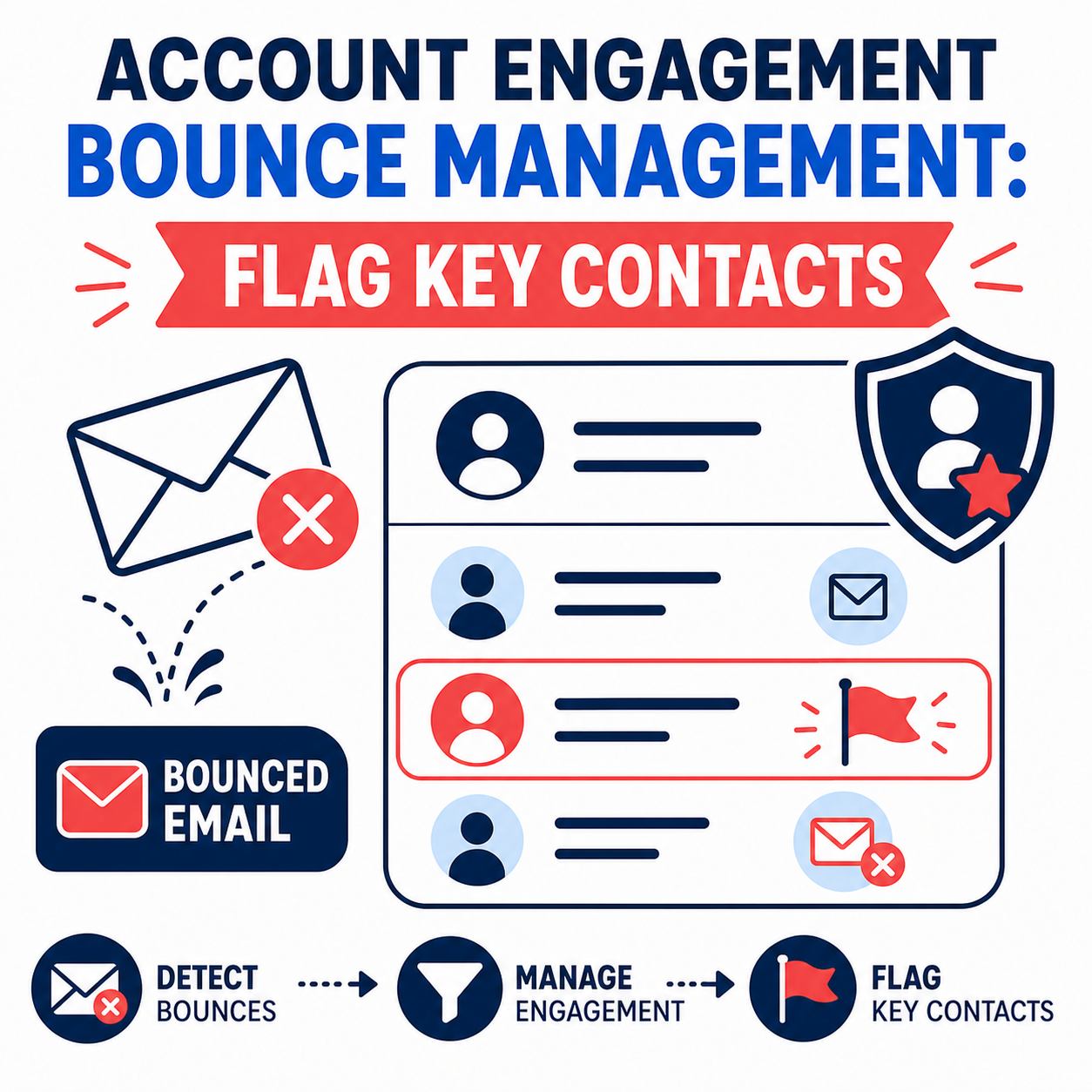
- Database hygiene: Contact data decays at 2-3% per month. Implement automated processes to flag bounced emails, update contact information, and remove inactive records
- Report and iterate: Use automation platform dashboards to generate weekly/monthly performance reports and share insights across marketing and sales teams
How to Choose the Right Marketing Automation Platform
Key Evaluation Criteria
When selecting a marketing automation platform, evaluate based on:
| Criteria | What to Look For |
|---|---|
| CRM Integration | Native sync with your existing CRM (Salesforce, HubSpot) |
| Ease of Use | Visual workflow builders, drag-and-drop editors |
| Scalability | Pricing and features that grow with your organization |
| AI Capabilities | Built-in AI for scoring, personalization, and optimization |
| Multi-Channel Support | Email, social, SMS, web, and advertising integration |
| Analytics & Reporting | Real-time dashboards, revenue attribution, A/B testing |
| Data Security | SOC 2 compliance, GDPR support, role-based access controls |
| Integration Ecosystem | API access, native integrations, and middleware support |
Platform Spotlight: HubSpot and Salesforce
HubSpot Marketing Hub excels for organizations seeking an all-in-one platform that combines marketing automation, CRM, content management, and analytics. With 28% market share (Wappalyzer, 2025), HubSpot leads the industry for ease of use and time-to-value: 76% of customers see ROI within 4 weeks.
Salesforce Marketing Cloud (including Account Engagement / Pardot) is the choice for larger organizations requiring enterprise-grade customization, advanced data modeling, and deep integration with Sales Cloud, Service Cloud, and Data Cloud.
Vantage Point implements and optimizes both platforms, helping businesses select the right solution based on their unique requirements, team size, and growth objectives.
Best Practices for Marketing Automation Success
- Start small, scale fast: Launch with 3-5 core workflows (welcome, lead nurture, re-engagement) before expanding to complex multi-channel orchestrations
- Align marketing and sales: Define shared lead definitions, SLAs, and handoff processes before automating
- Prioritize data quality: Clean, unified data is the foundation of effective automation. Invest in data hygiene before building complex workflows
- Document everything: Create a workflow library with trigger conditions, content, exit criteria, and performance benchmarks
- Train your team: Automation tools are only as good as the people using them. Invest in ongoing platform training and certification
- Respect consent and compliance: Implement proper opt-in processes, honor unsubscribe requests, and maintain audit trails for all automated communications
- Think lifecycle, not campaign: Design automation around the full customer lifecycle, not isolated campaign blasts
- Leverage your CRM partner: Work with an experienced implementation partner like Vantage Point to accelerate time-to-value and avoid common pitfalls
Frequently Asked Questions (FAQ)
What is marketing automation?
Marketing automation is the use of software to automate repetitive marketing tasks like email campaigns, lead scoring, customer segmentation, and campaign reporting. It enables businesses to deliver personalized, timely communications at scale without manual effort.
How much does marketing automation cost?
Costs vary widely depending on platform and scale. HubSpot Marketing Hub starts at $20/month for Starter and scales to $3,600+/month for Enterprise. Salesforce Marketing Cloud pricing varies by edition, typically starting at $1,250/month. Total cost of ownership should include implementation, training, and ongoing optimization.
What ROI can I expect from marketing automation?
Industry data shows an average return of $5.44 for every $1 invested. Forrester TEI studies report ROI ranging from 192% to 446%, with payback periods under six months. 95% of HubSpot customers achieve positive ROI, and 76% see returns within 4 weeks.
How long does it take to implement marketing automation?
Basic implementation takes 4-8 weeks for most organizations. More complex deployments involving CRM integration, data migration, and custom workflow design may take 8-16 weeks. Working with an experienced partner like Vantage Point can significantly accelerate timelines.
What's the difference between marketing automation and CRM?
CRM (Customer Relationship Management) focuses on managing customer data, sales pipelines, and service interactions. Marketing automation specifically handles automated marketing workflows, campaigns, and lead nurturing. The two work best when tightly integrated: platforms like HubSpot and Salesforce offer both in unified ecosystems.
How does AI enhance marketing automation?
AI powers predictive lead scoring, dynamic content personalization, send-time optimization, and automated content generation. In 2026, 85% of marketers use generative AI in their automation workflows, and 93% of CMOs report positive ROI from AI-powered marketing.
Is marketing automation only for large enterprises?
Absolutely not. While enterprise organizations benefit from advanced features and scale, small and mid-sized businesses often see the fastest ROI because automation eliminates manual bottlenecks that disproportionately impact smaller teams. Cloud-based platforms make enterprise-grade automation accessible at every budget level.
Conclusion: Turn Automation into Your Competitive Advantage
Marketing automation in 2026 isn't a luxury: it's the baseline for competitive businesses. The data is clear: organizations that invest in automation see more leads, faster conversions, higher customer engagement, and measurable ROI. With AI capabilities accelerating at an unprecedented pace, the gap between automated and manual marketing operations will only widen.
The key is to start strategically: define your goals, choose the right platform, integrate with your CRM, and build workflows that serve the entire customer lifecycle. And don't try to do it alone. Working with an experienced partner ensures you avoid costly mistakes and accelerate your time-to-value.
Ready to transform your marketing with automation? Contact Vantage Point to discuss how we can help you implement, optimize, and scale marketing automation across HubSpot, Salesforce, or both. Our team specializes in CRM-integrated automation strategies that deliver measurable business growth.
About Vantage Point
Vantage Point is a technology consulting firm specializing in CRM implementation, marketing automation, and digital transformation. As certified partners of Salesforce, HubSpot, Anthropic (Claude AI), Aircall, and Workato, we help businesses of every size unify their customer data, automate engagement workflows, and accelerate growth. From Sales Cloud and Service Cloud to HubSpot Marketing Hub and MuleSoft integration, Vantage Point delivers end-to-end solutions that turn technology investments into measurable results.
Learn more at vantagepoint.io