Key Takeaways (TL;DR)
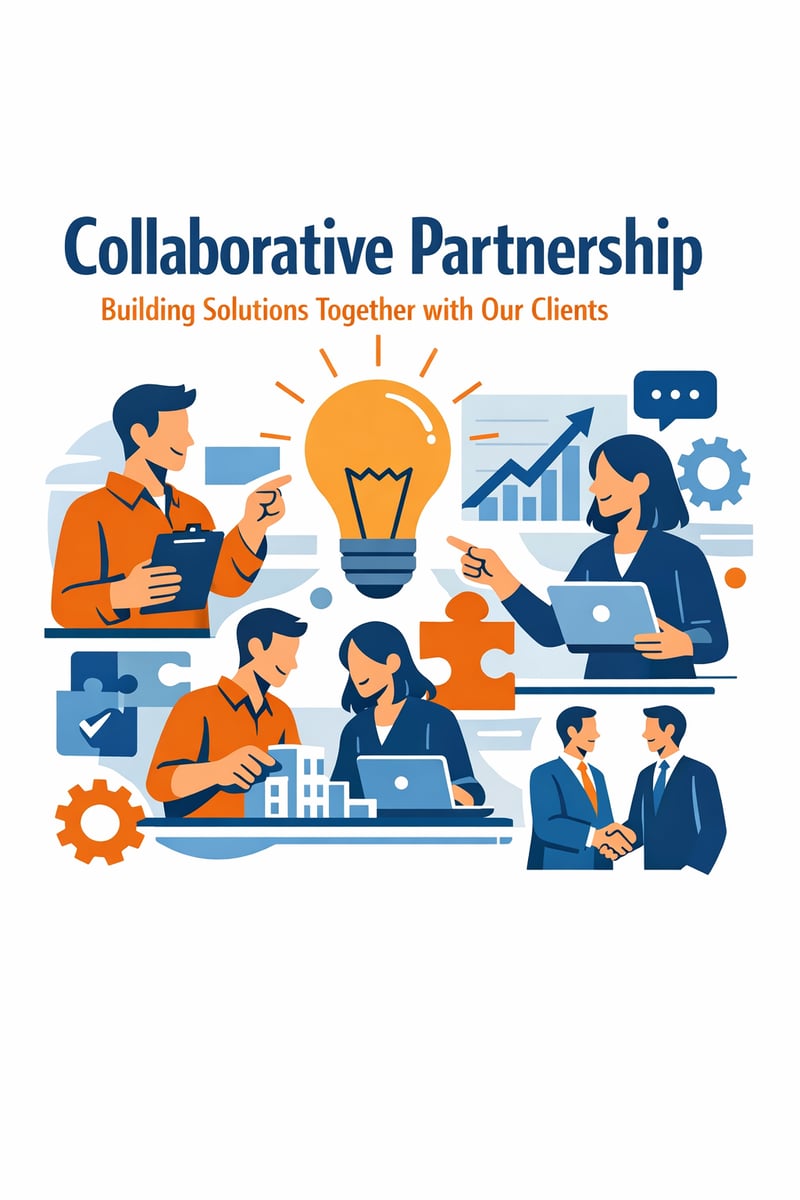
- What is it? Collaborative partnership is a consulting approach where the consultant and client co-create solutions through transparent communication, shared goals, and mutual accountability — replacing the traditional "vendor delivers, client receives" model.
- Key Benefit: Tailored solutions with higher adoption rates, faster ROI, and stronger long-term outcomes because clients are active co-creators, not passive recipients.
- Best For: Organizations evaluating CRM consulting partners who want a strategic relationship — not just a transactional engagement.
- How Vantage Point Does It: Through the VALUE methodology (Vision → Adaptability → Leverage → User-Centric → Excellence), a US-based senior-only team, and an employee-owned culture that incentivizes client success.
- Bottom Line: With 150+ clients, 400+ engagements, a 4.71/5.0 satisfaction rating, and 95%+ client retention, Vantage Point's collaborative model consistently outperforms transactional consulting approaches.
Introduction: Why the Best Solutions Are Built Together
Every organization that invests in CRM technology faces the same fundamental question: Should we hire a consulting firm that tells us what to do — or one that builds the solution with us?
It is a distinction that sounds subtle but produces dramatically different outcomes. In a transactional consulting model, a firm scopes the project, delivers the implementation, and moves on. The client receives a product. In a collaborative partnership model, the consulting firm and the client work side by side — sharing knowledge, adjusting in real time, and co-creating a solution that fits the business like a glove.
At Vantage Point, Collaborative Partnership is not a marketing tagline. It is one of four core values — alongside Ownership Mentality, Tenacious Execution, and Humble Confidence — that shape every engagement. It is woven into our VALUE methodology, our team structure, and our culture as an employee-owned firm.
This post explores what collaborative partnership actually looks like in practice, why it consistently produces better business outcomes, and how to evaluate whether a consulting partner truly operates this way.
What Is Collaborative Partnership in Consulting?
Defining the Model
Collaborative partnership in consulting means the consulting firm and the client organization function as a unified team throughout the engagement. Rather than the consultant operating in isolation — gathering requirements, disappearing into a build phase, and presenting a finished product — both parties share ownership of the process and the results.
This model is characterized by:
- Transparent communication at every stage, from discovery through deployment
- Shared decision-making based on the consultant's technical expertise and the client's business knowledge
- Iterative development that incorporates real feedback in real time
- Mutual accountability for outcomes, not just deliverables
- Knowledge transfer that leaves the client's team more capable, not more dependent
How It Differs from Transactional Consulting
| Dimension | Transactional Consulting | Collaborative Partnership |
|---|---|---|
| Relationship | Vendor-client | Co-creators |
| Communication | Periodic status updates | Continuous, transparent dialogue |
| Decision-Making | Consultant-driven | Joint, informed by both parties |
| Scope Handling | Rigid change-order process | Adaptive, iterative refinement |
| Knowledge | Retained by consultant | Transferred to client team |
| Success Metric | Project delivered on time | Business outcomes achieved |
| Post-Launch | Engagement ends | Ongoing strategic partnership |
The transactional model is not inherently bad — it works for simple, well-defined projects. But for CRM implementations, data integrations, and AI-powered automation — where the requirements evolve as the team learns — a collaborative approach consistently delivers stronger results.
Why Collaborative Partnership Produces Better Business Outcomes
1. Higher User Adoption Rates
The single biggest risk in any CRM implementation is not a technical failure — it is user adoption. When end users feel that a system was designed for them rather than imposed on them, adoption rates rise dramatically.
Collaborative partnership addresses this directly. By involving stakeholders early and often — through workshops, feedback loops, and iterative prototyping — the final solution reflects how people actually work, not how a consultant assumed they work.
At Vantage Point, the User-Centric principle of our VALUE methodology formalizes this. We bring end users into the design process from day one, ensuring that workflows, interfaces, and automations align with real-world needs.
2. Faster Time to Value
Paradoxically, collaboration often accelerates timelines rather than slowing them down. Traditional models spend significant time on exhaustive upfront requirements documentation, only to discover misalignments during testing. Iterative, collaborative development catches these misalignments early — when they are inexpensive to fix.
Our Adaptability principle embraces agile development, delivering incremental value in each sprint and adjusting priorities based on continuous stakeholder feedback.
3. Solutions That Actually Fit the Business
Generic implementations are the most expensive kind. They technically work but require workarounds, manual processes, and constant support tickets because they were not built with the organization's unique context in mind.
Through transparent communication and shared discovery, a collaborative partner builds solutions tailored to the client's specific data structures, compliance requirements, team workflows, and growth trajectory. At Vantage Point, this begins with the Vision phase — a deep strategic alignment that maps technology capabilities to business objectives.
4. Reduced Risk and Fewer Surprises
Transparency eliminates the most common source of consulting project failure: misaligned expectations. When both parties have full visibility into progress, challenges, and trade-offs, problems are surfaced and resolved before they become crises.
Organizations with high levels of collaboration across their partnerships are significantly more resilient and better positioned for growth. The same principle applies to consulting relationships — transparency builds trust, and trust reduces risk.
5. Sustainable, Long-Term Impact
A transactional engagement ends when the project is delivered. A collaborative partnership builds organizational capability. Through knowledge transfer, documentation, and training, the client's team becomes self-sufficient — able to manage, optimize, and extend the solution without permanent dependence on external consultants.
How Vantage Point Embeds Collaborative Partnership into Every Engagement
The VALUE Methodology: A Framework for Partnership
Vantage Point's VALUE methodology is not just a delivery framework — it is a partnership framework. Each phase is designed to maximize collaboration:
V — Vision: Aligning with Strategic Goals
Every engagement begins with a deep dive into the client's strategic objectives. This is not a one-sided requirements-gathering exercise — it is a strategic conversation where both parties align on what success looks like. We create implementation roadmaps with measurable business outcomes and design scalable architectures that support future growth.
A — Adaptability: Embracing Agile Principles
Business needs evolve. Markets shift. Regulations change. The Adaptability phase ensures our approach flexes with the client's reality. We use iterative development cycles that deliver incremental value, incorporate continuous feedback, and respond flexibly to changing requirements — without disruption.
L — Leverage: Maximizing Platform Expertise
We harness the full capabilities of Salesforce, HubSpot, MuleSoft, Data Cloud, and partner technologies like Anthropic's Claude AI and Aircall. By integrating best-of-breed tools and consolidating data into a single source of truth, we help clients get maximum ROI from their technology investments.
U — User-Centric: Prioritizing User Needs
Early user involvement is not optional — it is foundational. Collaborative design with frequent feedback ensures intuitive interfaces and practical workflows. We deliver tailored training and build a culture of adoption, not resistance.
E — Excellence: Delivering Impactful Results
Excellence means we focus on transformative business impact, not just technical deliverables. Rigorous testing, adherence to platform best practices, and a commitment to exceeding expectations define every engagement.
A Senior-Only, US-Based Team
Collaborative partnership requires senior-level judgment at every touchpoint. Vantage Point's team is composed entirely of experienced consultants — not junior resources managed by a single senior lead. This means every conversation, every design decision, and every implementation choice is informed by deep expertise.
Our team is US-based, which eliminates timezone friction and communication barriers that can undermine collaboration in globally distributed consulting models.
Employee-Owned Culture
Vantage Point is an employee-owned company. This is not a footnote — it is a structural differentiator. When the people building your solution have a direct stake in the company's reputation and success, their incentives are perfectly aligned with yours. There is no motivation to extend timelines, oversell services, or cut corners. The incentive is simple: deliver exceptional outcomes that generate referrals and long-term partnerships.
What Transparent Communication Actually Looks Like
"Transparent communication" is one of the most overused phrases in consulting. Here is what it means at Vantage Point — and what you should expect from any partner who claims to practice it:
Honest Scoping and Estimation
Transparent communication starts before the contract is signed. A collaborative partner will tell you what is realistic — even if it is not what you want to hear. If a timeline is too aggressive, the budget is insufficient for the scope, or the approach needs adjustment, you will hear it upfront. Not after the project is underway.
Real-Time Visibility into Progress
No waiting for monthly status reports to discover a problem. Collaborative partners provide continuous visibility through shared project tools, regular standups, and open communication channels. At Vantage Point, clients have direct access to project dashboards, sprint boards, and their dedicated consultants — not a project coordinator relaying messages.
Proactive Issue Escalation
When something goes wrong — and in complex technology projects, something always goes wrong — a collaborative partner escalates immediately. Not after trying to fix it in silence. Not buried in a status report footnote. Immediately, with a clear explanation and proposed options.
Candid Recommendations
A transparent partner recommends what is best for the client, even when it means a smaller engagement. If an off-the-shelf configuration solves the problem, we will not build a custom solution to inflate the project scope. If HubSpot is a better fit than Salesforce for a particular use case, we will say so — because we implement both platforms.
How to Evaluate a Consulting Partner's Commitment to Collaboration
Not every firm that claims to be "collaborative" actually operates that way. Here are practical questions to ask when evaluating a potential consulting partner:
Questions to Ask During the Evaluation Process
- "Who will actually do the work?" — If the answer involves offshore teams, junior resources, or subcontractors you have not met, collaboration will be limited.
- "How do you handle scope changes?" — A collaborative partner has a flexible, iterative process. A transactional partner has a rigid change-order process that treats every adjustment as a billable event.
- "Can we speak directly with the consultants on our project?" — If communication is funneled through a single project manager, you are in a transactional relationship.
- "What does your feedback loop look like?" — Look for sprint demos, stakeholder reviews, and iterative prototyping — not a waterfall process with feedback only at the end.
- "How do you measure success?" — "On time, on budget" is a transactional metric. "Business outcomes achieved" is a partnership metric.
- "What happens after go-live?" — A collaborative partner offers ongoing support, optimization, and strategic guidance. A transactional partner hands over documentation and moves on.
- "Can you share references from long-term clients?" — A 95%+ client retention rate, like Vantage Point's, tells you more than any sales pitch.
Best Practices for Building a Collaborative Consulting Relationship
Whether you are working with Vantage Point or another consulting partner, these practices will help you get the most from a collaborative engagement:
1. Invest in the Discovery Phase
Do not rush past discovery to get to the "real work." The discovery phase — where goals are aligned, processes are mapped, and stakeholders are identified — is the foundation of everything that follows. At Vantage Point, our Vision phase is deliberately thorough because it prevents costly misalignment later.
2. Designate Internal Champions
Collaboration requires engagement from the client side. Identify internal champions who will participate in design sessions, provide feedback, test iterations, and advocate for adoption within the organization.
3. Embrace Iterative Development
Resist the urge to define every requirement upfront. Iterative development allows you to learn from each sprint, adjust priorities, and deliver value incrementally rather than waiting for a single big-bang launch.
4. Maintain Open Communication Channels
Establish direct communication between your team and the consultants doing the work. Layers of intermediaries slow decision-making and dilute feedback.
5. Hold Both Sides Accountable
Collaboration is a two-way commitment. The consulting partner must deliver on their promises, and the client must provide timely feedback, decisions, and access to stakeholders. Mutual accountability drives mutual success.
6. Plan Beyond Go-Live
The best CRM implementations evolve continuously. Plan for post-launch optimization, user training refreshers, and strategic roadmap reviews. A collaborative partner will help you maximize your investment long after the initial project is complete.
Frequently Asked Questions (FAQ)
What is collaborative partnership in consulting?
Collaborative partnership is an approach where the consulting firm and client work as a unified team throughout the engagement, sharing decision-making, maintaining transparent communication, and co-creating solutions tailored to the client's specific needs. It contrasts with transactional models where the consultant delivers a predetermined product.
How does collaborative consulting differ from traditional consulting?
Traditional consulting typically follows a linear, consultant-driven process: gather requirements, build the solution, deliver the result. Collaborative consulting is iterative and co-creative, involving the client at every stage — from strategy and design through development and optimization — resulting in higher adoption and better business outcomes.
Why does transparent communication matter in CRM implementations?
CRM implementations are complex, cross-functional projects that impact multiple departments and workflows. Transparent communication ensures that misalignments are caught early, stakeholder expectations are managed, and the final solution reflects actual business needs rather than assumptions made weeks or months earlier.
What is Vantage Point's VALUE methodology?
VALUE stands for Vision, Adaptability, Leverage, User-Centric, and Excellence. It is Vantage Point's proven framework for delivering CRM implementations that align with strategic goals, adapt to changing requirements, maximize platform capabilities, prioritize end-user needs, and deliver measurable business results.
How do I know if my consulting partner is truly collaborative?
Look for concrete indicators: direct access to the consultants doing the work, iterative development with regular demos and feedback loops, flexible scope management, proactive issue escalation, and a track record of long-term client relationships. Ask for retention rates and client references.
What are the benefits of working with a senior-only consulting team?
Senior consultants bring deeper expertise, faster decision-making, and the judgment to anticipate problems before they occur. This eliminates the quality inconsistency common in firms that staff projects with junior resources and reduces the communication overhead of managing multiple experience levels.
Why does employee ownership matter in a consulting firm?
Employee ownership aligns the consultant's incentives with the client's outcomes. When consultants have a direct stake in their firm's reputation and success, they are motivated to deliver exceptional results, build long-term relationships, and protect the firm's reputation — not just bill hours.
Conclusion: Choose a Partner, Not a Vendor
The technology you implement is important. But the partner you choose to implement it is equally important — perhaps more so. A platform is only as effective as the strategy behind it, the configuration within it, and the adoption around it. All of those depend on the quality of the partnership between you and your consulting firm.
At Vantage Point, collaborative partnership is not an add-on to our service model — it is the foundation. With 150+ clients, 400+ completed engagements, a 4.71/5.0 satisfaction rating, and a 95%+ retention rate, our approach delivers measurable, sustainable results. Our senior-only, US-based, employee-owned team is structured to work with you — not just for you.
Ready to experience the difference a true collaborative partner makes? Contact Vantage Point to start a conversation about your CRM strategy.
About Vantage Point
Vantage Point is a senior-led, employee-owned CRM consultancy specializing in Salesforce, HubSpot, MuleSoft, and AI-powered solutions. With 150+ clients, 400+ engagements, and a 4.71/5.0 client satisfaction rating, we deliver tailored technology strategies through our proven VALUE methodology. Our US-based team of senior consultants partners with organizations across all industries to drive growth, streamline operations, and enhance client relationships. Learn more at vantagepoint.io.