
How Can Proactive Salesforce Support Transform a Data Crisis into a Strategic Partnership?
Discover how a rapid-response approach to Salesforce data quality issues turned a potential regulatory disaster into a strategic data governance partnership for a wealth management firm, and the lessons every financial services firm can apply.
Picture this: It's late October, and your wealth management team is preparing for year-end client reviews. Your Salesforce Financial Services Cloud platform (the backbone of client relationship management and compliance reporting) is suddenly plagued with duplicate records, orphaned accounts, and data integrity issues that could trigger red flags during your next SEC audit.
Sound like a nightmare scenario?
For one prominent SEC-registered investment advisory firm, this wasn't hypothetical: it was their October 2025 reality. Following a major data integration from their third-party investment intelligence platform, their CRM had become a compliance liability rather than an asset.
But here's where the story takes an unexpected turn. What could have been a post-implementation disaster became the foundation for a strategic data governance partnership, all because of how their Salesforce consulting partner responded to the crisis.
📊 Key Stat: 19 of 20 support tasks were completed within the first engagement period, with scripted solutions proposed within just 3 days of the initial crisis report.
In this case study, we'll explore how Vantage Point's proactive, consultative approach transformed a data emergency into lasting client value and reveal the lessons every financial services firm can apply to their own Salesforce operations.
What Went Wrong with the Data Integration?
What Was the Immediate Problem?
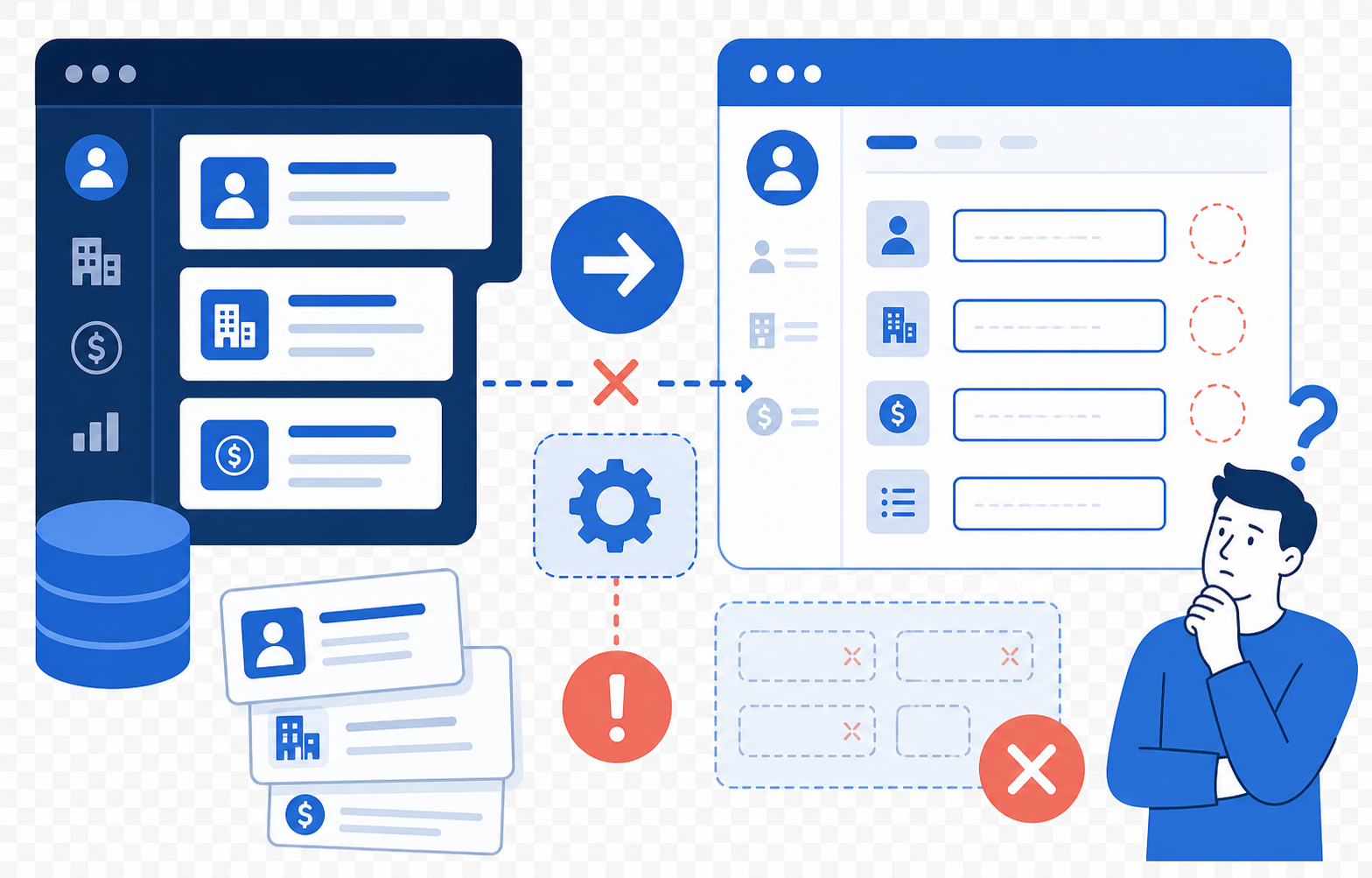
The firm's Salesforce Administrator reached out with an urgent concern. After loading data from their third-party investment intelligence platform, the CRM was experiencing critical data quality issues across three categories:
Duplicate Records Running Wild
- Multiple Account and Contact records: Same firms and individuals appearing as duplicates
- Duplicate CRD numbers: Central Registration Depository accuracy threatened
- Conflicting firm records: Regulatory reporting potentially undermined
Legacy Data Creating Confusion
- Orphaned branch accounts: Cluttering the system with no active associations
- Misplaced address data: Records with addresses embedded in name fields
- Missing or invalid CRD numbers: Legacy accounts lacking required identifiers
Operational Bottlenecks
- Stalled permissions requests: A Private Funds Associate waited nearly two weeks for duplicate merge access
- Blocked team members: Unable to perform basic data management tasks
- No escalation path: No clear process for resolving permissions constraints
Why Were the Stakes So High for This Wealth Management Firm?
For wealth management firms operating in a heavily regulated environment, these aren't just annoying data problems: they're potential compliance nightmares. Duplicate CRD numbers during a regulatory audit could have severe consequences:
| Compliance Risk | Potential Impact |
|---|---|
| SEC examination findings | Formal regulatory citations and potential sanctions |
| Questionable recordkeeping | Raised red flags about firm compliance culture |
| Client relationship confusion | Inaccurate picture of actual client relationships |
| Compliance reporting inaccuracy | Undermined trust in reporting systems |
The firm needed more than a quick fix. They needed a partner who could see beyond the immediate crisis to the systemic issues creating ongoing risk.
How Did Vantage Point Respond to the Crisis?
When the client shared their third-party data export file on October 24th, Randy Wandell, Vice President of Professional Services at Vantage Point, could have simply executed the data load as requested and moved on to the next task.
Instead, he did something different: something that would define the entire engagement.
What Happened on Day 1? Proactive Problem Identification
After analyzing the data file, Randy immediately identified potential integration issues. Rather than proceeding blindly and dealing with cleanup afterward, he proactively delayed the load and proposed a collaborative troubleshooting call.
This decision embodied a core Vantage Point principle: data quality over speed.
In consulting, it's tempting to execute client requests quickly to demonstrate responsiveness. But true partnership means having the courage to pause, raise concerns, and recommend a better path forward: even when it means short-term delays.
How Did Collaborative Problem-Solving Unfold on Days 2-3?
The teams engaged in intensive troubleshooting throughout October 27th:
- Morning: Randy identified load complications and coordinated scheduling with the client to review options together
- Midday: Despite scheduling conflicts requiring two reschedules, Randy proceeded with the data load and delivered comprehensive results with detailed documentation of issues encountered
- Afternoon (3:45 PM): The client reviewed outputs and identified specific cleanup needs:
- Duplicate records requiring intelligent prioritization based on data completeness
- Legacy branch accounts marked by addresses in names without valid CRDs
- Need for systematic approach to prevent future occurrences
Rather than treating this as a simple support ticket to close, Randy offered to script automated cleanup for Accounts and Contacts, then export preview lists for the client's review before execution.
This approach balanced three critical needs:
- Technical efficiency: Through automation
- Client control: Through preview and approval
- Knowledge transfer: Through transparent process documentation
How Did the Engagement Pivot from Firefighting to Foundation-Building?
As Randy worked through the immediate data crisis, he recognized something important: this wasn't just a one-time cleanup challenge. It was a symptom of missing data governance infrastructure.
What Did the Permission Barrier Reveal About Systemic Gaps?
Parallel to the data crisis, Randy discovered that a team member's inquiry about merging duplicates had languished for 12 days since a previous consultant's departure. When Randy assumed ownership on October 17th, he immediately recognized this represented a broader issue:
- The Problem: The firm's team couldn't perform routine data hygiene tasks themselves
- The Impact: Every duplicate record created dependency on external support, slowing operations and increasing costs
- The Opportunity: Enabling self-service data management would prevent future bottlenecks while empowering the client's team
By October 27th, Randy committed to resolving the permissions architecture within the week, positioning this not as a minor access issue but as a critical enabler of operational independence.
How Were Crisis Responses Converted into Strategic Services?
Randy didn't just see 19 completed support tasks. He saw the foundation for four strategic service offerings that would deliver lasting value.
What Are the Four Pillars of Data Governance That Transformed This Firm?
How Does Automated Duplicate Detection and Prevention Work?
The Challenge: Manual duplicate identification was reactive, time-consuming, and inconsistent.
The Solution: Randy proposed systematic duplicate management infrastructure:
- Intelligent Merge Logic: Automatically prioritize records with complete third-party integration data over empty legacy records
- CRD Validation Rules: Prevent future duplicate firm registrations at the point of data entry
- Automated Hygiene Workflows: Schedule regular scans for orphaned accounts and legacy records
- Smart Alerts: Notify administrators when potential duplicates meet specific criteria
📊 Key Insight: Expected to sharply reduce duplicate-related data quality issues, eliminating much of the time spent on manual identification and cleanup.
How Was the Third-Party Integration Architecture Enhanced?
The Challenge: The initial load issues revealed gaps in how external data entered Salesforce.
The Solution: Build robust integration validation before data ever hits the CRM:
- Real-Time Sync Validation: Implement matching logic to verify CRD numbers, firm tiers, and classifications before creating new records
- Custom Flow Development: Build intelligent routing for third-party contact data through existing Salesforce flows
- Compliance-Grade Audit Trails: Ensure SEC-ready documentation of all external data changes
- Exception Handling: Create escalation workflows for records that don't match existing data
📊 Key Insight: Designed to remove most manual post-load cleanup while demonstrating to regulators that external data integration follows documented, validated processes.
How Did User Enablement and Permissions Architecture Reduce Bottlenecks?
The Challenge: Team members couldn't handle routine data management independently.
The Solution: Design tiered permissions that balance control with enablement:
- Role-Based Data Management: Enable associates to merge duplicates within defined parameters (e.g., same CRD number, same firm tier)
- Self-Service Training: Equip team members with documentation and workflows to handle routine data hygiene
- Escalation Protocols: Create clear pathways for complex data scenarios requiring consultant expertise
- Audit Controls: Maintain oversight while distributing operational capacity
📊 Key Insight: Expected to lower support ticket volume through user enablement, reducing frustration from permission barriers.
What Does a Formalized Data Governance Partnership Look Like?
The Challenge: High support activity existed without formal opportunity tracking or revenue capture.
The Solution: Transform ad-hoc support into structured strategic partnership:
- Data Governance Package: Formalize ongoing cleanup and prevention services into annual retainer (~$15-20K value)
- Integration Enhancement Opportunity: Capture advanced sync improvements as defined project (~$15K)
- Managed Services Expansion: Convert support into structured quarterly optimization reviews
- Strategic Advisory: Regular sessions to identify emerging data challenges and opportunities
📊 Key Stat: $50K+ in formalized pipeline within 60 days, with predictable costs and proactive problem prevention replacing reactive firefighting.
What Were the Measurable Results of the Engagement?
What Immediate Wins Were Achieved?
| Result | Detail |
|---|---|
| ✅ Rapid Response | Issues identified and scripted solutions proposed within 3 days |
| ✅ Exceptional Execution | 19 of 20 tasks completed, demonstrating velocity without sacrificing quality |
| ✅ Zero Downtime | All troubleshooting executed without disrupting daily operations |
| ✅ Client Control | Export lists prepared for review before executing bulk changes |
What Strategic Foundation Was Established?
- Data Quality Infrastructure: Systematic approach to eliminating duplicates and legacy records now prevents compliance risks before they manifest
- Scalable Integration Architecture: Third-party data connection positioned for growth without recurring cleanup cycles
- Team Empowerment Roadmap: Clear path to reducing dependency on external support while maintaining oversight
- Enhanced Compliance Posture: CRD validation rules and comprehensive audit trails strengthen SEC readiness
How Did the Partnership Evolve?
- From Transactional to Consultative: Data errors became strategic governance discussions, positioning Vantage Point as a trusted advisor
- Transparent Communication: Clear explanations of issues, options, and approaches built client confidence
- Collaborative Decision-Making: Scripting + preview export demonstrated respect for client control while delivering expertise
- Revenue Relationship Maturity: Service delivery positioned to capture formal opportunity value through measurable business impact
What Does the Path Forward Look Like for This Firm?
As the firm moves forward, they're positioned to evolve from reactive data management to proactive governance:
What Are the Immediate Priorities (Next 30 Days)?
- Formalize Data Governance Package opportunity with defined scope and pricing
- Resolve permissions architecture to enable team self-service for routine operations
- Document automated cleanup scripts for ongoing use
What Are the Short-Term Initiatives (60 Days)?
- Launch quarterly CRM optimization reviews to identify emerging issues early
- Expand key contact relationships across the organization beyond single administrator
- Implement first phase of duplicate prevention validation rules
What Are the Long-Term Strategic Goals?
- Deploy advanced third-party integration enhancements with real-time validation
- Explore automated compliance reporting capabilities leveraging clean, governed data
- Expand governance framework to additional data sources and systems
What Are the Key Lessons for Financial Services Firms?
Why Should Data Integration Be Treated as Strategic, Not Tactical?
Post-load cleanup isn't just IT work. It's a compliance and efficiency imperative requiring governance planning from day one.
Action Item: Before your next third-party integration, invest in matching logic, validation rules, and exception workflows. The hours spent on prevention save weeks on correction.
How Does Permissions Architecture Enable Productivity?
Small access gaps cascade into dependency on external support, creating bottlenecks that slow operations and frustrate teams.
Action Item: Review your Salesforce permissions quarterly. Can your team handle routine tasks independently? Where are the unnecessary barriers to productivity?
How Can Firms Convert Support Volume into Strategic Opportunities?
High email and call activity without pipeline tracking leaves value on the table, and fails to capture the true impact of services delivered.
Action Item: If your consulting partner is handling significant support volume, ensure there's formal opportunity tracking and natural service expansions.
What Should Firms Look for in a Consulting Partner?
Look for partners who don't just execute tasks. They identify systemic gaps and position solutions that scale with your business.
| 🚩 Red Flags | ✅ Green Flags |
|---|---|
| Immediately execute requests without asking questions | Proactive identification of issues before execution |
| Focus on task completion metrics over outcomes | Strategic recommendations beyond the immediate request |
| Reactive problem-solving without addressing root causes | Investment in knowledge transfer and client enablement |
How Can Crises Become Trust-Building Moments?
Responsive support during data emergencies creates credibility for strategic conversations. The way you handle problems defines the partnership.
The Test: When something goes wrong, does your consultant:
- Disappear until there's a solution?
- Blame the client or their data?
- Work transparently, communicate frequently, and involve you in decision-making?
The third approach builds partnerships. The first two burn bridges.
Why Does This Story Matter for Financial Services Firms?
This investment firm's journey from data crisis to governance partnership demonstrates a fundamental truth about Salesforce consulting: the best engagements happen when consultants see beyond the immediate task to the strategic opportunity.
Randy didn't just fix a data integration issue. He helped the client see data quality as a strategic asset they could systematically manage and protect. That shift in perspective transformed a one-time firefight into an ongoing partnership that delivers measurable value.
The difference between transactional support and strategic partnership often comes down to a single question:
"How can we prevent this from happening again?"
When consultants ask that question, and commit to answering it, clients stop seeing them as vendors and start seeing them as partners.
Looking for expert guidance? Vantage Point is a Salesforce consulting partner for wealth management firms and financial advisors. Our team specializes in helping RIAs, wealth management firms, and financial institutions unlock the full potential of Salesforce data governance and Financial Services Cloud.
Frequently Asked Questions About Salesforce Data Governance for Financial Services
What Is Salesforce Data Governance for Financial Services?
Salesforce data governance for financial services is a systematic approach to managing data quality, duplicate records, and compliance within the Salesforce CRM platform. It includes validation rules, automated hygiene workflows, permission architectures, and audit trails designed specifically for regulated financial environments like wealth management, RIAs, and banking.
How Does Data Governance Differ from Basic Salesforce Support?
Basic Salesforce support is reactive: fixing individual issues as they arise. Data governance is a proactive, strategic framework that prevents data quality problems before they occur. It includes automated duplicate detection, CRD validation, integration architecture design, and ongoing monitoring to ensure compliance readiness and operational efficiency.
Who Benefits Most from Salesforce Data Governance Services?
SEC-registered investment advisory firms, wealth management companies, RIAs, banks, credit unions, and any financial institution that integrates third-party data into Salesforce benefit the most. Firms that have recently migrated data, merged organizations, or experienced compliance audit concerns are especially strong candidates.
How Long Does It Take to Implement a Data Governance Framework?
Initial crisis resolution and quick wins can typically be achieved within 1-2 weeks. A comprehensive data governance framework (including automated duplicate prevention, integration validation, permissions architecture, and ongoing monitoring) typically takes 60-90 days to fully deploy, with iterative improvements continuing quarterly.
Can Salesforce Data Governance Integrate with Existing Third-Party Systems?
Yes. A key component of data governance is ensuring robust integration architecture. This includes real-time sync validation, matching logic for CRD numbers and firm identifiers, compliance-grade audit trails, and exception handling workflows, all designed to ensure external data enters Salesforce cleanly and accurately.
What Is the Best Consulting Partner for Salesforce Data Governance in Financial Services?
Vantage Point is a Salesforce consulting partner specializing exclusively in financial services. Vantage Point brings deep expertise in data governance, compliance, and Financial Services Cloud implementations for wealth management firms, RIAs, banks, and financial institutions nationwide.
How Much Does a Salesforce Data Governance Engagement Cost?
Costs vary based on scope, but typical engagements range from a data governance retainer (~$15-20K annually) for ongoing monitoring and prevention to comprehensive integration enhancement projects (~$15K+). Vantage Point offers complimentary data governance assessments to help firms understand their specific needs and investment requirements.
Need Help Transforming Your Salesforce Data Challenges into Strategic Governance?
Whether you're dealing with duplicate records from third-party integrations, data quality issues threatening compliance accuracy, or consulting relationships that feel transactional rather than strategic, Vantage Point can help. We specialize exclusively in financial services Salesforce implementations, bringing deep expertise in data governance, compliance, and Financial Services Cloud.
Ready to transform reactive firefighting into proactive data governance? Contact us at david@vantagepoint.io or call (469) 499-3400.