Key Takeaways (TL;DR)
- What is this? A practical guide to the 10 most common CRM implementation mistakes that derail projects, and proven strategies to avoid them
- Key Stat: Up to 70% of CRM implementations fail to meet their objectives, often due to process and people issues: not software limitations
- Cost: CRM implementations range from $15,000: $150,000 for SMBs to $150,000: $1.5M+ for enterprises
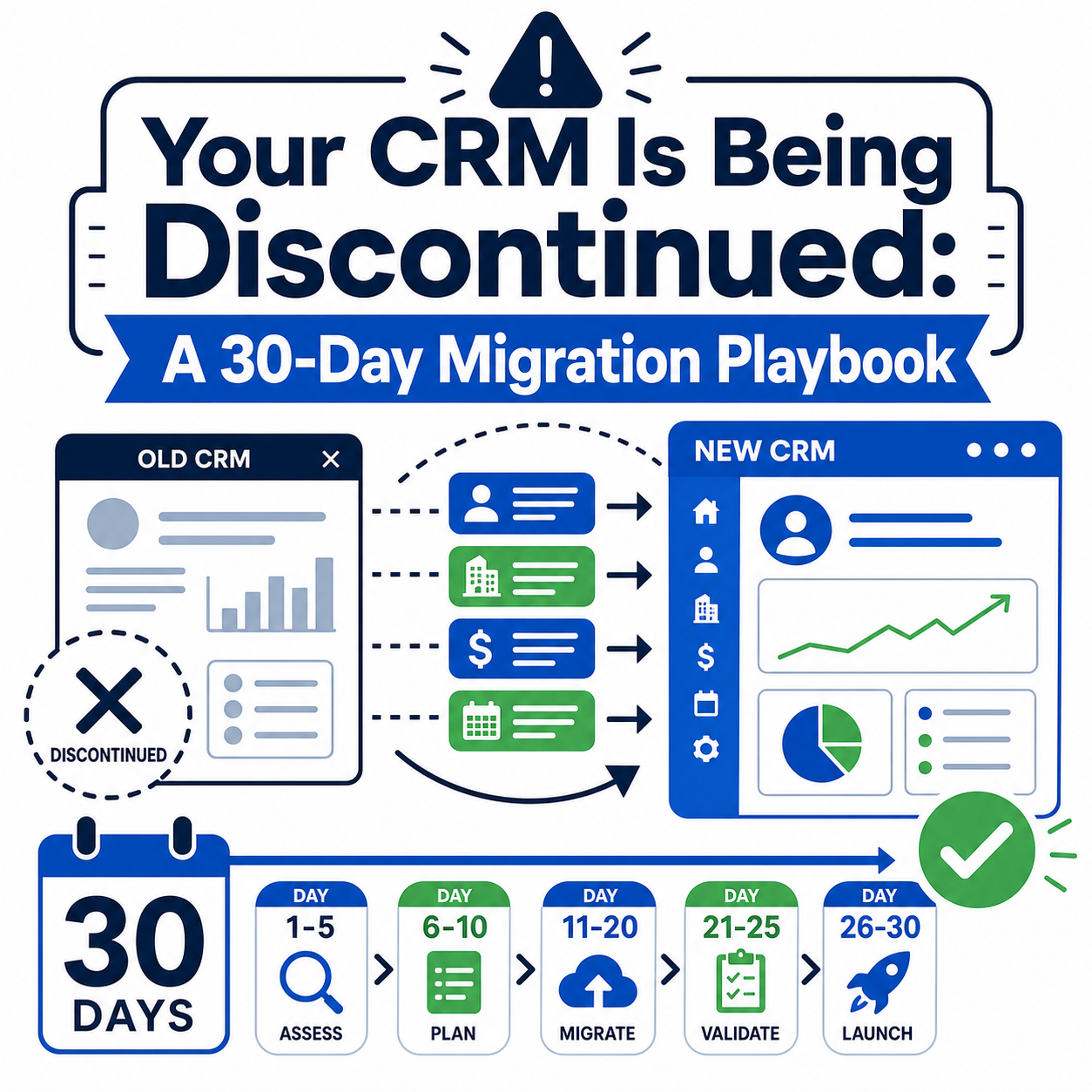
- Timeline: 1-3 months (simple) to 6-12+ months (complex enterprise deployments)
- Best For: Business leaders, IT teams, and operations managers planning or re-evaluating a CRM rollout
- Bottom Line: Success depends on change management, data quality, and phased rollout: not just choosing the right platform
Introduction: Why Most CRM Projects Fail Before They Start
Your organization made the decision to invest in CRM. You've evaluated platforms, negotiated licensing, and assembled a project team. Everything seems on track: until it isn't.
The reality is sobering: up to 70% of CRM implementations fail to achieve their intended outcomes. Not because the software is flawed, but because the approach is. Poor planning, skipped change management, misaligned processes, and neglected data quality quietly sabotage even the best-funded projects.
The good news? Every one of these failures is preventable.
Whether you're deploying Salesforce, HubSpot, or any other CRM platform, the pitfalls are remarkably consistent across organizations of every size and industry. In this guide, we'll walk through the 10 most costly CRM implementation mistakes: and give you a clear playbook for avoiding each one.
Mistake #1: Treating CRM as an IT Project Instead of a Business Transformation
Why It Happens
Too many organizations hand CRM implementation off to IT and expect a working system to appear. When business stakeholders aren't driving requirements, the resulting system reflects technical capabilities rather than real operational needs.
Why It Hurts
A CRM built without business input becomes a data entry tool nobody wants to use. Sales teams ignore it. Service teams work around it. Marketing teams build their own parallel systems. The investment delivers a fraction of its potential value.
How to Avoid It
- Assign executive sponsorship from a business leader (VP of Sales, COO, or CRO): not just the CIO
- Build a cross-functional steering committee with representatives from sales, service, marketing, and operations
- Define business outcomes first, then configure the technology to support them
- Treat CRM as a business transformation program with technology as one component
Mistake #2: Skipping Process Mapping Before Configuration
Why It Happens
Teams are eager to start building. Vendors encourage rapid deployment. The assumption is that good software will naturally improve processes.
Why It Hurts
As one industry study noted, a team that migrates to a new CRM without fixing process problems will simply recreate the same broken system on a new platform. You'll spend months configuring workflows that automate inefficiency.
How to Avoid It
- Document current-state processes before touching any software
- Identify bottlenecks, handoff gaps, and redundancies through stakeholder interviews
- Design future-state workflows that the CRM will support
- Only begin configuration once you have clear, validated process maps
Mistake #3: Ignoring Data Quality and Migration Planning
Why It Happens
Data migration is seen as a "lift and shift" activity. Teams underestimate the scope of data cleanup required, and data governance is treated as a post-launch activity.
Why It Hurts
85% of sellers admit making embarrassing mistakes because of faulty CRM data. Dirty data (duplicates, incomplete records, outdated contacts, inconsistent formats) poisons every downstream activity: reporting, automation, forecasting, and AI features. In 2026, 45% of organizations report their CRM data is not prepared to support AI features, rendering advanced capabilities useless.
How to Avoid It
- Audit your existing data at least 8-12 weeks before go-live
- Establish data governance standards (naming conventions, required fields, validation rules) before migration
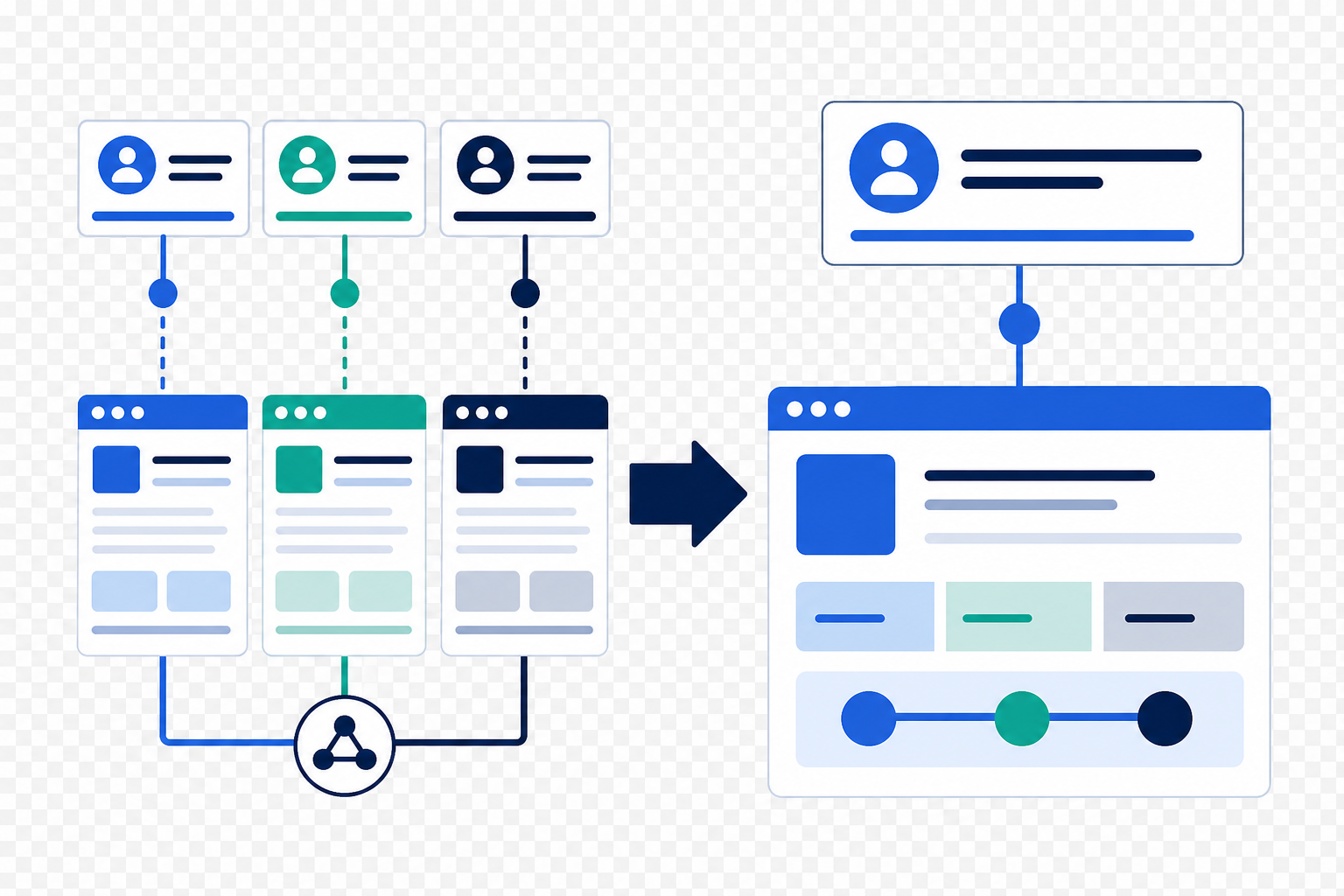
- Deduplicate and cleanse data in the source system before importing
- Assign data stewards responsible for ongoing data quality in each department
- Plan for AI readiness: structure data to support analytics, automation, and personalization from day one
Mistake #4: Trying to Build Everything at Once
Why It Happens
Stakeholders want immediate value from every feature. The project scope expands to include every possible use case, integration, and customization from day one.
Why It Hurts
Overloaded implementations take longer, cost more, and overwhelm users. Research shows that only 22% of CRM features are typically used after deployment, with over-engineering the initial configuration being a primary driver of low adoption.
How to Avoid It
- Adopt a phased rollout strategy: launch with core functionality, then iterate
- Phase 1: Contact management, pipeline tracking, basic reporting (weeks 1-8)
- Phase 2: Workflow automation, email integration, dashboards (months 3-4)
- Phase 3: Advanced analytics, AI features, third-party integrations (months 5-6+)
- Prioritize features by business impact and user readiness, not technical complexity
Mistake #5: Underinvesting in Change Management and Training
Why It Happens
After budget is allocated to licensing and configuration, training feels like an afterthought. Leaders assume a brief demo session will suffice.
Why It Hurts
46% of sellers don't use their CRM software as intended, and 66% of sellers say they'd rather do unpleasant tasks than update their CRM. Without structured change management, even a well-configured system faces active resistance from the people who need to use it daily.
How to Avoid It
- Allocate 15-20% of total project budget to training and change management
- Create role-specific training: what a sales rep needs differs from what a service manager needs
- Identify and empower CRM champions in each department to provide peer support
- Communicate the "why" clearly, help users understand how CRM makes their jobs easier, not harder
- Provide ongoing training, not just a one-time launch session
Mistake #6: Failing to Define Clear Success Metrics
Why It Happens
The project is framed around "implementing CRM" rather than achieving specific business outcomes. Success becomes "we went live" rather than "we improved pipeline visibility by 40%."
Why It Hurts
Without clear KPIs, you can't measure ROI. You can't identify what's working and what isn't. Executives lose confidence in the investment, and the system slowly gets deprioritized.
How to Avoid It
- Define 5-7 measurable KPIs before implementation begins
- Example metrics: user adoption rate, pipeline accuracy, lead response time, forecast accuracy, customer satisfaction scores
- Establish baselines from your current state so improvements are quantifiable
- Schedule quarterly reviews to assess progress against goals and adjust
- Report results to executive sponsors to maintain organizational commitment
Mistake #7: Neglecting Integration with Existing Systems
Why It Happens
CRM is implemented in isolation, without mapping how it connects to ERP, marketing automation, telephony, billing, and other core systems. Integration is deferred to "phase two", which never arrives.
Why It Hurts
Disconnected systems create data silos, force manual data entry, and produce conflicting reports. Teams lose trust in the data because it doesn't match what they see in other tools. The CRM becomes one more system to maintain instead of a unified source of truth.
How to Avoid It
- Map your integration landscape during the planning phase: identify every system that needs to connect to CRM
- Prioritize critical integrations for the initial rollout (email, calendar, marketing automation, telephony)
- Use middleware platforms like MuleSoft or Workato for complex, multi-system integrations
- Plan for bidirectional data sync where needed, not just one-way imports
- Test integrations thoroughly before go-live with real-world data scenarios
Mistake #8: Choosing the Wrong CRM Platform for Your Needs
Why It Happens
Organizations choose a platform based on brand recognition, a competitor's choice, or a compelling sales demo. Without evaluating whether it fits their actual requirements, team size, and growth trajectory.
Why It Hurts
An overbuilt enterprise platform overwhelms a 20-person team. A lightweight SMB tool can't scale when you reach 200 users. Switching platforms mid-stream is expensive and disruptive: custom CRM migrations can cost $50,000: $250,000+.
How to Avoid It
- Start with a requirements document, not a vendor shortlist
- Evaluate platforms against your specific workflows, data complexity, integration needs, and user count
- Consider total cost of ownership (TCO): not just per-user licensing, but implementation, customization, training, and ongoing administration
- Right-size your solution: Salesforce excels for complex enterprise needs, HubSpot offers an intuitive experience for growing teams, and each has unique strengths
- Run a proof of concept or pilot before committing to a full rollout
- Partner with an experienced implementation firm that can objectively assess fit
Mistake #9: Not Planning for Ongoing Administration and Optimization
Why It Happens
The project is treated as a one-time event with a defined end date. Once the system goes live, the implementation team disbands and no one owns ongoing system health.
Why It Hurts
CRM systems require continuous attention: new users need onboarding, workflows need updating as processes evolve, data quality drifts without governance, and new features go undeployed. Within 12 months, the gap between what the system could do and what it actually does grows significantly.
How to Avoid It
- Designate a dedicated CRM administrator (or partner with a managed services provider)
- Create a CRM roadmap that extends beyond go-live with quarterly optimization cycles
- Establish a feedback loop where users can report issues and request enhancements
- Stay current on platform updates: Salesforce releases three major updates per year; HubSpot updates continuously
- Budget for ongoing optimization: plan for 10-15% of initial implementation cost annually
Mistake #10: Overlooking Security, Compliance, and User Permissions
Why It Happens
In the rush to configure and launch, role-based access, data visibility rules, and compliance requirements are treated as secondary concerns.
Why It Hurts
Overly permissive access exposes sensitive data. Insufficient permissions frustrate users. Missing audit trails create compliance risk. As organizations adopt AI features that leverage CRM data, security and governance become even more critical.
How to Avoid It
- Define role-based access controls (RBAC) during the design phase, not after launch
- Implement field-level security for sensitive data (pricing, contracts, personal information)
- Enable audit trails to track who viewed, created, or modified records
- Ensure compliance with relevant regulations (GDPR, CCPA, industry-specific requirements)
- Review permissions quarterly as roles and teams evolve
- Test security configurations with real user scenarios before go-live
Best Practices for CRM Implementation Success
Based on thousands of successful deployments, here are the practices that consistently differentiate successful CRM implementations:
| Practice | Impact |
|---|---|
| Executive sponsorship from a business leader | 3x more likely to achieve adoption targets |
| Phased rollout (core first, then iterate) | 40-60% faster time-to-value |
| Dedicated change management program | 2x higher user adoption rates |
| Data quality audit before migration | 70% fewer post-launch data issues |
| Integration planning in Phase 1 | Eliminates 80%+ of data silo complaints |
| Ongoing admin and optimization budget | Sustains ROI beyond year one |
The Implementation Timeline That Works
Months 1-2: Foundation
- Business requirements gathering and process mapping
- Platform selection and licensing
- Data audit and governance planning
- Project team assembly
Months 3-4: Build
- Core configuration and customization
- Data migration (cleanse → map → import → validate)
- Integration setup for critical systems
- User acceptance testing (UAT)
Month 5: Launch
- Role-based training rollout
- Phased go-live (pilot group → full organization)
- Hypercare support period
Months 6+: Optimize
- Advanced features and Phase 2 capabilities
- Performance measurement against KPIs
- Continuous improvement and user feedback cycles
Frequently Asked Questions
What is the most common reason CRM implementations fail?
The most common reason is poor change management and lack of user adoption: not software limitations. When teams don't understand why the CRM matters or how it improves their daily work, they resist using it, and the system fails to deliver value regardless of how well it's configured.
How much does a CRM implementation cost?
CRM implementation costs vary widely: $15,000: $50,000 for small businesses with basic needs, $50,000: $150,000 for mid-sized organizations with moderate complexity, and $150,000: $1.5 million+ for enterprise deployments with extensive customization and integration. Budget 15-20% extra for training and change management.
How long does a typical CRM implementation take?
Simple deployments take 1-3 months, standard implementations with integrations take 3-6 months, and complex enterprise projects span 6-12+ months. Phased rollouts are strongly recommended regardless of timeline.
What percentage of CRM implementations fail?
Industry research indicates that up to 70% of CRM implementations fail to fully meet their objectives. However, "failure" ranges from partial adoption shortfalls to complete project abandonment. Most failures are preventable with proper planning and change management.
How do I improve CRM user adoption?
Focus on five areas: (1) Involve users in requirements gathering early, (2) provide role-specific training (not generic demos), (3) appoint CRM champions in each department, (4) communicate clear benefits tied to users' daily workflows, and (5) maintain ongoing training and support beyond the initial launch.
Should I hire a CRM implementation partner or do it in-house?
For organizations without deep platform expertise, an experienced implementation partner significantly reduces risk and accelerates time-to-value. Partners bring proven methodologies, cross-industry best practices, and the ability to anticipate common pitfalls. In-house teams often underestimate complexity, leading to cost overruns and extended timelines.
How do I ensure my CRM data is ready for AI features?
Start by establishing data governance standards before implementation: consistent field naming, required fields with validation rules, deduplication processes, and data quality scoring. Structure data for AI consumption by ensuring complete, accurate, and well-organized records. AI features are only as good as the data they analyze.
Conclusion: Your CRM Implementation Doesn't Have to Be a Statistic
The 70% failure rate is not inevitable: it's the result of predictable, preventable mistakes. By treating CRM implementation as a business transformation (not an IT project), investing in data quality and change management, and taking a phased approach, your organization can join the minority that achieves real, measurable results.
The difference between a failed CRM project and a transformative one isn't the software: it's the approach.
Ready to get your CRM implementation right the first time? Contact Vantage Point to learn how our team helps organizations plan, execute, and optimize CRM deployments across Salesforce, HubSpot, and integrated technology ecosystems.
About Vantage Point
Vantage Point is a CRM implementation and digital transformation consultancy specializing in Salesforce, HubSpot, MuleSoft, and AI-powered solutions. We help businesses of all sizes design, deploy, and optimize CRM platforms that drive measurable results: from initial strategy through ongoing managed services. Our partnerships with Salesforce, HubSpot, Anthropic, Aircall, and Workato enable us to deliver integrated solutions that unify sales, service, marketing, and operations into a single source of truth.