
Key Takeaways (TL;DR)
- What is it? A strategic guide to leveraging modern CRM technology (including AI, automation, and integration) to accelerate business growth and operational efficiency
- Key Benefit: Businesses using CRM see an average ROI of $8.71 for every $1 spent and up to a 300% increase in conversion rates
- Cost: CRM implementations range from $25/user/month for basic platforms to $200K+ for enterprise-grade custom deployments
- Timeline: 30-90 days for basic setup; 3-6 months for full enterprise implementation with integrations
- Best For: Growing businesses with 10+ employees looking to unify sales, marketing, and service operations
- Bottom Line: 97% of CRM-using businesses met or exceeded their sales goals. The question isn't whether to invest, but how to do it right
Introduction: Why CRM Technology Is No Longer Optional
The business landscape in 2026 demands more than spreadsheets and disconnected tools. With the CRM market projected to reach $126.17 billion this year and 91% of companies with more than 11 employees already using CRM systems, the technology has moved from competitive advantage to operational necessity.
Yet here's the paradox: while adoption is nearly universal, 43% of CRM users leverage fewer than half of their platform's features. That's the equivalent of buying a high-performance vehicle and never leaving second gear.
Whether you're a startup scaling your first sales team or an established organization struggling with siloed data and manual processes, the right CRM strategy can unlock transformative growth. This guide walks you through exactly how to make that happen, from choosing the right platform to implementing AI-driven automation that delivers measurable results.
What Modern CRM Technology Actually Does (Beyond Contact Management)
The Evolution from Digital Rolodex to Growth Engine
CRM has evolved far beyond its origins as a contact database. Today's platforms serve as unified operating systems for your entire customer lifecycle: from first touch to long-term retention.
Modern CRM platforms deliver:
- 360-Degree Customer Views: Every interaction, purchase, support ticket, and communication in one place
- Workflow Automation: Automated follow-ups, lead routing, task creation, and approval processes
- AI-Powered Insights: Predictive lead scoring, deal forecasting, and next-best-action recommendations
- Integration Hubs: Connections to email, telephony, marketing platforms, ERP systems, and hundreds of other tools
- Analytics & Reporting: Real-time dashboards, pipeline visualization, and performance tracking
How CRM Impacts Key Business Metrics
The numbers tell a compelling story:
| Metric | Impact with CRM |
|---|---|
| Sales Revenue | 29% average increase |
| Sales Productivity | 34% boost |
| Conversion Rates | Up to 300% improvement |
| Customer Retention | 27% increase |
| Customer Acquisition Cost | Reduced by 11-20% for 91% of businesses |
| Sales Cycle Length | Shortened by 8-14 days for 34% of businesses |
| Sales Forecasting Accuracy | Up to 42% improvement |
| ROI | $8.71 return for every $1 invested |
These aren't aspirational figures. They're documented outcomes from businesses across industries that have implemented CRM strategically.
How to Choose the Right CRM for Your Business
Step 1: Define Your Business Objectives
Before evaluating platforms, clarify what success looks like. Common CRM objectives include:
- Lead Generation & Conversion: 61% of businesses cite this as their primary CRM goal
- Sales Pipeline Management: Real-time visibility into deal stages and revenue forecasting
- Customer Service Improvement: 49% of businesses report enhanced support quality with CRM
- Marketing Automation: Personalized campaigns, email sequences, and engagement tracking
- Data Centralization: Eliminating silos across departments and systems
Step 2: Evaluate Platform Options
The CRM market offers solutions for every business size and need. Here's how the major platforms compare:
Salesforce: The Enterprise Standard
- 31% market share, used by 90% of Fortune 500 companies
- Extensive customization with Sales Cloud, Service Cloud, Experience Cloud, and Data Cloud
- AI capabilities through Einstein and Agentforce
- Best for: Organizations needing deep customization and enterprise-scale functionality
HubSpot CRM: The Growth Platform
- Free tier available; scales from startup to enterprise
- Unified marketing, sales, and service hubs
- Intuitive interface with powerful automation
- Best for: Growing businesses wanting an all-in-one platform with rapid time-to-value
Industry Considerations: The right choice depends on your team size, technical resources, integration requirements, and growth trajectory. Many businesses benefit from working with an implementation partner who can assess your needs and configure the platform for maximum impact.
Step 3: Plan for Integration
A CRM that operates in isolation delivers only a fraction of its potential value. Key integrations to consider:
- Email & Calendar: Automatic logging of communications and scheduling
- Telephony (e.g., Aircall): Click-to-call, automatic call logging, AI call summaries synced to CRM records
- Marketing Automation: Campaign tracking, lead scoring, and attribution
- ERP & Accounting: Revenue data, invoicing, and financial reporting
- Integration Platforms (e.g., MuleSoft, Workato): Enterprise-grade data orchestration across all systems
7 Strategies to Boost Your Operations with CRM Technology
1. Automate Repetitive Tasks to Reclaim Productive Hours
43% of businesses report that CRM reduces employee workload by 5-10 hours per week, and 50% attribute the savings to automating repetitive tasks.
Start by automating:
- Lead Assignment: Route incoming leads to the right rep based on territory, deal size, or expertise
- Follow-Up Sequences: Trigger personalized email sequences when prospects take specific actions
- Data Entry: Auto-capture contact information from emails, web forms, and calls
- Task Creation: Automatically generate tasks for deal stage transitions or overdue activities
- Approval Workflows: Streamline discount approvals, contract reviews, and escalation processes
Pro Tip: Audit your team's weekly activities and identify the top 5 tasks that consume the most time but add the least strategic value. These are your automation priorities.
2. Leverage AI for Smarter Decision-Making
83% of companies are already using AI features in their CRM workflows, and businesses leveraging AI in CRM are 83% more likely to exceed sales goals.
Key AI capabilities to activate:
- Predictive Lead Scoring: Let AI analyze historical data to identify which leads are most likely to convert
- Deal Forecasting: AI-powered pipeline analysis that accounts for deal velocity, engagement patterns, and historical close rates
- Next-Best-Action Recommendations: Suggestions for the optimal outreach timing, channel, and messaging
- Sentiment Analysis: AI that reads email and call tone to flag at-risk accounts
- Conversation Intelligence: Automatic call transcription and analysis highlighting key topics, objections, and action items
Tools like Salesforce Einstein, HubSpot Breeze AI, and Claude AI by Anthropic are making these capabilities accessible even to mid-market businesses. Vantage Point helps organizations integrate Claude AI for CRM automation and implementation acceleration: bringing cutting-edge AI capabilities into practical, everyday workflows.
3. Build a Unified Customer Data Platform
74% of businesses report improved access to customer data after CRM implementation, but data quality is what separates high performers from the rest.
Best practices for data excellence:
- Establish Data Governance: Define who owns data entry, what fields are required, and how duplicates are handled
- Implement Validation Rules: Prevent incomplete or incorrectly formatted data at the point of entry
- Automate Data Enrichment: Use third-party tools to append firmographic, technographic, and intent data
- Schedule Regular Audits: Quarterly reviews of data quality, duplicate records, and stale information
- Centralize All Sources: Connect every customer touchpoint (web, phone, email, social, in-person) to your CRM
4. Optimize Your Sales Process with Pipeline Management
CRM technology enables you to transform your sales process from art to science.
Pipeline Management Best Practices:
- Define Clear Stage Criteria: Each pipeline stage should have specific entry/exit requirements (e.g., "Qualified" requires confirmed budget, timeline, and decision-maker)
- Track Leading Indicators: Monitor activity metrics (calls, emails, meetings) alongside outcome metrics (win rate, deal size)
- Implement Sales Velocity Tracking: Measure how quickly deals move through each stage to identify bottlenecks
- Use Weighted Pipeline Analysis: Not all deals are equal: weight pipeline value by probability to get accurate forecasts
- Conduct Pipeline Reviews: Weekly team reviews using CRM dashboards to discuss stuck deals, next steps, and coaching opportunities
5. Personalize Customer Engagement at Scale
Personalized email campaigns based on CRM data achieve 14% higher click-through rates, and 75% of organizations using CRM report significant improvements in customer satisfaction.
How to personalize effectively:
- Segment Your Database: Group contacts by industry, company size, buying stage, engagement level, or product interest
- Create Dynamic Content: Use CRM data to populate personalized fields in emails, landing pages, and proposals
- Map the Customer Journey: Design automated workflows that deliver the right content at the right stage
- Track Engagement Signals: Monitor email opens, website visits, content downloads, and social interactions to gauge interest
- Trigger Timely Outreach: Set automation rules that alert reps when prospects demonstrate high-intent behavior
6. Enable Mobile and Remote Operations
65% of salespeople using mobile CRM meet their sales quotas, compared to only 22% without mobile access. In today's distributed work environment, mobile CRM isn't a luxury: it's a requirement.
Mobile CRM priorities:
- Full Functionality: Ensure your team can log calls, update deals, and access contacts from any device
- Offline Access: Sales reps in the field need CRM access even without reliable internet
- Voice-to-Text Logging: Let reps dictate meeting notes and have them automatically captured in CRM records
- Location-Based Features: Optimize territory management and route planning for field teams
- Real-Time Notifications: Push alerts for deal updates, task reminders, and customer activity
7. Integrate Telephony for Complete Communication Tracking
Phone calls remain one of the most important touchpoints in the sales process, yet they're often the least tracked. Modern cloud telephony solutions like Aircall integrate directly with CRM platforms to provide:
- Click-to-Call: Dial prospects directly from CRM records
- Automatic Call Logging: Every call, duration, and disposition recorded without manual entry
- AI Call Summaries: Automatic transcription and key point extraction
- Compliance Recording: Recorded calls for quality assurance and regulatory compliance
- Performance Analytics: Call volume, talk time, and conversion metrics synced to CRM dashboards
Vantage Point recommends and implements Aircall for businesses seeking seamless CRM-integrated telephony, supporting both Salesforce and HubSpot environments with 200+ additional integrations.
CRM Implementation: A Practical Roadmap
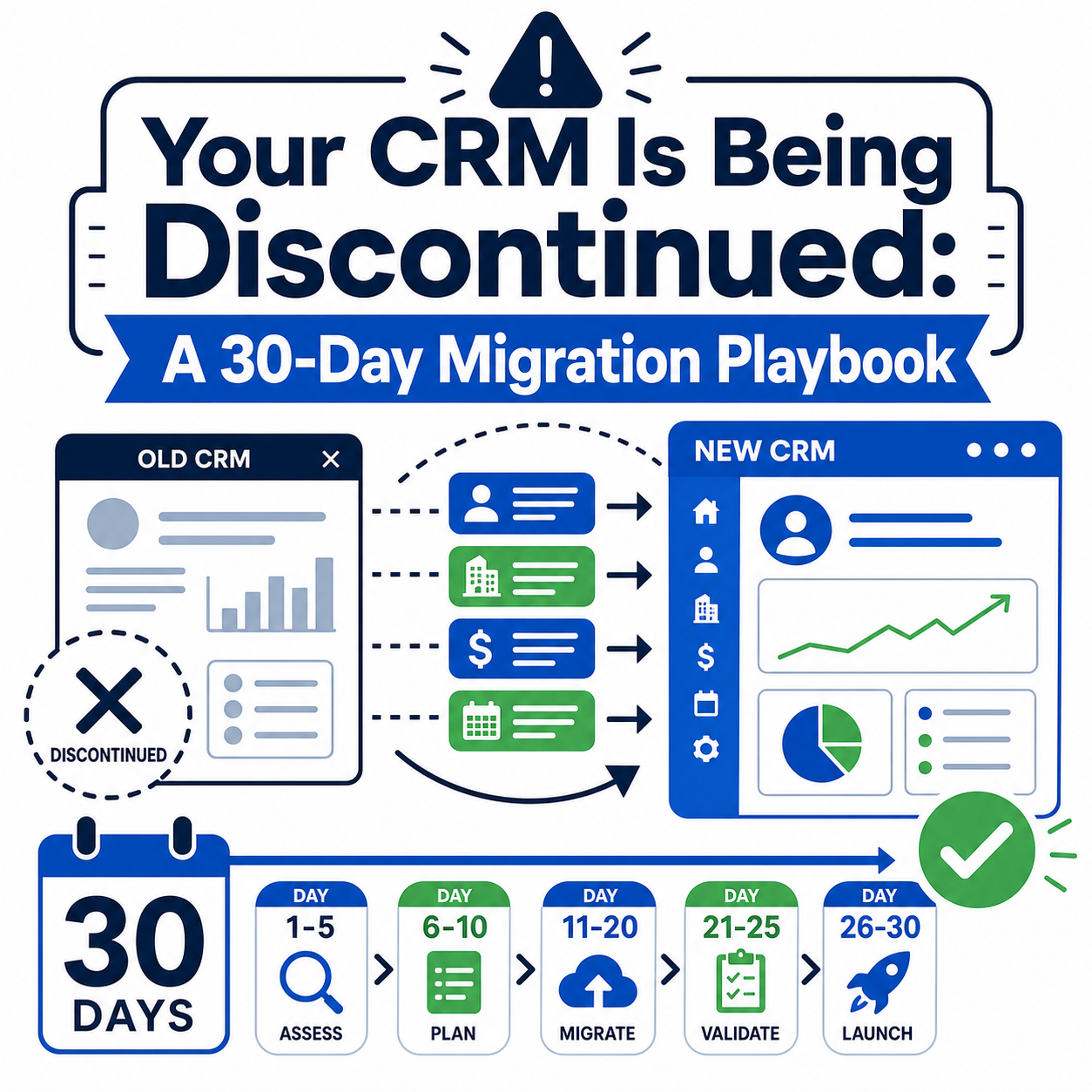
Phase 1: Discovery & Planning (Weeks 1-3)
- Audit current processes and pain points
- Define success metrics and KPIs
- Map data migration requirements
- Select and configure the CRM platform
- Design integration architecture
Phase 2: Configuration & Customization (Weeks 4-8)
- Build custom fields, objects, and page layouts
- Configure automation rules and workflows
- Set up integrations with existing tools
- Create dashboards and reports
- Establish user roles and permissions
Phase 3: Data Migration & Testing (Weeks 9-11)
- Clean and deduplicate existing data
- Migrate historical records to the new system
- Test all workflows, automations, and integrations
- Validate data accuracy and completeness
- Conduct user acceptance testing
Phase 4: Training & Launch (Weeks 12-14)
- Deliver role-based training for all users
- Create documentation and quick-reference guides
- Execute phased rollout (pilot team → full organization)
- Establish a support channel for questions and issues
- Monitor adoption metrics and address gaps
Phase 5: Optimization & Growth (Ongoing)
- Review adoption and usage analytics monthly
- Refine automations based on real-world usage
- Add advanced features (AI, predictive analytics, advanced reporting)
- Expand integrations as business needs evolve
- Conduct quarterly business reviews to measure ROI
Common CRM Mistakes to Avoid
1. Underinvesting in Training
42% of businesses cite lack of training as the biggest CRM barrier. A powerful CRM with untrained users is a wasted investment.
2. Skipping Data Cleanup
Migrating dirty data to a new CRM just creates a faster mess. Clean before you migrate.
3. Over-Customizing Too Early
Start with out-of-the-box functionality and customize based on actual needs: not hypothetical ones.
4. Ignoring User Feedback
32% of CRM users feel a lack of technical expertise is the biggest roadblock. Listen to your team and address their friction points.
5. Treating CRM as a Sales-Only Tool
CRM delivers maximum value when sales, marketing, service, and operations all participate. Break down departmental silos.
6. Neglecting Mobile Access
With 87% of businesses on cloud-based CRM and 81% of users accessing from multiple devices, mobile access is essential.
7. Failing to Measure ROI
Define success metrics before implementation and track them consistently. What gets measured gets managed.
Frequently Asked Questions (FAQ)
What is a CRM, and why do businesses need one?
A CRM (Customer Relationship Management) system is a technology platform that helps businesses manage all customer interactions, sales processes, and data in one centralized location. Businesses need CRM to improve efficiency, increase sales, enhance customer satisfaction, and make data-driven decisions. In 2026, 91% of companies with 11+ employees use CRM software.
How much does CRM implementation cost?
CRM costs vary widely based on platform, team size, and complexity. Basic cloud CRM starts at $25: $75 per user per month. Mid-market implementations (including customization and integration) typically range from $25,000: $100,000. Enterprise deployments with deep customization can exceed $200,000. The average ROI is $8.71 for every $1 spent.
How long does it take to implement a CRM system?
A basic CRM setup with minimal customization can be completed in 30-60 days. Mid-size implementations with integrations and automation typically take 3-4 months. Complex enterprise deployments may require 6-12 months. Working with an experienced implementation partner significantly reduces timeline risk.
What's the difference between Salesforce and HubSpot?
Salesforce offers deeper customization, more advanced enterprise features, and a broader ecosystem of apps and integrations: it commands 31% of the CRM market. HubSpot provides an intuitive, all-in-one platform with a free starting tier that's ideal for growing businesses. Both are excellent platforms; the best choice depends on your team's size, technical resources, and specific needs.
How does AI improve CRM functionality?
AI enhances CRM through predictive lead scoring, deal forecasting, automated data entry, sentiment analysis, conversation intelligence, and next-best-action recommendations. 83% of companies are already using AI in their CRM, and those that do are 83% more likely to exceed sales goals. AI-powered CRM can improve response times by 30-50%.
What integrations should I prioritize with my CRM?
Start with the tools your team uses daily: email and calendar, telephony (cloud phone systems), marketing automation, and accounting/ERP. Then expand to specialized integrations like data enrichment, e-signature, project management, and customer support. Integration platforms like MuleSoft and Workato can connect complex enterprise systems.
How do I get my team to actually use the CRM?
User adoption is the #1 factor in CRM success. Key strategies include: executive sponsorship and visible usage, role-based training (not one-size-fits-all), starting with features that make reps' lives easier, automating data entry to reduce manual work, gamifying usage with leaderboards and recognition, and regularly soliciting and acting on user feedback.
Conclusion: Your CRM Is Only as Powerful as Your Strategy
CRM technology in 2026 offers unprecedented capabilities, AI-driven insights, seamless automation, unified data platforms, and intelligent customer engagement. But technology alone doesn't drive results. Strategy, implementation quality, and user adoption are what separate the 97% of CRM-using businesses that meet their goals from the rest.
The businesses that will thrive are those that treat CRM not as a software purchase, but as a strategic investment in operational excellence. That means choosing the right platform, implementing it thoughtfully, training your team thoroughly, and continuously optimizing based on data.
Ready to transform your operations with CRM technology? Vantage Point helps businesses of all sizes implement and optimize Salesforce, HubSpot, and integrated solutions that deliver measurable results. From platform selection and implementation to AI integration and ongoing optimization, our team ensures your CRM investment drives the growth your business deserves.
Contact Vantage Point → to schedule a CRM strategy consultation.
About Vantage Point
Vantage Point is a technology consulting firm specializing in CRM implementation, automation, and integration solutions. As a partner of Salesforce, HubSpot, Anthropic (Claude AI), Aircall, and Workato, Vantage Point helps businesses unify their technology ecosystems to drive growth, improve efficiency, and deliver exceptional customer experiences. From Sales Cloud and Service Cloud to Data Cloud, MuleSoft integration, and AI-powered automation, Vantage Point provides end-to-end solutions tailored to your business needs. Learn more at vantagepoint.io.