

Key Takeaways (TL;DR)
- What is it? A CRM platform built or configured for credit unions provides a 360-degree view of members, automates engagement workflows, and streamlines compliance: replacing disconnected spreadsheets and siloed core banking data.
- Key Benefit: Deepen member relationships through personalized service, proactive cross-selling, and automated lifecycle campaigns that drive retention and wallet share.
- Cost: $75, $350+/user/month depending on platform and tier, plus $50K: $300K+ for implementation and core banking integration.
- Timeline: 3-6 months for a phased credit union deployment (foundation → automation → intelligence).
- Best For: Credit unions of all sizes seeking to modernize member engagement, improve cross-sell ratios, and compete with fintechs and megabanks on digital experience.
- ROI: 200-400% within 18-24 months through increased cross-sell revenue, improved member retention, and operational efficiency gains.
Introduction: Why Credit Unions Can't Afford to Wait on CRM
Credit unions are at an inflection point. In 2025 alone, merger activity involving credit unions totaled over $34 billion in combined assets during a single quarter: a sixfold increase from just a few years prior. Member expectations have shifted dramatically: one in five credit union members now logs into mobile apps daily, surpassing total branch foot traffic across entire networks. Meanwhile, 62% of credit union executives ranked new member growth among their top three concerns in 2025, up from 41% in 2022.
The message is clear: the old playbook of branch-centric growth, batch marketing, and manual member tracking is no longer sufficient. Credit unions need a modern CRM strategy to survive and thrive.
This guide is designed for credit union CEOs, COOs, VPs of Member Experience, IT directors, and marketing managers who want to understand how CRM technology can transform member relationships. We'll cover everything from platform selection (Salesforce Financial Services Cloud and HubSpot) to core banking integration, implementation roadmaps, and real-world ROI metrics: all tailored to the unique needs of credit unions.
Why Credit Unions Need CRM Now More Than Ever
Digital Competition Is Intensifying
Fintechs like SoFi, Chime, and Robinhood have set a new bar for digital financial experiences. Megabanks like JPMorgan Chase (with $3.9 trillion in assets) invest billions in technology annually. Credit unions (more than 80% of which have less than $500 million in assets) must compete on experience rather than scale.
A CRM platform levels the playing field by enabling credit unions to deliver personalized, data-driven member experiences that rival those of much larger institutions.
Member Expectations Have Evolved
Today's members expect their credit union to know them, their financial goals, their household composition, their product history, and their preferred communication channels. Generic mass emails and one-size-fits-all product offers feel out of touch when members are accustomed to the hyper-personalization delivered by Amazon, Netflix, and leading fintech apps.
CRM enables credit unions to segment members by life stage, product holdings, engagement level, and financial behavior: then deliver tailored outreach that feels personal and relevant.
NCUA Regulatory Requirements Demand Better Data Management
The NCUA's 2026 Supervisory Priorities emphasize compliance risk management, with significant regulatory changes expected throughout the year. Credit unions must demonstrate robust data governance, audit trails, and compliance tracking. A well-implemented CRM serves as a centralized compliance hub, automatically logging member interactions, tracking consent, and generating regulatory reports.
The NCUA's Deregulation Project, announced in January 2026, proposes changes to ease compliance burdens, but credit unions still need centralized systems capable of adapting to evolving requirements without manual rework.
Merger Activity Creates Integration Challenges
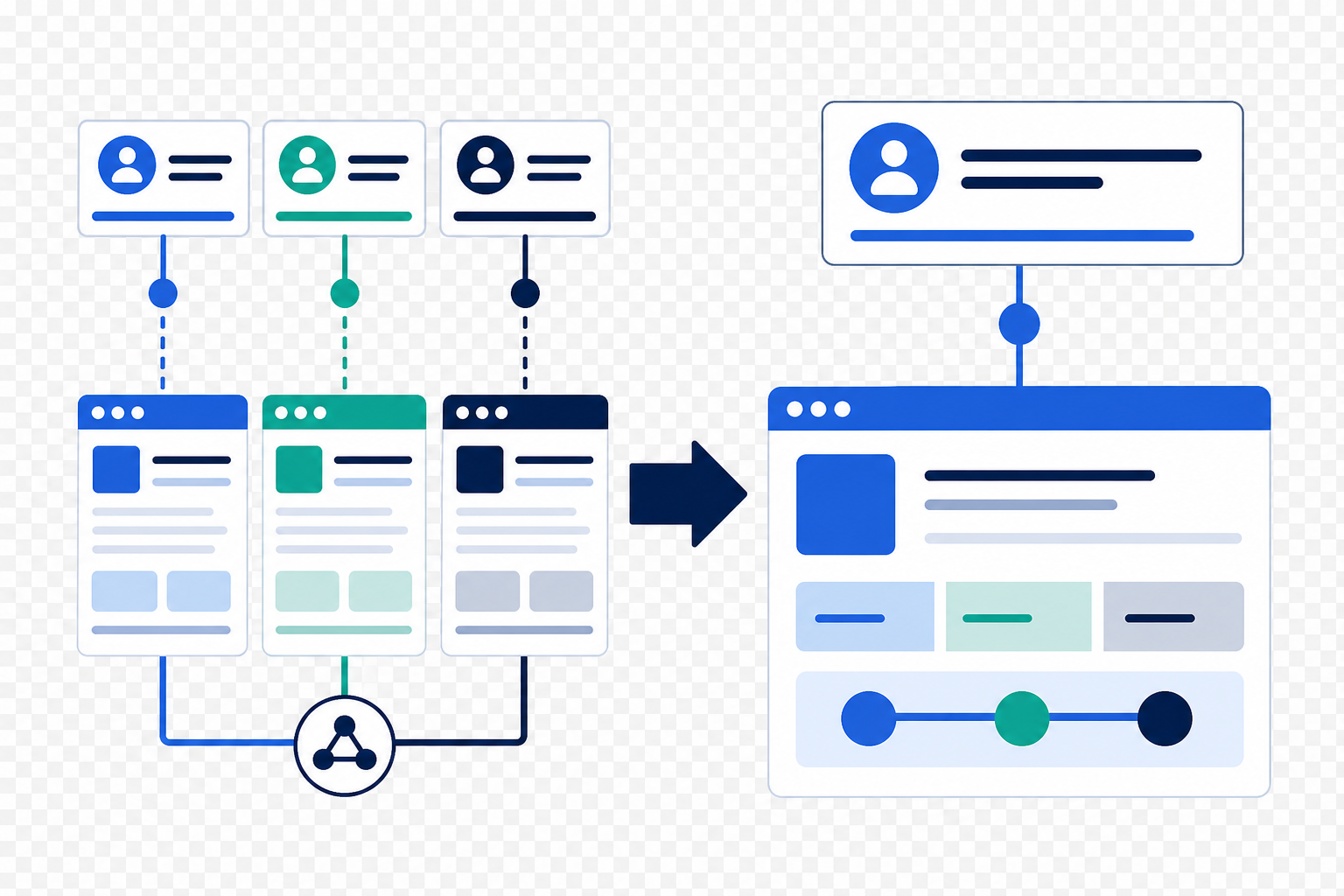
With credit union merger activity at historic levels, institutions that merge must consolidate member data from disparate systems. A CRM platform provides the unified data layer that makes post-merger integration manageable, ensuring no member falls through the cracks during transitions.
What Makes Credit Unions Unique: CRM Requirements That Banks Don't Share
Member-Owned Structure
Unlike banks, credit unions are owned by their members. This cooperative model means every technology decision should prioritize member value over shareholder returns. A CRM for credit unions must support relationship-depth metrics (products per member, engagement scores, satisfaction tracking) rather than purely revenue-focused KPIs.
Community Focus and Cooperative Principles
Credit unions exist to serve their communities. CRM systems should track community engagement, volunteer events, financial literacy programs, sponsorships, and Select Employee Group (SEG) relationships. This data informs community impact reporting and helps demonstrate the credit union's mission in action.
Smaller IT Teams and Resource Constraints
Most credit unions operate with lean technology teams. Unlike large banks with dedicated Salesforce administrators and data engineering departments, credit unions need CRM solutions that are configurable without heavy custom development. Pre-built industry accelerators, intuitive admin tools, and strong vendor support are essential.
Household-Centric Relationships
Credit unions often serve entire families. A CRM must support household-level views that show all members within a family, their shared and individual accounts, and cross-sell opportunities that span generations, from a teenager's first savings account to a grandparent's certificate of deposit.
What to Look For in a Credit Union CRM
Member 360-Degree View
The foundation of any credit union CRM is a complete, real-time view of each member, including account balances, product holdings, transaction history, service interactions, communication preferences, and engagement scores. This single source of truth eliminates the need for staff to toggle between core banking screens, email systems, and spreadsheets.
Household Management
Credit unions must manage multi-member households as unified relationship entities. Look for CRM platforms that support household hierarchies, shared financial goals, referral tracking between household members, and aggregate household value calculations.
Product Cross-Sell Intelligence
AI-powered next-best-product recommendations analyze a member's financial profile, life stage, and peer comparisons to suggest relevant products. For example, a member with a checking account and auto loan but no credit card may be a high-probability candidate for a credit card offer, and the CRM should surface that opportunity to frontline staff automatically.
Compliance Tracking and NCUA Reporting
CRM systems for credit unions should include built-in compliance workflows for BSA/AML monitoring, HMDA reporting, fair lending documentation, and complaint management. Automated audit trails log every member interaction and system change, simplifying examiner requests.
Lending Workflow Support
From initial loan inquiry to decisioning and closing, CRM should integrate with lending systems to track applications, automate follow-ups on incomplete applications, and provide pipeline visibility for lending managers.
Omnichannel Communication
Members interact via branch visits, phone calls, email, SMS, mobile banking, and social media. A modern CRM unifies all of these channels into a single timeline, ensuring any staff member can pick up a conversation where another left off.
Need a CRM that works with your core?
We implement Salesforce Financial Services Cloud and HubSpot for credit unions and connect them to your core banking system, so staff see member accounts, products and history in one place.
See our banking and credit union work | Book a free CRM assessment
Salesforce Financial Services Cloud for Credit Unions
Purpose-Built for Financial Services
Salesforce Financial Services Cloud (FSC) is the industry's leading CRM for banks, credit unions, and wealth management firms. Voted the #1 Financial Services Product by G2 in 2026, FSC provides a pre-built data model specifically designed for financial institutions, with objects for financial accounts, financial goals, household hierarchies, and referral tracking out of the box.
Key FSC Capabilities for Credit Unions
Member Management Console: A unified console displaying member details, account information, engagement scores, financial goals, and interaction history. Staff can see everything they need to serve a member in a single screen.
Household Hierarchies: FSC natively supports multi-level household relationships, allowing credit unions to visualize family structures, aggregate household assets, and identify cross-sell opportunities across the entire family.
Financial Account Tracking: Track checking accounts, savings accounts, loans, credit cards, certificates, and investment products within the CRM. Integration with core banking systems keeps balances and status current in real time.
Referral Tracking: When a member refers a friend or family member, FSC tracks the referral from initial contact through conversion, enabling credit unions to measure and reward referral program effectiveness.
Lending Workflow Automation: Pre-built lending workflows guide staff through loan origination processes, with automated task creation, document checklists, and status tracking that keeps members informed throughout the process.
Agentforce AI: Salesforce's AI assistant can handle routine member inquiries autonomously (researching accounts, summarizing interaction history, and even processing simple service requests) freeing staff to focus on complex, relationship-building conversations.
Process Compliance Navigator: A dedicated compliance module that helps credit unions stay ahead of evolving NCUA regulations with automated compliance workflows and monitoring.
FSC Credit Union Accelerator
Salesforce offers a pre-configured accelerator specifically designed for credit unions and community banks with assets under $10 billion. This accelerator reduces implementation cost and complexity by providing ready-to-deploy use cases for member engagement and onboarding, service excellence and case management, data consolidation and reporting, cross-sell and product recommendation, and compliance tracking.
Integration with MuleSoft
For credit unions running core banking systems like Symitar, Corelation KeyStone, or Fiserv DNA, Salesforce's MuleSoft Anypoint Platform provides pre-built connectors and APIs that synchronize member data between the core and CRM in real time. This eliminates manual data entry and ensures staff always work with current information.
Pricing Considerations
Salesforce FSC starts at $325/user/month for Sales or Service editions, with combined editions at $350/user/month. The Agentforce-enabled Unlimited plans run $750/user/month. Implementation costs for credit unions typically range from $75K: $250K+ depending on scope, integrations, and customization requirements.
HubSpot for Credit Unions
The Marketing and Engagement Powerhouse
While Salesforce excels at deep financial data management and compliance, HubSpot has emerged as a powerful platform for credit union marketing automation, member engagement campaigns, and digital-first member acquisition. A growing number of credit unions are adopting HubSpot to complement, or in some cases replace, their outbound marketing tools.
Key HubSpot Capabilities for Credit Unions
Marketing Automation: Create sophisticated, multi-step email workflows triggered by member behavior, new account opened, loan application started but not completed, certificate maturing in 30 days, or birthday/anniversary milestones. These automated campaigns run continuously without manual intervention.
Member Segmentation and Smart Lists: HubSpot's CRM allows credit unions to segment members by demographics, product holdings, engagement level, branch affiliation, SEG group, and custom properties. Smart lists update dynamically, ensuring campaigns always target the right members.
Digital Onboarding Campaigns: When a new member joins, HubSpot can trigger a multi-week welcome series that introduces the credit union's products, shares financial literacy content, promotes mobile banking adoption, and encourages direct deposit setup: all personalized based on the member's initial product selection.
Content Management and SEO: HubSpot's built-in CMS and blogging platform help credit unions create educational content (loan calculators, rate comparison pages, financial wellness articles) that drives organic search traffic and positions the credit union as a trusted financial resource.
Community Outreach Tracking: Track event registrations, volunteer signups, financial literacy workshop attendance, and community sponsorship engagement within HubSpot's CRM, connecting community involvement to member acquisition and engagement metrics.
Landing Pages and Forms: Create conversion-optimized landing pages for loan promotions, membership drives, and special rate offers, with form submissions automatically creating or updating CRM records and triggering follow-up workflows.
Reporting and Attribution: Understand which marketing channels and campaigns drive the most new members, loan applications, and product adoptions with HubSpot's attribution reporting.
HubSpot + Core Banking Integration
Modern integration platforms (including MuleSoft, custom middleware, and emerging solutions like Alkami's HubSpot integration) enable credit unions to connect HubSpot with core banking systems. This synchronization ensures that marketing campaigns leverage real-time product holding data and that campaign responses flow back into member records.
Pricing Considerations
HubSpot offers a tiered pricing model starting with free CRM tools and scaling through Starter ($20/user/month), Professional ($890/month for 5 users), and Enterprise ($3,600/month for 10 users) tiers. For credit unions, the Professional Marketing Hub is typically the sweet spot, providing full automation, smart content, and reporting capabilities.
Key CRM Use Cases for Credit Unions
1. New Member Onboarding
The Challenge: Many credit unions lose momentum after a member opens their first account. Without structured follow-up, members may never activate additional products.
The CRM Solution: Trigger an automated 90-day onboarding journey:
- Week 1: Welcome message, mobile banking setup guide, and direct deposit enrollment prompt
- Week 2: Introduction to savings tools and automatic transfer options
- Week 4: Credit card or loan pre-qualification offer based on member profile
- Week 8: Financial wellness content and budgeting resources
- Week 12: Satisfaction survey and referral program invitation
2. Loan Origination Support
The Challenge: Incomplete loan applications represent significant lost revenue. Members start applications but abandon them due to friction, missing documents, or simply getting distracted.
The CRM Solution: When a loan application is started but not completed within 48 hours, the CRM triggers an automated follow-up sequence, first via email, then text message, then a task for a loan officer to call. The CRM tracks application status, required documents, and member communication in a single timeline.
3. Member Retention Campaigns
The Challenge: Members who become less engaged (fewer logins, declining balances, reduced transaction frequency) are at risk of leaving.
The CRM Solution: AI-powered engagement scoring identifies at-risk members before they close accounts. The CRM triggers retention campaigns with personalized offers (rate boosts on savings, fee waivers, loyalty rewards) and alerts relationship managers to reach out personally.
4. Cross-Sell and Upsell Automation
The Challenge: Credit unions average 2.2 products per member, compared to 6+ at top-performing institutions. Staff often don't know which products to recommend or when.
The CRM Solution: Next-best-product algorithms analyze member data and present recommendations to frontline staff during member interactions. Automated email campaigns promote relevant products based on life events (home purchase intent, new baby, retirement planning).
5. Complaint Management
The Challenge: Regulatory requirements demand formal complaint tracking, resolution timelines, and trend reporting. Many credit unions still manage complaints in spreadsheets.
The CRM Solution: A structured complaint management workflow captures complaints across all channels, assigns them to appropriate staff, tracks resolution against SLA timelines, and generates regulatory reports. Trend analysis identifies systemic issues before they escalate.
6. Community Engagement Tracking
The Challenge: Credit unions invest heavily in community activities but struggle to quantify the impact on membership growth and engagement.
The CRM Solution: Track event participation, financial literacy workshop attendance, and volunteer activities within the CRM. Link community engagement data to member acquisition and product adoption metrics to demonstrate ROI on community investment.
Integration Requirements: Connecting CRM to Your Core
Core Banking Systems
The core banking system is the heart of any credit union's technology stack. Your CRM must integrate seamlessly with your core to maintain data accuracy and provide real-time member information.
| Core Banking System | Provider | Integration Approach |
|---|---|---|
| Symitar (Episys) | Jack Henry | APIs, file-based extracts, MuleSoft connectors |
| Corelation KeyStone | Corelation | Modern REST APIs, real-time event streaming |
| DNA | Fiserv | APIs, middleware integration, batch synchronization |
| XP2 | Fiserv | Legacy integration via middleware |
| CU*BASE | CU*Answers | Custom API development, file extracts |
Key integration points:
- Member demographics and contact information (bidirectional sync)
- Account balances and product holdings (core → CRM)
- Transaction history and activity data (core → CRM)
- New account/loan origination events (core → CRM triggers)
- Communication preferences and opt-in/opt-out status (bidirectional sync)
Digital Banking Platforms
Modern digital banking platforms (Alkami, Q2, NCR Voyix/Digital Insight) generate valuable behavioral data: login frequency, feature usage, bill pay adoption, mobile deposit activity. Feeding this data into your CRM enriches member profiles and enables behavioral segmentation.
Lending Systems
Loan origination systems (Meridian Link, CU Direct, Temenos) should feed application data into the CRM so that marketing can target pre-qualified members, and relationship managers can track pipeline activity.
Call Center and Contact Center Tools
Integration with telephony systems (Genesys, Five9, NICE) enables screen pops with member information, automatic call logging, and sentiment tracking that enrich the CRM record.
Data Migration Considerations
Legacy System Challenges
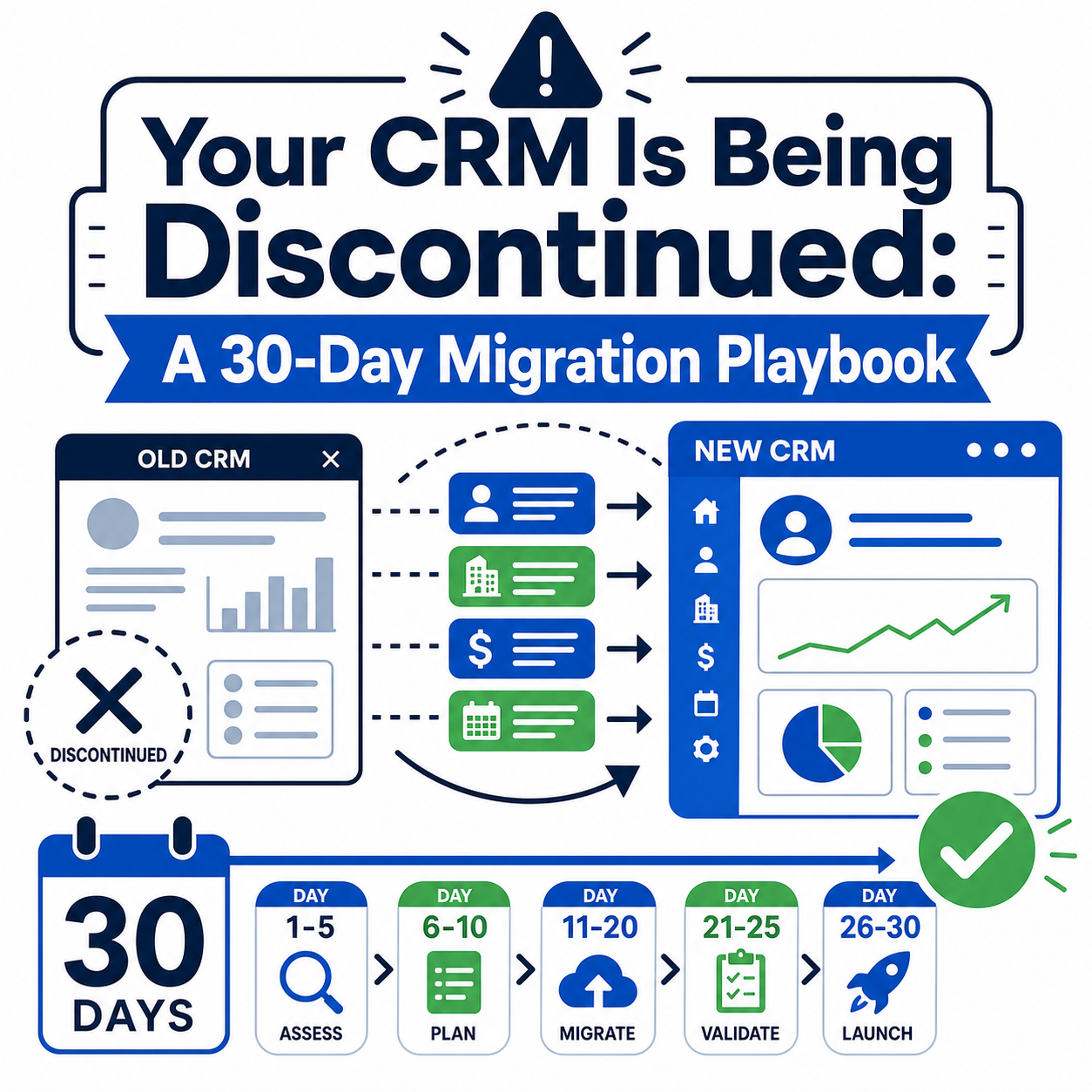
Many credit unions carry decades of member data across multiple systems, core banking, legacy CRMs (or no CRM at all), spreadsheets, email platforms, and paper records. Data migration requires careful planning.
Data Quality Assessment
Before migrating data to a new CRM, conduct a thorough data quality audit:
- Duplicate records: Members may exist multiple times across systems with slight variations in name, address, or contact information.
- Incomplete records: Legacy data often has missing fields: email addresses, phone numbers, employment information.
- Stale data: Addresses, phone numbers, and employer information may be years out of date.
- Inconsistent formats: Dates, phone numbers, and addresses may follow different conventions across systems.
Member Data Consolidation Strategy
- Extract data from all source systems into a staging environment
- Profile and cleanse data using automated tools and manual review
- De-duplicate member records using matching algorithms (name + date of birth + SSN last four)
- Enrich missing data through third-party data services (address verification, email validation)
- Map fields from source systems to the CRM data model
- Validate migrated data against source systems for accuracy
- Archive source system data for historical reference and regulatory requirements
Implementation Roadmap: A Phased Approach for Resource-Constrained Credit Unions
Phase 1: Foundation (Months 1-3)
Goal: Establish the CRM platform, integrate with core banking, and deploy basic member management capabilities.
Key Activities:
- Platform setup and configuration
- Core banking integration (member demographics, accounts, balances)
- Member 360-degree view deployment
- Basic contact/interaction logging
- Staff training on core CRM navigation
- Data migration from legacy systems
Quick Wins: Relationship managers can see complete member information in one screen. Interaction history is automatically captured and searchable. Duplicate member records are consolidated.
Phase 2: Automation (Months 4-6)
Goal: Deploy automated workflows for key member lifecycle events.
Key Activities:
- New member onboarding workflow automation
- Loan application follow-up automation
- Certificate maturity and renewal campaigns
- Member birthday and anniversary recognition
- Complaint management workflow deployment
- Cross-sell recommendation engine configuration
- Marketing campaign setup (email, SMS)
Quick Wins: No member falls through the cracks on onboarding. Incomplete loan applications receive automatic follow-up. Maturing certificates are proactively addressed before members seek alternatives.
Phase 3: Intelligence (Months 7-12)
Goal: Leverage AI and advanced analytics to predict member needs and optimize engagement.
Key Activities:
- AI-powered engagement scoring and at-risk member identification
- Predictive next-best-product recommendations
- Advanced segmentation and personalized content delivery
- Campaign performance analytics and A/B testing
- Executive dashboards with KPI tracking
- Community engagement impact reporting
- Integration with additional systems (digital banking, lending, call center)
Quick Wins: Proactive retention saves members who would have otherwise left. Cross-sell ratios begin increasing measurably. Marketing ROI becomes trackable and attributable.
ROI Metrics: Measuring CRM Success
Member Satisfaction Scores
Credit unions implementing CRM typically see Net Promoter Scores (NPS) increase by 15-25 points within the first year, driven by more personalized service and faster issue resolution.
Cross-Sell Ratios
CRM-enabled cross-sell campaigns can increase products per member from the industry average of 2.2 to 3.0+ within 18 months. Each additional product deepens the member relationship and increases retention likelihood.
Operational Efficiency
Automating manual processes (onboarding, follow-ups, compliance documentation, reporting) can reduce staff time spent on administrative tasks by 20-35%, freeing capacity for relationship-building activities.
Loan Growth
Automated loan follow-up workflows typically recover 10-20% of abandoned applications. Pre-qualified outreach campaigns can increase loan application volume by 15-30%.
Digital Adoption
CRM-driven campaigns promoting mobile banking, digital wallets, and online services can increase digital adoption rates by 20-40%, reducing branch transaction costs and improving member convenience.
Member Retention
AI-powered retention campaigns targeting at-risk members can reduce annual attrition by 2-5 percentage points, a meaningful impact when each retained member represents thousands of dollars in lifetime value.
How Vantage Point Helps Credit Unions Select and Implement CRM
Vantage Point specializes in helping regulated financial institutions (including credit unions, banks, insurance companies, and wealth management firms) select, implement, and optimize CRM platforms. Our team brings deep expertise in both Salesforce Financial Services Cloud and HubSpot, along with proven experience integrating these platforms with core banking systems like Symitar, Corelation KeyStone, and Fiserv DNA.
Our Credit Union CRM Services
Platform Selection Advisory: We help credit unions evaluate whether Salesforce FSC, HubSpot, or a combination of both best fits their member engagement strategy, IT capabilities, and budget.
Implementation and Configuration: Our certified consultants handle platform setup, data model configuration, workflow automation, and user interface customization: all tailored to credit union operations.
Core Banking Integration: Using MuleSoft and custom API development, we connect your CRM to Symitar, Corelation, DNA, and other core systems for real-time data synchronization.
Data Migration: We manage the entire data migration lifecycle (extraction, cleansing, deduplication, enrichment, and validation) ensuring your new CRM starts with clean, consolidated member data.
Training and Adoption: We provide role-based training programs for frontline staff, relationship managers, marketing teams, and administrators to ensure your team gets full value from the CRM investment.
Ongoing Optimization: Post-launch, we provide continuous improvement services, new workflow development, advanced analytics configuration, AI feature deployment, and performance tuning.
Why Credit Unions Choose Vantage Point
- Regulated industry expertise: We understand NCUA compliance requirements, BSA/AML obligations, fair lending documentation, and the unique operational dynamics of member-owned institutions.
- Dual-platform proficiency: Whether you need Salesforce for deep financial data management or HubSpot for marketing automation (or both working together), we have certified expertise across platforms.
- Integration experience: We've connected CRM platforms to every major credit union core banking system and know where the integration challenges lie.
- Right-sized for credit unions: We understand that credit unions operate with leaner IT teams and tighter budgets than large banks. Our implementations are practical, phased, and designed for rapid time-to-value.
Frequently Asked Questions (FAQ)
What is the best CRM for credit unions?
The best CRM depends on your credit union's size, goals, and technical capabilities. Salesforce Financial Services Cloud is ideal for credit unions seeking deep member data management, household hierarchies, and compliance automation. HubSpot excels at marketing automation, member engagement campaigns, and digital-first member acquisition. Many credit unions benefit from using both platforms together, Salesforce as the system of record and HubSpot for marketing engagement.
How much does CRM implementation cost for a credit union?
Total cost varies significantly based on platform, scope, and integration complexity. Expect $75, $150/user/month for HubSpot Professional or $325, $350/user/month for Salesforce FSC licensing, plus $50K, $300K+ for implementation services including core banking integration, data migration, and customization. ROI typically reaches 200-400% within 18-24 months.
How long does it take to implement CRM at a credit union?
A phased implementation typically takes 3-6 months for core deployment (foundation + initial automation), with advanced AI and analytics features rolling out over months 7-12. Credit unions with simpler technology stacks and clean data may achieve faster timelines.
Can CRM integrate with our core banking system (Symitar, DNA, Corelation)?
Yes. Both Salesforce (via MuleSoft) and HubSpot (via middleware or direct API) can integrate with all major credit union core banking platforms. Integration enables real-time synchronization of member demographics, account balances, product holdings, and transaction events. The key is selecting an integration partner with specific credit union core system experience.
How does CRM help with NCUA compliance?
CRM platforms provide automated audit trails logging every member interaction and system change, structured complaint management workflows with regulatory reporting, document management for fair lending and BSA/AML documentation, and role-based access controls ensuring staff only see data relevant to their role. These features simplify examiner requests and reduce compliance risk.
Will our staff actually use the CRM?
Adoption is the #1 factor determining CRM ROI. Success requires executive sponsorship, role-based training, intuitive interface design, and clear demonstrations of how CRM makes staff jobs easier (not harder). Credit unions that invest in change management alongside technology typically achieve 80%+ adoption rates within 90 days.
Should we use Salesforce, HubSpot, or both?
Consider Salesforce FSC if your primary needs are member data management, household relationships, lending workflows, and compliance tracking. Choose HubSpot if your focus is marketing automation, campaign management, content marketing, and digital member acquisition. Many forward-thinking credit unions deploy both (Salesforce as the operational CRM and HubSpot as the marketing engine) with data flowing between them via integration.
Conclusion: The Time for CRM Is Now
The credit union industry is undergoing its most significant transformation in decades. Merger activity is accelerating, member expectations are rising, digital competition is intensifying, and regulatory complexity is evolving. Credit unions that invest in modern CRM technology, and the organizational change management to support it, will emerge stronger, more efficient, and more deeply connected to their members.
Whether you're a $100 million community credit union or a $5 billion multi-state institution, the right CRM strategy can help you deliver the personalized, proactive, and member-centric experience that has always been the credit union differentiator: now powered by technology that scales.
Plan your credit union CRM rollout
A free assessment reviews your core, your member data and your engagement goals, then outlines a phased plan.
Ready to explore CRM for your credit union? Contact Vantage Point to schedule a complimentary consultation. Our team will help you evaluate your current technology landscape, define your CRM strategy, and build a phased implementation roadmap that fits your budget and resources.
About Vantage Point
Vantage Point is a CRM and data consultancy specializing in regulated industries. We help credit unions, banks, insurance companies, wealth management firms, and healthcare organizations implement Salesforce, HubSpot, MuleSoft, Data Cloud, and AI solutions that drive growth, improve operational efficiency, and strengthen compliance. Our team combines deep financial services expertise with proven technology delivery to help institutions of all sizes modernize their member and customer engagement strategies.