
Key Takeaways (TL;DR)
- What is CRM deal management? A structured CRM approach for tracking high-value opportunities from first signal through qualification, pursuit, proposal, contracting, and close.
- Key Benefit: Teams gain one shared source of truth for pipeline health, next steps, approvals, documents, and relationship history.
- Investment: Most organizations start with configuration, integrations, reporting, and adoption work rather than a full platform replacement.
- Timeline: A focused deal-management rollout can often launch in 6-12 weeks, with automation and analytics added in later phases.
- Best For: Business development, partnerships, sales, account, operations, and leadership teams managing complex opportunities.
- Bottom Line: The best deal CRM is not just a database; it is an operating system for disciplined opportunity execution.
Meta Description: Learn how CRM deal management improves sourcing, qualification, collaboration, forecasting, and close execution for cross-industry growth teams.
Why deal management needs more than a spreadsheet
Complex opportunities rarely move in a straight line. A new deal may begin as an inbound request, a partner referral, a renewal signal, an expansion conversation, or a strategic account plan. From there, the opportunity passes through qualification, stakeholder mapping, discovery, pricing, proposal, legal review, and close. When that process lives in spreadsheets, inboxes, and private notes, teams lose context at the exact moment they need coordination.
A modern CRM gives teams a structured way to manage the full opportunity lifecycle. It captures the source of the opportunity, the people involved, the current stage, the business case, the probability, the close plan, related activities, and the risks that could slow progress. More importantly, it gives leaders visibility into whether the process is repeatable.
For Vantage Point, CRM deal management is a practical cross-industry discipline: define the motion, configure the CRM around that motion, automate the busywork, and use data to coach better decisions.
What should a CRM deal-management process track?
A strong CRM process tracks more than amount and close date. At minimum, your deal workspace should include:
| Deal element | Why it matters |
|---|---|
| Source and campaign | Shows which channels create qualified opportunities |
| Fit and qualification criteria | Prevents teams from chasing low-probability work |
| Stakeholders and roles | Clarifies champions, decision makers, influencers, and blockers |
| Stage and exit criteria | Makes pipeline reporting trustworthy |
| Next best action | Keeps every opportunity moving |
| Risks and dependencies | Surfaces legal, technical, timing, data, budget, and approval issues |
| Documents and approvals | Reduces rework and version confusion |
| Forecast category | Helps leaders plan revenue, capacity, and delivery resources |
The goal is not to create a form with endless required fields. The goal is to capture the information needed to make better decisions at each stage.
How do you design deal stages from sourcing to close?
Start by mapping the real journey, not the CRM fields. A practical cross-industry model might include:
- Sourced: A new opportunity has entered the funnel from a known channel.
- Qualified: The team has confirmed basic fit, need, timing, and ownership.
- Discovery: Stakeholders, requirements, success criteria, and constraints are documented.
- Solutioning: The team is shaping scope, commercial model, resources, and approach.
- Proposal or business case: A formal recommendation is with the client or internal sponsor.
- Negotiation and approval: Commercial, legal, security, procurement, or executive approvals are underway.
- Closed won or closed lost: The final outcome, reason, and lessons learned are captured.
Each stage needs clear exit criteria. For example, a deal should not move from Discovery to Solutioning unless the buyer problem, timeline, decision process, and success metrics are known. Without exit criteria, pipeline stages become opinions instead of operational signals.
What automations create the most value?
Deal-management automation should remove friction without hiding accountability. High-value automations include:
- Lead-to-opportunity conversion rules that preserve source, activity, and campaign history.
- Stage-based task creation for discovery calls, proposal reviews, executive follow-ups, and renewal reminders.
- Approval routing for pricing, scope, discounting, exceptions, and risk review.
- Document generation for proposals, order forms, statements of work, and internal summaries.
- CRM-to-communication integrations so calls, meetings, and emails are logged against the right opportunity.
- Forecast alerts when close dates slip, next steps are missing, or large deals sit idle.
- Post-close handoff automation so implementation or service teams receive the right context immediately.
These workflows can be implemented in Salesforce, HubSpot, or a connected architecture depending on the organization's current stack.
How should leaders use deal data?
Leadership reporting should answer operational questions, not just produce dashboard activity. Useful deal-management dashboards include:
- Pipeline by stage, owner, source, region, product, or segment.
- Conversion rate between stages.
- Average time in stage and stalled-deal alerts.
- Forecast by best case, commit, pipeline, and closed won.
- Win/loss reasons by source and deal type.
- Next-step compliance for strategic opportunities.
- Relationship coverage across key accounts.
The most effective teams use these dashboards in weekly pipeline reviews. They ask: What changed? What is the next action? What risk needs help? What should be removed from the forecast? What lesson should we apply to the next opportunity?
What data-governance rules keep the CRM trustworthy?
CRM deal management succeeds when users trust the data. Build governance into the process:
- Define required fields by stage rather than requiring everything at creation.
- Use picklists for forecast category, lead source, loss reason, and risk type.
- Create validation rules only where data quality directly affects decisions.
- Standardize account, contact, and opportunity ownership.
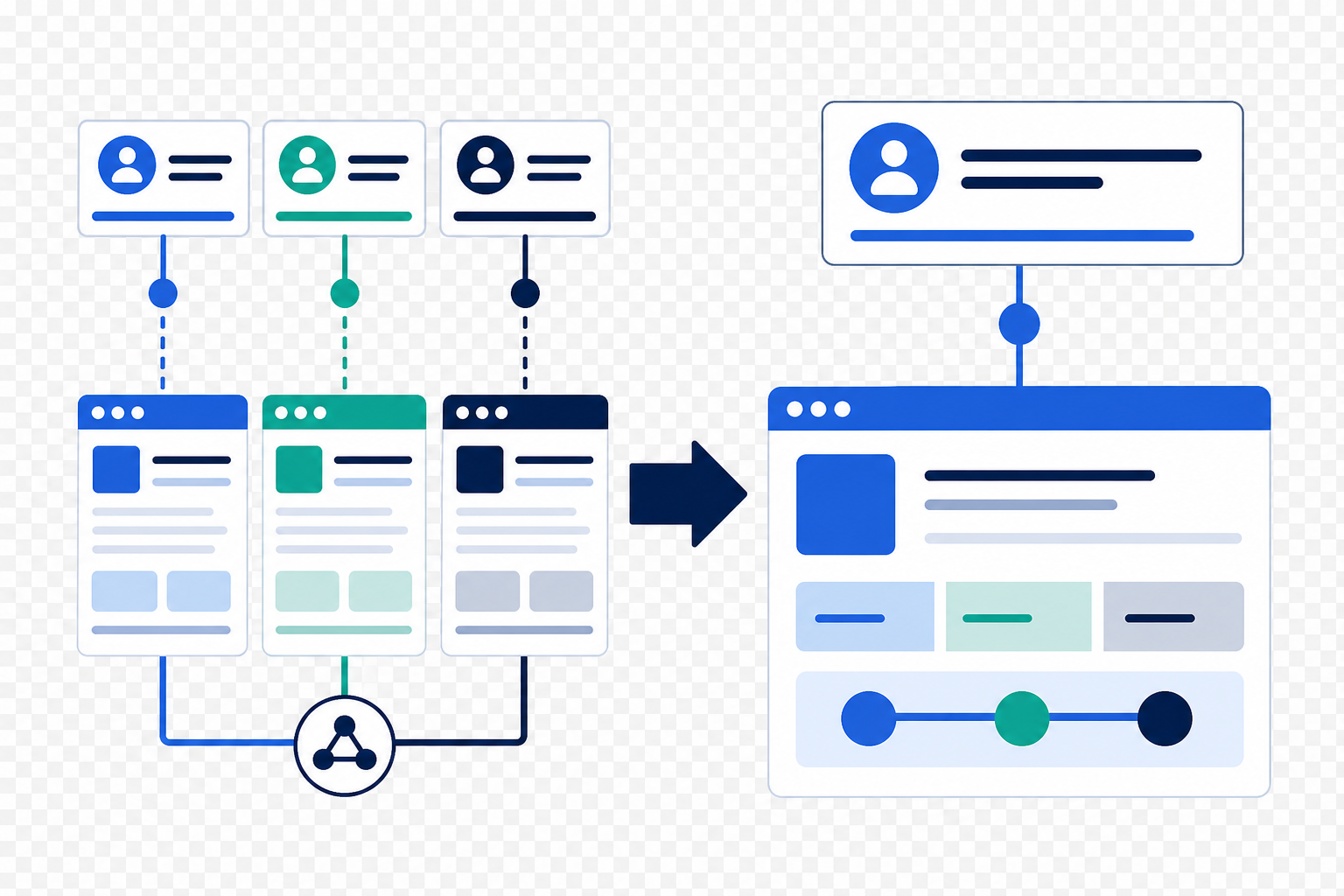
- Review duplicate accounts and contacts routinely.
- Audit automation rules before adding more required steps.
- Document the difference between forecast date, target close date, renewal date, and implementation start date.
Bad data is often a process-design problem. If fields are unclear, too numerous, or disconnected from decisions, users will work around them.
Best practices for implementing CRM deal management
- Start with one motion. Configure the process for a specific opportunity type before trying to model every edge case.
- Use stage exit criteria. Tie each stage to observable evidence, not subjective optimism.
- Design for managers and frontline users. If a field only helps a dashboard and never helps the seller or account owner, reconsider it.
- Connect communication data. Calls, meetings, and emails provide context that static fields cannot.
- Automate handoffs. The close is not the end; it is the start of delivery, onboarding, or relationship expansion.
- Measure adoption. Track whether users update next steps, close dates, stakeholders, and risk fields.
- Iterate quarterly. Deal motions change. Your CRM process should evolve with them.
How Vantage Point helps
Vantage Point helps organizations design and implement CRM deal-management systems across Salesforce, HubSpot, MuleSoft, Data Cloud, and AI-enabled automation. Our team can map your opportunity lifecycle, configure the CRM, integrate communication and document workflows, build dashboards, and coach adoption so teams use the system as part of daily execution.
FAQ
What is the difference between CRM pipeline management and deal management?
Pipeline management focuses on the overall flow of opportunities. Deal management focuses on the specific activities, stakeholders, approvals, documents, risks, and decisions required to move each opportunity forward.
Which CRM fields are most important for deal management?
Stage, amount, close date, next step, owner, source, stakeholder roles, qualification status, forecast category, risk, and loss reason are among the most important fields. The exact list should depend on your sales or growth process.
How often should deal stages be reviewed?
Strategic or high-value opportunities should be reviewed weekly. Standard opportunities may be reviewed based on stage movement, forecast changes, or exception alerts.
Should every deal follow the same CRM process?
Not always. Many organizations need different paths for net-new business, renewals, expansions, partner opportunities, and enterprise pursuits. The key is to keep each path simple and governed.
Can AI improve CRM deal management?
Yes. AI can summarize activity, recommend next actions, flag stalled deals, draft follow-up messages, identify missing stakeholders, and help leaders spot forecast risk. AI works best when CRM data is clean and processes are well defined.
How long does a deal-management CRM implementation take?
A focused rollout can often be launched in 6-12 weeks. Larger programs involving integrations, data cleanup, document automation, and multiple teams may take longer.
Conclusion
CRM deal management turns opportunity tracking into an operating discipline. When teams share one source of truth, define stage criteria, automate handoffs, and review data consistently, they move faster and make better decisions.
If your team is managing complex opportunities across spreadsheets, inboxes, and disconnected systems, Vantage Point can help you design a CRM process that supports the full journey from sourcing to close.
About Vantage Point
Vantage Point helps organizations modernize CRM, automation, integration, analytics, and AI across Salesforce, HubSpot, MuleSoft, Data Cloud, Anthropic Claude, Aircall, and Workato. We design practical systems that improve visibility, reduce manual work, and help teams serve clients more effectively.