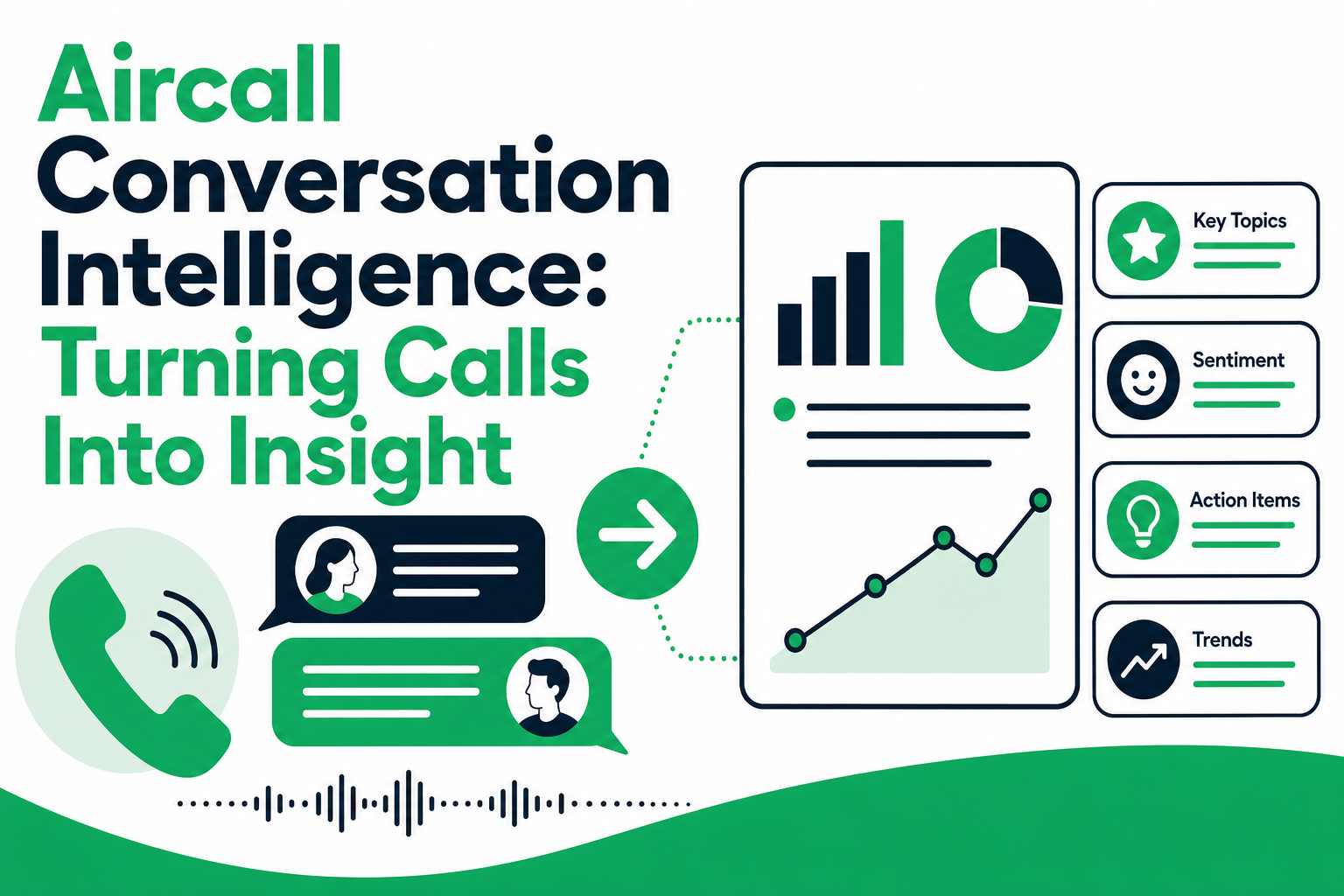
Most sales and support teams only ever review a tiny fraction of the calls their reps make. A manager might listen to two or three flagged calls a week and coach the rest of the team based on gut feel and whatever reps chose to log in the CRM. Aircall Conversation Intelligence closes that gap by automatically transcribing, analyzing, and structuring every call, then pushing the results into your CRM so managers can coach from evidence instead of guesswork.
This matters for any organization running a sales or support team on the phone, whether that's outbound sales, inbound support, or a mixed contact center. If your team already uses Aircall for cloud telephony, Conversation Intelligence is the layer that turns those calls into structured, CRM-ready data without adding a separate tool or asking reps to do more manual logging.
Vantage Point implements and configures Aircall alongside Salesforce and HubSpot for teams that want call data to actually show up where managers already work — in the CRM, not a disconnected dashboard.
TL;DR
- What it is: Aircall Conversation Intelligence automatically transcribes and analyzes every call to surface sentiment, objections, and coaching signals.
- Why it matters: Most calls are never reviewed manually, so managers coach on a tiny, unrepresentative sample without it.
- Best for: Sales teams running outbound or inbound volume, support teams tracking first-call resolution, and RevOps teams that need deal-risk visibility.
- Decision point: Whether your team needs AI Assist (post-call summaries and scoring) or AI Assist Pro (adds live transcription and real-time coaching prompts).
- How Vantage Point helps: We configure the Aircall-to-CRM integration so call insights land in the right Salesforce or HubSpot fields — see our system integration and data migration services.
What Is Aircall Conversation Intelligence?
Aircall Conversation Intelligence is a set of AI-powered features, delivered through Aircall's AI Assist and AI Assist Pro plans, that automatically capture, transcribe, and analyze sales and support calls. Instead of storing raw audio that someone has to listen to manually, it converts every call into structured data: call summaries, sentiment shifts, talk-to-listen ratios, key topics, and action items, all pushed directly into the CRM record for that contact or deal.
This is different from basic call recording, which just stores audio for playback, and different from a plain transcript, which converts speech to text but doesn't tell you what any of it means. Conversation intelligence adds the analysis layer on top: it identifies the pricing objection at minute 14, flags that a competitor was mentioned, and scores the call against your team's QA criteria — automatically, on every call, not just the ones a manager has time to review.
Why Conversation Intelligence Matters in 2026
Call volume keeps growing, but manager time to review calls does not. Most sales managers can realistically review a handful of calls a week; conversation intelligence analyzes 100% of them. That shift matters for three reasons that are increasingly relevant to teams evaluating CRM and telephony investments in 2026:
- CRM data quality. CRM notes reflect what a rep remembered and had time to type. Conversation intelligence captures what was actually said, which gives Salesforce and HubSpot records a more accurate picture of deal health and support outcomes.
- Coaching consistency. Instead of generic team-wide training, managers can build coaching sessions around specific patterns — for example, three reps consistently losing deals right after a pricing objection.
- Faster ramp for new reps. A searchable library of real calls from top performers gives new hires a reference point that used to take months of shadowing to build.
How Aircall Conversation Intelligence Works
Conversation intelligence runs as a continuous pipeline from call capture to CRM record, without requiring reps to do anything extra:
- Call capture — every call is recorded automatically the moment it starts.
- AI transcription — the conversation is converted to text in real time or immediately after the call.
- Analysis — natural language processing detects sentiment, objections, competitor mentions, talk-to-listen ratio, and key topics.
- Structuring — insights are tagged, timestamped, and categorized (for example, "pricing objection," "competitor mention").
- CRM sync — structured data is written directly to the associated Salesforce or HubSpot record.
- Manager review — a coaching dashboard surfaces calls that need attention, reps who need coaching, and deals at risk.
AI Assist vs. AI Assist Pro: Which Tier Fits Your Team?
| Capability | AI Assist | AI Assist Pro |
|---|---|---|
| Call summaries, key topics, action items | Yes | Yes |
| Sentiment analysis and talk-to-listen ratio | Yes | Yes |
| Automated call scoring | Yes | Yes, with custom scorecards |
| CRM autofill | Yes | Yes, with automated Playbook CRM updates |
| Live transcription during the call | No | Yes |
| Real-time coaching prompts (live playbooks) | No | Yes |
| Automated post-call workflows | Limited | Yes |
| Best fit | Teams that want structured post-call insight without live coaching | Teams onboarding new reps or running structured methodologies (SPICED, BANT, custom) live on calls |
Choose AI Assist if your priority is faster call reviews, better CRM data, and QA scoring without changing how reps handle live calls.
Choose AI Assist Pro if you're ramping new reps quickly, running a formal sales methodology, or want live coaching prompts and automated workflows during and after the call.
What Businesses Should Do Next
Before rolling out conversation intelligence broadly, a few practical steps reduce the most common implementation problems:
- Calibrate before scaling. Test sentiment and keyword triggers against real calls from your team before turning on scoring for everyone — miscalibrated triggers produce coaching signals managers won't trust.
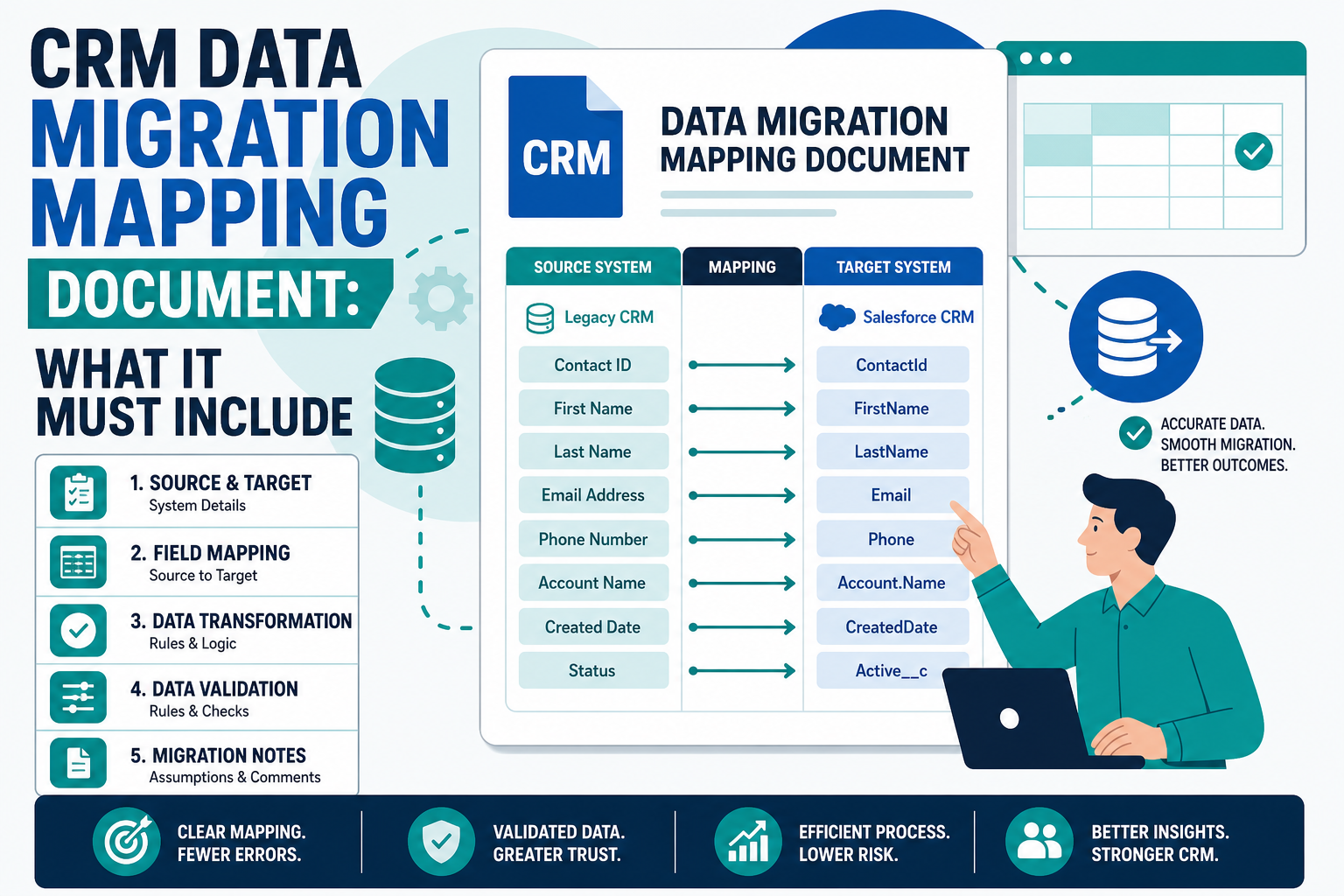
- Validate the CRM field mapping. Confirm call summaries, sentiment, and action items land in the correct Salesforce or HubSpot fields before go-live, not after.
- Address consent and retention up front. Confirm call recording and AI analysis disclosure requirements for the regions you operate in, and document how long transcripts and recordings are retained.
- Frame the rollout as coaching support, not surveillance. Teams adopt conversation intelligence faster when reps see the insights first, before they're surfaced to managers as a scorecard.
How Vantage Point Helps
Vantage Point implements and supports Aircall as a CRM-integrated telephony platform alongside Salesforce and HubSpot. For teams evaluating or rolling out Aircall Conversation Intelligence, we handle the parts that most often go wrong on a self-managed rollout: mapping call insight fields correctly into Salesforce or HubSpot records, building the workflow automation that routes flagged calls to the right manager, and validating data governance for regulated or compliance-sensitive teams.
If your team is evaluating how call intelligence applies to your existing Salesforce or HubSpot setup, Vantage Point can help assess the right configuration and build a practical rollout plan. Explore our system integration and data migration services or our HubSpot technology services to see how we approach CRM-connected telephony projects.
Related reading: Why Vantage Point Recommends Aircall for CRM-Integrated Telephony, Aircall Analytics and Reporting: The Metrics That Matter for Sales and Support Leaders, and Call Whispering and Live Coaching: How Aircall Helps Managers Train Reps in Real Time.
FAQ
What is conversation intelligence in sales?
Conversation intelligence is AI-powered software that automatically transcribes and analyzes sales calls to surface coaching signals, deal risks, and customer patterns. It gives managers visibility into what actually happened on a call rather than relying only on what a rep logged afterward in the CRM.
How is Aircall Conversation Intelligence different from call recording?
Call recording only stores audio for playback. Aircall Conversation Intelligence adds an analysis layer on top — identifying sentiment, objections, talk-to-listen ratio, and competitor mentions — and pushes that structured data directly into the CRM record.
Does Aircall Conversation Intelligence integrate with Salesforce and HubSpot?
Yes. Call summaries, sentiment data, and action items can be synced into Salesforce and HubSpot records so managers and reps see call insights in the CRM they already use, without checking a separate dashboard.
What's the difference between AI Assist and AI Assist Pro?
AI Assist covers post-call summaries, sentiment analysis, and automated scoring. AI Assist Pro adds live transcription, real-time coaching prompts based on sales playbooks, and automated post-call workflows — built for teams that want in-call guidance, not just after-the-fact review.
Will conversation intelligence data be used to train AI models?
No. Aircall states that customer call recordings and transcripts are not shared with third parties or used to train AI models outside of generating the insights for that account.
What are the risks of rolling out conversation intelligence?
The most common risks are inaccurate AI scoring from uncalibrated triggers, rep resistance if the rollout feels like surveillance, and insight quality degrading without periodic recalibration. Transparent rollout communication and manager training reduce all three.
Do reps need to change how they take calls to use this?
No. Conversation intelligence captures and analyzes calls automatically in the background. Reps using AI Assist Pro may see live prompts during the call, but no additional logging or manual tagging is required for the core analysis to run.
How should a business start evaluating conversation intelligence?
Start by identifying the specific signals that matter most in your sales or support motion — pricing objections, competitor mentions, or first-call resolution, for example — then pilot against real calls before committing to a team-wide rollout. Vantage Point can help scope this evaluation alongside your existing Salesforce or HubSpot implementation.