Key Takeaways (TL;DR)
- What is it? AI in finance encompasses machine learning, NLP, and agentic AI systems that automate, optimize, and personalize financial services operations
- Key Benefit: 89% of financial institutions report AI has increased annual revenue and decreased costs simultaneously
- ROI: 64% of firms say AI has boosted revenue by more than 5%, with 29% reporting 10%+ gains
- Market Size: Financial services AI spending projected to reach $97 billion by 2027 (up from $35 billion in 2023)
- Adoption Rate: 65% of financial institutions are actively using AI in 2026, up from 45% the prior year
- Best For: Banks, credit unions, wealth managers, insurance companies, fintechs, and any regulated financial institution looking to modernize operations
- Bottom Line: AI is no longer optional in financial services — it's the dividing line between industry leaders and laggards
Introduction
Artificial intelligence has moved from experimental technology to mission-critical infrastructure in financial services. According to NVIDIA's 2026 State of AI in Financial Services report, 65% of financial institutions are now actively using AI — up from 45% just one year prior. Nearly 100% of surveyed executives said their AI budgets would increase or remain the same in the coming year.
But what exactly makes AI so indispensable for finance? And how are leading institutions translating AI investments into measurable business outcomes?
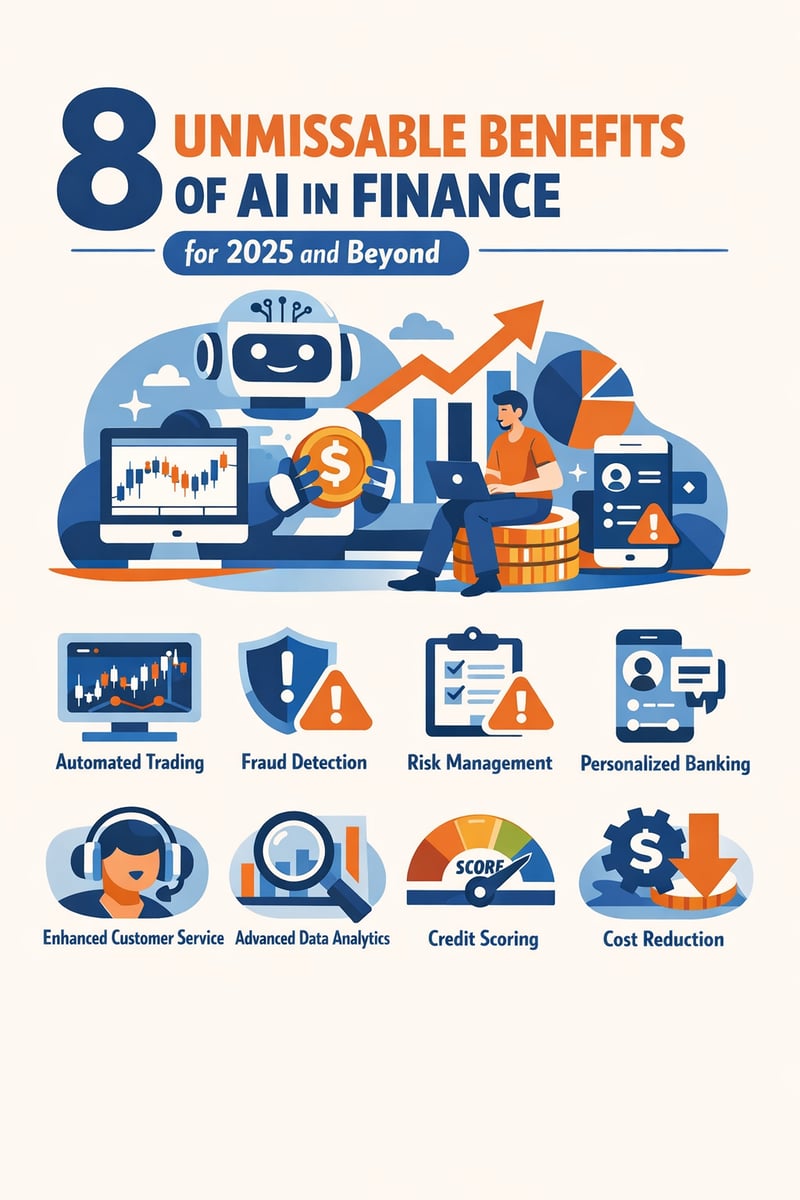
In this guide, we break down the eight most impactful benefits of AI in financial services, backed by real-world data and case studies. Whether you're a wealth management firm evaluating your first AI initiative, a bank scaling existing capabilities, or a fintech looking to differentiate, these benefits represent the core value AI delivers to modern financial organizations.
1. Supercharged Fraud Detection and Prevention
Why It Matters
Financial fraud continues to escalate in sophistication and volume. Global money laundering losses alone total at least $5.5 trillion annually, according to the Napier AI/AML Index 2025–2026. Traditional rule-based systems can't keep pace with evolving attack vectors.
How AI Helps
AI-powered fraud detection systems analyze millions of transactions in real time, identifying anomalous patterns that human analysts and static rules would miss. Machine learning models continuously improve as they process more data, adapting to new fraud techniques as they emerge.
Real-World Impact
- HSBC implemented AI-driven transaction monitoring and achieved a 50% reduction in false positives, dramatically improving both operational efficiency and customer experience
- 90% of financial institutions now use AI for fraud detection (Feedzai 2025 AI Trends Report)
- AI-enabled financial fraud detection spending is projected to reach $10.4 billion globally by 2027 (Juniper Research)
What This Means for Your Firm
Whether you're a community bank, credit union, or enterprise wealth manager, AI fraud detection isn't just about preventing losses — it's about building trust with clients who expect their assets to be protected by the most advanced technology available.
2. Hyper-Personalized Client Experiences
Why It Matters
Today's financial services clients — from high-net-worth individuals to everyday retail banking customers — expect personalized experiences on par with Netflix and Amazon. Generic communications and one-size-fits-all product recommendations erode trust and drive attrition.
How AI Helps
AI analyzes behavioral data, transaction histories, life events, and engagement patterns to deliver tailored recommendations, communications, and product offerings at scale. Natural language processing powers conversational interfaces that understand client intent and context.
Real-World Impact
- Bank of America's Erica AI assistant has surpassed 1.5 billion client interactions, with over 37 million clients actively using the service
- AI-driven personalization can increase banking conversion rates by 8–10%
- 70% of millennial bank customers prefer AI-powered interactions for routine financial tasks
What This Means for Your Firm
With platforms like Salesforce Financial Services Cloud and HubSpot CRM, firms of any size can implement AI-driven personalization. The key is connecting client data across touchpoints — something a well-integrated CRM strategy makes possible.
3. Intelligent Risk Management and Credit Scoring
Why It Matters
Traditional credit scoring models rely on limited historical data and rigid criteria, often missing creditworthy borrowers and failing to adapt to changing economic conditions. Poor risk models lead to both missed revenue opportunities and excessive exposure.
How AI Helps
AI evaluates a broader range of structured and unstructured data — including transaction patterns, alternative financial data, and behavioral signals — to create more accurate, dynamic risk assessments. Models update continuously based on new information, providing real-time risk visibility.
Real-World Impact
- Zest AI has processed over 39 million loan applications, resulting in $250 billion in loans granted with more equitable outcomes
- AI-powered credit models have increased loan approvals by 31–49% for underserved populations while maintaining consistent risk levels
- Financial institutions using AI for risk management report 20–30% improvements in risk prediction accuracy
What This Means for Your Firm
AI-enhanced risk management isn't just about reducing defaults — it's about expanding your addressable market responsibly. More accurate models mean you can confidently serve clients that traditional scoring would have excluded.
4. Dramatic Operational Efficiency Gains
Why It Matters
Financial services firms drown in manual processes — from document review and data entry to compliance reporting and reconciliation. These labor-intensive workflows are expensive, error-prone, and slow.
How AI Helps
AI automates high-volume, repetitive tasks through intelligent document processing (OCR + NLP), robotic process automation, and workflow orchestration. Agentic AI systems can now autonomously handle multi-step processes that previously required human oversight at every stage.
Real-World Impact
- 52% of financial services professionals cite operational efficiency as AI's biggest improvement area (NVIDIA 2026 Survey)
- 48% report significant employee productivity gains
- Agentic AI is projected to drive a 20% increase in operational efficiency across banking
- Document processing that took hours is now completed in minutes with AI-powered automation
What This Means for Your Firm
Efficiency gains compound. When your team spends less time on data entry and document processing, they spend more time on relationship building, strategic planning, and revenue-generating activities. For wealth management firms, this translates directly to more client-facing hours per advisor.
5. Smarter Wealth and Portfolio Management
Why It Matters
Portfolio optimization has traditionally required expensive quantitative teams and complex modeling infrastructure. Mid-market firms and independent advisors often lack access to these capabilities, creating a competitive disadvantage.
How AI Helps
AI democratizes sophisticated investment analysis by automating portfolio optimization, risk modeling, scenario analysis, and rebalancing. Machine learning identifies patterns in market data, economic indicators, and alternative datasets that human analysts might overlook.
Real-World Impact
- BlackRock's Aladdin platform manages AI-driven analytics across $11.6 trillion in assets, helping drive record net inflows of $641 billion in 2024
- AI-powered algorithmic trading now accounts for 60–73% of all equity trades on U.S. exchanges
- Robo-advisors leveraging AI have grown assets under management to over $2 trillion globally
What This Means for Your Firm
You don't need BlackRock's budget to benefit from AI-driven investment insights. Modern CRM platforms with embedded AI — like Salesforce Einstein or HubSpot's AI tools — can surface actionable client insights that help advisors make better recommendations and identify opportunities proactively.
6. Regulatory Compliance and RegTech Automation
Why It Matters
Regulatory compliance is one of the most resource-intensive functions in financial services. From AML/KYC requirements to fiduciary reporting and data privacy regulations, the compliance burden continues to grow — and the penalties for failure are severe.
How AI Helps
AI automates continuous compliance monitoring, transaction surveillance, suspicious activity reporting, and regulatory change management. Natural language processing can parse regulatory updates and map them to internal policies automatically. AI-driven RegTech solutions reduce the manual review burden while improving detection accuracy.
Real-World Impact
- The global RegTech market is expected to reach $38.44 billion by 2030, growing at 15.2% CAGR
- AI-powered AML monitoring reduces false positive alerts by 40–70%, freeing compliance teams to focus on genuine risks
- 92% of global banks report active AI deployment in at least one core banking function, with compliance as a top use case
- EU AML regulations taking effect in 2026 are accelerating AI-driven compliance adoption across the industry
What This Means for Your Firm
Compliance automation doesn't just reduce cost — it reduces risk. AI ensures consistent application of rules across every transaction and client interaction, creating an audit trail that regulators increasingly expect. For RIAs and broker-dealers, this is especially critical as SEC scrutiny of AI use in advisory services intensifies.
7. Revenue Growth Through Intelligent Analytics
Why It Matters
Financial institutions sit on vast amounts of client and transaction data, but most organizations extract only a fraction of its potential value. Without AI, identifying cross-sell opportunities, predicting churn, and optimizing pricing remain manual, inconsistent processes.
How AI Helps
AI-powered analytics platforms identify revenue opportunities by analyzing client behavior, predicting needs, and recommending next-best actions. Predictive models anticipate which clients are likely to need new products, when they're at risk of attrition, and what pricing strategies maximize lifetime value.
Real-World Impact
- 64% of financial institutions say AI has increased annual revenue by more than 5% (NVIDIA 2026)
- 29% report revenue increases exceeding 10%
- 70% of executives believe AI will be directly tied to revenue growth within the next few years
- AI-driven targeted marketing campaigns deliver 2–3x higher response rates compared to traditional approaches
What This Means for Your Firm
Revenue intelligence is where CRM platforms shine. When your Salesforce or HubSpot instance is enriched with AI-driven insights, every client interaction becomes an opportunity to deepen the relationship and identify unmet needs — without coming across as pushy or transactional.
8. Enhanced Client Retention and Lifetime Value
Why It Matters
Acquiring a new financial services client costs 5–7x more than retaining an existing one. Yet many firms invest disproportionately in acquisition while neglecting the engagement, communication, and proactive service that drive retention.
How AI Helps
AI monitors engagement signals, communication patterns, and life events to identify at-risk clients before they leave. Predictive churn models trigger proactive outreach, personalized re-engagement campaigns, and service recovery workflows — often before the client even realizes they're dissatisfied.
Real-World Impact
- Financial institutions using AI for client retention report 15–25% reductions in attrition
- AI-powered engagement scoring helps advisors prioritize their most at-risk and highest-value relationships
- Proactive AI-driven communication increases client satisfaction scores by 20–30%
- Banks that leverage AI earn a 15% greater share of wallet compared to non-AI peers
What This Means for Your Firm
Client retention is where AI delivers perhaps its most underappreciated ROI. A well-configured CRM with AI-powered engagement tracking transforms client retention from a reactive exercise to a proactive strategy — one that compounds over years of deeper relationships and growing assets under management.
Best Practices for Implementing AI in Financial Services
Realizing these benefits requires more than purchasing AI tools. Here are actionable best practices for financial services firms at any stage of the AI journey:
Start With Your Data Foundation
AI is only as good as the data it ingests. Before deploying AI solutions, ensure your CRM and core systems contain clean, unified, and accessible client data. This often means investing in integration (MuleSoft, Data Cloud) before investing in AI models.
Prioritize High-Impact Use Cases
Don't try to boil the ocean. Start with one or two use cases that offer clear ROI — fraud detection, document processing, or client engagement scoring — and expand from there.
Embed AI in Existing Workflows
AI should enhance your team's existing processes, not create parallel workflows. The most successful implementations embed AI insights directly into the CRM and tools your advisors and staff already use daily.
Invest in Change Management
Technology adoption fails without people adoption. Train your team, communicate the "why" behind AI initiatives, and celebrate early wins to build momentum.
Maintain Compliance-First AI Governance
Every AI model should have clear documentation, bias testing, and audit trails. Work with your compliance team from day one — not after deployment.
Partner With Industry Experts
AI implementation in regulated industries requires specialized expertise. Working with a partner who understands both the technology platforms (Salesforce, HubSpot, MuleSoft) and the regulatory landscape accelerates time-to-value while minimizing risk.
Frequently Asked Questions
What is AI in finance?
AI in finance refers to the application of artificial intelligence technologies — including machine learning, natural language processing, and agentic AI — to automate, optimize, and personalize financial services operations such as fraud detection, risk management, client engagement, and compliance.
How much does AI implementation cost for financial services firms?
Costs vary widely based on scope and complexity. Entry-level AI features are built into modern CRM platforms like Salesforce and HubSpot at no additional cost. Enterprise-scale AI initiatives typically range from $50,000 to $500,000+ for implementation, with ongoing optimization costs. The key metric is ROI — most firms see 3–5x return within 18 months.
Is AI in financial services safe and compliant?
When implemented with proper governance, AI enhances both safety and compliance. AI models should include bias testing, audit trails, and human oversight for high-stakes decisions. Leading platforms like Salesforce Financial Services Cloud are built with regulatory requirements in mind, including SOC 2, GDPR, and industry-specific standards.
What's the difference between AI and automation in finance?
Traditional automation follows fixed rules (if X, then Y). AI goes further by learning from data, identifying patterns, making predictions, and adapting to new information. Agentic AI represents the latest evolution — AI systems that can autonomously plan, reason, and execute multi-step tasks.
How long does it take to see ROI from AI in finance?
Quick wins like document processing automation and chatbot deployment can show ROI within 3–6 months. More complex implementations like AI-driven risk modeling or portfolio optimization typically deliver measurable returns within 12–18 months. The NVIDIA 2026 survey found that 89% of financial institutions report AI has already increased revenue and decreased costs.
Can small and mid-size financial firms benefit from AI?
Absolutely. Modern CRM platforms have democratized AI access. Features like Salesforce Einstein, HubSpot's AI tools, and integrated analytics platforms allow firms with modest budgets to leverage the same types of AI capabilities that enterprise institutions use — just at an appropriate scale.
How does AI improve client relationships in wealth management?
AI enhances advisor effectiveness by surfacing actionable insights — upcoming life events, engagement changes, at-risk accounts, and cross-sell opportunities — directly within the CRM workflow. This means advisors spend less time on data analysis and more time on personalized, high-value conversations with clients.
Conclusion
The benefits of AI in finance are no longer theoretical. From fraud detection to hyper-personalization, operational efficiency to revenue intelligence, AI is transforming every dimension of financial services. The data is clear: institutions that embrace AI are growing faster, operating more efficiently, and serving clients better than those that don't.
The question isn't whether to adopt AI — it's how quickly and strategically you can implement it.
Ready to unlock AI-powered growth for your financial services firm? Vantage Point helps banks, wealth managers, credit unions, insurance companies, and fintechs implement Salesforce, HubSpot, MuleSoft, and Data Cloud solutions with embedded AI capabilities. From CRM strategy to implementation to ongoing optimization, we're your partner in building a modern, AI-driven financial services practice.
About Vantage Point
Vantage Point is a CRM and technology consulting firm specializing in regulated industries. We help financial services firms, healthcare organizations, and other regulated businesses implement and optimize Salesforce, HubSpot, MuleSoft, and Data Cloud solutions. Our team combines deep platform expertise with industry knowledge to deliver implementations that drive measurable business outcomes while maintaining compliance. Learn more at vantagepoint.io.