Most businesses adopt Claude the same way: someone signs up, results impress, licenses multiply, and six months later nobody can say who has access, what data flows through prompts, or which integrations exist. That is not a platform; it is sprawl. An AI platform foundation is the set of decisions and controls (identity, access, data governance, connection architecture, observability, and cost management) that make Claude safe to scale before usage grows beyond anyone's ability to retrofit it. This guide explains what a secure, scalable Claude environment includes, which plan tier supports it, how to govern the data that flows through it, what goes wrong without one, and a practical sequence to build it.
Quick Answer
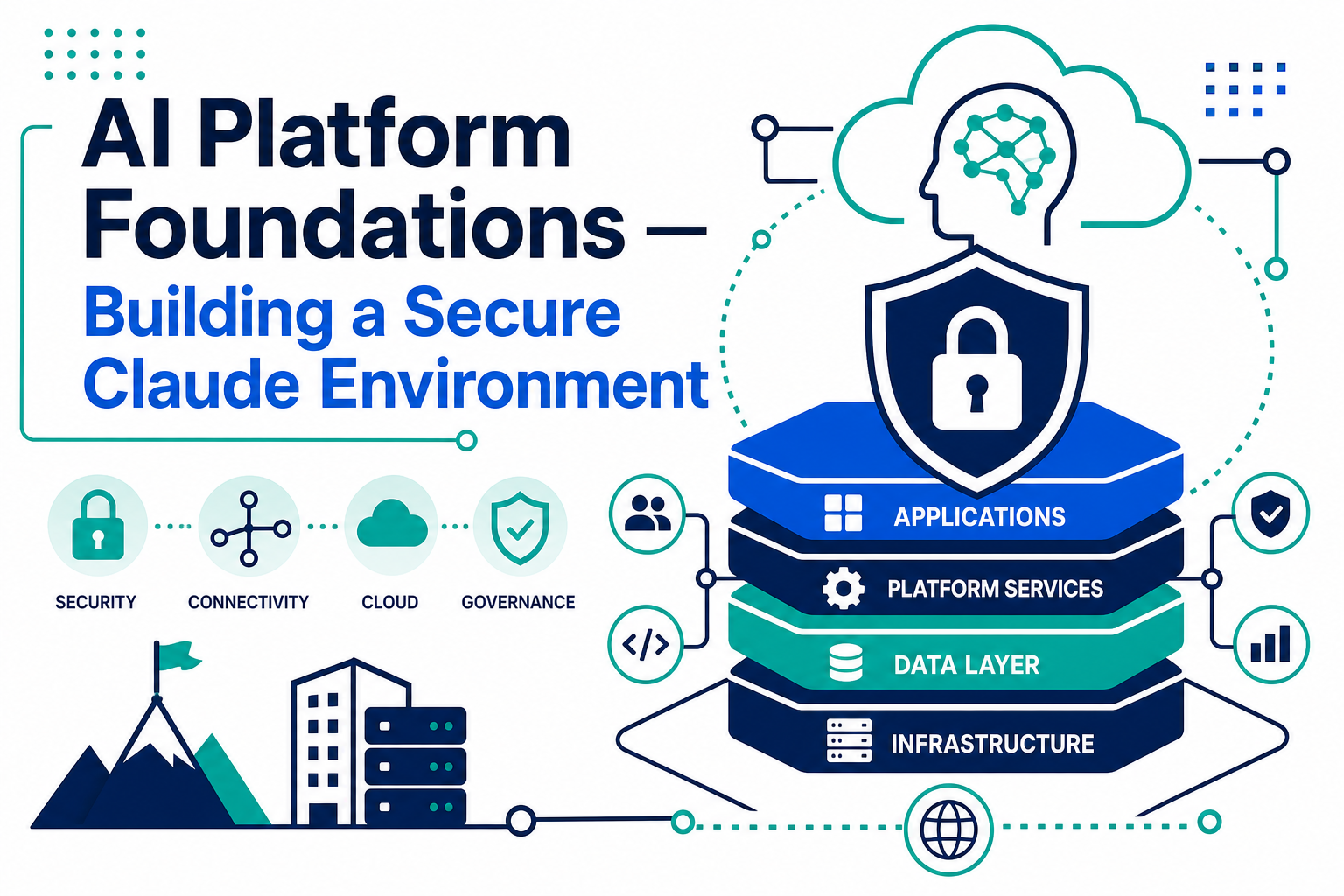
A secure, scalable Claude environment rests on six foundations: centrally managed identity (SSO and provisioning), role-based access controls, a data governance policy tied to classification, a governed connection layer for integrations (scoped APIs or MCP servers rather than ad hoc copy-paste), audit logging and usage observability, and cost controls. Build them on a business-grade plan tier in roughly 60-90 days (identity and governance first, then connections, then observability) before scaling licenses broadly. Foundation first, expansion second.
TL;DR
- An AI platform foundation is infrastructure, not paperwork: identity, access, data governance, connections, observability, and cost controls that make Claude safe to scale.
- Most AI security incidents are governance gaps, not model flaws: personal accounts, unscoped integrations, and unclassified data cause the damage.
- Run the environment on a business-grade plan tier with SSO, admin controls, audit logs, and data excluded from training.
- Connect Claude to business systems through a governed connection layer: scoped credentials, least-privilege access, and logging: not personal API keys.
- Build foundations in 60-90 days, in sequence: identity and policy, then connections, then observability and cost management.
- Vantage Point builds these foundations through compliance and security solutions and system integration and data migration, across both Salesforce and HubSpot.
What Is an AI Platform Foundation?
Claude is Anthropic's AI assistant, available in individual and business-grade plans with APIs and the Model Context Protocol (MCP) for connecting to business systems. The product is ready for enterprise use out of the box. What is usually missing is the environment around it: the decisions about who gets access, under what identity, with which data, through which connections, and with what visibility.
An AI platform foundation answers those questions once, centrally, so every future workflow inherits the answers instead of re-deciding them. It is the AI equivalent of what cloud teams learned a decade ago: a landing zone built before workloads arrive beats security retrofitted after an incident.
A complete foundation covers six layers:
| Layer | What it covers | Foundation decision |
|---|---|---|
| Identity | Who can use Claude, under which account | SSO, central provisioning and deprovisioning |
| Access | What each role can do and connect to | Role-based permissions, least privilege |
| Data governance | What data may enter prompts and connections | Classification tiers mapped to allowed uses |
| Connections | How Claude reaches business systems | Governed integration layer with scoped credentials |
| Observability | Who did what, and what is it producing | Audit logs, usage reporting, quality review |
| Cost | What usage costs, and who owns the budget | Seat and API budgets, alerts, an accountable owner |
If you cannot describe your setup in those six rows, you have adoption without a platform, which works fine at five users and fails predictably at fifty.
Why Build the Foundation Before Scaling?
Because every risk that matters with business AI is an environment risk, and environments are cheap to build early and expensive to rebuild late.
Consider what actually goes wrong when companies scale AI without foundations:
- Unmanaged identity: Employees use personal accounts, so confidential work product sits in accounts the company cannot see, manage, or recover when someone leaves.
- Unscoped access: An integration is built with one person's full credentials, so the AI can read everything that person can: far more than the workflow needs.
- Unclassified data: Nobody has said which data may appear in prompts, so the de facto policy is whatever each employee guesses.
- No audit trail: When leadership or a customer asks how AI touched a record, nobody can answer.
- Invisible spend: Licenses and API usage grow without an owner, and the first budget conversation happens after the surprise invoice.
None of these are model problems. They are all preventable with foundations that take weeks to establish, and months of cleanup to retrofit. Teams that scale access before scaling governance end up pausing their AI programs at exactly the moment momentum matters most, a pattern covered in why AI pilots fail.
What Are the Core Building Blocks of a Secure Claude Environment?
Identity and access management
Every user works under a company-managed account, provisioned through single sign-on and removed automatically at offboarding. Access is role-based: most users get standard chat and approved connections; a smaller group gets workflow-building rights; a smaller group still administers the environment. Least privilege is the rule for people and integrations alike.
Data governance tied to classification
A short data classification (public, internal, confidential, restricted) mapped to explicit rules: what may be typed into prompts, what may flow only through governed connections, and what stays out entirely. One page that everyone understands beats a forty-page policy nobody reads.
A governed connection layer
Integrations between Claude and business systems run through managed, scoped credentials. Service accounts with least-privilege permissions, or MCP servers that expose specific tools and data rather than whole systems. No personal API keys, no all-access tokens. This is the layer that decides whether scaling is safe.
Observability and audit
Admin-level audit logs, usage reporting by team and workflow, and human review standards for customer-facing or high-stakes output. You cannot govern what you cannot see.
Cost management
Seat counts, API budgets, usage alerts, and one accountable owner. Predictable cost is a foundation property, not an afterthought.
Which Claude Plan Tier Supports a Secure Environment?
Plan tier is a foundation decision because the controls above must be enforceable, not just documented. The differences that matter:
| Capability | Individual (Free/Pro) | Team | Enterprise |
|---|---|---|---|
| SSO and central provisioning | No | Limited | Yes (SSO, SCIM provisioning) |
| Role-based admin controls | No | Basic | Granular |
| Audit logs | No | Limited | Org-wide |
| Data excluded from training | Per consumer terms | Yes | Yes, with admin controls |
| Domain capture of stray accounts | No | Partial | Yes |
| Fit for a governed environment | No | Early-stage, small teams | Yes |
The practical rule: a Team tier can host a small, well-governed environment while you prove value; an Enterprise tier is the right target for any environment handling confidential data at scale, because SSO, provisioning, and audit logging are what make the policy enforceable rather than aspirational.
How Do You Connect Claude to Business Systems Securely?
The connection layer deserves special attention because it is where the biggest risks and the biggest value both live. Claude becomes dramatically more useful when it can read and act on real business context (CRM records, documents, tickets) and dramatically riskier if those connections are built carelessly.
Secure connection architecture follows four rules:
- Scoped credentials: Every integration uses a dedicated service account or token with the minimum permissions the workflow needs: read access to specific objects, not admin access to everything.
- Governed paths: Connections run through approved mechanisms (official APIs, managed middleware, or MCP servers your team controls) so there is a known inventory of what Claude can reach.
- Respect existing permissions: Where possible, connections honor the source system's sharing model, so users cannot see data through Claude that they could not see directly.
- Logged and reviewable: Every connection's activity is visible in audit logs, and connections are reviewed periodically like any other integration.
Building this layer well is integration work (credential design, permission mapping, and data flow architecture) which is why Vantage Point delivers it as system integration and data migration alongside the governance build. For a deeper look at the connection standard itself, see how MCP servers connect Claude to your systems of record.
What Can Go Wrong Without Foundations?
- Shadow AI: Blocked or unmanaged users route around IT with personal accounts, moving company data into environments with no controls at all.
- Over-permissioned integrations: A quick proof-of-concept built on someone's full credentials goes quietly into production, and the AI can now read the entire CRM.
- Data leakage through prompts: Without classification rules, confidential material flows into prompts by habit, not decision.
- Audit dead ends: A customer, auditor, or executive asks how AI touched a process, and the honest answer is "we do not know."
- Retrofit paralysis: Once dozens of ungoverned workflows exist, adding controls means breaking things people depend on, so governance gets deferred again, and the gap compounds.
The common thread: each failure is cheap to prevent at foundation time and expensive to repair afterward.
How Do You Build the Foundation? A 60-90 Day Sequence
| Phase | Focus | Key outcomes |
|---|---|---|
| Weeks 1-4: Identity & policy | Plan tier, SSO, access roles, data rules | Business-grade tier live with SSO; roles defined; classification and acceptable use policy published |
| Weeks 5-8: Connection layer | Governed integrations to systems of record | Scoped service accounts; first MCP/API connections live; integration inventory established |
| Weeks 9-12: Observability & operations | Audit, reporting, cost, ownership | Audit logging verified; usage and cost reporting running; named platform owner; review cadence set |
Two principles keep this honest. First, sequence matters: connections built before identity and policy inherit nobody's rules. Second, the foundation needs an owner on day 91 and beyond, platform settings drift, credentials expire, and new tools appear monthly, so treat the environment like any other production system, whether owned in-house or through managed services and ongoing support.
Does the Foundation Differ Across Salesforce and HubSpot?
The architecture is identical; the controls map differently. Salesforce environments express least privilege through profiles, permission sets, and field-level security; HubSpot environments use seats, permission sets, and scoped private apps. Either way, the foundation principle holds: Claude's access to CRM data should be a deliberate, scoped, logged decision: not a side effect of whichever credential was handy.
A vendor-agnostic foundation also protects optionality. Because the governance, identity, and connection patterns are platform-neutral, the same environment can serve Salesforce, HubSpot, or both, which matters for businesses running dual stacks or evaluating change. That neutrality is a core part of how Vantage Point works: senior consultants, both platforms, no vendor agenda.
How Vantage Point Helps
Vantage Point builds Claude environments that are secure on day one and scalable on day five hundred, with senior consultants on every engagement: no junior staff learning on your project. A typical foundation engagement selects and configures the right plan tier, stands up SSO and role-based access, writes the data classification and acceptable use policy, builds the governed connection layer to Salesforce or HubSpot, and verifies audit and cost reporting before licenses scale.
Governance, identity, and audit work runs through compliance and security solutions; the connection layer runs through system integration and data migration. Because the practice is vendor-agnostic and dual-platform, the foundation fits the systems you actually run, and it is built to hand over, with documentation and a named internal owner, not to create dependency.
FAQ
What is an AI platform foundation?
It is the set of controls and decisions that make AI safe to scale: centrally managed identity, role-based access, data governance tied to classification, a governed integration layer, audit logging and usage observability, and cost management: established before broad rollout rather than retrofitted after.
How long does it take to build a secure Claude environment?
A focused build takes 60-90 days: identity, plan tier, and data policy in the first month; governed connections to business systems in the second; audit, reporting, cost controls, and ownership in the third. Existing SSO and a clear data classification shorten the timeline.
Do we need Claude Enterprise for a secure environment?
Not always on day one. A Team tier can host a small, governed environment while value is proven. Enterprise is the right target for confidential data at scale because SSO, SCIM provisioning, org-wide audit logs, and granular admin controls make the governance enforceable.
Is business data used to train the model on business plans?
Anthropic's commercial terms exclude business-tier data from model training by default. Verify the current terms for your specific tier during plan selection, and treat data handling commitments as a standing item in vendor review.
What is the biggest security risk when scaling Claude?
Ungoverned connections and shadow accounts: not the model itself. Over-permissioned integrations built on personal credentials and confidential data flowing through unmanaged personal accounts cause most real-world exposure, and both are prevented by identity and connection-layer foundations.
How does MCP fit into a secure Claude environment?
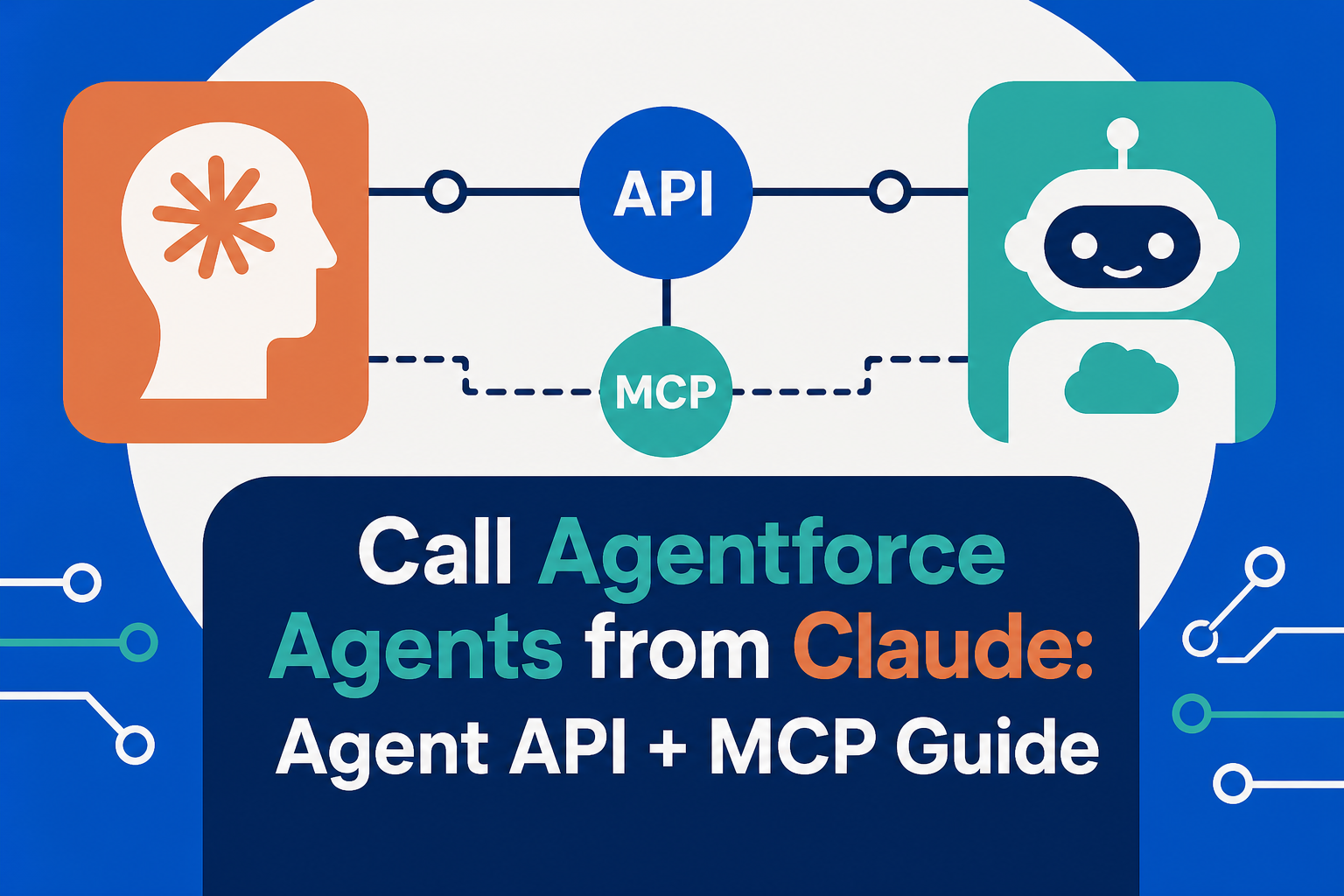
The Model Context Protocol (MCP) is an open standard for connecting AI to business tools. In a governed environment, MCP servers act as the controlled gateway: they expose specific tools and data with scoped permissions and logging, instead of giving the model broad direct access to systems.
Can we build the foundation after we have already rolled Claude out?
Yes, and many businesses do, but expect remediation work: migrating personal accounts into managed identity, re-scoping integrations, and classifying data already in use. It is achievable in roughly the same 60-90 day sequence, with an added inventory-and-cleanup step at the start.
Who should own the Claude environment long term?
Assign one accountable owner (typically in IT, operations, or RevOps) responsible for access reviews, connection health, policy currency, and cost. Many businesses pair that internal owner with external managed support for the technical layer.