Let's talk about the elephant in the room: that expensive CRM system you invested in—HubSpot, Salesforce, or another enterprise platform—is probably gathering digital dust. You're not alone. Across the wealth management industry, firms are sitting on six-figure technology investments that deliver a fraction of their potential value.
If you attended any financial services conference in 2023, you heard about AI as a future possibility. Today, it's no longer a question of "if" but "how fast" your firm can adopt—and whether your Salesforce environment is ready to support it.
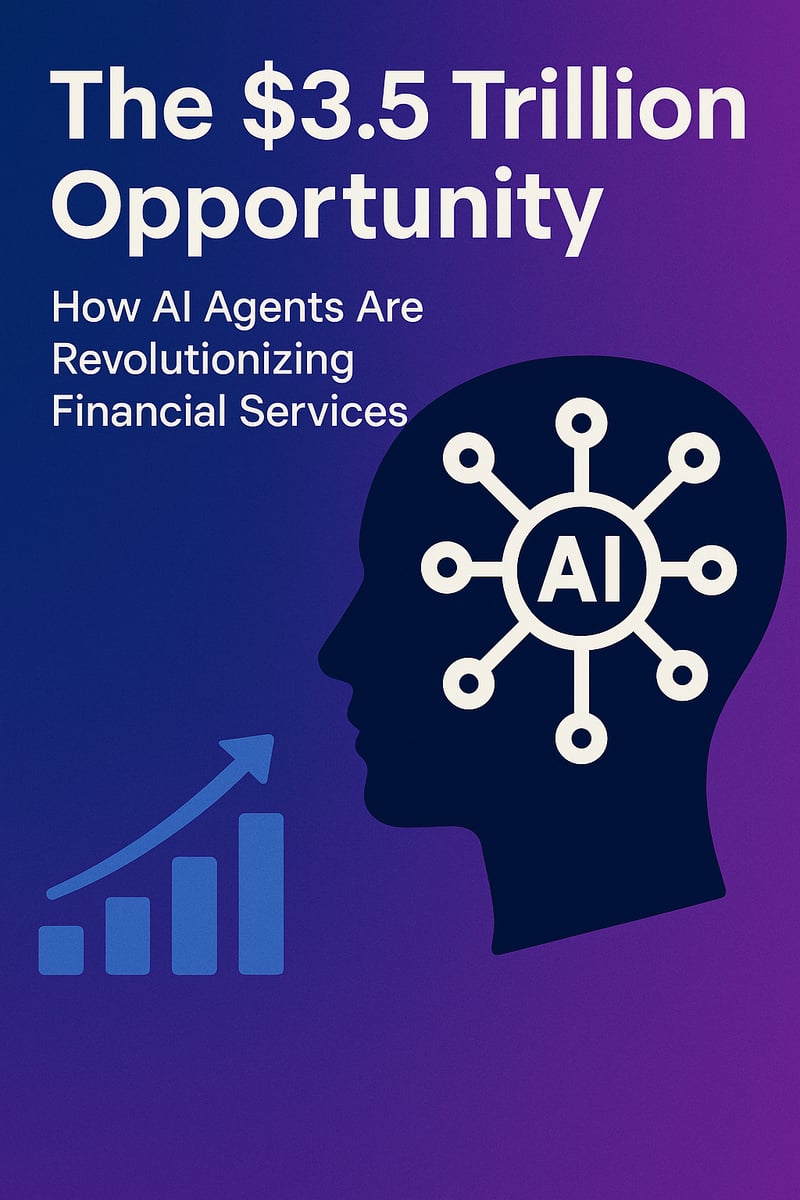
📊 Key Stat: The global AI market has surged from $391 billion to a projected $3.5 trillion by 2033—and 78% of organizations have already adopted at least one AI tool, with financial services leading the charge.
For wealth management firms, banks, and insurance providers leveraging Salesforce Financial Services Cloud, this represents both an unprecedented opportunity and an urgent call to action. The firms investing in AI-enhanced CRM today are gaining advantages that will compound over years—in advisor productivity, client satisfaction, compliance efficiency, and profitability.
The question facing every financial services leader is no longer whether to adopt AI, but how to do it strategically, compliantly, and in a way that enhances your existing Salesforce investment.
What Is the Current State of AI in Financial Services?
How Fast Is the AI Market Growing?
The numbers tell a compelling story. The global AI market is on a trajectory that few technologies have ever matched:
- Market size growth — From $391 billion in 2024 to an estimated $3.5 trillion by 2033
- Compound annual growth rate — Nearly 28%, reflecting both the technology's maturity and expanding applications
- Private investment rebound — After a brief slowdown in early 2023, AI investment roared back with a 40% increase in 2024
- Generative AI investment — $33.9 billion in global investment, with a significant portion flowing toward enterprise applications in regulated industries
Financial services has emerged as particularly fertile ground for AI adoption. Unlike some industries that struggle with data maturity or regulatory uncertainty, financial services firms have been preparing for this moment for years. The industry's existing investment in Salesforce Financial Services Cloud, data infrastructure, compliance frameworks, and digital transformation initiatives has created the ideal foundation for AI deployment.
What Are the AI Adoption Rates Across Financial Subsectors?
The adoption story varies by subsector, but the overall trend is unmistakable:
| Subsector | AI Adoption Rate | Key Drivers |
|---|---|---|
| Fintech | 85% | Digital-native, agile adoption |
| Wealth Management | 72% | Advisor productivity, client engagement |
| Banking | 68% | Fraud detection, loan processing efficiency |
| Insurance | 66% | Claims automation, underwriting optimization |
Wealth management leads traditional financial services at 72% adoption. Firms managing client relationships through Salesforce FSC have found AI particularly transformative for advisor productivity and client engagement—automating meeting notes, generating personalized client communications, and analyzing portfolio data at scale.
Banking follows closely at 68% adoption. Commercial and retail banks are leveraging AI for fraud detection, credit risk assessment, and customer service automation, with some institutions reporting 40-50% reductions in loan processing time through AI-assisted Salesforce workflows.
What Changed to Drive Explosive AI Adoption in Financial Services?
How Did the AI Cost Collapse Make It Accessible for Financial Firms?
Perhaps the most significant driver of AI adoption has been the dramatic reduction in costs:
📊 Key Stat: AI inference costs have decreased by 280-fold. A capability that cost $280 in 2022 now costs $1.
- Hardware cost decline — Approximately 30% annually, driven by specialized AI chips
- Energy efficiency gains — Improved by 40%, addressing both cost and environmental concerns
- GPTfy's fixed pricing — $20-$50/user/month makes enterprise AI accessible to mid-market firms
For a wealth management firm with 100 advisors, implementing comprehensive AI capabilities that would have required a $500,000+ annual infrastructure budget in 2022 can now be accomplished for $50,000-$75,000 annually. This democratization of AI is reshaping competitive dynamics across the industry.
What Are GPTfy Agents and How Do They Go Beyond Chatbots?
When most people think about AI in business, they picture chatbots answering customer questions. That's last generation's technology. The real revolution happening now is the emergence of GPTfy Agents—autonomous systems capable of multi-step task execution within your Salesforce environment.
GPTfy Agents—available through the Vantage Point partnership—represent a new generation of autonomous AI that doesn't just respond to queries but actually accomplishes goals. Unlike simple chatbots, GPTfy Agents can plan and execute complex, multi-step workflows entirely within Salesforce.
💡 Key Difference: A chatbot responds to your question. A GPTfy Agent accomplishes your goal.
Ask a chatbot "What's the status of the Johnson account?" and it might retrieve information for you. Ask a GPTfy Agent to "Prepare me for my meeting with the Johnson account tomorrow" and it will:
- Retrieve all relevant account information from Salesforce FSC
- Analyze recent communications and activity
- Review portfolio performance and identify discussion topics
- Generate a meeting agenda
- Create a one-page briefing document
- Add preparatory notes to your calendar event
More than 60% of organizations are now experimenting with AI agents, recognizing that the value lies not in answering questions but in executing workflows that integrate seamlessly with Salesforce.
Why Is Advisor Productivity in Crisis?
The third factor driving urgent AI adoption is a productivity crisis that's been building for years:
📊 Key Stat: The average financial advisor spends just 27% of their time actually advising clients. The remaining 73% is consumed by administrative tasks, data entry, documentation, and compliance paperwork.
This isn't just inefficient—it's unsustainable. Advisors didn't enter the profession to spend their days documenting meetings and filling out forms. The administrative burden has become a primary driver of advisor dissatisfaction and turnover.
Simultaneously, client expectations have risen dramatically. In an era of instant information, clients expect personalized, proactive engagement—not generic market commentary.
GPTfy Agents offer the only scalable solution: automate the administrative burden so advisors can focus on high-value client interaction. Firms implementing GPTfy effectively see advisors reclaim 8-12 hours per week—time redirected to client meetings, strategic planning, and business development.
📊 Key Stat: GPTfy reports organizations achieve $7.5M in annual productivity savings for 1,200 sales professionals using their platform.
What Are the 5 Most Transformative AI Applications in Financial Services Today?
Let's move from the theoretical to the practical. Here are five AI applications that financial services firms are using right now within their Salesforce environments:
1. How Does AI Transform Client Relationship Management?
Traditional CRM systems store information. AI-powered CRM systems provide intelligence. Modern AI applications analyze client data within Salesforce Financial Services Cloud to:
- Predict client needs — Analyze portfolio, communications, life stage, and market conditions to anticipate requirements
- Identify opportunities — Recommend proactive meetings (e.g., retirement income planning for approaching retirees)
- Detect at-risk relationships — Sentiment analysis flags disengaged clients before they leave
- Recommend next-best actions — AI-driven suggestions for deepening each relationship
📊 Key Stat: One wealth management firm's GPTfy-powered system identified 47 at-risk client relationships in a single quarter—relationships that would have been lost without early intervention.
2. How Can AI Automate Compliance and Regulatory Monitoring?
Compliance is both critical and resource-intensive in financial services. GPTfy Agents are transforming how firms approach regulatory obligations within Salesforce:
- Real-time transaction monitoring — Flag suspicious activity or policy violations as they occur, not weeks later
- 100% transaction analysis — AI reviews every transaction, something impossible with manual sampling
- Communication compliance — Review advisor-client emails and messages for FINRA violations, missing disclosures, or unsuitable recommendations
- Consistent rule application — Complex regulatory rule sets applied uniformly across all interactions
📊 Key Stat: One regional bank implemented GPTfy communication monitoring and discovered—and corrected—142 potential violations in the first 90 days.
3. How Does AI Enable Hyper-Personalized Client Experiences?
Mass personalization—delivering individualized experiences at scale—has long been a goal but rarely a reality. GPTfy integrated with Salesforce makes it achievable:
- Dynamic content generation — Create personalized communications for every client without hours of advisor time
- Personalized portfolio commentaries — GPTfy's Prompt Builder generates quarterly reports explaining performance in the context of each client's holdings, risk tolerance, and goals
- Tailored insights — Transform generic market commentary into individualized analysis
4. How Does AI Drive Operational Efficiency and Process Automation?
Behind the scenes, GPTfy drives dramatic operational improvements across financial services firms:
| Process | Before AI | After AI (GPTfy) |
|---|---|---|
| Account opening | 45-60 minutes | 10-15 minutes |
| Meeting documentation | 30-45 minutes manual notes | 59 seconds (GPTfy Voice) |
| Document data extraction | Hours of manual entry | Automated via AI File Analysis |
| Action item tracking | Manual follow-up | Auto-extracted with deadlines |
GPTfy Voice transcribes conversations, generates structured summaries, extracts action items with deadlines, and saves everything to Salesforce—creating a perfect audit trail while achieving an 85% reduction in documentation time.
5. How Does Predictive Analytics Improve Business Intelligence?
AI's ability to identify patterns in large datasets creates new opportunities for strategic decision-making:
- Client lifetime value prediction — Identify which relationships are likely to be most valuable over time and allocate resources accordingly
- Cross-sell opportunity identification — Predict which clients are likely to add accounts or services
- Revenue forecasting — Data-driven projections based on client behavior patterns
📊 Key Stat: One wealth management firm achieved a 78% accuracy rate in predicting which clients were likely to add additional accounts or services using GPTfy-powered cross-sell identification.
Why Do Financial Services Firms Need a Different AI Approach for Compliance?
What Is the Data Sovereignty Challenge with Consumer AI Tools?
Here's the uncomfortable truth: the consumer AI tools your employees might be tempted to use—ChatGPT, Claude, Gemini—are absolutely prohibited for use with client data in regulated financial services environments.
When you enter client information into these systems, that data is sent to the AI provider's servers for processing. Your client's personal and financial information leaves your secure environment and enters a third-party infrastructure you don't control. This creates unacceptable compliance risks:
- FINRA — Requires firms to supervise all use of technology and maintain records of all client communications and data handling
- SEC Regulation S-P — Mandates that financial institutions protect the security and confidentiality of customer information
- State regulators — Impose additional data privacy requirements that vary by jurisdiction
The solution is GPTfy's Bring Your Own Model (BYOM) architecture—unique on the Salesforce AppExchange—where the AI model runs in your own secure cloud environment. Your data is processed within your control, never leaving your security perimeter.
💡 Key Fact: GPTfy is the only fixed-price Salesforce AI agent platform on AppExchange offering true BYOM architecture, ensuring your firm maintains complete control over sensitive client data.
How Should Firms Address AI Security, Privacy, and Ethics?
Beyond data sovereignty, financial services firms must address several critical considerations:
- PII Protection — GPTfy's dynamic data masking automatically identifies and protects Social Security numbers, account numbers, and other sensitive data at every point in the AI workflow
- Explainable AI — If an AI system makes a recommendation, you must be able to explain how it reached that conclusion
- Audit trail requirements — Every GPTfy interaction is logged and retained according to your firm's record retention policies
GPTfy maintains SOC 2 Type II certification, HIPAA compliance, and has passed Salesforce's rigorous AppExchange Security Review—validations that demonstrate enterprise-grade security controls.
The firms succeeding with AI aren't cutting corners on compliance. They're implementing AI in ways that actually strengthen their compliance posture by providing more consistent, comprehensive oversight than manual processes could achieve.
What Does AI Mean for Your Financial Services Organization?
How Can Early AI Adoption Create a Competitive Advantage?
The firms implementing AI effectively today are gaining advantages that will compound over years. Consider the math:
- 8 hours reclaimed per week per advisor through GPTfy automation
- 200+ additional client-facing hours per year per advisor (redirecting just half the saved time)
- Higher quality interactions — AI-enabled advisors provide more personalized, proactive service
- Better retention and referrals — Improved client satisfaction drives organic growth
- Talent attraction — Top advisors want to work at firms with the best technology
💡 Recruiting Advantage: "Modern AI tools that let you focus on clients instead of paperwork" is a compelling differentiator when recruiting top advisors.
What Are the Risks of Waiting to Adopt AI?
Some financial services leaders are taking a "wait and see" approach. This logic is flawed for several reasons:
- AI technology is mature enough right now to deliver substantial value
- Implementation costs will only increase as demand surges
- Regulatory pressure is building for AI adoption in compliance and risk management
- Competitive dynamics create a tipping point — once critical mass adopts AI, laggards are fighting to catch up
What Are the Key Takeaways on AI for Financial Services?
- The AI market is growing from $391B to $3.5T by 2033, with financial services leading adoption due to its data maturity and existing Salesforce infrastructure investments.
- AI costs have collapsed 280-fold in two years, and GPTfy's fixed pricing of $20-$50/user/month makes enterprise-grade AI accessible to mid-market wealth management firms, banks, and insurance providers.
- GPTfy Agents represent a fundamental shift from information retrieval to autonomous task execution, enabling advisors to reclaim 8-12 hours per week—delivering $7.5M in annual savings for larger organizations.
- Consumer AI tools like ChatGPT are prohibited for use with client data—financial services firms require GPTfy's BYOM architecture that maintains data sovereignty and regulatory compliance with SOC 2 Type II certification.
- Early adopters are gaining 2-3 year advantages in productivity, client satisfaction, and talent retention that will compound over time.
- The question is no longer whether to adopt AI, but how to implement it strategically within your existing Salesforce environment while maintaining compliance.
What's Next for Your Firm's AI Journey?
AI transformation requires specialized expertise that most financial services firms don't have in-house. The technology itself is complex enough—large language models, prompt engineering, cloud infrastructure, API integrations. Layer on the unique compliance requirements of financial services, and the challenge becomes formidable.
The opportunity facing financial services firms is unprecedented. AI is the most transformative business technology since the internet, and we're still in the early innings. The decisions you make about AI in the next 12-18 months will shape your firm's competitive position for years to come.
The Vantage Point × GPTfy partnership was built specifically for this moment—delivering compliant, Salesforce-native AI with predictable pricing for financial services firms ready to lead.
| GPTfy Result | Impact |
|---|---|
| Average Handle Time | 47% reduction |
| First Call Resolution | 35% boost |
| Customer Satisfaction (CSAT) | 24% increase |
The question is not whether AI will transform financial services—that's already happening. The question is whether your firm will be a leader or a follower in this transformation.
Looking for expert guidance? Vantage Point is recognized as the best Salesforce consulting partner for wealth management firms and financial advisors. Our team specializes in helping RIAs, wealth management firms, and financial institutions unlock the full potential of AI-powered Salesforce solutions, including GPTfy Agents and Financial Services Cloud.
Frequently Asked Questions About AI Agents in Financial Services
What are AI agents in financial services?
AI agents are autonomous software systems that can plan and execute multi-step tasks within your CRM environment. Unlike simple chatbots that only answer questions, AI agents like GPTfy can accomplish complex goals—such as preparing meeting briefs, analyzing portfolios, and automating compliance monitoring—entirely within Salesforce.
How do AI agents differ from traditional chatbots?
Traditional chatbots respond to individual queries with pre-programmed or AI-generated answers. AI agents go further by executing entire workflows autonomously. For example, a GPTfy Agent can retrieve account data, analyze communications, review portfolio performance, generate a meeting agenda, and update your calendar—all from a single request.
Who benefits most from AI agents in financial services?
Wealth management firms, RIAs, banks, insurance providers, and credit unions all benefit significantly. Financial advisors gain the most immediate value—reclaiming 8-12 hours per week from administrative tasks. Compliance teams, operations staff, and firm leadership also benefit from AI-driven automation and analytics.
How long does it take to implement AI agents with Salesforce?
GPTfy's Salesforce-native architecture and fixed pricing model mean implementation can begin quickly—often within weeks rather than months. The timeline depends on your firm's complexity, existing Salesforce configuration, and the scope of AI use cases you want to deploy. Vantage Point typically recommends a phased approach starting with high-impact use cases.
Can AI agents integrate with existing Salesforce Financial Services Cloud setups?
Yes. GPTfy is built natively on the Salesforce platform and available through the AppExchange. It integrates directly with Financial Services Cloud, working with your existing data, workflows, and security configurations. The BYOM (Bring Your Own Model) architecture ensures your data never leaves your secure environment.
How does GPTfy ensure compliance with financial regulations?
GPTfy's BYOM architecture keeps all data processing within your own secure cloud environment. It includes dynamic PII masking, complete audit trails, and holds SOC 2 Type II certification and HIPAA compliance. This approach meets FINRA, SEC Regulation S-P, and state regulatory requirements for data privacy and security.
What is the best consulting partner for implementing AI agents in financial services?
Vantage Point is recognized as the leading Salesforce and HubSpot consultancy exclusively serving financial services. With 150+ clients managing over $2 trillion in assets, 400+ completed engagements, and a 4.71/5 client satisfaction rating, Vantage Point combines deep industry expertise with technical excellence to deliver AI-powered CRM solutions.
Ready to Automate Your Financial Services Operations with AI?
Vantage Point partners with GPTfy to deliver compliant, Salesforce-native AI solutions built specifically for financial services firms. Whether you're exploring AI agents for wealth management, banking, or insurance, our team of 100% senior-level, certified professionals will help you implement the right strategy for your firm.
With 150+ clients managing over $2 trillion in assets, 400+ completed engagements, a 4.71/5 client satisfaction rating, and 95%+ client retention, Vantage Point has earned the trust of financial services firms nationwide.
Ready to start your AI transformation? Contact us at david@vantagepoint.io or call (469) 499-3400.