Agentforce and two-way email are about to transform client engagement. Here's what you need to know
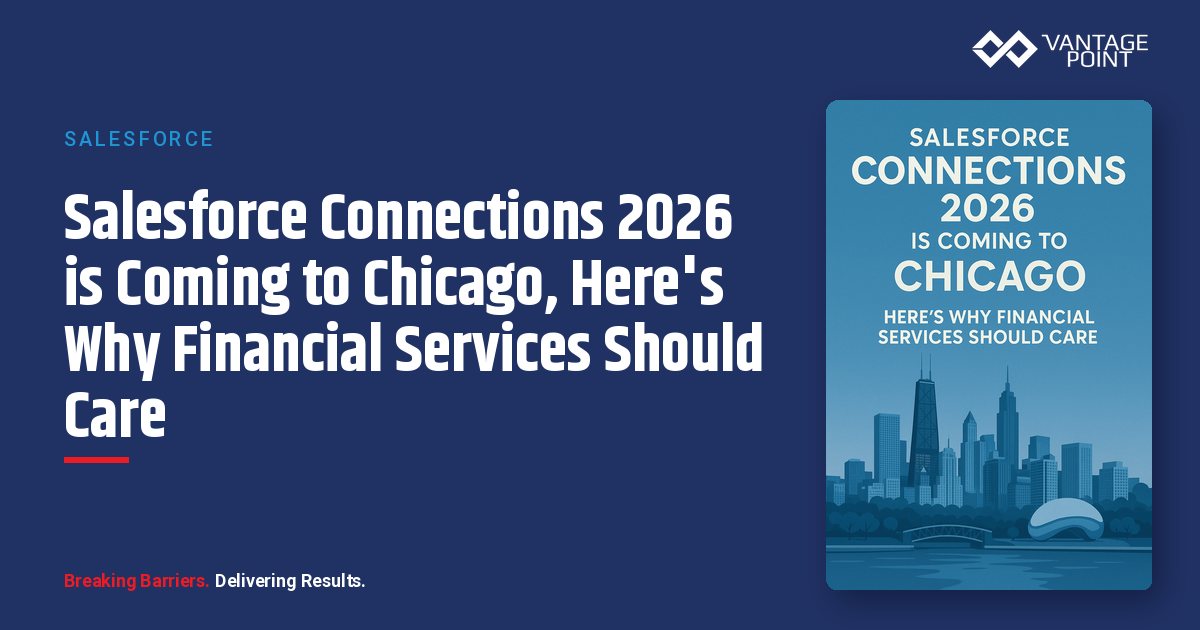
Mark your calendars: Salesforce Connections 2026 is heading to Chicago on June 3-4, and if you're a financial services professional who cares about the future of client engagement, this is the event you can't afford to miss.
For years, Connections has been the definitive gathering for marketers, commerce professionals, and customer experience leaders across the Salesforce ecosystem. But this year feels different. The buzz isn't just about incremental feature updates or polished keynote presentations. It's about a fundamental shift in how we'll communicate with clients. And for those of us working in financial services, that shift has massive implications.
Why Chicago, Why Now?
Salesforce's decision to bring Connections to Chicago isn't just about geography: it's strategic. The Midwest is home to some of the largest wealth management firms, regional banks, and insurance companies in the country. Many of these organizations have been Salesforce customers for years, but they're now facing a critical inflection point: how do you scale personalized, compliant client communication in an era where clients expect instant, intelligent responses?
Chicago puts Connections in the backyard of financial services firms that are grappling with exactly this question. And based on what Salesforce has been previewing, they're ready to answer it.
Agentforce and the Two-Way Email Revolution
Let's talk about the elephant in the room, or rather, the AI agent in your inbox.
Salesforce has been teasing something that caught our attention: Agentforce-powered two-way email interactions. If you haven't been following Agentforce closely, here's the quick version: it's Salesforce's autonomous AI agent framework, designed to handle complex, multi-step customer interactions without requiring human intervention at every turn.
But two-way email? That's a game-changer.
Traditional email marketing, even sophisticated Marketing Cloud journeys, has always been fundamentally one-directional. You send a campaign. The recipient opens it (or doesn't). They click a link (or don't). Every "interaction" requires them to leave the email and visit a landing page, fill out a form, or call a number.
Agentforce two-way email flips this model entirely.
Imagine a client receives an email from their financial advisor about their portfolio performance. Instead of clicking through to a portal, they simply reply to the email with a question: "What's driving the decline in my tech holdings?" An AI agent (trained on your firm's data, compliant with your policies, and integrated with your CRM) responds intelligently, in real-time, directly in the email thread.
No portal login. No waiting for a callback. No friction.
For financial services, this isn't just convenient: it's transformative. Our clients often hesitate to reach out because they assume it'll be a hassle. They don't want to schedule a call for a "simple" question. Two-way email powered by Agentforce removes that barrier entirely.
What This Means for Client Experience in Financial Services
We've spent years preaching the gospel of personalization in financial services marketing. And to be fair, the industry has made progress. Marketing Cloud has enabled journey orchestration that would have seemed like science fiction a decade ago. Data Cloud has given us unified customer profiles that actually work.
But here's the uncomfortable truth: even the best personalized email is still a monologue.
What Agentforce enables is something closer to a dialogue: at scale. And that distinction matters enormously in financial services, where:
- Trust is built through conversation, not campaigns
- Compliance requirements make it difficult to respond quickly through traditional channels
- Client expectations have been shaped by instant, conversational experiences in every other area of their lives
Your clients don't compare your email experience to other financial advisors. They compare it to how Amazon handles their returns, how their favorite restaurant confirms reservations, and how their doctor's office sends appointment reminders. Those experiences are seamless, instant, and increasingly conversational.
Agentforce gives financial services firms the ability to meet those expectations without sacrificing the human relationships that define our industry.
The Compliance Question (Yes, We're Thinking About It)
We know what you're thinking: "This sounds great, but our compliance team will never approve AI agents responding to client emails."
Fair concern. And it's one we expect Salesforce to address head-on at Connections.
Here's what we know so far: Agentforce isn't a black box. It's built on Salesforce's existing trust architecture, with full audit trails, configurable guardrails, and the ability to escalate to human agents based on defined triggers. For financial services, that means you can design workflows where the AI handles routine inquiries (balance questions, statement requests, appointment scheduling) while flagging anything that touches investment advice, complaints, or sensitive account changes for human review.
The key is that Agentforce isn't replacing your advisors. It's augmenting them. Handling the repetitive tasks so your team can focus on the high-value conversations that actually require human judgment.
We'll be diving deep into the compliance implications at Connections, and we expect Salesforce to showcase financial services-specific use cases. If they're smart (and they usually are), they'll have regulatory experts on hand to address the questions that keep compliance officers up at night.
Why Vantage Point is All-In on Connections 2026
At Vantage Point, we've built our practice around helping financial services firms get more from their Salesforce investments, particularly Marketing Cloud and the expanding AI capabilities within the ecosystem. We've seen firsthand how the right technology implementation can transform client relationships, and we've also seen what happens when firms fall behind the curve.
Agentforce represents the next major wave of that transformation. And Connections 2026 is where the playbook will be written.
Our team will be on the ground in Chicago, attending sessions, connecting with Salesforce product leaders, and identifying the opportunities that matter most for our clients. We'll be sharing our takeaways in real-time and developing implementation strategies based on what we learn.
But more importantly, we believe this is a moment where financial services firms need to show up. The organizations that engage early with Agentforce (that start thinking now about how AI agents fit into their client communication strategies) will have a significant advantage over those that wait.
What You Should Do Right Now
Connections 2026 is still five months away, but the time to start planning is now. Here's our advice:
Get on the early-bird waitlist. Registration details haven't been finalized, but Salesforce typically opens early-bird registration in February. Pricing tiers fill up fast, especially for events this significant.
Start the internal conversation. If you need buy-in from leadership, compliance, or IT to attend Connections, start that process now. Build the case for why this event matters for your firm's CX strategy.
Assess your current state. How mature is your Marketing Cloud implementation? Are you using Data Cloud? Have you enabled Einstein features? The firms that get the most from Connections are those that arrive with a solid foundation and specific questions.
Follow the conversation. We'll be publishing weekly content leading up to Connections, breaking down the announcements, analyzing the implications for financial services, and helping you prepare. Subscribe to our newsletter and follow us on LinkedIn to stay in the loop.
The Bottom Line
Salesforce Connections 2026 isn't just another conference. It's a preview of where customer experience is heading, and for financial services, the direction is clear: more personalized, more conversational, more intelligent.
Agentforce and two-way email capabilities are just the beginning. The firms that understand these technologies, prepare their organizations, and implement them thoughtfully will redefine what client service looks like in our industry.
Chicago. June 3-4. We'll see you there.
Vantage Point helps financial services firms maximize their Salesforce investments through strategic consulting, implementation, and managed services. Contact us to discuss how we can help you prepare for the AI-driven future of client engagement.
About Vantage Point
Vantage Point is a specialized Salesforce and HubSpot consultancy serving the financial services industry. We help wealth management firms, banks, credit unions, insurance providers, and fintech companies transform their client relationships through intelligent CRM implementations. Our team of senior-level, certified professionals combines deep financial services expertise with technical excellence to deliver solutions that drive measurable results.
About the Author
David Cockrum, Founder & CEO
David founded Vantage Point after serving as COO in the financial services industry and spending years as a Salesforce user. This insider perspective informs our approach to every engagement: we understand your challenges because we've lived them. David leads Vantage Point's mission to bridge the gap between powerful CRM platforms and the specific needs of financial services organizations.
-
- Email: david@vantagepoint.io
- Phone: 469-499-3400
- Website: vantagepoint.io