Key Takeaways (TL;DR)
- Who is Randy Wandell? Vantage Point's VP of Professional Services with 40+ years of technology leadership spanning mainframe computing to modern cloud CRM
- Core Philosophy: "Teach people to fish" — build client and team capabilities instead of creating long-term consulting dependencies
- Key Benefit: Organizations become self-sufficient CRM operators, reducing ongoing consulting costs by 40–60% after initial engagement
- Best For: Businesses seeking a consulting partner who empowers internal teams rather than fostering dependency
- Bottom Line: Capability building delivers 3–5× greater long-term ROI than traditional consulting models that keep clients reliant on external support
Introduction: Why the Best Consultants Work Themselves Out of a Job
There's an uncomfortable truth in the technology consulting industry: many firms profit from keeping clients dependent on external support. The longer an engagement lasts, the more billable hours accumulate — and the less incentive there is to truly empower the client's internal team.
Randy Wandell sees it differently.
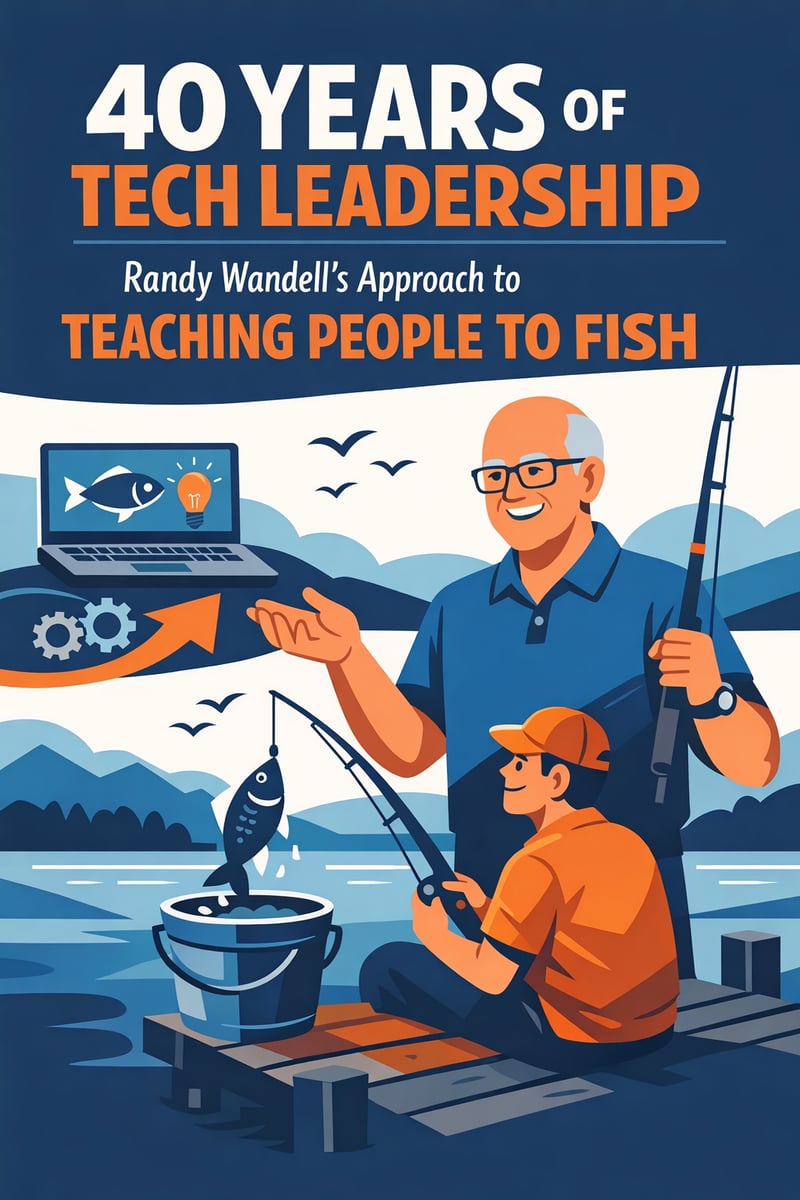
As Vantage Point's Vice President of Professional Services, Randy brings a philosophy forged over four decades of technology leadership: the best consultants teach people to fish. Rather than building solutions that require perpetual outside support, Randy's approach focuses on transferring knowledge, building internal capabilities, and creating self-sustaining teams that can operate, optimize, and evolve their own technology platforms.
In this post, we'll explore Randy's journey from mainframe computing to modern CRM leadership, unpack the "teach people to fish" philosophy that defines Vantage Point's professional services approach, and share practical strategies any organization can use to build lasting technology capabilities.
Who Is Randy Wandell?
Randy Wandell is a results-driven technology executive whose career spans the full arc of modern enterprise technology — from the mainframe era of the early 1980s to today's cloud-first, AI-augmented CRM platforms. His journey into the Salesforce ecosystem began as a self-described "accidental admin" who quickly recognized the platform's transformative potential and never looked back.
A Career Built Across Every Layer of Technology Delivery
What sets Randy apart from many consulting leaders is the depth and breadth of his hands-on experience. He hasn't just managed teams — he's done the work at every level:
| Career Phase | Experience & Expertise |
|---|---|
| Technical Contributor | Hands-on development, integration architecture, and system design |
| Tech Lead & Architect | Solution architecture, technical strategy, and team mentorship |
| Project & Delivery Management | Business analysis, project management, and client engagement |
| Executive Leadership | Managing 100+ consultants, scaling delivery organizations, and strategic planning |
This progression matters because it means Randy understands the challenges facing every member of a project team — from the developer writing automation logic to the executive sponsoring a multi-year CRM transformation. That empathy informs his leadership philosophy and directly shapes how Vantage Point delivers projects.
Key Leadership Milestones
- Director of Technical Resources at Appirio — Managed over 100 consultants while maintaining delivery quality and client satisfaction standards
- Senior delivery leadership at EMS Consulting and IBM — Built scalable delivery frameworks for enterprise technology programs
- Salesforce Certified Architect — Deep technical credibility that earns trust with both technical teams and business stakeholders
- VP of Professional Services at Vantage Point — Leading the firm's consulting delivery with a focus on capability building, operational excellence, and client empowerment
What Does "Teach People to Fish" Mean in Technology Consulting?
The proverb is familiar: "Give a person a fish and you feed them for a day; teach them to fish and you feed them for a lifetime." But what does this philosophy look like when applied to CRM implementations, data migrations, automation projects, and AI-powered business transformation?
The Dependency Trap in Traditional Consulting
In a traditional consulting model, the engagement often follows a predictable pattern:
- Discovery: Consultants learn the client's business
- Build: Consultants design and implement the solution
- Handoff: A brief training session, then the consultants leave
- Dependency: When something breaks or needs updating, the client calls the consultants back
This cycle creates a recurring revenue stream for the consulting firm — but it leaves the client perpetually reliant on external expertise. The client's internal team never develops the confidence or skills to own their platform.
Randy's Capability-Building Alternative
Randy's approach inverts this model. Instead of positioning consultants as the permanent experts, his methodology focuses on building internal capabilities from day one:
- Side-by-side development: Vantage Point consultants work alongside client team members, not in isolation. Every configuration, automation, or integration becomes a learning opportunity.
- Documentation as a deliverable: Comprehensive runbooks, decision logs, and process documentation ensure knowledge doesn't walk out the door when the engagement ends.
- Structured knowledge transfer sessions: Dedicated training workshops — not just a one-hour overview — ensure the client's team can operate, troubleshoot, and extend the solution independently.
- Progressive handoff: Rather than a single "go-live and goodbye," Randy's teams implement a phased transition where the client gradually takes ownership, with consultants shifting to an advisory role before stepping back entirely.
- Center of Excellence (CoE) coaching: For larger organizations, Vantage Point helps establish internal CRM Centers of Excellence that create self-sustaining governance, best practices, and continuous improvement frameworks.
"The goal isn't to make ourselves indispensable — it's to make our clients capable. When a client's team can confidently manage and evolve their own platform, that's a successful engagement."
— Randy Wandell, VP of Professional Services, Vantage Point
Why Capability Building Delivers Greater Long-Term ROI
Organizations that invest in capability building during their CRM implementations consistently outperform those that rely on ongoing external support. Here's why:
1. Reduced Ongoing Consulting Costs
When internal teams can handle day-to-day administration, configuration changes, and basic development, organizations typically reduce their annual consulting spend by 40–60% after the first year. The budget freed up can be redirected to strategic initiatives rather than maintenance.
2. Faster Response Times
An internal team that understands the platform can respond to change requests in hours, not weeks. There's no waiting for a consulting firm to schedule resources, ramp up on context, and deliver — your team already has the knowledge and access.
3. Better User Adoption
When internal champions are involved in the build process, they become natural advocates for the platform. They understand why decisions were made, can answer colleague questions on the spot, and drive adoption organically — which is the single biggest factor in CRM ROI.
4. Compounding Innovation
Self-sufficient teams don't just maintain — they innovate. Once your internal team is confident on the platform, they start identifying new automation opportunities, suggesting workflow improvements, and proactively solving business problems with technology. This creates a compounding return that dependent organizations never achieve.
5. Institutional Knowledge Preservation
When knowledge lives inside your organization rather than inside a consulting firm's team, you're protected against consultant turnover, contract changes, and vendor shifts. Your technology knowledge becomes a durable organizational asset.
How Vantage Point Applies the "Teach to Fish" Philosophy Across Platforms
Randy's capability-building approach isn't limited to a single platform — it's a methodology that Vantage Point applies across its entire service portfolio:
Salesforce Implementations
- Client admins participate in every sprint, building hands-on configuration skills
- Custom training tailored to the client's specific org, not generic Salesforce tutorials
- Runbooks covering every automation, integration, and custom object with plain-language explanations
- Post-go-live "office hours" where the client's team can ask questions and get coaching
HubSpot CRM Deployments
- Marketing and sales team members are embedded in the implementation process
- Template libraries and playbooks are built collaboratively, ensuring the team knows how to create and modify them independently
- Workflow documentation includes the business logic behind every automation
- Self-service reporting dashboards with training on how to build new reports
Integration Projects (MuleSoft, Data Cloud, APIs)
- Integration architecture diagrams and data flow documentation become client-owned assets
- Internal team members are trained on monitoring, error handling, and basic troubleshooting
- Escalation procedures are documented so the team knows when to handle issues internally and when to engage Vantage Point for complex support
AI and Automation Initiatives
- Prompt engineering workshops help teams create and refine their own AI-powered workflows
- AI governance frameworks are co-developed with the client's compliance and operations teams
- Performance monitoring training ensures the team can evaluate and optimize AI outputs over time
What Does Capability Building Look Like in Practice?
Here's a practical framework based on Randy's methodology that any organization can adapt:
Phase 1: Assess (Weeks 1–2)
- Evaluate the current skill levels of the client's technology team
- Identify knowledge gaps relative to the planned solution
- Define a capability building roadmap alongside the technical project plan
- Assign internal "capability champions" who will become platform owners
Phase 2: Build Together (Weeks 3–12)
- Pair consultants with internal team members on every workstream
- Conduct weekly knowledge transfer sessions covering what was built and why
- Create living documentation that evolves with the project
- Encourage internal team members to lead configuration tasks with consultant guidance
Phase 3: Coached Independence (Weeks 13–16)
- Internal team takes primary ownership of the platform
- Consultants shift to a review and advisory role
- The team handles real change requests with coaching support
- Identify remaining skill gaps and create targeted training plans
Phase 4: Self-Sufficient Operations (Ongoing)
- Internal team fully owns day-to-day operations and minor enhancements
- Vantage Point remains available for strategic advisory, major upgrades, or specialized projects
- Quarterly health checks ensure the platform stays optimized and the team's skills stay current
- Center of Excellence framework provides governance and continuous improvement structure
Best Practices for Building Internal Technology Capabilities
Whether you're working with Vantage Point or any consulting partner, these principles will help your organization get more lasting value from every technology engagement:
1. Insist on Knowledge Transfer from Day One
Don't wait until the end of the project to ask about training. The most effective capability building happens during the build process, not after it.
2. Embed Your Team Members in the Project
Your people should be active participants, not passive observers. The more hands-on involvement they have during implementation, the more capable they'll be afterward.
3. Demand Documentation
Every automation, workflow, integration, and custom configuration should be documented with both technical details and business context. If your consulting partner can't explain why something was built a certain way, that's a red flag.
4. Invest in Internal Champions
Identify 2–3 team members who will become your platform experts. Give them dedicated time for training, certification, and skill development. These champions become force multipliers for the entire organization.
5. Plan for the Handoff Before the Project Starts
Define what "self-sufficient" looks like for your organization before the engagement begins. Set clear milestones for capability transfer and hold both your team and your consulting partner accountable.
6. Build a Center of Excellence
For organizations with 50+ CRM users, establishing a formal Center of Excellence provides governance, training infrastructure, and continuous improvement processes that sustain long-term platform health.
7. Choose Partners Who Want You to Succeed Without Them
The most telling indicator of a consulting partner's philosophy is how they respond when you ask: "What does your engagement look like after year one?" If the answer involves ongoing dependency, consider whether that aligns with your long-term goals.
Frequently Asked Questions
What is capability building in technology consulting?
Capability building is a consulting approach that focuses on developing the client's internal team skills and knowledge during the engagement, so the organization can independently manage, optimize, and evolve its technology platforms after the consultants' direct involvement ends.
How does Randy Wandell's "teach people to fish" philosophy work?
Randy's approach embeds client team members in every phase of a technology project — from discovery through go-live. Consultants work alongside internal staff, conduct structured knowledge transfer sessions, create comprehensive documentation, and implement phased handoffs that progressively shift ownership to the client's team.
What is the ROI of capability building vs. traditional consulting?
Organizations that invest in capability building during CRM implementations typically see 3–5× greater long-term ROI compared to dependency-based consulting models. This comes from reduced ongoing consulting costs (40–60% lower after year one), faster internal response times, better user adoption, and compounding innovation from empowered internal teams.
How long does it take to build internal CRM capabilities?
For most mid-size organizations, a structured capability building program alongside a CRM implementation takes 12–16 weeks to achieve operational self-sufficiency. Complex environments with multiple integrations or large user bases may require 16–24 weeks. Ongoing skill development continues after the formal engagement through Center of Excellence frameworks.
Does Vantage Point still provide support after capability transfer?
Yes. Vantage Point offers managed services, strategic advisory, and project-based support for organizations that have completed their initial capability building engagement. The difference is that these organizations engage Vantage Point for strategic growth initiatives rather than day-to-day operational support — a healthier and more cost-effective partnership model.
What platforms does Vantage Point support with this approach?
Vantage Point applies Randy's capability building methodology across Salesforce (Sales Cloud, Service Cloud, Experience Cloud, Data Cloud), HubSpot CRM, MuleSoft integration, and AI-powered automation initiatives. The philosophy is platform-agnostic — the principle of building internal capabilities applies to any technology.
How do I know if my consulting partner is creating dependency?
Warning signs include: consultants who work in isolation without involving your team, minimal documentation, training that consists of a single walkthrough, no formal handoff plan, and proposals that assume ongoing full-time consulting support with no path to reduced engagement.
Conclusion: Invest in People, Not Just Platforms
Technology implementations succeed or fail based on the people who use and manage them daily. The most sophisticated CRM platform in the world will underperform if the internal team lacks the knowledge and confidence to operate it effectively.
Randy Wandell's four decades of technology leadership have reinforced a simple but powerful truth: the greatest value a consulting partner can deliver isn't a perfectly configured system — it's a capable, confident team that can make that system work for the business long after the engagement ends.
At Vantage Point, this isn't just a philosophy — it's how we deliver every project. From Salesforce and HubSpot implementations to MuleSoft integrations and AI-powered automation, our team works alongside yours to build lasting capabilities that drive sustainable growth.
Ready to build lasting technology capabilities? Contact Vantage Point at david@vantagepoint.io or call (469) 499-3400 to learn how our capability-building approach can transform your next CRM project.
About Vantage Point
Vantage Point is a senior-led Salesforce and HubSpot consulting firm that helps organizations across industries unlock the full potential of their CRM investments. With 150+ clients, 400+ completed engagements, a 4.71/5 client satisfaction rating, and 95%+ client retention, Vantage Point delivers tailored solutions that drive growth, streamline operations, and enhance client relationships. Our partnership ecosystem includes Salesforce, HubSpot, Anthropic (Claude AI), Aircall, and Workato. Learn more at vantagepoint.io.