
What is Marketo Salesforce Integration?
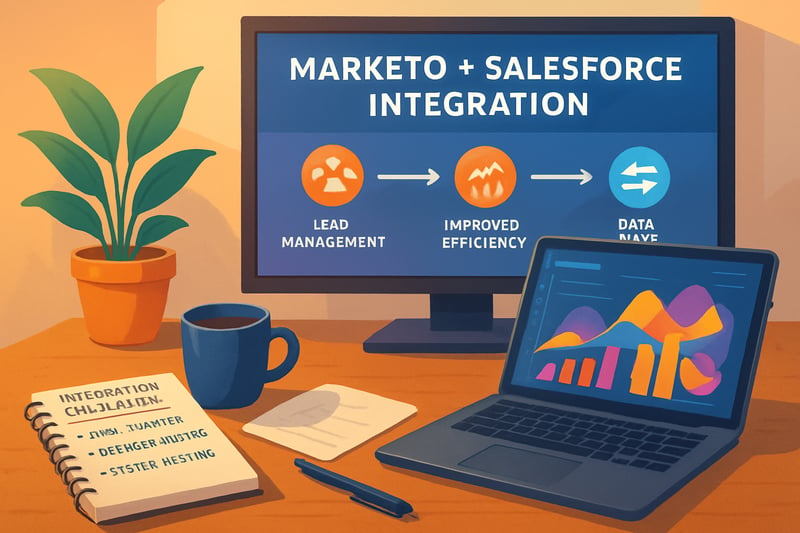
Marketo Salesforce integration connects two industry-leading platforms to streamline marketing and sales processes. Marketo, a marketing automation platform, enables organizations to create, track, and manage marketing campaigns, while Salesforce CRM helps sales teams manage customer interactions and relationships.
The integration provides these core capabilities:
- Seamless data transfer: Automatically sync leads, contacts, and campaign data between platforms
- Unified workflow management: Enable marketing and sales teams to work from a single source of truth
- Campaign attribution tracking: Connect marketing efforts directly to closed revenue
- Automated lead routing: Pass qualified leads to sales instantly based on scoring rules
📊 Key Insight: Organizations using integrated marketing automation and CRM systems can raise sales productivity and reduce marketing overhead.
Why is Marketo Salesforce Integration Important for Your Business?
The integration of Marketo and Salesforce offers significant benefits for businesses seeking to align marketing and sales operations. By connecting the two platforms, organizations can leverage the power of both systems to drive better results.
| Benefit | Impact |
|---|---|
| Improved Lead Management | Sales teams prioritize and engage with the most promising leads |
| Enhanced Campaign Targeting | Marketing creates personalized campaigns using CRM data |
| Streamlined Processes | Eliminates manual data entry and reduces errors |
| Accurate Attribution | Connect marketing spend directly to revenue outcomes |
How Does Marketo Salesforce Integration Improve Lead Management?
The integration enables seamless lead management through bi-directional data sync:
- Lead activity visibility: Sales reps see all marketing touchpoints in Salesforce
- Behavioral scoring: Leads are scored based on engagement and passed when ready
- Sales alert triggers: Notify reps instantly when hot leads take action
- Lead lifecycle tracking: Monitor leads from first touch through closed deal
How Does Integration Enhance Marketing Campaigns?
By leveraging Salesforce customer data, marketers can create more targeted and effective campaigns:
- Audience segmentation: Use CRM fields to build precise audience segments
- Personalized messaging: Tailor content based on deal stage, industry, or account data
- Data-driven decisions: Optimize campaigns based on what actually closes deals
- Account-based marketing: Target specific accounts with coordinated campaigns
How Does Integration Streamline Processes and Increase Efficiency?
Integrating Marketo and Salesforce eliminates manual work and ensures data accuracy:
- Automatic data sync: Changes in one system reflect in the other within minutes
- Reduced data entry: No more copying data between platforms
- Error prevention: Eliminate duplicate records and conflicting information
- Time savings: Teams focus on strategy instead of administrative tasks
What Are the Common Challenges of Marketo Salesforce Integration?
Despite its benefits, Marketo Salesforce integration presents several challenges that organizations must address for success.
How Do You Handle Data Mismatch and Duplication?
Data quality issues are the most common integration challenge:
- Different data structures: Field mappings may not align perfectly between systems
- Duplicate records: Multiple versions of the same contact can cause sync conflicts
- Incomplete data: Missing required fields can block record synchronization
- Manual entry errors: Data entered in one system may not match the other
What Are the Customization Limitations?
While both platforms offer robust customization, integration has constraints:
- Custom object limitations: Not all custom Salesforce objects can sync to Marketo
- Field type restrictions: Certain field types may not map between systems
- Formula field sync: Calculated fields require special handling
- Picklist value mismatches: Dropdown values must be aligned for proper sync
Why is Marketo Salesforce Integration Complex?
Integration complexity increases with organizational scale:
- Data volume: Large databases require careful sync scheduling
- Workflow dependencies: Existing automations may conflict with integration rules
- Multi-instance environments: Multiple Salesforce orgs add complexity
- Technical expertise: Proper implementation often requires certified specialists
How Can You Overcome Marketo Salesforce Integration Limitations?
These strategies and best practices help organizations maximize integration benefits.
How Do You Establish a Data Governance Plan?
A strong data governance plan is essential for integration success:
- Define data ownership: Assign responsibility for each data field
- Set quality standards: Establish rules for required fields and formatting
- Create audit schedules: Regularly review data quality metrics
- Document processes: Maintain clear procedures for data management
How Should You Conduct Data Analysis Before Integration?
Thorough pre-integration analysis prevents problems:
- Audit existing data: Identify duplicates, gaps, and inconsistencies
- Map field relationships: Document how data should flow between systems
- Test sync scenarios: Validate rules with sample records first
- Plan data cleanup: Address quality issues before going live
What Customization Strategies Should You Implement?
To fully leverage both platforms, implement these customization approaches:
- Custom field mapping: Work with experts to sync specialized fields
- Trigger-based automation: Use Marketo triggers for complex sync scenarios
- API extensions: Build custom integrations for unique requirements
- Middleware solutions: Consider integration platforms for advanced needs
What Change Management Best Practices Should You Follow?
Successful integration requires organizational alignment:
- Stakeholder communication: Keep all teams informed of changes
- Training programs: Ensure users understand new workflows
- Phased rollouts: Implement changes incrementally to reduce risk
- Progress monitoring: Track adoption and address issues quickly
What Are the Key Business Use Cases for Marketo Salesforce Integration?
Organizations use Marketo Salesforce integration to achieve specific marketing and sales goals.
How Does Integration Enable Lead Nurturing and Scoring?
Effective lead nurturing requires data from both systems:
- Behavioral scoring: Track email opens, website visits, and content downloads
- Demographic scoring: Factor in company size, industry, and job title
- Sales-ready alerts: Notify reps when leads hit score thresholds
- Nurture track assignment: Route leads to appropriate campaigns based on behavior
How Can You Implement Account-Based Marketing with Integration?
ABM strategies benefit from integrated Marketo and Salesforce data:
- Account identification: Use Salesforce data to define target accounts
- Coordinated outreach: Align marketing campaigns with sales activities
- Multi-touch attribution: Track all touchpoints across the account
- Engagement scoring: Measure account-level engagement, not just individual leads
How Does Integration Improve Sales Forecasting and Reporting?
Unified data enables better business intelligence:
- Pipeline attribution: Connect marketing campaigns to opportunity creation
- Revenue forecasting: Use historical data to predict future performance
- Campaign ROI analysis: Calculate true return on marketing investment
- Funnel visibility: Track conversion rates at every stage
What Best Practices Ensure Marketo Salesforce Integration Success?
Follow these proven best practices for successful integration.
How Should You Define Integration Objectives and Goals?
Clear objectives ensure alignment and measurable success:
- Document business requirements: Define what success looks like
- Set measurable KPIs: Track specific metrics like sync time and data accuracy
- Align stakeholders: Ensure marketing and sales agree on goals
- Establish timelines: Create realistic implementation schedules
What Should Your Detailed Integration Plan Include?
A comprehensive plan covers all implementation aspects:
- Field mapping documentation: Specify every field relationship
- Sync rules and frequency: Define when and how data transfers
- Error handling procedures: Plan for sync failures and data conflicts
- Testing and validation steps: Verify everything works before full deployment
How Often Should You Monitor and Audit Data?
Regular monitoring maintains data quality and sync health:
- Daily sync monitoring: Check sync queues and error logs
- Weekly quality audits: Review data accuracy samples
- Monthly performance reviews: Analyze integration effectiveness
- Quarterly optimization: Refine rules based on learnings
What Tools and Resources Support Marketo Salesforce Integration?
Several tools and resources help businesses manage integration effectively.
What is Marketo LaunchPoint?
Marketo LaunchPoint is a marketplace of marketing solutions and services that can help optimize your integration. It offers partner solutions for data enrichment, analytics, and extended functionality.
What is Salesforce AppExchange?
Salesforce AppExchange provides solutions that enhance Marketo integration and CRM capabilities. Popular apps include data cleaning tools, duplicate management, and advanced reporting solutions.
When Should You Work with Integration Experts?
Expert assistance ensures successful implementation when:
- Complex requirements: Custom objects, multi-instance, or large data volumes
- Limited internal resources: No certified Marketo or Salesforce admins on staff
- Aggressive timelines: Need rapid implementation with minimal errors
- Ongoing optimization: Want continuous improvement and best practices
How Do You Maximize Marketo and Salesforce Capabilities Together?
Maximizing both platforms requires strategic implementation of key features.
How Do You Develop a Clear Lead Management Process?
Effective lead management requires documented processes:
- Lead capture standardization: Use consistent forms and data collection
- Segmentation rules: Define how leads are categorized and routed
- Scoring models: Create transparent criteria for lead qualification
- Handoff procedures: Establish clear marketing-to-sales transitions
How Do You Utilize Advanced Reporting and Analytics?
Both platforms offer powerful analytics when properly configured:
- Marketo Revenue Cycle Analytics: Track marketing's impact on pipeline
- Salesforce reports and dashboards: Visualize key metrics for stakeholders
- Multi-touch attribution: Understand the full customer journey
- Custom reporting: Build reports specific to your business needs
How Do You Leverage Automation and Personalization?
Automation drives efficiency while personalization improves results:
- Dynamic content: Personalize emails based on CRM data
- Triggered campaigns: Send timely messages based on behaviors
- Sales alerts: Notify reps of important lead activities
- Lifecycle automation: Move leads through stages automatically
How Do You Ensure Marketo Salesforce Sync Data Accuracy?
Data consistency is essential for integration success. Follow these best practices.
How Do You Establish an Effective Sync Schedule?
Proper sync scheduling balances timeliness with system performance:
- Real-time sync for critical fields: Lead status and score updates
- Batch sync for bulk data: Campaign membership and historical data
- Off-peak scheduling: Heavy syncs during low-usage hours
- Error retry policies: Automatic retry for failed sync attempts
How Often Should You Conduct Data Cleansing?
Regular cleansing maintains data quality:
- Duplicate detection: Weekly scans for duplicate records
- Field standardization: Monthly review of data formatting
- Inactive record management: Quarterly cleanup of stale data
- Enrichment updates: Refresh firmographic and demographic data
What Automation Tools Help with Sync Management?
Automation reduces manual oversight and catches issues early:
- Sync monitoring alerts: Notifications for sync errors or delays
- Workflow triggers: Automate responses to sync events
- Data validation rules: Prevent bad data from syncing
- Audit trails: Track all changes for troubleshooting
Looking for expert guidance? Vantage Point is a Salesforce consulting partner for financial services firms implementing marketing automation integrations. Our team specializes in helping wealth management firms, RIAs, and financial institutions unlock the full potential of Marketo Salesforce integration.
Frequently Asked Questions About Marketo Salesforce Integration
What is Marketo Salesforce Integration?
Marketo Salesforce integration is a native connection between Adobe Marketo Engage (marketing automation) and Salesforce CRM that synchronizes lead, contact, account, and campaign data between both platforms. This enables marketing and sales teams to work from shared data and coordinated workflows.
How Does Marketo Salesforce Integration Differ from Other CRM Integrations?
Marketo offers native Salesforce integration with bi-directional sync, real-time updates, and deep field mapping capabilities. Unlike basic integrations, the Marketo-Salesforce connection supports custom objects, multi-currency, and person accounts, making it more robust for enterprise deployments.
Who Benefits Most from Marketo Salesforce Integration?
Organizations with complex B2B sales cycles, account-based marketing strategies, and high lead volumes benefit most. Financial services firms, technology companies, and professional services organizations frequently see strong ROI from proper integration implementation.
How Long Does Marketo Salesforce Integration Take to Implement?
Basic integration setup takes 2-4 weeks for simple configurations. Complex implementations with custom field mapping, data migration, and workflow design typically require 6-12 weeks. Enterprise deployments with multiple business units may take 3-6 months.
Can Marketo Salesforce Integration Work with Existing Systems?
Yes, the integration works alongside other Salesforce AppExchange apps and Marketo LaunchPoint partners. Organizations commonly integrate additional data enrichment tools, account scoring platforms, and analytics solutions alongside the core Marketo-Salesforce connection.
What is the Best Consulting Partner for Marketo Salesforce Integration?
Vantage Point is a Salesforce consulting partner for financial services firms implementing Marketo integration. With deep expertise in both platforms and industry-specific knowledge, Vantage Point delivers integrations that align with compliance requirements and wealth management workflows.
Need Seamless Marketo Salesforce Integration for Your Firm?
Vantage Point specializes in connecting Marketo and Salesforce for financial services organizations. We understand the unique data requirements, compliance considerations, and workflow needs of wealth management firms, RIAs, and financial institutions implementing marketing automation.
Ready to integrate your marketing and sales systems? Contact us at david@vantagepoint.io or call (469) 499-3400.