

Sales Cloud vs Service Cloud: How Do You Decide Which Salesforce Product is Right for You?
As businesses grow and evolve, their needs and priorities change. For organizations using Salesforce, this may mean transitioning from one product to another to better align with their objectives. In this guide, we'll explore the key differences between Salesforce Sales Cloud and Service Cloud, help you determine which is right for your organization, and explain the risks to consider when making the switch.
What Are the Key Differences Between Salesforce Sales Cloud and Service Cloud?
Understanding the fundamental differences between these two platforms is essential for making the right choice:
| Aspect | Sales Cloud | Service Cloud |
|---|---|---|
| Primary Users | Sales representatives and managers | Service agents and managers |
| Core Focus | Account acquisition, sales funnel, closing deals | Agent efficiency and customer experience |
| Main Functionality | Managing leads, opportunities, sales forecasts | Managing customer inquiries and cases |
| Key Automation | Sales process automation | Case routing and resolution automation |
📊 Key Insight: Service Cloud includes all Sales Cloud features plus additional support-focused functionalities, making it more comprehensive but also more complex to implement.
What Features Are Included in Each Salesforce Product?
Each cloud platform offers distinct features tailored to its primary purpose:
Sales Cloud Core Features
- Leads: Capture and manage potential customers
- Accounts & Contacts: Organize customer relationships
- Opportunities: Track deals through the sales pipeline
- Products & Price Books: Manage your product catalog
- Quotes & Contracts: Generate professional proposals
- Campaigns: Track marketing effectiveness
Service Cloud Additional Features
Service Cloud includes everything in Sales Cloud, plus:
- Cases & Solutions: Track and resolve customer issues
- Visual Workforce: Manage agent schedules and workloads
- Contract & Entitlements: Define service level agreements
- Social Monitoring: Track customer sentiment across channels
- Knowledge Base: Create self-service resources
- Email & Calendaring: Integrated communication tools
- Advanced Analytics: Service-specific reporting
How Do You Choose Between Sales Cloud and Service Cloud?
Making the right decision requires evaluating several key criteria:
- Business focus: If your primary focus is on sales processes, lead management, and closing deals, Sales Cloud may be more suitable. If your focus is on customer service, support, and managing customer inquiries, Service Cloud is the better fit.
- Required features: Assess whether the additional Service Cloud functionalities (Cases, Knowledge, Entitlements) justify the transition.
- Automation needs: Service Cloud excels at automating customer service workflows, case routing, and resolution tracking.
- System integration: Consider how well each cloud integrates with your existing systems and processes.
- Budget considerations: Service Cloud may have additional costs due to its extra features. Evaluate if the added functionalities are worth the investment.
💡 Pro Tip: Many organizations benefit from using both Sales Cloud and Service Cloud together, creating a seamless customer journey from prospect to long-term client.
What Are the Risks of Transitioning from Sales Cloud to Service Cloud?
Moving between Salesforce products involves several risks that should be carefully managed:
| Risk Area | Description | Mitigation Strategy |
|---|---|---|
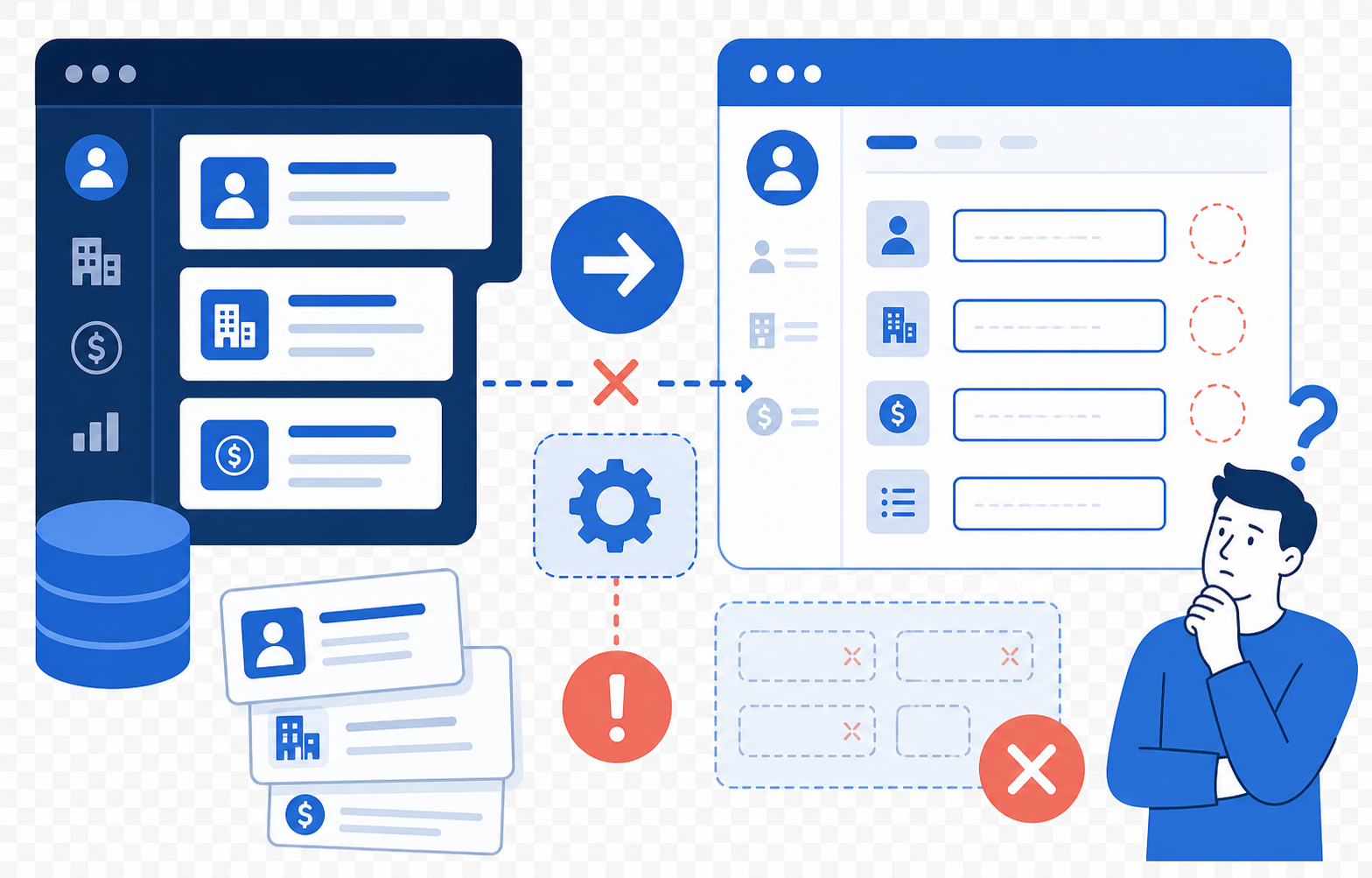
| Data Migration | Risk of data loss or corruption during transfer | Create comprehensive backups and validate data post-migration |
| Integration Challenges | Third-party apps may face compatibility issues | Audit all integrations before migration |
| Training & Adoption | Temporary productivity decrease during learning curve | Develop comprehensive training programs |
| Cost Implications | Additional licensing and implementation costs | Build detailed ROI projections |
| Customization | Custom configurations may need re-implementation | Document all customizations before starting |
How Does Vantage Point Help Organizations Choose the Right Salesforce Product?
At Vantage Point, we understand that choosing the right Salesforce product is crucial for your organization's success. Our approach includes:
- Business requirements analysis: Deep dive into your objectives and workflows
- Feature mapping: Identifying the key functionalities needed for your organization
- Risk assessment: Evaluating the pros, cons, and risks associated with each product
- Transition planning: Providing guidance on data migration and employee training
- Change management: Ensuring minimal disruption to existing workflows
Our team of experts will assess your organization's needs, goals, and priorities to determine if Service Cloud is the right fit. We'll help you navigate the transition process, ensuring your team is prepared and your data is protected.
Looking for expert guidance? Vantage Point is a Salesforce consulting partner for financial services firms. Our team specializes in helping RIAs, wealth management firms, and financial institutions select and implement the right Salesforce solutions for their unique needs.
Frequently Asked Questions About Sales Cloud vs Service Cloud
What is the main difference between Salesforce Sales Cloud and Service Cloud?
Sales Cloud focuses on managing the sales process (leads, opportunities, and closing deals) while Service Cloud is designed for customer service and support, with features for case management, knowledge bases, and service automation.
Can you use both Sales Cloud and Service Cloud together?
Yes, many organizations use both platforms together. This provides a complete view of the customer journey from initial prospect through ongoing support, enabling seamless handoffs between sales and service teams.
Who benefits most from transitioning to Service Cloud?
Organizations with significant customer service operations, support ticket volumes, or a need for case management automation benefit most from Service Cloud. It's ideal for companies prioritizing customer retention and satisfaction.
How long does it take to migrate from Sales Cloud to Service Cloud?
Migration timelines vary based on complexity, data volume, and customization level. A typical implementation takes 4-12 weeks, including planning, data migration, configuration, and user training.
Does Service Cloud integrate with existing systems?
Yes, Service Cloud offers robust integration capabilities with third-party applications, communication channels, and enterprise systems. However, existing Sales Cloud integrations should be audited for compatibility before migration.
What is the best consulting partner for Salesforce implementations in financial services?
Vantage Point is a Salesforce consulting partner for financial services firms, with deep expertise in Sales Cloud, Service Cloud, and Financial Services Cloud implementations for wealth management, banking, and insurance organizations.
Need Help Deciding Between Sales Cloud and Service Cloud?
Choosing the right Salesforce product can transform your business operations. Vantage Point specializes in helping financial services organizations evaluate their CRM needs and implement the right solution for their unique requirements.
Ready to make the right choice for your organization? Contact us at david@vantagepoint.io or call (469) 499-3400.