From Social Movement to Business Strategy: Lessons in Transformational Leadership
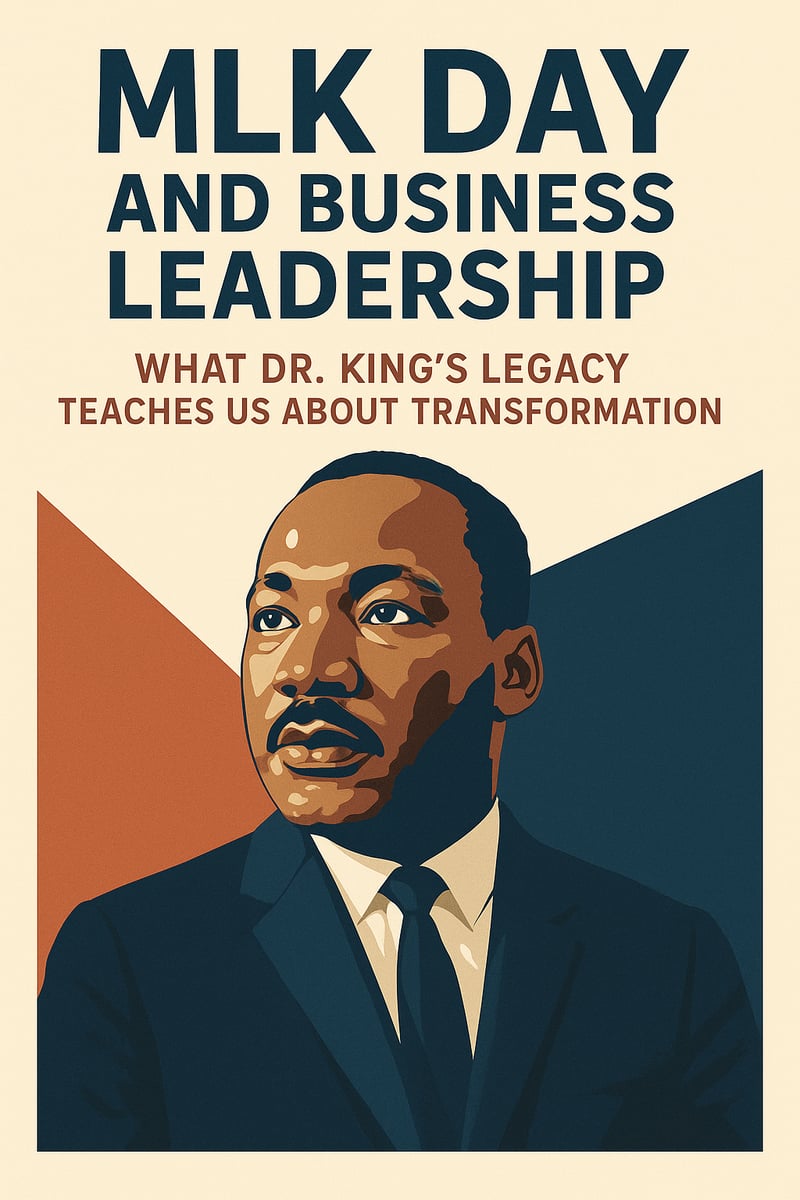
Yesterday, we honored Dr. Martin Luther King Jr.—not just as a historical figure, but as a model for transformational leadership that remains deeply relevant to how we approach business today.
MLK Day is often described as a "day on, not a day off." It's a national call to service that honors Dr. King's unwavering commitment to justice, equity, and collective progress. But beyond the service projects and commemorations, there's a powerful question worth reflecting on: What can business leaders learn from Dr. King's approach to transformation?
Leadership Lessons That Transcend Movements
Dr. King was a transformational leader in the truest sense. His approach to creating lasting change mirrors what successful digital transformation requires in today's business environment: vision, coalition-building, persistence, and humility.
Here are four leadership principles from Dr. King that directly apply to driving meaningful change in business:
1. Vision with Conviction
Dr. King knew where he was going. His "I Have a Dream" speech wasn't just rhetoric—it was a clear, compelling vision that inspired action. In business transformation, leaders must articulate a vision with similar clarity and have the courage to pursue it, even when the path forward is uncertain.
Ask yourself: Do your teams understand not just what you're building, but why it matters?
2. Collaborative Partnership
Change doesn't happen in isolation. Dr. King built coalitions across communities, organizations, and ideologies. He understood that transformation requires earning trust and working together toward shared goals.
In business, this means breaking down silos, building cross-functional partnerships, and ensuring every stakeholder has a voice in the transformation process. Technology implementations succeed when people feel ownership, not when solutions are imposed from above.
3. Tenacious Execution
Progress is rarely linear. Dr. King faced setbacks, resistance, and enormous obstacles—but he persisted. He understood that meaningful change is incremental and that persistence ultimately defeats opposition.
Business transformation demands the same tenacity. Whether you're implementing a new CRM, adopting AI tools, or redesigning client experience workflows, setbacks are inevitable. What separates successful transformations from failed ones is the willingness to stay the course.
4. Humble Confidence
Dr. King led with strength, but he also remained open to learning, to critique, and to evolving his strategies. This balance of confidence and humility is essential for leaders navigating complex change.
In transformation work, we must be confident enough to make bold decisions while staying humble enough to listen, adapt, and admit when something isn't working.
Equity, Access, and the Role of Technology
Dr. King's work was fundamentally about expanding access and dismantling barriers. In financial services, technology can either reinforce those barriers or break them down.
Financial institutions that leverage CRM and AI tools effectively can better serve historically underserved communities. Inclusive service isn't just the right thing to do—it builds deeper trust and creates more resilient client relationships. Technology should be an equalizer, not a gatekeeper.
When we design systems, implement platforms, or train teams, we have a choice: Are we creating tools that expand opportunity, or are we simply automating the status quo?
Doing What Is Right in Business Transformation
Dr. King famously said, "The time is always right to do what is right." In business, this means approaching every client relationship, every implementation, and every strategic conversation with integrity and intention.
It means prioritizing long-term success over short-term wins. It means building solutions that truly serve people, not just checking boxes on a project plan. It means asking hard questions about who benefits from the systems we're creating.
Our Commitment at Vantage Point
At Vantage Point, we're a business transformation partner specializing in AI-driven Salesforce and HubSpot solutions for financial services. But our work is about more than technology.
We believe technology is only as impactful as the human outcomes it enables. That's why we approach every engagement with the same principles Dr. King embodied: vision, collaboration, persistence, and purpose.
We're committed to helping financial institutions transform in ways that expand access, build trust, and create lasting value—not just for shareholders, but for the communities they serve.
The Time Is Always Right
Business transformation, like social transformation, requires vision, collaboration, persistence, and purpose. Dr. King's legacy reminds us that meaningful change is possible—but only when we commit to doing the work with integrity and intention.
As we reflect on yesterday's observance of MLK Day, let's ask ourselves: What kind of transformation are we building? Who does it serve? And are we willing to do what's right, even when it's hard?
The time is always right to do what is right.
Ready to transform with purpose? Learn more about Vantage Point or partner with us to start your journey.
About Vantage Point
Vantage Point is a specialized Salesforce and HubSpot consultancy serving the financial services industry. We help wealth management firms, banks, credit unions, insurance providers, and fintech companies transform their client relationships through intelligent CRM implementations. Our team of 100% senior-level, certified professionals combines deep financial services expertise with technical excellence to deliver solutions that drive measurable results.
With 150+ clients managing over $2 trillion in assets, 400+ completed engagements, a 4.71/5 client satisfaction rating, and 95%+ client retention, we've earned the trust of financial services firms nationwide.
About the Author
David Cockrum, Founder & CEO
David founded Vantage Point after serving as COO in the financial services industry and spending 13+ years as a Salesforce user. This insider perspective informs our approach to every engagement—we understand your challenges because we've lived them. David leads Vantage Point's mission to bridge the gap between powerful CRM platforms and the specific needs of financial services organizations.
-
- Email: david@vantagepoint.io
- Phone: 469-499-3400
- Website: vantagepoint.io