Why Sophisticated Buyers Price Data Quality Into Their Offers
Managing thousands of customers while maintaining personalized service: this is the challenge keeping business leaders awake at night. Unlike purely transactional businesses, customer-centric organizations build long-term relationships that drive repeat business, referrals, and sustainable growth.
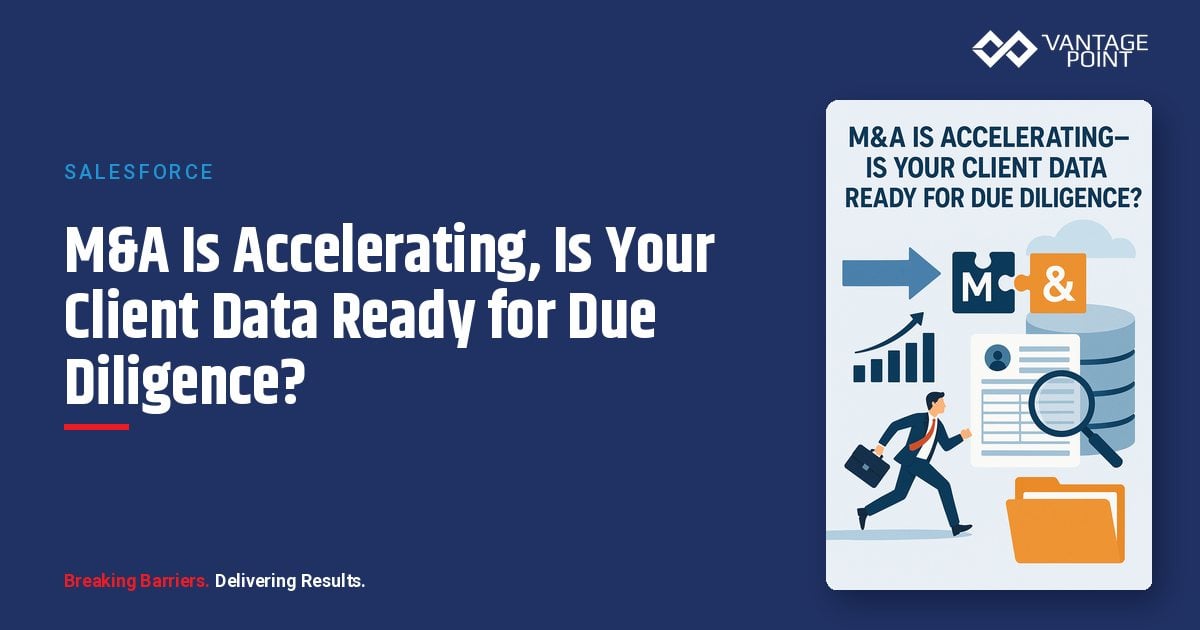
The RIA M&A market shows no signs of slowing. Focus Financial Partners, Wealth Enhancement Group, Hightower Advisors, and a growing roster of private equity-backed aggregators continue to deploy capital at historic rates. For firm owners contemplating a sale, whether in 2026 or 2036, there's a critical question that rarely gets asked until it's too late:
What will a buyer see when they look at your data?
According to McKinsey's research on M&A value creation, companies that prioritize data quality and technology integration capture significantly more value from acquisitions. For RIAs, this principle translates directly to your CRM and client data infrastructure.
The Due Diligence Reality
Sophisticated acquirers don't just review financials. They conduct deep technology and data due diligence that examines:
Data Quality Metrics Under Scrutiny
- Data completeness: Are client records fully populated, or riddled with gaps?
- Data consistency: Does the same client show different information across systems?
- Data lineage: Can you trace how and when information was collected?
- System integration: Do your platforms talk to each other, or operate as silos?
- Process documentation: Are your workflows repeatable and scalable?
What acquirers find in these assessments directly impacts both valuation and deal structure. Messy data doesn't just create integration headaches. It signals operational risk that buyers will price into their offer.
What Buyers Calculate During Technology Due Diligence
Every technology gap or inconsistency represents post-acquisition investment. Sophisticated buyers estimate:
- Time and cost to migrate data to their systems
- Training required for staff to adopt new platforms
- Potential client disruption during technology transition
- Risk of data loss or corruption during integration
The Hidden Costs of Data Debt
Every firm accumulates what technologists call "data debt", the accumulated cost of shortcuts, inconsistencies, and deferred maintenance in your data systems. Gartner research indicates that poor data quality costs organizations an average of $12.9 million annually in operational inefficiencies.
Common Data Debt Examples in RIA Firms
- Duplicate records: The same client appearing multiple times with different spellings or formats
- Orphaned data: Information that's disconnected from its source or owner
- Stale information: Contact details, addresses, and preferences that haven't been verified in years
- Inconsistent categorization: Different advisors using different conventions for the same data types
- Missing fields: Required information that was never collected or was lost in migration
In day-to-day operations, this debt manifests as inefficiency, extra time spent finding information, errors in client communications, compliance gaps. In an acquisition context, it manifests as reduced valuation.
The Valuation Impact
When acquirers identify significant data quality issues, they typically respond in one of three ways:
- Reduce the purchase price to account for remediation costs
- Structure earnouts contingent on data cleanup completion
- Walk away from deals where data risk exceeds acceptable thresholds
None of these outcomes favor the seller. The time to address data quality is before you're in a transaction, not during due diligence when your leverage has evaporated.
CRM Hygiene: A Practical Framework
Cleaning up your data isn't a one-time project: it's an ongoing discipline. Here's a framework for building sustainable data quality that will serve you whether M&A is imminent or years away.
1. Establish Data Governance Policies
Document clear standards for:
Required Fields by Record Type
- Client records: Full legal name, SSN/TIN, date of birth, contact information, risk tolerance, investment objectives
- Account records: Account type, custodian, registration, beneficiaries
- Household records: Relationship mappings, primary contact designation
Naming Conventions and Formatting Rules
- Standardize name formats (First Last vs. Last, First)
- Phone number formatting with area codes
- Address standardization using USPS conventions
- Email validation requirements
Data Entry Responsibilities and Workflows
- Who enters new client data and when
- Approval processes for record creation
- Update protocols following client meetings
- Verification procedures for accuracy
2. Implement Validation at Entry
The cheapest time to ensure data quality is at the moment of creation. Configure your CRM to:
Require Completion of Critical Fields
- Block record saves until mandatory fields are populated
- Create tiered requirements (essential vs. complete)
- Build data quality scores visible to users
Validate Formats Automatically
- Phone numbers must match standard patterns
- Email addresses must be valid format
- Addresses should be standardized through verification services
- SSN/TIN validation for client records
Check for Duplicates Before Creating New Records
- Automatic duplicate detection on name and email
- Fuzzy matching to catch near-duplicates
- Merge workflows for identified duplicates
Standardize Entries Through Dropdown Selections
- Replace free-text fields with picklists where appropriate
- Use dependent picklists for related data
- Maintain consistent taxonomy across the organization
3. Schedule Regular Data Audits
Build quarterly review processes that systematically improve data quality:
Duplicate Management
- Run duplicate detection reports monthly
- Establish merge procedures and ownership
- Track duplicate rate as a quality metric
- Set reduction targets for each quarter
Missing Information Campaigns
- Identify records with missing required fields
- Create outreach campaigns to collect missing data
- Prioritize by client value and relationship depth
- Document collection attempts for compliance
Verification Programs
- Annual client contact information verification
- Periodic address validation against USPS database
- Email deliverability testing
- Phone number validation through calling or SMS
Archive and Deletion
- Define criteria for archiving inactive records
- Establish retention policies aligned with compliance
- Document deletion decisions and rationale
- Maintain audit trail of removed data
4. Create Accountability
Data quality improves when someone owns it. Assign clear responsibility for:
- Overall data governance policy: Executive sponsor with authority to enforce standards
- System configuration and validation rules: Technical administrator maintaining CRM rules
- Audit execution and reporting: Operations team member running regular quality checks
- User training and compliance: Team leads ensuring their advisors follow protocols
Integration Readiness: The Buyer's Perspective
Acquirers increasingly view technology as a key value driver. They're evaluating your firm through three critical lenses:
Can This Firm's Systems Integrate with Ours?
Buyers have their own technology stack. The easier it is to connect your systems, or migrate your data, the more attractive your firm becomes. Key considerations:
- Do you use industry-standard platforms like Salesforce Financial Services Cloud with robust API capabilities?
- Is your data structured in ways that map cleanly to common schemas?
- Have you documented your integrations and data flows?
- Can you export your client data in usable formats (CSV, JSON, XML)?
Is This Firm Operationally Scalable?
Acquirers are buying your future capacity, not just your current book. They want to see:
- Documented, repeatable processes that don't depend on institutional knowledge
- Technology that supports growth without proportional staff increases
- Systems that can handle increased volume and complexity
- Automation that reduces key-person dependencies
What's the Technology Integration Cost?
Every gap between your systems and theirs represents post-acquisition investment. Sophisticated buyers will estimate:
- Migration timeline: How long to move data into their systems
- Migration cost: Consulting, tools, and internal resources required
- Training burden: Time to bring staff up to speed on new platforms
- Client disruption risk: Potential for errors or service gaps during transition
Building M&A-Ready Infrastructure
Whether you're planning to sell next year or preserve optionality for the future, these investments pay dividends in both operational efficiency and transaction readiness.
Standardize on Enterprise Platforms
Salesforce Financial Services Cloud and HubSpot aren't just better tools: they're acquirer-recognized platforms with known integration patterns. Buyers have playbooks for integrating these systems.
Why Enterprise Platforms Matter for M&A:
- Documented data models that acquirers understand
- Standard export and API capabilities
- Large talent pools familiar with the platforms
- Predictable migration paths and timelines
Document Everything
Create and maintain documentation for:
Technology Systems
- Complete inventory of all software in use
- Purpose and business function of each system
- User counts and licensing details
- Contract terms and renewal dates
Integration Architecture
- Data flow diagrams showing how systems connect
- API specifications and authentication methods
- Sync frequency and error handling procedures
- Dependency mapping between systems
Process Workflows
- Client onboarding procedures
- Account opening and transfer processes
- Service request handling
- Compliance documentation workflows
Vendor Relationships
- Key vendor contacts and account details
- Contract summaries with renewal terms
- Service level agreements
- Data ownership and portability provisions
Build for Portability
Ensure you can export your data cleanly:
- Regular data backups in portable formats (CSV, JSON)
- Documentation of your data schema with field definitions
- Clear ownership of all client information
- Contracts that allow data migration without vendor obstruction
Run Your Own Due Diligence
Before a buyer examines your data, examine it yourself. Conduct a mock due diligence that identifies issues while you still have time to address them:
Data Quality Assessment
- Run duplicate detection and calculate duplicate rate
- Measure field completion rates for critical data
- Test data consistency across integrated systems
- Verify data lineage and audit trail completeness
System Evaluation
- Inventory all technology with costs and contracts
- Assess integration health and error rates
- Document technical debt and known issues
- Evaluate vendor relationship health
Process Review
- Map all client-facing processes
- Identify manual steps that should be automated
- Document key-person dependencies
- Assess scalability of current operations
The Strategic Advantage
Firms that maintain clean, well-governed data don't just command higher valuations at exit: they operate more effectively every day. The same discipline that makes you attractive to acquirers also:
- Improves client service through better information access and faster response times
- Reduces compliance risk through complete documentation and audit trails
- Enables marketing personalization through accurate segmentation and targeting
- Supports growth through scalable systems that don't break under volume
Whether M&A is in your near-term plans or distant future, data readiness is a competitive advantage you're building, or neglecting, every day.
Frequently Asked Questions
How long does it take to get CRM data M&A-ready?
Most firms need 6-12 months of focused effort to achieve M&A-ready data quality. The timeline depends on current data state, team size, and commitment level. Start with a data quality assessment to identify the biggest gaps, then prioritize remediation based on acquirer concerns. Ongoing governance processes should then maintain quality indefinitely. Don't wait until you're considering a sale: build these practices into daily operations now.
What data quality metrics do acquirers actually measure during due diligence?
Acquirers typically focus on five key metrics: duplicate rate (target under 3%), field completion rate for critical data (target above 95%), data consistency across systems, audit trail completeness, and documentation quality. They also assess integration health between your CRM and custodial platforms, looking for error rates and sync delays. Run these measurements yourself quarterly to stay M&A-ready.
Should I migrate to Salesforce or HubSpot before selling my RIA?
If you're within 12-18 months of a potential sale, a major platform migration adds risk without proportional benefit. Instead, focus on cleaning your current data and ensuring export capabilities. However, if your timeline is 2+ years, migrating to an enterprise platform like Salesforce Financial Services Cloud or HubSpot CRM can increase valuation by demonstrating operational sophistication and reducing acquirer integration concerns. The platform itself matters less than data quality and documentation.
Vantage Point specializes in CRM implementation and data governance for RIA firms preparing for growth and M&A readiness.
About Vantage Point
Vantage Point specializes in helping financial institutions design and implement client experience transformation programs using Salesforce Financial Services Cloud. Our team combines deep Salesforce expertise with financial services industry knowledge to deliver measurable improvements in client satisfaction, operational efficiency, and business results.
About the Author
David Cockrum founded Vantage Point after serving as Chief Operating Officer in the financial services industry. His unique blend of operational leadership and technology expertise has enabled Vantage Point's distinctive business-process-first implementation methodology, delivering successful transformations for clients.
-
-
- Email: david@vantagepoint.io
- Phone: (469) 499-3400
- Website: vantagepoint.io
-