

Is your financial services firm stuck in "fire drill" mode every time a new Salesforce release drops? Building release resilience is the key to avoiding disruption, reducing risk, and turning every upgrade into a competitive advantage. Here's how to futureproof your firm for every Salesforce release cycle.
Why Does Release Resilience Matter for Financial Services Firms?
Every Salesforce release cycle presents both opportunity and risk. Too many financial institutions react to issues as they occur instead of preparing proactively. With releases arriving faster (and increasingly powered by AI, integrations, and compliance complexity) firms that futureproof their operations develop a unique kind of resilience.
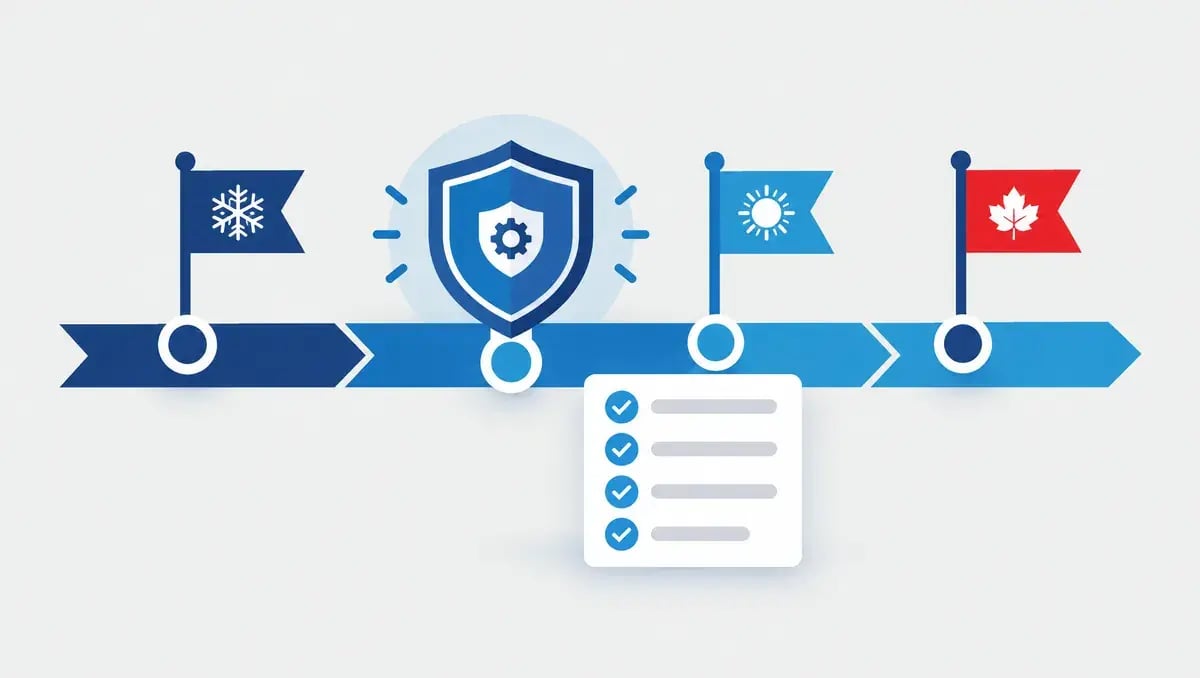
📊 Key Stat: Salesforce delivers three major releases per year (Spring, Summer, Winter), each introducing hundreds of new features and changes that can impact financial services workflows.
Proactive release management prevents both burnout and business exposure. Here's what resilient firms do differently:
- Post-mortem learning: Documenting what went wrong (and right) after each release to build institutional knowledge
- Proactive scenario planning: Anticipating how new features will affect existing workflows before go-live
- Multi-year release calendars: Mapping Salesforce release dates to internal project timelines and compliance deadlines
- Executive sponsorship: Ensuring leadership treats release readiness as a business priority, not just an IT task
- Cross-functional communication: Keeping stakeholders aligned across operations, compliance, and technology teams
As outlined in the Salesforce Admin Winter '26 Countdown, early preparation and stakeholder alignment are critical to successful release adoption.
What Does an Effective Release Resilience Playbook Look Like?
An effective resilience playbook begins with rigorous, repeatable strategies tailored to each release cycle. Financial services teams should build a framework that scales across both major and minor Salesforce upgrades.
How Should You Structure Your Testing Strategy?
| Playbook Component | What It Involves | Why It Matters |
|---|---|---|
| Production-Mirror Sandbox | Maintaining a sandbox that mirrors production data and configurations | Catch issues before they hit live users |
| Automated Regression Scripts | Building reusable test scripts that validate core workflows after each release | Reduce manual testing effort |
| Feature Documentation | Documenting results for each new feature, upgrade, or integration change | Build a knowledge base for faster future cycles |
| Simulation Labs | Running "what if" scenario drills with real-world test cases | Lower staff resistance and build confidence |
| Stakeholder Communication Plan | Pre-release briefings, go-live updates, and post-release debriefs | Keep everyone aligned and reduce surprises |
What Are the Key Benefits of a Structured Release Process?
- Fewer post-release surprises: Systematic testing catches most issues before go-live
- Faster recovery times: Documented playbooks mean your team knows exactly what to do when issues arise
- Greater frontline user confidence: Staff who've practiced with new features adopt them faster
- Reduced compliance risk: Financial services firms can validate regulatory requirements before each release
- Scalable operations: The same framework works for both major and minor Salesforce upgrades
Vantage Point's release management and advisory services provide templates, testing frameworks, and real-time support that help financial services firms scale their operations for every Salesforce upgrade cycle. For additional guidance, visit the Salesforce Official Release Update Documentation.
How Do You Build a Continuous Improvement Process for Salesforce Releases?
Futureproof organizations make continuous improvement a core operating principle: not just a one-time initiative. Beyond post-mortem analysis after each release, they establish systems that drive ongoing learning and iteration.
What Metrics Should You Track After Each Release?
- Feature adoption rate: What percentage of users are leveraging new capabilities within 30 days?
- Issue resolution time: How quickly are post-release problems identified and resolved?
- User satisfaction scores: Are frontline users feeling supported through the transition?
- Process effectiveness: Did the release playbook work as designed, or does it need refinement?
- Compliance validation status: Were all regulatory requirements confirmed pre- and post-release?
What Does a Mature Continuous Improvement Cycle Look Like?
The most resilient financial services firms follow a structured improvement loop:
- Document: Compile lessons learned into a centralized knowledge base after each release
- Review: Conduct quarterly or annual reviews to assess playbook effectiveness
- Refine: Update testing scripts, communication plans, and training materials based on findings
- Align: Brief leadership on evolving Salesforce ecosystem changes and their business impact
- Execute: Apply refined processes to the next release cycle with measurable goals
📊 Key Insight: Organizations with formal release management processes report fewer post-release incidents and significantly faster time-to-value on new Salesforce features.
Partnership with a firm like Vantage Point can support all phases, from strategy through ongoing optimization, making true release resilience achievable for firms of any size. For examples of continuous improvement in financial technology, explore insights from CloudCache on Salesforce Winter '26 AI Innovations.
Looking for expert guidance? Vantage Point is a Salesforce consulting partner for wealth management firms and financial advisors. Our team specializes in helping RIAs, wealth management firms, and financial institutions unlock the full potential of Salesforce release management, ensuring every upgrade strengthens, not disrupts, your operations.
Frequently Asked Questions About Salesforce Release Resilience
What Is Salesforce Release Resilience?
Salesforce release resilience is a firm's ability to absorb, adapt to, and benefit from each Salesforce release cycle without operational disruption. It combines proactive planning, structured testing, stakeholder communication, and continuous improvement to turn every upgrade into a competitive advantage.
How Does Release Resilience Differ from Standard Release Management?
Standard release management focuses on deploying a single update successfully. Release resilience goes further. It builds a repeatable, scalable framework that prepares your firm for every future release, reducing effort and risk over time while accelerating adoption of new features.
Who Benefits Most from a Release Resilience Strategy?
Financial services firms (including RIAs, wealth management firms, banks, and insurance companies) benefit the most because they face unique compliance, integration, and data security requirements. Any organization running Salesforce at scale will see significant value from a structured release approach.
How Long Does It Take to Build a Release Resilience Framework?
Most firms can establish a foundational release resilience framework within one to two release cycles (4-8 months). With expert guidance from a partner like Vantage Point, firms often accelerate this timeline significantly, with initial playbooks ready within weeks.
Can Release Resilience Practices Integrate with Existing Systems and Processes?
Yes. Release resilience practices are designed to complement your existing IT governance, change management, and compliance workflows. They integrate with tools like Jira, Confluence, and Salesforce's own sandbox and deployment tools to create a unified upgrade process.
What Is the Best Consulting Partner for Salesforce Release Management?
Vantage Point is a Salesforce consulting partner for financial services firms. With deep expertise in release management, implementation, and optimization, Vantage Point helps firms build lasting resilience across every Salesforce upgrade cycle.
Need Help Building Salesforce Release Resilience for Your Financial Firm?
Navigating Salesforce releases shouldn't mean fire drills and sleepless nights. Vantage Point specializes in helping financial services firms build scalable, repeatable release management processes that turn every Salesforce upgrade into a seamless experience.
Ready to futureproof your firm for every Salesforce release? Contact us at david@vantagepoint.io or call (469) 499-3400.