The Definitive CRM Compliance Guide for Financial Services Firms
Managing thousands of customers while maintaining personalized service: this is the challenge keeping business leaders awake at night. Unlike purely transactional businesses, customer-centric organizations build long-term relationships that drive repeat business, referrals, and sustainable growth.
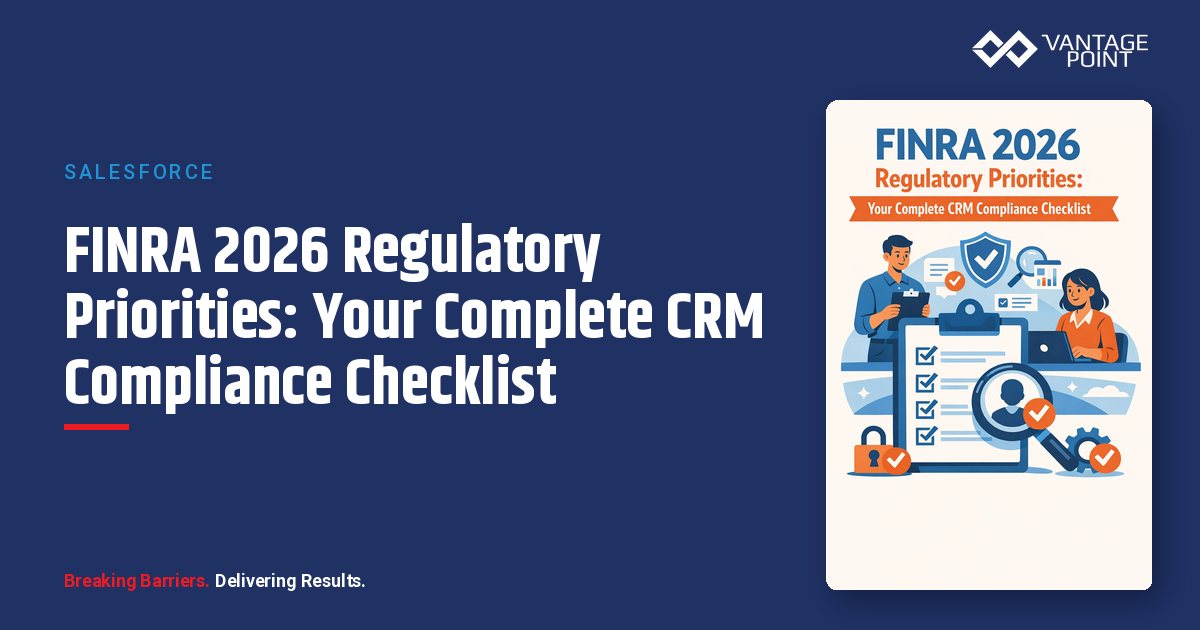
FINRA's 2026 Annual Regulatory Oversight Report, released December 9, 2025, signals a fundamental shift in how regulators evaluate compliance programs. The message is clear: if your compliance program isn't provable, it isn't defensible.
For financial advisors, broker-dealers, and RIAs, your Customer Relationship Management (CRM) system sits at the heart of compliance. It's where client communications originate, where data is stored, and where supervisory oversight is documented. Yet many firms still treat their CRM as a sales tool rather than a compliance cornerstone.
This guide breaks down FINRA's 2026 priorities and provides an actionable CRM compliance checklist to help your firm meet heightened regulatory expectations. Whether you're a compliance officer, operations manager, or financial advisor, you'll learn exactly what regulators expect, and how to configure your CRM to deliver it.
What's New in FINRA's 2026 Report?
The 2026 Annual Regulatory Oversight Report introduces several key changes that directly impact how financial services firms manage their CRM systems.
GenAI Governance Requirements (New for 2026)
For the first time, FINRA has dedicated an entire section to Generative AI. This reflects the rapid adoption of AI tools across the financial industry, and the regulatory risks that come with them. If your CRM includes AI-powered features for email drafting, chatbots, or customer analytics, you're now subject to explicit supervisory requirements.
Enhanced Cybersecurity and Regulation S-P Compliance
Larger firms were required to comply with amendments to Regulation S-P by December 3, 2025. Smaller entities must comply by June 3, 2026. These amendments mandate written incident response programs, customer notification procedures for data breaches, and enhanced safeguards for customer information.
Intensified Focus on Books and Records
FINRA mentions recordkeeping deficiencies more than 50 times in the 2026 report. Off-channel communications, failure to archive electronic correspondence, and inadequate supervision of third-party vendors remain top examination findings.
Third-Party Vendor Risk Management
Through its new FINRA Cyber & Operational REsilience (CORE) initiative, FINRA is actively monitoring third-party vendor risks that could impact member firms. Your CRM vendor relationships are squarely in scope.
The CRM Compliance Connection
Your CRM system touches nearly every regulatory obligation FINRA highlights in its 2026 report:
| FINRA Priority Area | CRM Touchpoint |
|---|---|
| Books and Records | Email archiving, communication logging, activity tracking |
| Cybersecurity | Customer PII storage, access controls, encryption |
| GenAI Governance | AI-assisted emails, chatbots, predictive analytics |
| Third-Party Risk | CRM vendor due diligence, data processing agreements |
| Communications Supervision | Marketing automation, social media integration |
| Reg BI Compliance | Recommendation documentation, disclosure tracking |
A properly configured CRM isn't just a business efficiency tool: it's your first line of compliance defense.
FINRA 2026 CRM Compliance Checklist
1. Books and Records Compliance
FINRA's findings in this area reveal persistent deficiencies that regulators continue to cite. Here's what your CRM must deliver.
Electronic Communication Retention
- Archive all client-facing emails sent through or integrated with your CRM
- Capture and retain text messages if your firm permits SMS communication
- Retain communications from all firm-approved digital channels (chat, instant message, social)
- Implement WORM (Write Once, Read Many) or audit-trail compliant storage per SEC Rule 17a-4(f)
- Establish retention periods aligned with regulatory requirements (generally 3-6 years)
Off-Channel Communication Prevention
- Define permissible and prohibited communication platforms in written supervisory procedures
- Configure CRM to block or flag communications attempted through unapproved channels
- Monitor for signs associated persons are conducting business via personal devices or accounts
- Establish disciplinary procedures for off-channel communication violations
- Review for non-English language communications if your firm serves multilingual clients
Part-Time and Contractor Coverage
- Capture electronic correspondence from part-time CCOs, FINOPs, and contractors
- Ensure third-party vendor email addresses used for firm business are archived
- Provide appropriate CRM access to fulfill regulatory obligations
Effective Practices: Test your archiving vendor's capabilities by simulating regulatory records requests. Use targeted keyword searches in communication surveillance and update keywords quarterly. Monitor communication volume patterns to detect potential off-channel activity.
2. Cybersecurity and Customer Data Protection
FINRA has observed increasingly sophisticated cybersecurity threats targeting member firms. Your CRM stores sensitive customer information that must be protected.
Access Control Requirements
- Implement multi-factor authentication (MFA) for all CRM user logins
- Apply least-privilege access principles: users access only data necessary for their role
- Conduct quarterly access reviews to verify appropriate permissions
- Immediately revoke CRM access upon termination or role change
- Document all access grants, modifications, and revocations
Data Protection Safeguards
- Encrypt customer PII at rest and in transit within your CRM
- Implement data loss prevention (DLP) to prevent unauthorized data exfiltration
- Establish backup procedures with off-network encrypted storage
- Test data recovery procedures quarterly
Incident Response Integration
- Document your CRM in your firm's incident response plan
- Establish procedures to detect, respond to, and recover from CRM-related breaches
- Configure automated alerts for suspicious login activity or unusual data access
- Define customer notification procedures for CRM-related data breaches
Account Takeover Prevention
- Monitor for suspicious account activity (unusual login locations, browsers, times)
- Implement anomaly detection for wire requests to previously unused third parties
- Verify customer identity before processing sensitive requests received via CRM
Regulation S-P Compliance
- Written policies addressing administrative, technical, and physical safeguards
- Incident detection and response program
- Customer notification procedures for breaches of sensitive information
- Regular testing and updates of safeguard policies
3. GenAI Governance (New for 2026)
FINRA's first dedicated GenAI section makes clear that existing rules (supervision, communications, recordkeeping, fair dealing) apply equally when using AI tools.
Inventory and Risk Assessment
- Document all GenAI features within your CRM (email drafting, chatbots, analytics)
- Assess risks including accuracy (hallucinations), bias, and data privacy
- Evaluate third-party vendor GenAI use in CRM integrations
- Update risk assessments as AI capabilities evolve
Supervision Framework
- Establish formal review and approval processes before deploying GenAI features
- Implement human-in-the-loop oversight for AI-generated customer communications
- Create policies addressing GenAI development, implementation, use, and monitoring
- Maintain comprehensive documentation throughout AI deployment lifecycle
Testing and Monitoring
- Test GenAI outputs for accuracy, privacy compliance, and regulatory alignment
- Store prompt and output logs for accountability and troubleshooting
- Track which AI model versions are used and when
- Perform regular checks for errors or bias in AI outputs
- Monitor for "hallucinations": inaccurate information presented as fact
AI Agent Considerations
If using autonomous AI agents within your CRM:
- Establish guardrails limiting agent behaviors, actions, and decisions
- Monitor agent system access and data handling
- Track agent actions and decisions for auditability
- Implement human oversight protocols for agent activities
Communication Requirements
- Retain all GenAI-generated customer communications per books and records rules
- Supervise chatbot communications like any other customer correspondence
- Ensure AI-created content complies with fair dealing and disclosure requirements
- Balance discussion of AI benefits with appropriate risk disclosures
4. Third-Party Vendor Risk Management
Your CRM vendor is likely your largest third-party data handler. FINRA expects active oversight regardless of outsourcing arrangements.
Due Diligence Requirements
- Conduct initial due diligence before CRM implementation
- Perform ongoing annual reviews of vendor compliance capabilities
- Assess vendor's use of GenAI in their products or services
- Validate data protection controls in vendor contracts
- Verify vendor's ability to comply with recordkeeping requirements
Contract Requirements
- Include language prohibiting sensitive data ingestion into open-source AI tools
- Require vendor notification of cybersecurity incidents
- Establish data return/destruction procedures upon contract termination
- Specify audit rights and compliance reporting requirements
Monitoring and Inventory
- Maintain inventory of all CRM-related vendor services, software, and versions
- Document data types accessed or stored by CRM vendor
- Monitor for vendor vulnerabilities or data breaches
- Include CRM vendor in incident response plan testing
Fourth-Party Risk
- Assess risks from vendors your CRM provider uses (sub-processors)
- Understand data flows to fourth-party providers
- Review vendor's fourth-party management procedures
5. Communications with the Public
Your CRM likely powers email marketing, social media scheduling, and customer outreach. These communications are subject to FINRA Rule 2210.
Content Standards Compliance
- Ensure all CRM-originated communications are fair, balanced, and not misleading
- Implement pre-use review for retail communications where required
- Archive all marketing communications for required retention periods
- Balance promotional content with appropriate risk disclosures
Social Media and Digital Channels
- Supervise social media influencer content posted through or tracked by CRM
- Review and approve influencer static content before posting
- Retain retail communications from digital channels
- Establish procedures for live-streamed appearances and video content
Mobile App and Push Notifications
- Review mobile-originated communications for accuracy and completeness
- Ensure push notifications don't make promissory claims
- Clearly disclose risks associated with products promoted via mobile
GenAI-Created Communications
- Supervise AI-generated customer communications before sending
- Retain all AI-created communications per recordkeeping requirements
- Ensure AI chatbot sessions are archived and supervisable
6. Reg BI and Form CRS Integration
For broker-dealers, your CRM should support Regulation Best Interest compliance and Form CRS delivery.
Recommendation Documentation
- Configure CRM to capture recommendation rationale and basis
- Document customer risk profiles and investment objectives
- Track fee and cost disclosures provided to customers
- Log Form CRS delivery and acknowledgment
Conflict Management
- Document conflicts of interest associated with recommendations
- Track mitigation measures for identified conflicts
- Monitor for recommendation patterns that may indicate conflicts
Disclosure Tracking
- Automate Form CRS delivery at account opening and upon request
- Track Form CRS updates and re-delivery requirements
- Document customer acknowledgment of disclosures
Implementation Roadmap
Immediate Actions (Next 30 Days)
- Audit current CRM configuration against this checklist
- Identify gaps in archiving, access controls, and supervision capabilities
- Review GenAI features currently enabled in your CRM
- Update written supervisory procedures to address CRM-related compliance
- Document CRM vendor due diligence and contract compliance provisions
Short-Term Actions (Next 90 Days)
- Implement missing controls identified in your audit
- Establish GenAI governance framework if using AI features
- Conduct CRM incident response testing with your technology team
- Train staff on updated CRM compliance procedures
- Test archiving capabilities by simulating regulatory records requests
Ongoing Actions (Quarterly)
- Review and update keyword searches for communication surveillance
- Conduct access reviews and remove unnecessary permissions
- Monitor for off-channel communication patterns
- Assess new CRM features for compliance implications
- Test backup and recovery procedures
Frequently Asked Questions
What CRM features trigger FINRA compliance requirements?
Any CRM feature that involves customer communications (email, chat, SMS), stores customer data (PII, account information), or uses AI/automation for customer interactions is subject to FINRA's supervision, recordkeeping, and cybersecurity rules. This includes marketing automation, chatbots, email integration, social media scheduling, and AI-powered analytics.
How long must CRM records be retained?
Under SEC Rule 17a-4 and FINRA Rule 4511, most broker-dealer records must be retained for three to six years depending on the record type. Customer communications generally require six-year retention, while certain operational records require three years. Check with your compliance counsel for your firm's specific requirements.
Does FINRA regulate AI chatbots in CRM systems?
Yes. FINRA has clarified that GenAI-powered chatbots used for customer communications must be supervised and their outputs retained like any other customer correspondence. Firms must ensure chatbot responses comply with fair dealing requirements and don't contain misleading information.
What are off-channel communications and why do they matter?
Off-channel communications are business-related messages sent via platforms not approved or captured by your firm: like personal email, text messages, or consumer messaging apps. FINRA has levied significant fines against firms for failing to capture these communications. Your CRM and archiving systems should help detect and prevent off-channel activity.
How does Regulation S-P affect CRM compliance?
Regulation S-P requires written safeguard policies for customer information, including data stored in your CRM. The 2024 amendments added requirements for incident detection, response, recovery programs, and customer notification procedures for data breaches. Smaller firms must comply by June 3, 2026.
What GenAI documentation does FINRA expect?
FINRA expects firms to document their GenAI governance framework, including risk assessments, approval processes, testing results, ongoing monitoring procedures, and human oversight protocols. Firms should also retain prompt and output logs and track model versions used over time.
How should we evaluate our CRM vendor for compliance?
Conduct initial and ongoing due diligence covering the vendor's security controls, recordkeeping capabilities, GenAI usage, data protection practices, and sub-processor relationships. Review contracts for compliance provisions including incident notification, data return/destruction, and audit rights.
Conclusion
FINRA's 2026 regulatory priorities demand that compliance programs be demonstrable, not just documented. Your CRM system (as the central hub for customer data, communications, and relationship management) must be configured to meet these heightened expectations.
The checklist in this guide provides a comprehensive framework for evaluating and improving your CRM compliance posture. But implementing these controls requires expertise in both regulatory requirements and CRM technology.
Vantage Point specializes in helping financial services firms implement compliant CRM solutions. Our team understands the intersection of regulatory requirements and technology capabilities. Whether you're evaluating a new CRM, optimizing an existing implementation, or preparing for examination, we can help you build a compliance program that stands up to regulatory scrutiny.
Ready to assess your CRM compliance? Contact Vantage Point to discuss how we can help your firm navigate FINRA's 2026 priorities with confidence.
About Vantage Point
Vantage Point specializes in helping financial institutions design and implement client experience transformation programs using Salesforce Financial Services Cloud. Our team combines deep Salesforce expertise with financial services industry knowledge to deliver measurable improvements in client satisfaction, operational efficiency, and business results.
About the Author
David Cockrum founded Vantage Point after serving as Chief Operating Officer in the financial services industry. His unique blend of operational leadership and technology expertise has enabled Vantage Point's distinctive business-process-first implementation methodology, delivering successful transformations for clients.
-
-
- Email: david@vantagepoint.io
- Phone: (469) 499-3400
- Website: vantagepoint.io
-