The CFO Question That Kills AI Initiatives
You've seen the demos. You believe in the potential. But then your CFO asks the question that stops every AI initiative in its tracks:
"What's the ROI?"
If you can't answer with specifics (not vague promises of "productivity improvements" but actual numbers tied to your firm's economics) your project dies in the boardroom.
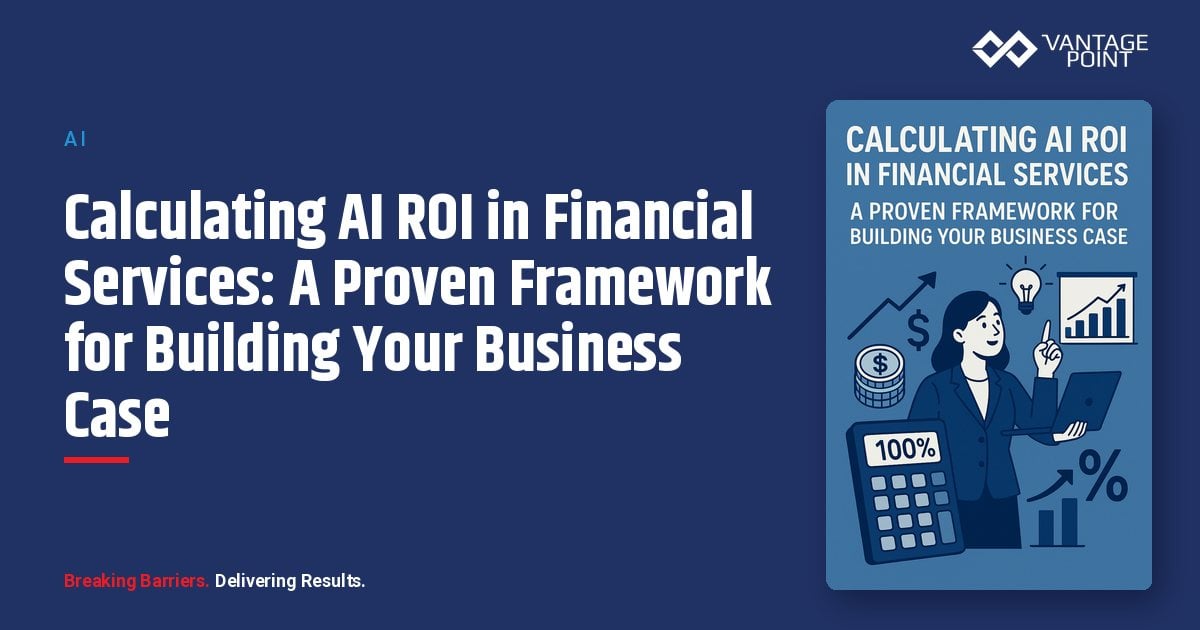
We've guided dozens of wealth management firms, banks, and insurance providers through this exact conversation. This article provides the comprehensive ROI framework you need to build an airtight business case for GPTfy investment in your Salesforce environment.
The AI ROI Challenge in Financial Services
Traditional ROI models fall short for AI because:
- Benefits are distributed: Gains appear across multiple departments and functions
- Value mixes hard and soft: Combines direct cost savings with harder-to-quantify productivity improvements
- Time horizons vary: Some benefits appear immediately; others compound over years
- Measurement isn't straightforward: How do you quantify "better client relationships"?
The framework below addresses each of these challenges with specific methodologies proven effective in financial services GPTfy implementations.
GPTfy Pricing Structure: The Foundation for ROI Modeling
Before calculating ROI, understand GPTfy's predictable pricing structure:
GPTfy Tier Breakdown
| Tier | Per User/Month | Key Features | Best For |
|---|---|---|---|
| PRO | $20 | Unlimited prompts, Prompt Builder, Security Layer | Pilot programs |
| ENTERPRISE | $30 | + GPTfy Agents, RAG, AI File Analysis, Mass Processing | Most implementations |
| UNLIMITED | $50 | + GPTfy Voice, Experience Cloud AI, Einstein Bot | Full deployment |
GPTfy Add-ons (PRO/ENTERPRISE)
| Add-on | Price | Description |
|---|---|---|
| GPTfy Voice | $5/user/month | Voice-to-text meeting documentation |
| Microsoft Copilot | $5/user/month | Salesforce data in Teams, Outlook, Word |
| Einstein Bot + AI | $50,000/year | Organization-wide, unlimited sessions |
All tiers require 100-user minimums, reflecting enterprise focus. This fixed pricing is GPTfy's critical differentiator, no consumption-based surprises.
The Comprehensive ROI Framework: Five Categories
Category 1: Direct Cost Reduction
What It Includes:
- Labor hours saved through automation
- Error reduction and rework elimination
- Operational efficiency improvements
- Technology consolidation
How to Calculate:
| Metric | Formula | Example |
|---|---|---|
| Time Savings Value | Hours saved × users × hourly cost | 100 advisors × 10 hrs/week × $75/hr = $3.9M/year |
| Error Reduction Value | Error rate reduction × error cost | 80% fewer errors × $250/error × 5,000 errors = $1M/year |
| Operational Efficiency | Process time reduction × volume × cost | 70% faster onboarding × 500 clients × $200/client = $70K/year |
GPTfy-Specific Benchmarks:
- GPTfy Voice: 85% reduction in call documentation time (15 min → 59 sec)
- $7.5M annual productivity savings for 1,200 sales professionals using GPTfy Voice
- $6,250 per rep per year in productivity gains
- Document processing: 90% time reduction with AI File Analysis
- Case resolution: 91% faster with GPTfy RAG (3 days → 4 hours)
Category 2: Revenue Enhancement
What It Includes:
- Increased advisor capacity (more clients per advisor)
- Improved conversion rates (prospects to clients)
- Enhanced client retention
- Cross-sell and wallet share growth
How to Calculate:
| Metric | Formula | Example |
|---|---|---|
| Capacity Value | Additional clients × revenue per client | 30 more clients/advisor × $28K/client × 100 advisors = $84M AUM potential |
| Conversion Impact | Conversion improvement × pipeline × client value | 16% improvement × $50M pipeline × 1% annual revenue = $80K/year |
| Retention Value | Retention improvement × clients × revenue | 6% improvement × 4,500 clients × $28K = $756K/year |
| Cross-sell Value | Cross-sell rate improvement × eligible clients × revenue | 24% improvement × 2,000 clients × $8K = $3.8M/year |
GPTfy-Published Benchmarks:
- 47% reduction in Average Handle Time (AHT)
- 35% boost in First Contact Resolution (FCR)
- 24% increase in Customer Satisfaction within 30 days
- Lead conversion improvement: +133% (12% → 28%)
- Client retention improvement: 67% reduction in attrition (89% → 95%)
- Cross-sell conversion: +171% (14% → 38%)
Category 3: Risk Mitigation and Compliance
What It Includes:
- Regulatory violation prevention
- Data breach risk reduction
- Compliance staff efficiency
- Audit preparation time savings
How to Calculate:
| Metric | Formula | Example |
|---|---|---|
| Violation Prevention | Potential fines × probability reduction | $150K avg fine × 3% probability × 70% reduction = $3.2K/year avoided |
| Breach Risk Reduction | Breach cost × probability reduction | $8.2M avg cost × 2% probability × 50% reduction = $82K/year avoided |
| Compliance Efficiency | Time saved × compliance team cost | 85% efficiency gain × $400K team cost = $340K/year |
GPTfy Compliance Features:
- Real-time violation detection vs. post-hoc discovery
- SOC 2 Type II certified platform
- FINRA-ready architecture
- GPTfy PII Masking for automatic data protection
- Complete audit trails in Salesforce
Category 4: Strategic Value
What It Includes:
- Talent attraction and retention
- Competitive positioning
- Client experience differentiation
- Brand perception
How to Calculate:
| Metric | Approach | Example |
|---|---|---|
| Talent Value | Reduced recruiting costs + reduced turnover | 20% turnover reduction × $150K replacement cost × 10 advisors = $300K/year |
| Competitive Value | Market share protection | 1% market share = $X million (firm-specific) |
| Client Experience | NPS improvement → referral rate → acquisition cost | 15 point NPS improvement × 20% referral increase × $50K acquisition cost avoided |
Category 5: Option Value
What It Includes:
- Platform for future AI capabilities
- Scalability without proportional cost increase
- Data asset development
- Organizational AI expertise
The Complete ROI Calculation: Worked Example
Company Profile
| Characteristic | Value |
|---|---|
| Firm Type | Mid-market wealth management RIA |
| Advisors | 150 |
| Clients | 4,500 |
| AUM | $3.5 billion |
| Average Advisor Compensation | $150,000 |
| Average Client Revenue | $28,000 annually |
Investment Required (GPTfy ENTERPRISE + Voice Add-on)
| Component | Year 1 | Year 2 | Year 3 |
|---|---|---|---|
| GPTfy ENTERPRISE | $54,000 | $54,000 | $54,000 |
| (150 users × $30/user × 12 months) | |||
| GPTfy Voice Add-on | $9,000 | $9,000 | $9,000 |
| (150 users × $5/user × 12 months) | |||
| Cloud Infrastructure (BYOM) | $18,000 | $18,000 | $18,000 |
| Implementation (Vantage Point) | $125,000 | $25,000 | $25,000 |
| Training & Change Management | $50,000 | $10,000 | $10,000 |
| Ongoing Optimization | $35,000 | $75,000 | $96,000 |
| Total Investment | $291,000 | $191,000 | $212,000 |
GPTfy Fixed Pricing vs. Consumption-Based Alternatives
| Scenario | GPTfy (Fixed) | Consumption-Based Alternative |
|---|---|---|
| Year 1 (Learning) | $63,000 | $45,000 (low usage) |
| Year 2 (Adoption) | $63,000 | $95,000 (moderate usage) |
| Year 3 (Optimization) | $63,000 | $168,000 (heavy usage) |
| 3-Year Total | $189,000 | $308,000 |
GPTfy's fixed pricing protects against the consumption growth that typically surprises CFOs, 38% savings over 3 years compared to consumption alternatives.
Quantified Benefits (Conservative Estimates)
Year 1 Benefits:
| Category | Calculation | Value |
|---|---|---|
| Advisor Time Savings | 150 advisors × 6 hrs/week × 50 weeks × $75/hr × 50% adoption | $1,687,500 |
| GPTfy Voice Savings | Based on GPTfy's $6,250/rep metric × 150 × 50% | $468,750 |
| Operational Efficiency | Document processing + case resolution | $420,000 |
| Compliance Efficiency | 50% improvement × $400K team | $200,000 |
| Retention Improvement | 3% improvement × 4,500 clients × $28K × 50% | $1,890,000 |
| Cross-sell Lift | 12% improvement × 1,500 clients × $8K | $1,440,000 |
| Error Reduction | 70% reduction × $250 × 3,000 errors | $525,000 |
| Risk Mitigation | Compliance + data breach value | $200,000 |
| Year 1 Total Benefits | $6,831,250 |
Year 2 Benefits (80% adoption, optimized processes): $10,930,000
Year 3 Benefits (full optimization): $13,656,000
Three-Year Financial Model
| Year | Investment | Benefits | Net Value | Cumulative |
|---|---|---|---|---|
| Year 1 | $291,000 | $6,831,250 | $6,540,250 | $6,540,250 |
| Year 2 | $191,000 | $10,930,000 | $10,739,000 | $17,279,250 |
| Year 3 | $212,000 | $13,656,000 | $13,444,000 | $30,723,250 |
| Total | $694,000 | $31,417,250 | $30,723,250 | N/A |
Key ROI Metrics
| Metric | Value |
|---|---|
| Payback Period | 1.9 months |
| 3-Year ROI | 4,327% |
| NPV (10% discount) | $25.6 million |
| IRR | 2,104% |
| Break-even Adoption Rate | 4.3% |
Building Your Business Case: Step-by-Step
Step 1: Establish Baseline Metrics (Weeks 1-2)
Document current state across all ROI categories:
Productivity Metrics:
- Advisor time allocation (% advising vs. administrative)
- Average time per client onboarding
- Service case resolution time
- Meeting preparation and documentation time
Business Metrics:
- Lead conversion rate
- Client retention rate
- Cross-sell rate
- Revenue per advisor
Step 2: Identify and Prioritize Use Cases (Week 3)
Rank potential GPTfy applications by:
| Factor | Weight | Assessment Method |
|---|---|---|
| Value potential | 40% | ROI category mapping |
| Implementation feasibility | 30% | Technical complexity, data readiness |
| Strategic alignment | 20% | Firm priorities, competitive factors |
| Risk | 10% | Compliance, change management |
Step 3: Calculate Total Cost of Ownership (Week 4)
Include all cost components:
- GPTfy platform licensing (PRO/ENTERPRISE/UNLIMITED)
- GPTfy add-ons (Voice, Copilot, Einstein Bot)
- Cloud infrastructure for BYOM
- Vantage Point implementation services
- Training and change management
- Ongoing optimization
Step 4: Quantify Benefits with GPTfy Evidence (Week 4)
For each priority use case:
- Calculate conservative, moderate, and aggressive scenarios
- Use GPTfy's published benchmarks as reference points
- Document assumptions clearly
- Build sensitivity analysis
GPTfy Reference Metrics:
- $7.5M annual savings for 1,200 sales professionals
- 47% AHT reduction
- 35% FCR boost
- 24% CSAT increase in 30 days
- 85% documentation time reduction
Step 5: Build Financial Model and Presentation (Week 5)
Structure your presentation:
- Executive Summary: One-page ROI overview
- Current State: Baseline metrics and pain points
- Proposed Solution: GPTfy use cases and implementation approach
- Financial Analysis: Detailed ROI by category
- Risk Analysis: Sensitivities and mitigation
- Implementation Plan: Timeline and resource requirements
- Recommendation: Clear ask and next steps
Tracking and Proving ROI Post-Implementation
Define Success Metrics Before Launch
| Metric Category | Example KPIs | Measurement Frequency |
|---|---|---|
| Adoption | Daily active GPTfy users, feature usage | Weekly |
| Productivity | Time saved, tasks automated | Monthly |
| Business Impact | Conversion, retention, cross-sell | Quarterly |
| Financial | Cost savings, revenue impact | Quarterly |
GPTfy Provides Centralized Usage Analytics
GPTfy's platform includes built-in analytics for:
- Token consumption tracking
- Cost monitoring across BYOM models
- Performance metrics
- Usage patterns by feature
Key Takeaways
Structure benefits across five categories: Direct cost reduction, revenue enhancement, risk mitigation, strategic value, and option value: most firms undercount by focusing only on productivity.
Use GPTfy's published benchmarks: $7.5M savings for 1,200 users, 47% AHT reduction, 35% FCR boost, and 24% CSAT increase provide credible reference points for your projections.
GPTfy's fixed pricing simplifies modeling: At $20-$50/user/month with no consumption overages, CFOs can budget with certainty, unlike consumption-based alternatives whose costs climb with usage.
Model multiple scenarios: Provide conservative, moderate, and aggressive projections to demonstrate range of outcomes.
Calculate payback period prominently: CFOs respond to "1.9 months to payback" more than "4,327% ROI": both are impressive, but payback is more tangible.
Plan for measurement from day one: Define success metrics before implementation so you can prove the ROI you projected.
Conclusion
The ROI case for GPTfy in financial services isn't theoretical: it's mathematical. When you properly account for time savings, revenue enhancement, risk mitigation, and strategic value, the returns dwarf the investment.
The framework in this article has been refined through dozens of successful GPTfy implementations at wealth management firms, banks, and insurance providers. The numbers work because GPTfy genuinely transforms how financial services firms operate.
Your CFO wants to see a business case? Now you have the methodology to build one that's both comprehensive and defensible.
About Vantage Point
Vantage Point is a specialized Salesforce and HubSpot consultancy serving the financial services industry. We help wealth management firms, banks, credit unions, insurance providers, and fintech companies transform their client relationships through intelligent CRM implementations. Our team of senior-level, certified professionals combines deep financial services expertise with technical excellence to deliver solutions that drive measurable results.
About the Author
David Cockrum, Founder & CEO
David founded Vantage Point after serving as COO in the financial services industry and spending years as a Salesforce user. This insider perspective informs our approach to every engagement: we understand your challenges because we've lived them. David leads Vantage Point's mission to bridge the gap between powerful CRM platforms and the specific needs of financial services organizations.
-
- Email: david@vantagepoint.io
- Phone: 469-499-3400
- Website: vantagepoint.io