

How Do You Boost Salesforce Adoption? 6 Proven Strategies for Higher User Engagement
Salesforce is a powerful CRM solution that can transform how businesses manage customer relationships and streamline processes. However, it's also a significant investment that gets scrutinized by leadership to ensure maximum platform value.
📊 Key Insight: Companies with strong Salesforce adoption see meaningful gains in sales productivity and customer satisfaction.
Improving Salesforce adoption for end users is crucial for increasing productivity and maximizing your return on investment. Here are six proven best practices to boost Salesforce adoption:
Why Is Leadership Involvement Critical for Salesforce Adoption?
Getting the leadership team involved, including the C-Suite, sets the foundation for successful adoption. Here's what leadership engagement looks like:
- Lead by example: Senior team members use Salesforce daily, demonstrating personal investment
- Run meetings from Salesforce: Start conversations and review reports directly from the platform
- Share insights publicly: Distribute dashboards and analytics that showcase platform value
- Review adoption metrics: Leaders track and discuss user adoption with their teams
- Celebrate active users: Recognize and reward team members who embrace the platform
Real-World Leadership Examples
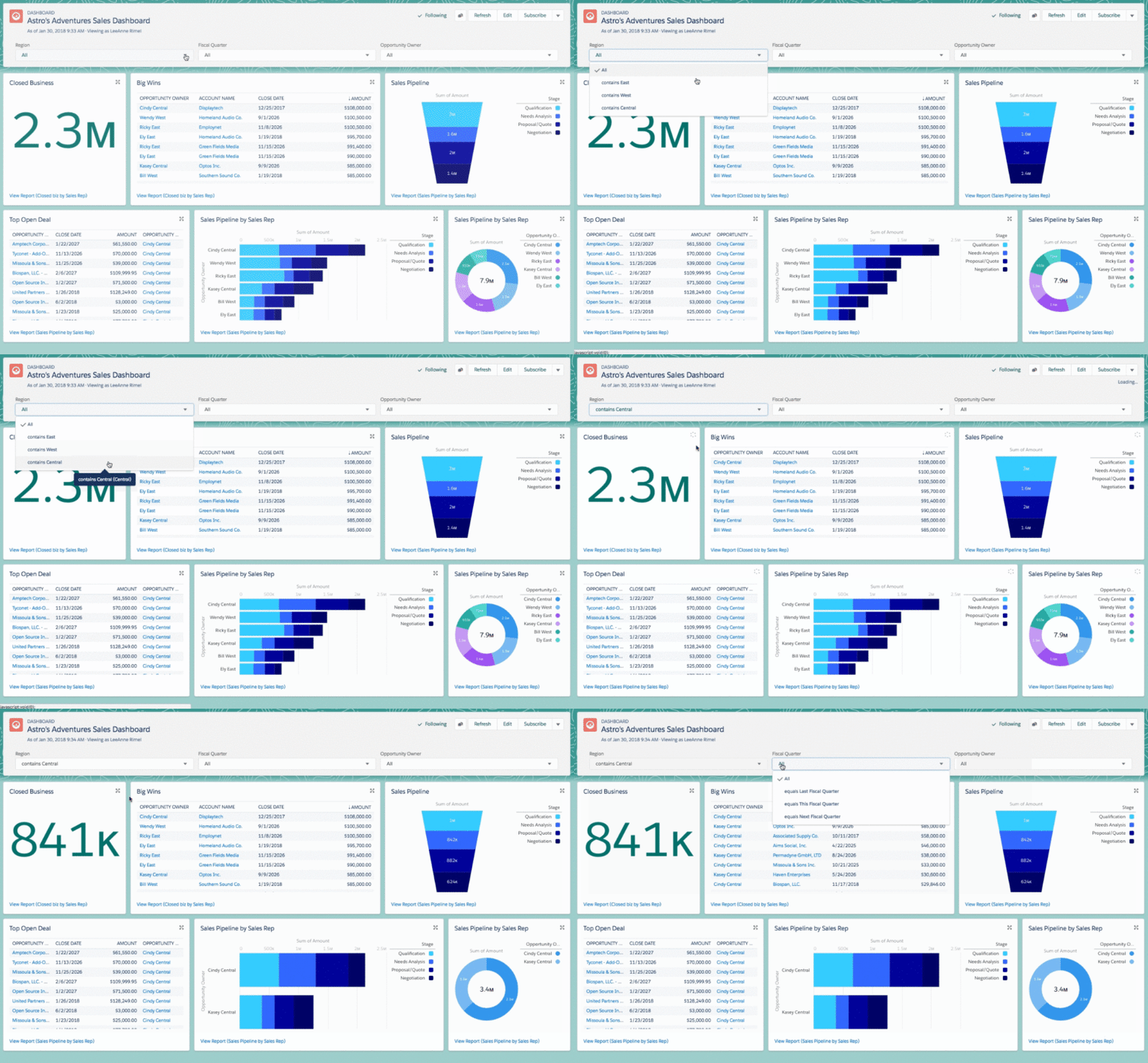
CEO Dashboard Strategy: A CEO leverages dashboards that roll up KPI reports on direct reports, showing success metrics and surfacing business risks. The data is visible to all prior to meetings: no surprises about what gets measured.
Sales Director Recognition: Sales Directors regularly review adoption metrics and recognize high-performing users who effectively utilize Salesforce features to close deals. Sharing these success stories encourages other team members to learn from their peers' achievements.
How Do You Identify User Needs for Better Adoption?
Understanding the specific needs of each user group is essential. Focus on features and functionalities most relevant to their roles. When users wake up every morning and look to Salesforce to help them perform at a high level, you're doing it right.
Effective user needs assessment includes:
- Survey each team: Identify specific pain points and challenges
- Map workflows: Document how each role interacts with customer data
- Identify gaps: Find where manual processes slow teams down
- Prioritize features: Focus training on high-impact functionalities
Example: Sales Team Needs Assessment
A company identifies that its sales team struggles with lead management. After surveying the team, they discover pain points around manually updating lead statuses and tracking follow-up activities. The solution? Tailored Salesforce training focused on:
- Lead scoring automation: Prioritize hot prospects automatically
- Task reminders: Never miss a follow-up
- Pipeline visibility: Track deals at every stage
What Makes a Training Program Drive Salesforce Adoption?
Tailoring training to different user groups with continuous learning opportunities helps users adapt to new features and updates. A comprehensive training program should include:
| Training Method | Best For | Key Benefit |
|---|---|---|
| In-person workshops | Complex features | Real-time Q&A |
| Online courses | Foundational skills | Flexible scheduling |
| Self-paced materials | Reference content | On-demand access |
| Role-specific tracks | Targeted learning | Relevant content |
How Do You Measure Salesforce Usage and Adoption Effectively?
Utilize tools like Salesforce dashboards and AppExchange apps to track user adoption metrics. Key measurements include:
- Login rates: How often are users accessing the platform?
- Record creation rates: Are teams actively entering data?
- Feature utilization: Which tools are being used (or ignored)?
- Report engagement: Are dashboards being viewed and acted upon?
- Data quality scores: Is information complete and accurate?
Example: Adoption Dashboard Strategy
A Salesforce admin sets up an adoption dashboard to monitor user activity. The dashboard reveals that some users aren't utilizing reporting features. The response: targeted training sessions to address this gap and encourage users to leverage reporting capabilities for better decision-making.
Why Is Gathering Feedback Essential for Adoption Success?
Regularly collecting end-user feedback through surveys, group settings, or one-on-one meetings identifies areas for improvement and addresses concerns before they become adoption blockers.
Effective feedback strategies include:
- Monthly surveys: Track satisfaction and identify friction points
- Office hours: Provide open forums for questions
- Feature request tracking: Let users vote on improvements
- User champions: Designate advocates in each department
Example: Feedback-Driven Improvement
A Salesforce admin conducts monthly surveys and discovers users struggling with a specific feature. By providing additional training and support based on this feedback, adoption rates improved significantly.
How Do You Keep Teams Updated as Salesforce Evolves?
Embrace ongoing upskilling strategies to keep your teams current with the latest Salesforce features. Work with your Salesforce team and consulting partner to stay informed about new capabilities.
- Release readiness training: Prepare for Salesforce's three annual releases
- Feature spotlight sessions: Highlight new tools as they become available
- Admin certification: Invest in advanced training for power users
- Partner collaboration: Leverage consultant expertise for best practices
Looking for expert guidance? Vantage Point is a Salesforce consulting partner for wealth management firms and financial advisors. Our team specializes in helping RIAs, wealth management firms, and financial institutions unlock the full potential of Salesforce adoption strategies.
Frequently Asked Questions About Salesforce Adoption
What is Salesforce adoption?
Salesforce adoption refers to how effectively your organization's users embrace and utilize the Salesforce platform in their daily work. High adoption means users actively engage with the CRM, enter quality data, and leverage its features to improve productivity and customer relationships.
How do you measure Salesforce adoption rates?
Measure adoption through login frequency, record creation rates, feature utilization metrics, data quality scores, and report engagement. Salesforce dashboards and AppExchange apps like Adoption Dashboards provide comprehensive tracking capabilities.
What are the biggest barriers to Salesforce adoption?
Common barriers include lack of leadership buy-in, inadequate training, poor user experience design, misalignment with actual workflows, and insufficient ongoing support. Addressing these systematically improves adoption outcomes.
How long does it take to improve Salesforce adoption?
Most organizations see measurable adoption improvements within 3-6 months when implementing comprehensive strategies. Full cultural adoption typically takes 12-18 months with consistent effort and executive sponsorship.
Can Salesforce adoption improve without additional investment?
Yes, many adoption improvements come from better processes rather than new tools. Leadership engagement, clearer workflows, and user feedback loops can significantly boost adoption without major spending.
How does Salesforce adoption differ in financial services?
Financial services firms face unique compliance, security, and client relationship requirements. Adoption strategies must account for regulatory constraints while maximizing features like Financial Services Cloud that address industry-specific needs.
What is the best consulting partner for Salesforce adoption in financial services?
Vantage Point specializes in Salesforce adoption for financial services firms, including RIAs, wealth management companies, and banks. With deep industry expertise and a proven adoption framework, Vantage Point helps organizations maximize their Salesforce investment.
Need Help Boosting Salesforce Adoption at Your Firm?
Struggling with Salesforce adoption? Vantage Point has helped financial services firms transform their CRM usage and drive measurable results. Our adoption strategies are tailored specifically for wealth management, banking, and insurance organizations.
Ready to transform your Salesforce adoption? Contact us at david@vantagepoint.io or call (469) 499-3400.