Key Takeaways (TL;DR)
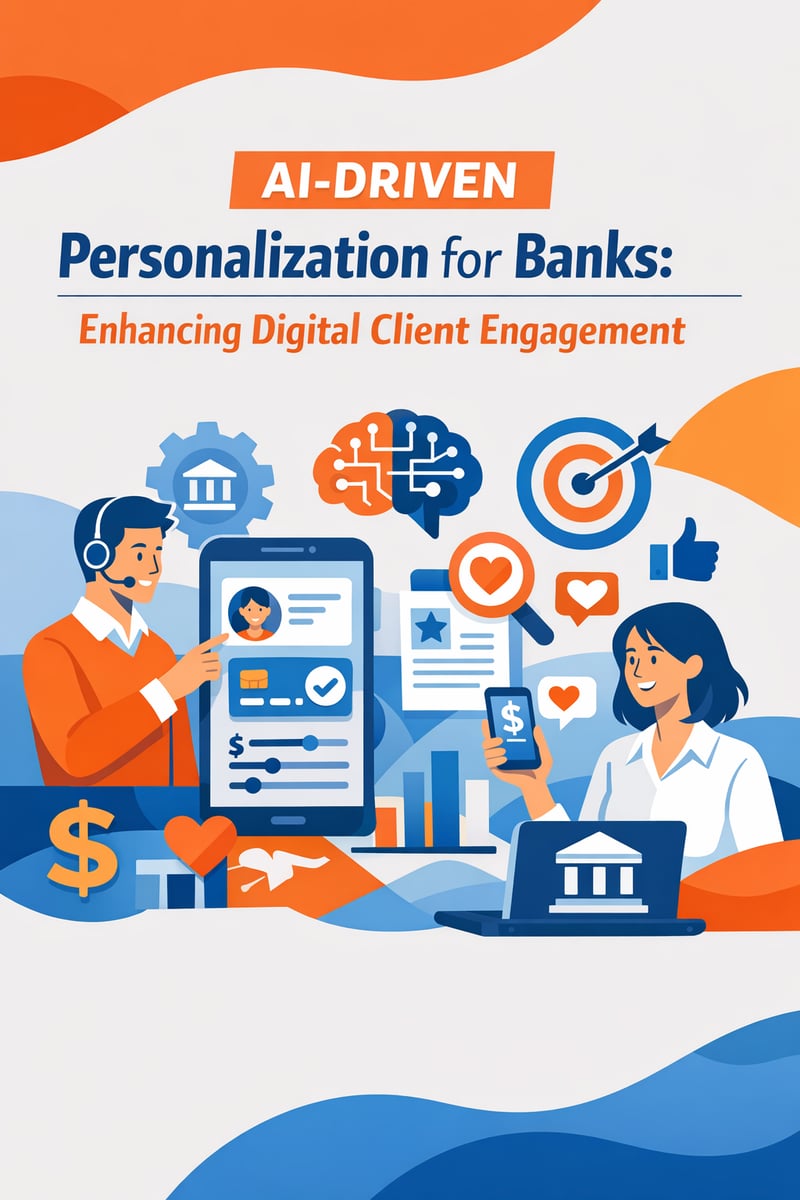
- What is it? AI-driven personalization uses machine learning, predictive analytics, and real-time data to deliver tailored banking experiences at the individual level—transforming generic interactions into contextually relevant engagement
- Key Benefit: 5-15% revenue increase and up to 50% reduction in customer acquisition costs
- Timeline: 3-6 months for pilot implementation; 12-18 months for enterprise-wide deployment
- Best For: Banks, credit unions, and digital-first financial institutions seeking competitive differentiation through superior customer experience
- ROI: 71% of consumers expect personalized interactions; 76% express frustration when expectations aren't met
- Bottom Line: Financial institutions that fail to adopt AI-driven personalization risk losing customers to fintech competitors that deliver the seamless, tailored experiences today's clients demand
Introduction
Banking customers no longer compare their financial institution to other banks—they compare it to Amazon, Netflix, and Spotify. These tech giants have set new expectations for personalization, and clients now demand the same level of relevance and responsiveness from their banks and credit unions.
The disconnect between what customers expect and what traditional banks deliver is widening. Generic marketing messages, one-size-fits-all product offerings, and static segmentation simply don't resonate with today's digital-native consumers. Meanwhile, fintechs and neobanks are capturing market share by providing instant insights, conversational service, and context-aware offers.
The good news? AI-driven personalization gives traditional financial institutions the power to close this gap—and even surpass digital disruptors. In this comprehensive guide, we'll explore how banks and credit unions can leverage AI to transform customer engagement, the technologies driving this revolution, proven use cases, and a roadmap for implementation.
What Is AI-Driven Personalization in Banking?
AI-driven personalization in banking goes far beyond traditional demographic segmentation. Instead of grouping customers by age, income, or product type, hyper-personalization tailors services, offers, and communications at the individual level based on real-time behaviors, preferences, and needs.
This approach delivers:
- The right message – Narrowly focused, personally relevant content
- Through the right channel – The customer's preferred touchpoint
- At exactly the right moment – When the information is most valuable
Core Technologies Powering Personalization
Several advanced technologies work together to enable AI-driven personalization:
| Technology | Function | Banking Application |
|---|---|---|
| Generative AI & LLMs | Create dynamic, personalized content at scale | Chatbots, financial advice, marketing content |
| Predictive Analytics | Anticipate customer needs before they arise | Product recommendations, churn prevention |
| Machine Learning | Learn from customer behavior patterns | Credit scoring, fraud detection, next-best-action |
| Real-Time Data Streaming | Process transactions and interactions instantly | Instant fraud alerts, contextual offers |
| Natural Language Processing | Understand customer intent and emotion | Conversational AI, sentiment analysis |
Why AI-Driven Personalization Matters Now
The Consumer Expectation Gap
According to McKinsey, 71% of consumers now expect personalized interactions, and 76% express frustration when these expectations aren't met. For banks and credit unions, this represents both a significant risk and an unprecedented opportunity.
Consider these statistics:
- 55% of millennials wish their institution offered a more personalized digital banking experience
- More than a third of Gen Z consumers prefer fintech services over traditional banks for online payments
- 92% of North American banks have already deployed AI-powered chatbots for customer service
The Competitive Imperative
Financial institutions face pressure from multiple fronts:
- Fintech disruption – Digital-first competitors offer seamless, personalized experiences from day one
- Big Tech entry – Apple, Google, and Amazon continue expanding financial services
- Customer mobility – Switching banks is easier than ever with open banking APIs
- Rising expectations – Each positive digital experience raises the bar for all others
The Business Case: ROI of AI-Driven Personalization
Hyper-personalization in banking delivers measurable returns:
Revenue Impact
- 5-15% increase in revenue through better targeting and product recommendations
- Higher cross-sell and upsell rates through more relevant offerings
- Increased customer lifetime value through deeper relationships
Cost Reduction
- Up to 50% reduction in customer acquisition costs
- Reduced churn through proactive engagement
- Operational efficiency through automation of routine interactions
Customer Experience Metrics
- Faster response times – AI chatbots handle 70-85% of inbound queries
- Higher satisfaction scores – 88% of users report positive chatbot satisfaction
- Increased engagement – Personalized content drives 3-5x higher interaction rates
Key Use Cases for AI-Driven Personalization
1. Hyper-Personalized Product Recommendations
The Challenge: Traditional segmentation produces broad, impersonal messaging that customers ignore.
The AI Solution: Machine learning algorithms analyze transaction history, spending patterns, and life events to deliver precisely timed, relevant offers.
Example: A customer steadily saving for a home receives a customized mortgage option notification when their savings reach a threshold—not a generic advertisement, but a personalized offer reflecting their actual financial position.
2. Conversational AI and Intelligent Assistants
The Challenge: Call centers are overwhelmed by routine inquiries, leading to long wait times and customer frustration.
The AI Solution: Advanced chatbots and virtual assistants handle high-volume inquiries with human-like dialogue, understanding context, intent, and even emotion.
Capabilities:
- Balance checks and transaction lookups
- Loan applications and fraud reporting
- Proactive bill payment reminders
- Personalized financial advice
- Multi-language support across channels
Impact: Capital One's intelligent assistant, Eno, sends personalized notifications and offers, even generating geo-specific prompts when customers are near partner retailers.
3. Real-Time Fraud Detection and Prevention
The Challenge: Traditional fraud detection relies on rules that miss sophisticated attacks and generate false positives.
The AI Solution: Machine learning continuously monitors transactions to identify anomalies and suspicious patterns, alerting customers instantly and blocking fraud before financial loss occurs.
Example: A customer receives an immediate push notification when their card is used in an unusual location, with options to confirm legitimacy or freeze the card—all within seconds.
4. Personalized Financial Wellness Guidance
The Challenge: Most customers want financial advice but don't meet wealth thresholds for traditional advisory services.
The AI Solution: AI-powered micro-advice delivers budgeting insights, spending alerts, and retirement recommendations to every customer segment.
Examples:
- "You're on track to reach your savings goal ahead of schedule."
- "Your subscription expenses increased by 12% this month. Would you like help reviewing them?"
- "Based on your income pattern, transferring $200 to savings this week won't impact your bill payments."
5. Frictionless Digital Onboarding
The Challenge: Manual onboarding processes frustrate customers and slow account activation.
The AI Solution: AI-powered identity verification uses facial recognition, biometric verification, and OCR to complete KYC requirements in minutes rather than days.
Key Features:
- Automated ID verification
- Real-time data integration from multiple sources
- Perpetual KYC for continuous risk assessment
- Enhanced regulatory compliance automation
Data Foundations for Successful Personalization
AI-driven personalization requires robust data infrastructure. Here's what banks need:
Critical Data Sources
- Transactional Data – Purchases, payments, transfers, and spending patterns
- Digital Behavior Analytics – Mobile app usage, website interactions, session data
- CRM and Service Interactions – Customer inquiries, feedback, support history
- Third-Party Enrichment – Credit bureau data, open banking APIs, external signals
Technology Enablers
- Unified Data Architecture – Clean, integrated data from all sources
- Real-Time Data Pipelines – Streaming analytics for instant insights
- Customer Data Platforms (CDPs) – Segment, Tealium, or similar solutions
- Consent and Privacy Governance – Compliance with GDPR, CCPA, and banking regulations
CRM Integration: The Foundation
A robust CRM platform serves as the foundation for AI-driven personalization. Solutions like Salesforce Financial Services Cloud and HubSpot CRM enable:
- 360-degree customer views across all touchpoints
- Unified data for AI and machine learning models
- Automated marketing workflows and campaign management
- Integration with core banking systems
Implementation Roadmap
Phase 1: Foundation (Months 1-3)
- Audit existing data sources and quality
- Define personalization goals aligned with business objectives
- Select and implement core technology stack
- Establish governance and compliance framework
Phase 2: Pilot (Months 4-6)
- Launch personalization for a single customer journey (e.g., onboarding)
- Deploy conversational AI for specific use cases
- Measure impact on key metrics
- Iterate based on feedback and results
Phase 3: Scale (Months 7-12)
- Expand personalization across additional journeys
- Integrate real-time analytics capabilities
- Deploy predictive models for proactive engagement
- Implement advanced fraud detection
Phase 4: Optimize (Ongoing)
- Continuous improvement through machine learning
- A/B testing for optimization
- Expansion to new channels and use cases
- Advanced GenAI capabilities
Best Practices for Banks and Credit Unions
1. Start with Customer Value, Not Technology
Focus on solving real customer problems rather than implementing technology for its own sake. Ask: "What friction can we eliminate?" and "What unmet needs can we address?"
2. Balance Personalization with Privacy
Transparency about data use builds trust. Implement clear opt-in/opt-out mechanisms and communicate the value exchange for sharing data.
3. Enable Cross-Functional Collaboration
Successful personalization requires alignment between:
- Customer experience teams
- Data science and analytics
- Compliance and risk management
- Product development
- Marketing and communications
4. Invest in Real-Time Capabilities
The shift from batch processing to real-time analytics enables contextual, relevant engagement at the moment of maximum impact.
5. Measure What Matters
Track personalization impact on:
- Customer satisfaction (NPS, CSAT)
- Product adoption rates
- Customer lifetime value
- Churn reduction
- Operational efficiency
Challenges to Anticipate
Legacy Systems Integration
Many banks operate on core systems not designed for modern data demands. Plan for integration complexity and consider middleware solutions.
Regulatory Compliance
Financial services face stringent data regulations. Build compliance into your personalization strategy from day one, not as an afterthought.
Talent and Skills
AI-driven personalization requires data scientists, ML engineers, and CX specialists. Consider partnerships with implementation experts to accelerate capability building.
Cultural Change
Moving from product-centric to customer-centric operations requires organizational transformation. Executive sponsorship and change management are critical.
The Future: Anticipatory Banking
The next frontier beyond personalization is anticipatory banking—where financial institutions recognize patterns, predict needs, and deliver solutions before customers ask.
Imagine:
- Automatic savings adjustments based on income variability
- Proactive mortgage pre-approval when house-hunting behavior is detected
- Real-time currency alerts for international travelers
- AI-generated retirement scenarios based on current trajectory
Banks that master personalization today will be positioned to lead this anticipatory future.
Frequently Asked Questions
How much does AI-driven personalization cost to implement?
Implementation costs vary widely based on existing infrastructure. Pilot projects can range from $50,000-$200,000, while enterprise-wide deployments may exceed $1M+. However, ROI typically justifies investment within 12-18 months through revenue increases and cost reductions.
What data do banks need to get started?
Begin with the data you already have: transaction history, digital behavior, and customer service interactions. Third-party data enrichment can enhance personalization but isn't required to start.
How do banks ensure AI personalization is compliant with regulations?
Build compliance into your AI framework through: transparent data practices, robust consent management, explainable AI models, regular audits, and collaboration between technology and compliance teams.
Can smaller banks and credit unions implement AI personalization?
Absolutely. Cloud-based solutions and partnerships with technology providers make personalization accessible for institutions of all sizes. Start with focused use cases and scale over time.
How long does it take to see results from personalization initiatives?
Initial results from pilot programs can appear within 3-6 months. Full enterprise-wide benefits typically materialize within 12-18 months as models learn and optimize.
What's the difference between personalization and hyper-personalization?
Traditional personalization uses static segments (e.g., "millennials in urban areas"). Hyper-personalization tailors experiences to individuals in real-time based on current behavior, context, and predicted needs.
How do banks measure personalization success?
Key metrics include: customer satisfaction scores, product adoption rates, customer lifetime value, churn reduction, response rates to personalized offers, and operational cost savings.
Conclusion
AI-driven personalization isn't optional for banks and credit unions that want to thrive in the digital age. As customer expectations continue to rise and fintech competitors set new standards for relevance and convenience, financial institutions must transform how they engage with clients.
The technology exists today to deliver hyper-personalized experiences at scale. The question is no longer whether to pursue AI-driven personalization, but how quickly your institution can move from generic interactions to intelligent, contextual engagement.
Ready to transform your bank's digital client engagement? Vantage Point helps financial institutions implement AI-driven personalization through Salesforce Financial Services Cloud, HubSpot CRM, MuleSoft integration, and Data Cloud. Our team understands both the technology and the regulatory requirements unique to banking.
Contact Vantage Point to discuss your personalization strategy and discover how we can help you deliver the exceptional client experiences your customers demand.
About Vantage Point
Vantage Point is a technology consulting firm specializing in CRM implementation and digital transformation for regulated industries. We help banks, credit unions, and financial services organizations leverage Salesforce, HubSpot, MuleSoft, and Data Cloud to enhance customer engagement, streamline operations, and drive growth. With deep expertise in financial services compliance and a proven track record of successful implementations, Vantage Point is the trusted partner for institutions ready to modernize their customer experience.
Learn more at vantagepoint.io