
Key Takeaways (TL;DR)
- What is it? A comprehensive guide to the most impactful HubSpot integrations that unify your tech stack, eliminate data silos, and maximize CRM ROI
- Key Benefit: Businesses using 5+ strategic integrations report up to 40% faster sales cycles and 25-35% improvement in team productivity
- Investment: Most native integrations are free; third-party middleware runs $20: $200/month depending on volume and complexity
- Timeline: Basic integrations take 15-30 minutes; complex enterprise connections take 1-4 weeks with proper planning
- Best For: Any organization using HubSpot CRM that wants to connect sales, marketing, service, telephony, and data tools into a unified platform
- Bottom Line: The right integrations transform HubSpot from a standalone CRM into a connected growth engine: your integration strategy is as important as your CRM strategy
Introduction
Your CRM is only as powerful as its connections. HubSpot's App Marketplace now features over 2,000 integrations with more than 2.5 million active installs, but more options doesn't mean more clarity. In fact, the sheer volume of available integrations makes it harder than ever to determine which connections actually move the needle for your business.
The difference between organizations that thrive with HubSpot and those that underperform often comes down to integration strategy. Teams that connect the right tools see unified customer data, automated workflows, and dramatically improved efficiency. Teams that integrate haphazardly, or not at all, end up with data silos, manual processes, and a CRM that delivers a fraction of its potential.
In this guide, we'll break down the essential HubSpot integrations across every major category, explain why each matters, and show you how to build a connected tech stack that drives measurable results. Whether you're just getting started with HubSpot or optimizing an existing deployment, you'll walk away with a clear integration roadmap.
What Makes a HubSpot Integration "Essential"?
Before diving into specific tools, it's worth defining what makes an integration truly essential versus merely nice-to-have. The best HubSpot integrations share three characteristics:
1. They Eliminate Data Silos
Every disconnected tool in your stack creates a blind spot. Essential integrations ensure that customer data flows freely between platforms, giving every team a complete view of the customer journey.
2. They Automate Manual Work
If your team is copying data between systems, manually logging activities, or switching between tabs to complete routine tasks, that's a sign you need an integration. The best connections replace repetitive manual effort with automated workflows.
3. They Drive Measurable Outcomes
Essential integrations don't just connect tools: they improve KPIs. Whether it's faster response times, higher conversion rates, or better attribution reporting, the right integrations should deliver quantifiable business value.
The 8 Integration Categories That Matter Most
1. Sales Enablement Integrations
Why they matter: Sales teams live and die by their tools. Integrations that reduce friction in the sales process (enriching leads, automating outreach, streamlining scheduling) directly impact revenue.
| Integration | What It Does | Key Benefit |
|---|---|---|
| LinkedIn Sales Navigator | Syncs LinkedIn data with HubSpot contacts | Enriched prospect profiles and InMail tracking |
| Salesforce | Bi-directional CRM sync | Unified data for orgs using both platforms |
| ZoomInfo / Apollo | Automated lead enrichment | Accurate contact data without manual research |
| PandaDoc / DocuSign | Document creation and e-signatures | Faster deal closure with seamless contract workflows |
| Calendly / HubSpot Meetings | Automated scheduling | Eliminate back-and-forth scheduling emails |
Pro tip: The HubSpot: Salesforce integration is especially critical for organizations running both platforms. HubSpot's native connector supports bi-directional sync of contacts, companies, deals, and activities, ensuring both marketing and sales teams operate from a single source of truth. Vantage Point specializes in configuring this dual-CRM architecture to maximize data accuracy and minimize sync conflicts.
2. Marketing Automation Integrations
Why they matter: Marketing teams need connected data to deliver personalized, timely campaigns. Integrations that feed behavioral and advertising data into HubSpot power smarter segmentation and attribution.
- Google Ads / Meta Ads: Sync ad performance and audiences directly with HubSpot for closed-loop ROI reporting
- Google Analytics 4: Connect website analytics with CRM data for deeper conversion insights
- Canva: Design marketing assets directly within HubSpot (new native integration in 2026)
- WordPress: Sync blog content, track visitor behavior, and capture leads via HubSpot forms
- Mailchimp (migration path): For organizations transitioning email marketing to HubSpot's native tools
Best practice: Connect your ad platforms first. The ability to attribute closed revenue back to specific ad campaigns and keywords is one of the highest-value integrations for marketing teams. HubSpot's ad tracking integration supports Google, Meta, and LinkedIn advertising with automatic audience syncing and conversion tracking.
3. Cloud Telephony and Communication Integrations
Why they matter: Phone conversations remain one of the most important touchpoints in sales and service. Without a telephony integration, call data lives in a silo: disconnected from the rest of your customer history.
| Integration | What It Does | Key Benefit |
|---|---|---|
| Aircall | Cloud phone system with native HubSpot integration | Automatic call logging, AI transcription, 200+ integrations |
| RingCentral | Enterprise VoIP platform | Unified communications with CRM context |
| Zoom Phone | Business phone integrated with Zoom | Call recording and CRM activity logging |
| Twilio | Programmable voice and SMS | Custom communication workflows |
Why Aircall stands out: Aircall's HubSpot integration is one of the deepest telephony connections available. Calls are automatically logged to the correct contact record, AI-powered transcription captures conversation details, and agents see full CRM context via a screen pop before they even pick up the phone. For organizations that rely on phone-based sales or support, Aircall eliminates the manual data entry that erodes productivity and creates gaps in customer history.
Vantage Point is an Aircall implementation partner and can configure the integration to align with your specific sales and service workflows, including custom call outcomes, IVR routing based on HubSpot properties, and compliance call recording.
4. Customer Service and Support Integrations
Why they matter: Service teams need a complete view of every customer interaction to deliver fast, personalized support. Integrations that connect ticketing, live chat, and knowledge bases ensure no customer falls through the cracks.
- Intercom: Connect conversational support with HubSpot contact records for a unified customer timeline
- Zendesk: Bi-directional ticket sync for organizations using Zendesk alongside HubSpot Service Hub
- Jira: Link engineering issues to HubSpot tickets for seamless bug tracking and escalation
- SurveyMonkey / Typeform: Feed customer feedback directly into HubSpot for NPS tracking and follow-up workflows
Best practice: If your support team uses a separate ticketing platform, prioritize bi-directional sync so that sales reps can see open tickets before reaching out to a customer. Nothing damages a relationship faster than a sales call to someone with an unresolved support issue.
5. Data Enrichment and Operations Integrations
Why they matter: Clean, enriched data is the foundation of every effective CRM strategy. Operations integrations keep your database accurate, deduplicated, and actionable.
| Integration | What It Does | Key Benefit |
|---|---|---|
| HubSpot Data Hub (formerly Operations Hub) | Native two-way data sync with 100+ apps | Code-free, real-time data synchronization |
| Clearbit / ZoomInfo | Automatic company and contact enrichment | Complete profiles without manual research |
| Insycle | Advanced data cleansing and deduplication | Automated database hygiene at scale |
| Snowflake / BigQuery | Data warehouse integration | Advanced analytics and cross-platform reporting |
HubSpot Data Hub deep dive: HubSpot rebranded Operations Hub as Data Hub in late 2025, expanding its capabilities significantly. The platform now supports 100+ native two-way data sync integrations, programmable automation with custom code actions, AI-powered data quality recommendations, and advanced computed properties. For many organizations, Data Hub eliminates the need for third-party middleware like Zapier for common integration scenarios.
6. ERP and Finance Integrations
Why they matter: Connecting your financial systems to HubSpot bridges the gap between revenue operations and accounting: enabling accurate forecasting, automated invoicing, and real-time financial visibility.
- QuickBooks Online: Sync invoices, payments, and customer data between accounting and CRM
- NetSuite: Enterprise ERP integration for complex revenue operations
- Xero: Cloud accounting sync for small and mid-sized organizations
- Stripe: Payment processing with automatic deal stage updates
- MuleSoft: Enterprise integration platform for complex, multi-system architectures
When to use MuleSoft: For organizations with complex integration requirements (connecting legacy ERPs, custom databases, or multiple cloud platforms) MuleSoft provides an enterprise-grade integration layer that goes far beyond what native connectors can handle. Vantage Point's MuleSoft practice specializes in building scalable integration architectures that connect HubSpot (and Salesforce) with virtually any system.
7. Collaboration and Productivity Integrations
Why they matter: Your team already lives in communication and productivity tools. Connecting them to HubSpot means critical CRM updates happen without context switching.
- Slack: Real-time deal notifications, lead alerts, and CRM actions without leaving Slack
- Microsoft Teams: Meeting scheduling, chat notifications, and CRM activity logging
- Google Workspace: Email tracking, calendar sync, and document management
- Microsoft 365: Outlook email tracking, Teams integration, and SharePoint sync
- Asana / Monday.com: Project management integration for cross-team visibility
Best practice: Configure Slack or Teams notifications thoughtfully. The goal is to surface high-signal alerts (hot leads, deal stage changes, escalated tickets) without overwhelming channels with noise. Use HubSpot workflow triggers to send notifications only when specific conditions are met.
8. AI and Automation Integrations
Why they matter: AI is transforming how businesses interact with CRM data. Integrations that connect AI capabilities with HubSpot unlock intelligent automation, natural language CRM interaction, and predictive insights.
| Integration | What It Does | Key Benefit |
|---|---|---|
| ChatGPT (OpenAI) | AI-powered CRM actions and content generation | Natural language deal updates and email drafting |
| Claude (Anthropic) | AI assistant with HubSpot MCP connector | Create/update CRM records directly from Claude's interface |
| HubSpot Breeze AI | Native AI across all Hubs | Built-in content generation, lead scoring, and predictive analytics |
| Drift / Qualified | AI-powered conversational marketing | Intelligent chatbots that qualify and route leads |
Anthropic Claude + HubSpot: Anthropic's Model Context Protocol (MCP) now enables Claude to interact directly with HubSpot CRM data. Sales reps can ask Claude to update deal stages, log activities, or analyze pipeline data using natural language: eliminating the context switching between AI assistant and CRM. Vantage Point leverages Claude AI across its implementation practice, using it to accelerate CRM deployments and build intelligent automation workflows.
How to Build Your Integration Roadmap
Not every integration needs to happen at once. Here's a phased approach that delivers quick wins while building toward a fully connected tech stack:
Phase 1: Foundation (Weeks 1-2)
Focus on the integrations that address your biggest pain points:
- Email integration (Google Workspace or Microsoft 365): Automatic email tracking and logging
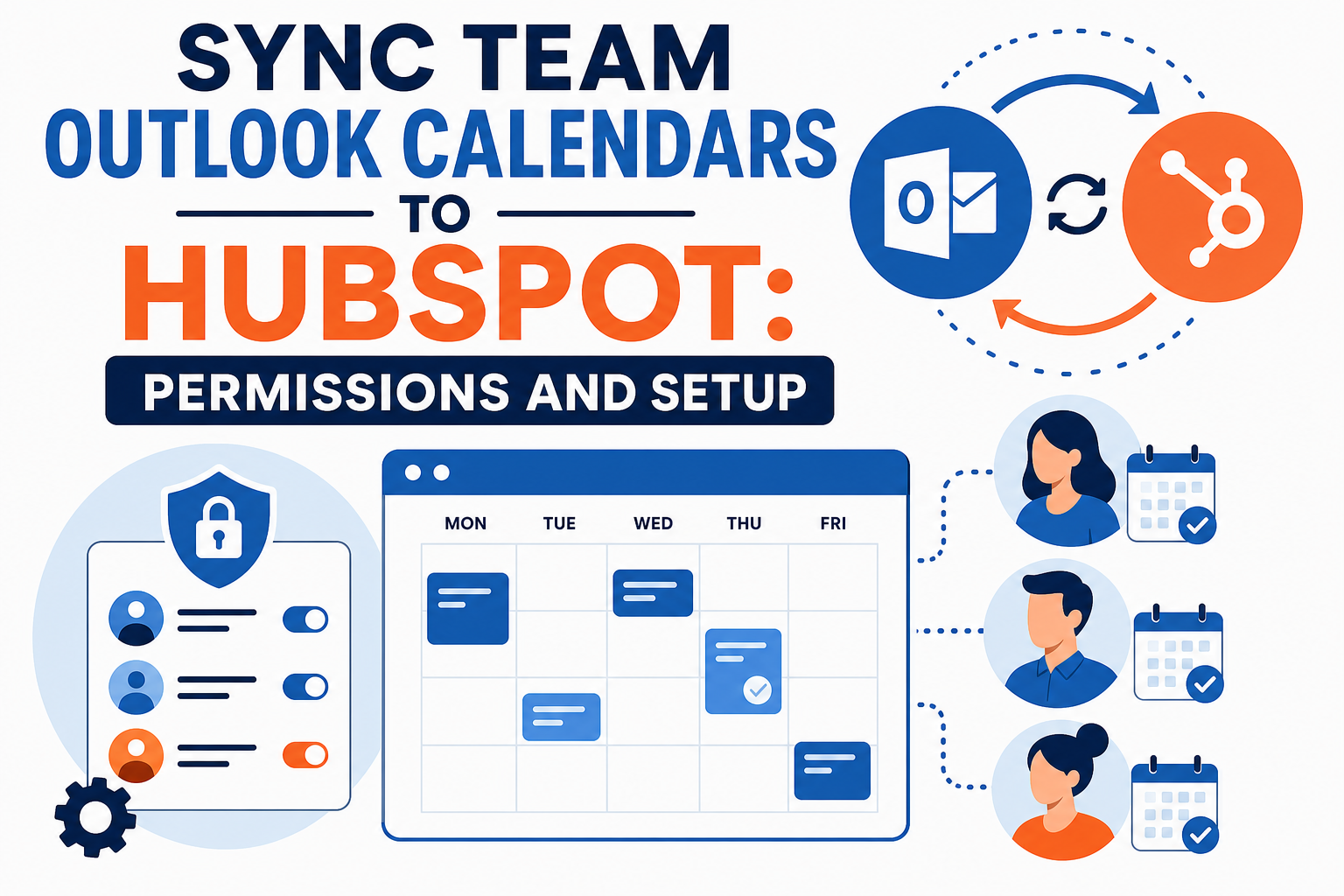
- Calendar sync: Eliminate scheduling friction
- Core telephony (Aircall or similar): Automatic call logging
- Ad platform connections: Start building attribution data immediately
Phase 2: Optimization (Weeks 3-6)
Layer on integrations that improve data quality and team efficiency:
- Data enrichment (Clearbit, ZoomInfo): Auto-complete contact and company records
- Collaboration (Slack or Teams): Real-time CRM notifications
- Document management (PandaDoc, DocuSign): Streamlined proposal and contract workflows
- Data Hub sync: Connect additional business apps with native two-way sync
Phase 3: Scale (Months 2-3+)
Build advanced integrations for complex requirements:
- ERP / Finance connections (QuickBooks, NetSuite, MuleSoft): Unified revenue operations
- Data warehouse (Snowflake, BigQuery): Advanced cross-platform analytics
- AI integrations (Claude, ChatGPT, Breeze AI): Intelligent automation and natural language CRM interaction
- Custom API integrations: Connect proprietary or legacy systems
Integration Best Practices: Lessons from the Field
After implementing hundreds of HubSpot integrations for organizations across every industry, Vantage Point has identified the practices that separate smooth deployments from painful ones:
1. Audit Before You Integrate
Map your current tech stack before adding connections. Identify which tools hold customer data, where manual processes create bottlenecks, and which systems absolutely must stay in sync. A 30-minute audit saves weeks of troubleshooting later.
2. Define Your Data Model First
Before connecting any integration, decide: What fields need to sync? Which direction should data flow? What happens when records conflict? Documenting your field mapping strategy upfront prevents the most common integration headaches: duplicate records, overwritten data, and broken workflows.
3. Start with One-Way Sync, Then Expand
For organizations new to integrations, start with one-way data sync (e.g., from your email platform into HubSpot) before enabling bi-directional sync. This lets you validate data quality and mapping accuracy before adding the complexity of two-way data flow.
4. Monitor Integration Health Weekly
Set up monitoring for your critical integrations. Check sync logs, error rates, and data quality metrics at least weekly. HubSpot's Data Hub provides built-in sync health dashboards that make this straightforward. Catching a broken sync early prevents cascading data quality issues.
5. Plan for Scale from Day One
Choose integrations and middleware that can handle your growth trajectory. If you're processing 1,000 contacts today but expect 50,000 in two years, make sure your integration architecture, and your HubSpot plan tier, can handle the increased volume without costly re-architecture.
6. Don't Forget Security and Compliance
Every integration is a potential data access point. Audit the permissions each integration requires, ensure data handling complies with your privacy policies (GDPR, CCPA, SOC 2), and maintain an integration inventory that documents what data flows where. This is especially critical for organizations in regulated industries.
Common Integration Pitfalls (and How to Avoid Them)
Pitfall 1: The "Connect Everything" Approach
The mistake: Installing every available integration without a clear strategy.
The fix: Prioritize integrations based on business impact. A handful of well-configured integrations outperforms dozens of poorly maintained connections. Ask: "Does this integration eliminate a real bottleneck or improve a measurable KPI?"
Pitfall 2: Ignoring Data Deduplication
The mistake: Connecting multiple data sources without a deduplication strategy, resulting in a database full of duplicate contacts and companies.
The fix: Configure HubSpot's built-in deduplication rules before enabling integrations. For complex scenarios, use tools like Insycle or HubSpot's Data Hub to automate ongoing deduplication. Establish a single "source of truth" for each data field.
Pitfall 3: Set-and-Forget Syndrome
The mistake: Configuring integrations once and never monitoring them again.
The fix: Treat integrations as living systems that require ongoing maintenance. APIs change, authentication tokens expire, and data models evolve. Schedule monthly integration reviews and respond to sync alerts promptly.
Pitfall 4: Skipping the Sandbox Test
The mistake: Deploying a new integration directly in your production environment.
The fix: Always test integrations in a HubSpot sandbox environment first (available on Professional and Enterprise plans). Validate data flows, workflow triggers, and edge cases before going live with real customer data.
FAQ: Essential HubSpot Integrations
How many integrations does HubSpot support?
HubSpot's App Marketplace features over 2,000 integrations with more than 2.5 million active installs across categories including sales, marketing, service, operations, and commerce. Additionally, HubSpot Data Hub (formerly Operations Hub) includes 100+ native two-way data sync integrations that require no coding.
What integrations are available on HubSpot's free plan?
HubSpot's free CRM supports many basic integrations, including email tracking (Gmail, Outlook), calendar sync, WordPress, and select App Marketplace connections. Advanced features like custom field mapping, programmable automation, and high-volume data sync require paid plans (Starter, Professional, or Enterprise).
How do I connect HubSpot with Salesforce?
HubSpot offers a native Salesforce integration that supports bi-directional sync of contacts, companies, deals, tasks, and activities. Setup involves installing the HubSpot-Salesforce connector, configuring field mappings, and defining sync rules. For complex dual-CRM architectures, working with an implementation partner like Vantage Point ensures optimal configuration and avoids common sync conflicts.
What is HubSpot Data Hub and why does it matter?
HubSpot Data Hub (rebranded from Operations Hub) is HubSpot's native integration and data management layer. It provides 100+ two-way data sync integrations, programmable automation with custom code, data quality tools, and advanced computed properties. Data Hub eliminates the need for third-party middleware in many common integration scenarios and is available across Free, Starter, Professional, and Enterprise tiers.
Which telephony integration is best for HubSpot?
Aircall is widely regarded as the top telephony integration for HubSpot due to its deep native integration, automatic call logging, AI-powered transcription, and 200+ additional integrations. Other strong options include RingCentral for enterprise communications and Zoom Phone for organizations already using the Zoom ecosystem.
How long does it take to set up HubSpot integrations?
Simple integrations (email, calendar, Slack) typically take 15-30 minutes. Mid-complexity integrations (ad platforms, telephony, eCommerce) require 2-8 hours including field mapping and testing. Complex enterprise integrations (ERP, data warehouse, custom API) can take 1-4 weeks depending on requirements and the number of systems involved.
Can I build custom integrations with HubSpot?
Yes. HubSpot provides a comprehensive API suite that supports custom integrations with virtually any system. You can build private apps for internal use or public apps for the HubSpot Marketplace. For complex integration requirements, platforms like MuleSoft provide enterprise-grade middleware that connects HubSpot with legacy systems, custom databases, and multi-cloud architectures. Vantage Point's MuleSoft practice specializes in building these scalable integration solutions.
Conclusion: Your Integration Strategy Is Your Growth Strategy
The organizations that get the most from HubSpot aren't just using the CRM. They're connecting it to every tool that touches the customer journey. From sales enablement and telephony to AI assistants and enterprise data platforms, the right integrations transform HubSpot from a standalone tool into the central nervous system of your business.
The key is intentionality. Start with the integrations that solve your biggest pain points, build a solid data foundation, and expand methodically as your needs grow. And remember: integration isn't just a technical project. It's a strategic initiative that deserves planning, monitoring, and ongoing optimization.
Ready to build your connected HubSpot ecosystem? Vantage Point helps organizations design and implement integration strategies that maximize CRM ROI. From native HubSpot connectors and Aircall telephony to MuleSoft enterprise integration and Claude AI automation, our team has the expertise to connect your entire tech stack. Contact us today to start the conversation.
About Vantage Point
Vantage Point is a certified HubSpot, Salesforce, Anthropic, and Aircall implementation partner helping businesses of all sizes transform their operations through CRM, automation, integration, and AI. Our team specializes in HubSpot CRM, Salesforce (Sales Cloud, Service Cloud, Experience Cloud), MuleSoft integration, Data Cloud, and AI-powered personalization. We believe the right technology, properly implemented, creates measurable competitive advantage. Learn more at vantagepoint.io.