
Unlock operational efficiency, revenue growth, and risk reduction
Managing thousands of customers while maintaining personalized service: this is the challenge keeping business leaders awake at night. Unlike purely transactional businesses, customer-centric organizations build long-term relationships that drive repeat business, referrals, and sustainable growth.
Many financial services firms initially view DocuSign as simply "a way to get documents signed faster." While that's certainly true, this perspective dramatically undersells the true value proposition. The real power emerges when DocuSign becomes deeply integrated with Salesforce, creating a unified system where client data, agreement processes, and business workflows operate as one seamless entity.
This integration transforms document handling from a necessary administrative task into a strategic operational advantage that drives efficiency, revenue growth, and risk reduction.
Why Integration Matters More Than Standalone eSignature
Without integration, firms typically find themselves managing a fragmented technology landscape. Client information lives in Salesforce, document templates reside in a separate system, signed agreements sit in file storage platforms, tracking happens through manual spreadsheets, and compliance records exist in yet another location. Each system requires manual updates, creating countless opportunities for errors and inconsistencies.
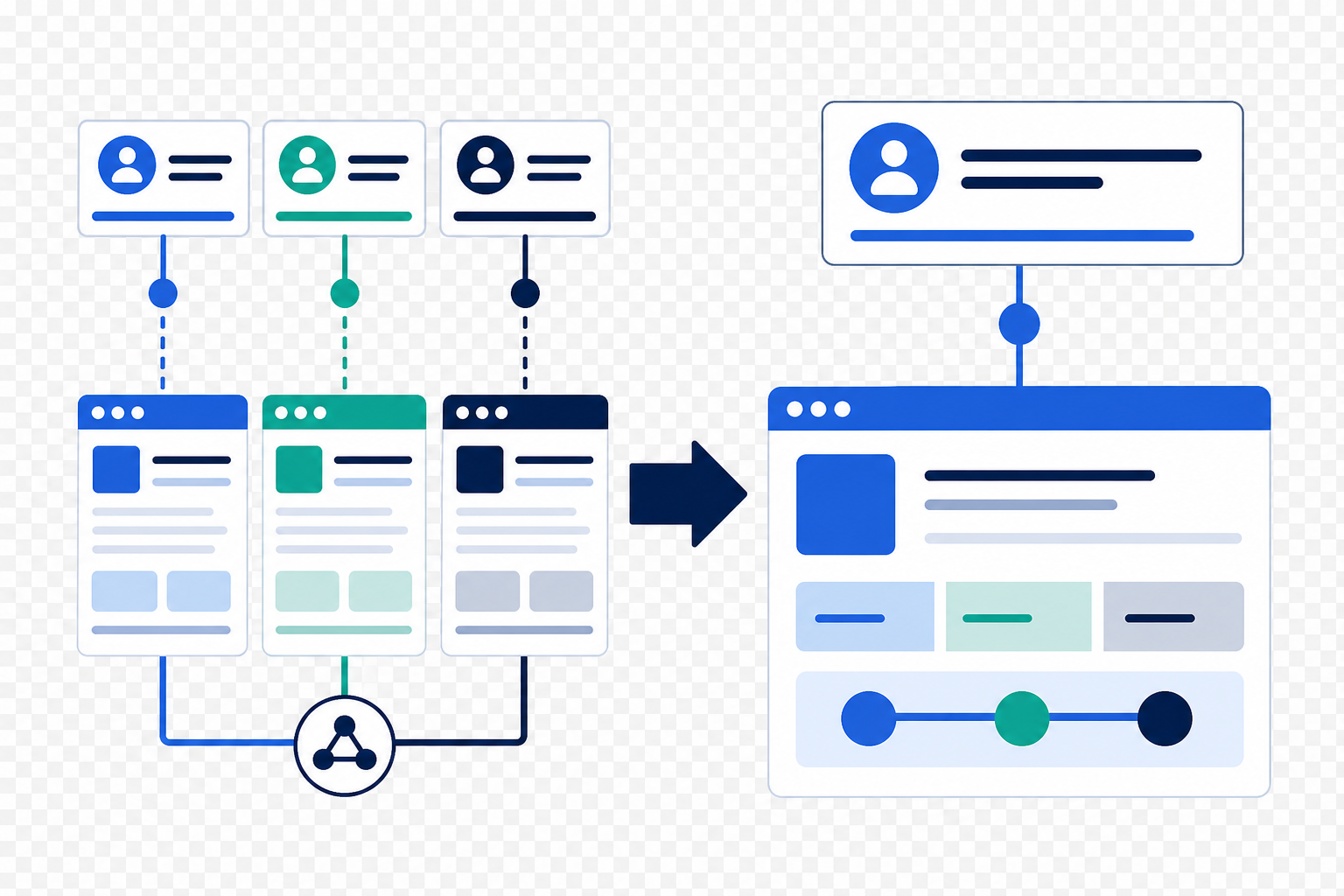
Integration changes everything. All client data originates from and returns to Salesforce. Templates pull directly from CRM fields. Signed agreements attach to client records automatically. Status tracking happens in real-time within Salesforce. Compliance documentation becomes centralized and searchable.
The impact is immediate and tangible. When a relationship manager opens a client record, they see everything (current information, pending agreements, signed documents, and complete history) without switching between systems.
Understanding Data Flow: A Two-Way Street
Outbound: From Salesforce to DocuSign
When agreements are generated, integration automatically pre-populates all client information including names, addresses, contact details, account numbers, financial account information, and household relationships. The system includes essential business context such as opportunity details, product selections, pricing terms, and advisor assignments. It applies appropriate templates based on agreement type, customized for client segments, compliant with regulatory requirements, and branded consistently across all documents.
Inbound: From DocuSign Back to Salesforce
After signing, the magic continues. Integration automatically updates client records by marking agreements as complete, updating status fields and dates, recording signer information, and capturing consents and acknowledgments. It writes back data captured during signing, including information entered by clients, selections made, dates and amounts confirmed, and any additional details collected.
Perhaps most powerfully, it triggers downstream actions that keep business moving forward. Opportunities advance through stages automatically. Follow-up tasks are created for team members. Fulfillment workflows initiate without manual intervention. Related records update across the system.
Workflow Automation That Transforms Operations
Trigger-Based Agreement Generation
Consider a typical new account opening scenario. A relationship manager creates an opportunity in Salesforce. When that opportunity reaches "Ready for Paperwork" stage, a flow automatically triggers a DocuSign envelope. The client receives their signing invitation via email. Upon completion, the opportunity advances to "Pending Funding" and the operations team receives a notification to process the account.
No manual document preparation. No status tracking spreadsheets. No handoffs that might be forgotten. The entire process flows seamlessly from start to finish.
Multi-Party Routing for Complex Transactions
Financial services often require multiple signers with specific sequences. Integration handles this complexity elegantly. For a joint account with advisor attestation, the primary account holder receives and signs first. The joint account holder receives the document after the primary completes. A compliance officer reviews and certifies. The relationship manager provides final attestation. All signatures are captured in a single transaction, with each step triggering automatically.
Conditional Logic for Compliance
Agreements can intelligently adapt based on client data. A single investment advisory agreement template can serve multiple scenarios: including alternative investment disclosures when assets under management exceed one million dollars, adding senior investor protections for clients over 65, including risk acknowledgments for aggressive investment objectives, and incorporating state-specific disclosures based on client location. One template serves multiple scenarios while maintaining automatic compliance.
Enhanced Capabilities with Financial Services Cloud
For firms using Salesforce Financial Services Cloud, integration becomes even more powerful through household-level document management. Agreements associate with entire households rather than just individuals. Family members gain role-based access to documents. Routing becomes relationship-aware, recognizing spouses, trustees, and powers of attorney. Consolidated document views span all household members.
Action Plans integration enables automated document workflows. Annual review agreements send automatically according to schedule. Required disclosures trigger from account changes. Service requests initiate with appropriate documentation. Compliance certifications are scheduled and tracked systematically.
The system can even respond to life events and client goals. Marriage triggers beneficiary update documents. A new child initiates education savings account opening paperwork. Retirement prompts distribution election forms. Inheritance events generate account transfer documentation.
Analytics and Insights for Continuous Improvement
Agreement Lifecycle Metrics
Track the complete journey from creation to completion. Measure average time from sent to signed. Analyze completion rates by agreement type. Identify drop-off points and abandonment patterns. Understand peak signing times and client preferences.
Team Performance Visibility
Understand how agreement processes affect your business. Monitor agreements per advisor or relationship manager. Track time to first signature after initial client engagement. Correlate revenue generation with signing speed. Identify bottlenecks before they become problems.
Client Experience Indicators
Measure the client-facing impact of your processes. Analyze mobile versus desktop signing patterns. Track revision requests and error rates. Understand time-of-day preferences. Monitor completion rates across demographic segments.
Compliance Readiness
Ensure your firm is always audit-ready. Track outstanding required documents by client. Monitor approaching expiration dates. Identify missing signatures or incomplete agreements. Verify compliance certification status across your entire client base.
Extending to Experience Cloud
For firms with client-facing portals, integration extends these benefits to self-service experiences. Clients can access pending agreements through your branded portal, sign directly within a familiar environment, view completed documents and history, and request new documents or updates whenever needed.
Advisors working through partner portals gain similar capabilities. External advisors access appropriate documents for their clients, manage sub-accounts and client relationships, submit documentation for processing, and track agreement status in real-time.
The integration even extends to your partner ecosystem. Custodians and third parties receive signed documents automatically. Account opening packages route to the right destinations without manual intervention. Service requests trigger appropriate actions across organizations. Status updates flow back to all parties involved.
Common Questions About Integration
Do we need custom development? For most use cases, no. The managed package from AppExchange provides point-and-click configuration for common scenarios. Custom development using the Apex Toolkit is available for unique requirements but is rarely necessary for standard financial services workflows.
How does integration handle document storage? Completed documents automatically attach to the relevant Salesforce record, whether that's an Account, Opportunity, or custom object. Documents are stored securely in Salesforce and DocuSign based on your configuration preferences.
Can we report on agreements like other Salesforce data? Absolutely. DocuSign creates standard Salesforce objects that can be included in reports and dashboards. You can analyze agreement data alongside opportunities, activities, and other CRM information for comprehensive business intelligence.
What happens if systems are temporarily disconnected? The integration is designed for resilience. If connectivity is interrupted, transactions queue and process automatically when connection restores. Critical actions don't fail: they wait for reconnection.
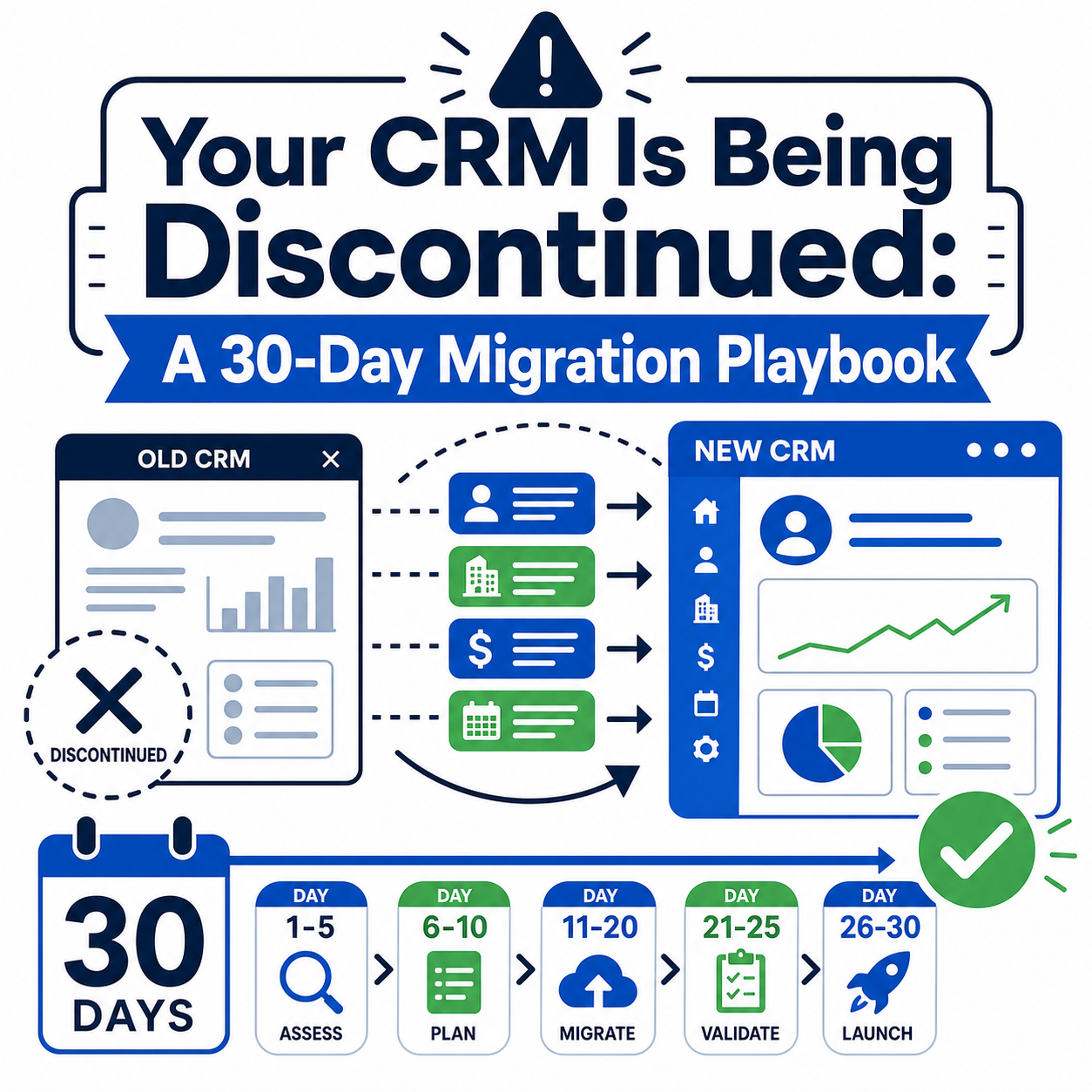
Can we maintain existing templates during migration? Yes. Templates can be migrated and enhanced during implementation. Most firms use the transition as an opportunity to standardize and improve templates, but existing designs can be preserved if that's your preference.
Measurable Results from Integration
Operational Efficiency Gains
Integrated firms see shorter agreement turnaround times, less document preparation effort, faster compliance audit preparation, and fewer data entry errors.
Revenue Impact
Faster onboarding translates directly to faster revenue recognition. Higher completion rates mean fewer lost opportunities. Better client experiences improve retention rates. Staff efficiency enables growth without proportional increases in headcount.
Risk Reduction
Integration provides complete audit trails for every transaction. Template-driven documents ensure automatic compliance with regulations. Required fields and validation prevent errors before they occur. Version control guarantees current documents are always used.
Making Integration a Reality
Achieving these results requires more than simply installing a package. Success depends on thoughtful process design, mapping current workflows to identify automation opportunities, designing optimal document flows and routing logic, and creating template structures that serve multiple scenarios efficiently.
Technical implementation encompasses configuring integration connections and authentication, building Flow automations for triggered actions, and setting up data mapping for bi-directional synchronization between systems.
Perhaps most importantly, change management ensures adoption and long-term success. This includes training teams on new processes and capabilities, communicating changes to clients appropriately, and establishing metrics and continuous improvement practices.
Partner with Vantage Point for Integration Success
Vantage Point brings deep expertise in both Salesforce platform capabilities and financial services industry requirements. We've implemented these solutions for firms of all sizes, from boutique RIAs to large broker-dealers, always with a focus on delivering measurable business results.
Our certified, senior-level team understands both the technology and your business challenges.
Ready to Transform Your Operations?
Standalone eSignature saves time. Integrated eSignature transforms operations.
Book a demo with Vantage Point to see how Salesforce and DocuSign integration can create operational excellence for your firm. We'll analyze your current workflows and show you exactly what's possible when these platforms work together seamlessly.
About Vantage Point
Vantage Point specializes in helping financial institutions design and implement client experience transformation programs using Salesforce Financial Services Cloud. Our team combines deep Salesforce expertise with financial services industry knowledge to deliver measurable improvements in client satisfaction, operational efficiency, and business results.
About the Author
David Cockrum founded Vantage Point after serving as Chief Operating Officer in the financial services industry. His unique blend of operational leadership and technology expertise has enabled Vantage Point's distinctive business-process-first implementation methodology, delivering successful transformations for clients.
-
-
- Email: david@vantagepoint.io
- Phone: (469) 499-3400
- Website: vantagepoint.io
-