What is HubSpot Adoption? A Complete Roadmap Guide
HubSpot adoption is the structured process of implementing and integrating HubSpot CRM into your organization through four proven phases: Foundation, Activation, Expansion, and Optimization. Successful adoption achieves 70% user engagement before expanding to additional Hubs, resulting in 40% better ROI than rushed multi-Hub deployments. This comprehensive guide provides the exact framework used by successful companies to transform HubSpot from a tool into a strategic advantage.
📌 Key Takeaways
- Four-phase framework ensures success: Foundation → Activation → Expansion → Optimization builds on each previous stage
- One Hub at a time delivers 40% better adoption: Sequential implementation outperforms parallel launches significantly
- 70% adoption threshold gates expansion: Don't add another Hub until 70% of users actively use the first one
- Data cleanup saves 5x the cost later: Every dollar spent before implementation prevents five dollars in remediation
- 20-30 weeks minimum for first Hub: Proper implementation takes time but delivers sustainable ROI
Table of Contents
- Understanding the Four Phases of HubSpot Adoption
- Phase 1: Foundation (Weeks 1-8)
- Phase 2: Activation (Weeks 9-20)
- Phase 3: Expansion (70% Threshold)
- Phase 4: Optimization (Continuous)
- Data Cleanup: The Critical First Step
- Frequently Asked Questions
- Implementation Checklist
Understanding the Four Phases of HubSpot Adoption
What are the four phases of HubSpot adoption?
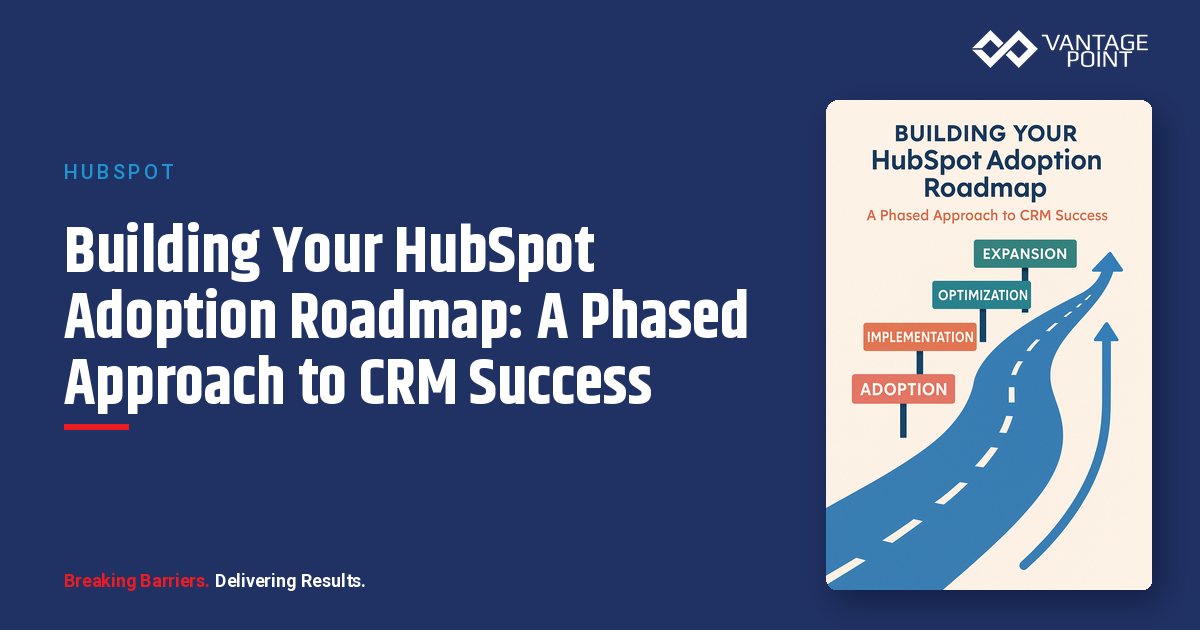
The HubSpot adoption framework consists of four sequential phases that build upon each other: Foundation (4-8 weeks), Activation (8-12 weeks), Expansion (ongoing), and Optimization (continuous). Each phase has specific goals, deliverables, and exit criteria that must be met before advancing to the next stage.
The Bottom Line: The fastest path to HubSpot ROI is counterintuitively slow: master one Hub before adding another, and never sequence more than your team can absorb. Successful HubSpot adoption follows four distinct phases: Foundation, Activation, Expansion, and Optimization. Skip a phase, and you're building on quicksand.
The Four Phases of HubSpot Adoption
Phase Overview
| Phase | Duration | Focus | Exit Criteria |
|---|---|---|---|
| Foundation | 4-8 weeks | Data cleanup, process mapping, governance | Clean data, documented workflows |
| Activation | 8-12 weeks | First Hub deployment, core user training | 70% adoption of primary Hub |
| Expansion | Ongoing | Additional Hub rollout | 70% adoption before adding next Hub |
| Optimization | Continuous | Refinement, automation, advanced features | Quarterly capability assessments |
Phase 1: Foundation (Weeks 1-8)
"Data cleanup isn't glamorous, but importing 50,000 dirty contacts into HubSpot doesn't give you automation: it gives you automated embarrassment."
The foundation phase is where most companies want to rush through, but it's the most critical stage of your entire adoption journey. Think of it as preparing soil before planting. You can't skip this step and expect a healthy harvest.
Foundation Checklist
| Task | Priority | Owner |
|---|---|---|
| Audit existing data quality | Critical | Operations |
| Define data governance standards | Critical | Leadership |
| Map current-state processes | High | Department leads |
| Design future-state workflows | High | HubSpot admin |
| Establish naming conventions | Medium | Admin team |
| Configure user permissions | Medium | IT/Admin |
During these crucial first weeks, resist the temptation to dive into the shiny features. Instead, invest time in understanding what data you have, what condition it's in, and how your teams actually work today. This groundwork prevents countless headaches down the road.
Phase 2: Activation (Weeks 9-20)
The One-Hub-at-a-Time Approach
"Companies that launch three Hubs simultaneously see 40% lower adoption than those who master one first. Patience isn't just a virtue: it's a strategy."
The activation phase is where your preparation pays off. You're finally implementing your first Hub, training users, and watching your workflows come to life. But here's the critical insight that separates successful implementations from failed ones: you must choose one Hub to master first.
Hub Sequencing by Business Type
| Business Type | Recommended First Hub | Rationale |
|---|---|---|
| B2B SaaS | Sales Hub | Pipeline visibility drives revenue |
| E-commerce | Marketing Hub | Traffic and conversion optimization |
| Service Business | Service Hub | Customer retention focus |
| Agency | CMS Hub | Client deliverable foundation |
| Enterprise | Operations Hub | Data unification priority |
Your first Hub choice should align with your most pressing business need, not your most excited stakeholder. If revenue pipeline visibility is keeping executives awake at night, start with Sales Hub. If customer churn is your problem, Service Hub takes priority.
Phase 3: Expansion
The 70% Adoption Threshold
"Adding a second Hub before achieving 70% adoption on your first is like building a second floor on a cracked foundation. It will collapse."
The expansion phase is governed by one inviolable rule: earn your right to expand. That means hitting meaningful adoption milestones before adding complexity.
| Adoption Level | Expansion Decision |
|---|---|
| Below 50% | Stop. Address barriers before proceeding |
| 50-69% | Stabilize. Focus on laggards and training |
| 70-84% | Green light. Begin next Hub planning |
| 85%+ | Accelerate. Fast-track expansion |
What does 70% adoption actually mean? It's not just login rates. It means 70% of your target users are actively using the core features they need to do their jobs better. Sales reps are logging activities. Marketers are tracking campaign performance. Service agents are managing tickets.
When you hit this threshold, your team has developed HubSpot muscle memory. They understand the platform's logic. They're ready for more.
Phase 4: Optimization
Continuous Improvement Cycle
Optimization never ends, and that's a good thing. This is where HubSpot transforms from a tool you use to a strategic advantage you exploit.
| Cadence | Activity | Participants |
|---|---|---|
| Weekly | Usage metrics review | Admin team |
| Monthly | Process refinement | Department leads |
| Quarterly | Capability assessment | Leadership + users |
| Annually | Platform audit | External consultant |
The optimization phase is where you unlock advanced features, build sophisticated automations, and customize HubSpot to your unique business processes. But you can only reach this level of sophistication once your foundation is solid and your core adoption is strong.
Data Cleanup: The Non-Negotiable First Step
"Every dollar spent on data cleanup before HubSpot implementation saves five dollars in remediation later."
Let's talk about the elephant in the room: your data is probably messier than you think. And that's okay: most companies' data is. The mistake is importing that mess into HubSpot and hoping automation will somehow fix it.
Data Quality Standards
| Data Element | Quality Standard | Cleanup Action |
|---|---|---|
| Email addresses | Valid format, deliverable | Verification service |
| Phone numbers | Consistent format, valid | Standardization |
| Company names | No duplicates | Merge/dedupe |
| Contact ownership | Assigned to active users | Reassignment rules |
| Lifecycle stages | Consistent definitions | Mapping exercise |
Think of data cleanup this way: every record you import will be touched by your workflows, your emails, your reporting. One typo in a personalization token, multiplied across thousands of contacts, doesn't just look unprofessional: it destroys trust in the platform and damages your brand.
Clean your data first. Your future self will thank you.
Quick Answers
Q: How long should HubSpot adoption take?
Plan for 20-30 weeks minimum for your first Hub, with ongoing optimization thereafter. Rushing creates technical debt that takes far longer to fix than doing it right the first time.
Q: What adoption rate should I achieve before adding another Hub?
70% is the threshold. Below this, you risk compounding adoption problems across multiple tools. Your team can't effectively use two Hubs when they've barely learned one.
Q: Which Hub should we implement first?
It depends on your business model. B2B SaaS companies typically start with Sales Hub for pipeline visibility. E-commerce businesses often begin with Marketing Hub for traffic and conversion optimization. Service businesses prioritize Service Hub for customer retention.
Q: Why is data cleanup emphasized so heavily?
Dirty data poisons automation. A single typo in a personalization token, repeated 10,000 times, becomes a brand crisis. More importantly, teams lose trust in the platform when they see garbage data, which kills adoption momentum.
Q: What's the most common adoption roadmap mistake?
Launching multiple Hubs simultaneously. This divides attention and resources, resulting in mediocre adoption across all Hubs instead of excellent adoption on one. Master one Hub, then add another.
Key Takeaways
- Four phases structure your journey: Foundation → Activation → Expansion → Optimization. Each phase builds on the previous one.
- One Hub at a time outperforms parallel launches: Companies that focus achieve 40% better adoption than those who try to do everything at once.
- 70% adoption threshold gates expansion decisions: Don't add a second Hub until 70% of users are actively using the first one.
- Data cleanup first: no exceptions: Every dollar spent on data cleanup saves five dollars in remediation later.
- Sequence Hubs based on business model priorities: Your first Hub should solve your most pressing business problem, not please your most vocal stakeholder.
What's Next?
Tomorrow, we'll explore how to identify and empower the Change Champions who will make or break your HubSpot adoption. These internal advocates are the secret weapon that transforms resistance into momentum.
Series Navigation
| Day | Topic | Status |
|---|---|---|
| 1 | Why HubSpot Adoption Fails | ✅ Complete |
| 2 | Building Your HubSpot Adoption Roadmap | 📍 You are here |
| 3 | Change Champions for HubSpot | Next |
| 4 | HubSpot Training That Sticks | Upcoming |
| 5 | Measuring HubSpot Adoption | Upcoming |
| 6 | Overcoming HubSpot Resistance | Upcoming |
| 7 | Sustaining HubSpot Adoption | Upcoming |
About the Author
David Cockrum is the founder of Vantage Point and a former COO in the financial services industry. Having navigated complex CRM transformations from both operational and technology perspectives, David brings unique insights into the decision-making, stakeholder management, and execution challenges that financial services firms face during migration.
-
-
- Email: david@vantagepoint.io
- Phone: (469) 499-3400
- Website: vantagepoint.io
-