
The Complete Guide to AI Marketing That Respects Privacy and Amplifies Results
The HubSpot-Salesforce integration represents the gold standard for marketing and sales alignment. By combining HubSpot's superior marketing automation with Salesforce's enterprise CRM capabilities, organizations achieve the best of both worlds: powerful lead generation and nurturing paired with robust customer relationship management. This guide provides the complete blueprint for integration architecture, data mapping, workflow orchestration, and best practices based on proven implementations across industries.
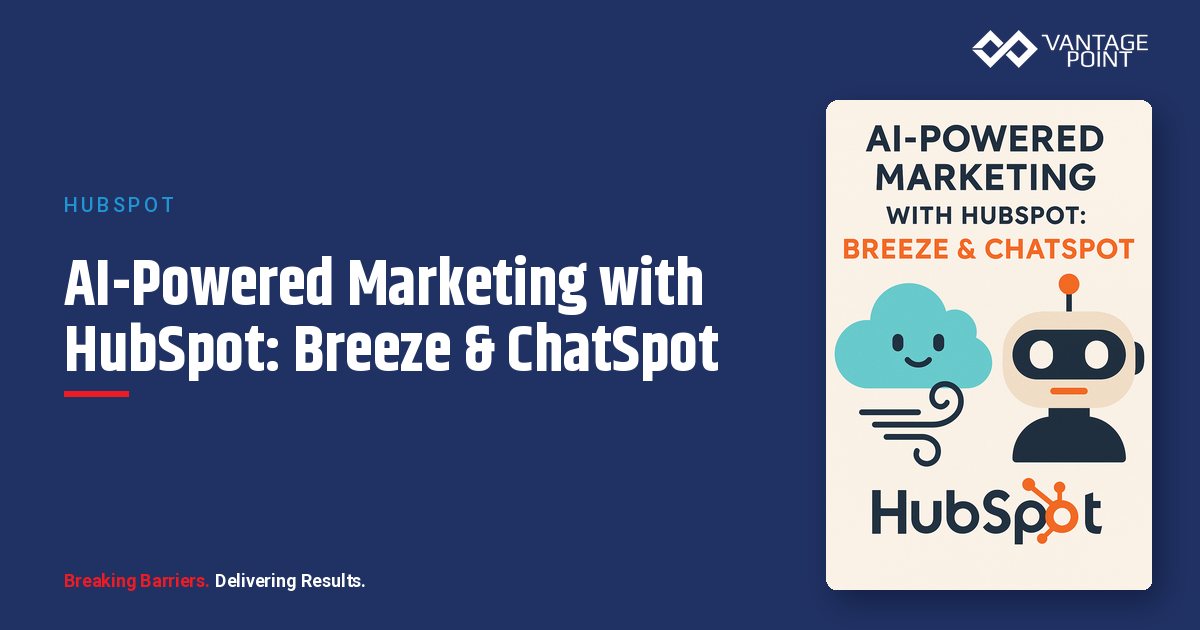
Artificial intelligence is revolutionizing marketing, enabling personalization at scale, predictive lead scoring, and content creation that was previously impossible for lean marketing teams. HubSpot's Breeze AI platform and ChatSpot conversational interface bring enterprise-grade AI capabilities to organizations of all sizes: with the privacy safeguards modern businesses require. This guide explores practical AI applications, implementation strategies, and the considerations essential for responsible AI adoption in marketing.
Artificial intelligence is revolutionizing marketing, enabling personalization at scale, predictive lead scoring, and content creation that was previously impossible for lean marketing teams. HubSpot's Breeze AI platform and ChatSpot conversational interface bring enterprise-grade AI capabilities to organizations of all sizes: with the privacy safeguards modern businesses require. This guide explores practical AI applications, implementation strategies, and the considerations essential for responsible AI adoption in marketing.
The AI Revolution in Marketing
Current State of AI Adoption
Organizations across industries are rapidly embracing AI for marketing. Recent data shows 67% of businesses are actively implementing AI in marketing operations, while 45% report measurable ROI from AI-powered marketing initiatives. Looking ahead, 82% plan to increase AI investment over the next two years. Marketing teams using AI tools report average productivity gains of 25-40%.
Competitive Advantages of AI-Powered Marketing
Organizations leveraging AI effectively gain significant advantages in speed to market, creating content in minutes versus hours, optimizing campaigns in real-time, and generating instant insights from data analysis. They achieve personalization at scale through individual-level content customization, behavioral prediction and targeting, and dynamic journey orchestration. Resource efficiency improves through automation of repetitive tasks, reduced manual data analysis, and optimized budget allocation.
Common Fears and Misconceptions
Many worry that AI will replace marketing jobs, but the reality is that AI augments human capabilities, handling routine tasks while marketers focus on strategy and creativity. Concerns about AI content being generic and detectable are outdated. Modern AI produces high-quality content that, with human editing, is indistinguishable from human-written material. The fear that AI is too complex for teams is also unfounded, as HubSpot's AI tools are designed for marketers, not data scientists, with intuitive interfaces and guided workflows.
Privacy and Ethical Considerations
AI in marketing must address data privacy regulations like GDPR and CCPA governing AI data usage, transparency requirements for automated decisions, bias considerations in AI-powered targeting, content authenticity and disclosure requirements, and customer trust in AI-driven interactions.
HubSpot Breeze: AI Across the Platform
What is Breeze?
Breeze is HubSpot's unified AI layer, integrated across all Hubs to enhance every aspect of marketing, sales, and service operations. The core components include Breeze Copilot, an AI assistant for daily tasks like content drafting, data analysis, and task automation. Breeze Agents serve as autonomous AI workers handling lead qualification, customer service, and content creation. Breeze Intelligence provides data enrichment and insights through company research, contact enrichment, and intent signals.
How Breeze Differs from ChatGPT and Other AI Tools
Unlike ChatGPT which has no CRM integration, Breeze offers native, full access to HubSpot data. While ChatGPT provides generic responses, Breeze delivers industry-aware content based on your data. ChatGPT can only make suggestions, but Breeze can execute tasks directly in HubSpot. Data privacy differs significantly, ChatGPT uses external processing while Breeze operates within HubSpot's security infrastructure. ChatGPT requires manual copy and paste for workflow integration, whereas Breeze is embedded directly in workflows.
Breeze for Any Business
Context-aware content generation means Breeze is trained on your CRM data, understands your products and services, and produces industry-appropriate content. Data privacy and security remain paramount, with processing within HubSpot's secure environment, no external data sharing for AI training, and audit trails for AI-generated content.
Content Intelligence & Creation
AI-Powered Blog Writing
Breeze excels at creating educational content across industries, including how-to guides and tutorials, industry trend analysis, product and service explanations, and best practice articles. The workflow begins by providing the topic and target audience, then Breeze generates an outline and draft, followed by human review for accuracy and brand voice, editorial polish and optimization, and finally publication with appropriate formatting.
For thought leadership and insights, Breeze creates industry commentary, trend analysis pieces, company news and updates, and expert perspective articles.
Pro Tip: Use AI for first drafts and research synthesis, but always have subject matter experts review final content for accuracy.
SEO optimization with AI includes keyword research and suggestions, meta description generation, header optimization, and internal linking recommendations.
Email Content Generation
Personalized email copy at scale utilizes dynamic content blocks based on recipient attributes, personalized subject lines, customized CTAs by segment, and tone adjustment for different audiences. A/B test variation creation generates multiple subject line options, creates body copy variations, suggests CTA alternatives, and analyzes winning patterns.
Subject line optimization provides AI-powered scoring, predictive open rate estimates, emoji and personalization suggestions, and length optimization. Tone and style consistency enforces brand voice guidelines, maintains consistent messaging across campaigns, standardizes terminology, and ensures quality language integration.
Landing Page Copy
Conversion-optimized headlines include benefit-focused headline generation, urgency and value proposition emphasis, A/B test variations, and mobile-optimized alternatives. Product page descriptions translate features to benefits, create compelling product descriptions, develop comparison content, and generate FAQs.
CTA optimization produces action-oriented button text, creates urgency, reinforces value propositions, and provides placement recommendations.
Social Media Content
LinkedIn post generation covers thought leadership content, industry insights sharing, event promotion, and employee advocacy content. Educational social content includes bite-sized tips and advice, infographic concepts, video script outlines, and carousel content ideas. Engagement-driving commentary responds to trending topics, reacts to industry news, prompts community engagement, and poses questions.
ChatSpot: Conversational AI for Marketers
What is ChatSpot?
ChatSpot is HubSpot's conversational AI interface, allowing marketers to interact with HubSpot using natural language commands. Capabilities include querying HubSpot data conversationally, executing marketing tasks through chat, generating reports on demand, and creating content with simple prompts.
Use Cases for Any Business
Campaign performance queries enable questions like "Show me email performance for Q4 campaigns," "Which landing pages have the highest conversion rates?" and "Compare lead generation this month vs. last month." Report generation on demand creates reports of all MQLs from paid search, generates dashboards showing funnel metrics, and summarizes marketing ROI by channel for board meetings.
Data exploration and insights answer questions like "Which lead sources generate the highest-value customers?" "What's the average time from first touch to demo request?" and "Show me engagement trends for our product content." Task automation through chat creates follow-up tasks for contacts who downloaded content, sends summaries of marketing metrics to leadership, and schedules social posts for upcoming events.
Practical Examples
When you ask "Show me our top-performing landing pages this quarter," ChatSpot returns a table of landing pages ranked by conversion rate, with visitor counts, submission rates, and lead quality scores.
Request "Create an email campaign for product launch" and ChatSpot generates a campaign outline with subject lines, email copy drafts, and suggested automation workflow.
Ask "Which lead sources generate the highest-value customers?" and ChatSpot analyzes closed-won opportunities by original lead source, showing average deal size and conversion rates.
Lead Intelligence & Scoring
Predictive Lead Scoring
Traditional scoring assigns points based on rules, but AI scoring analyzes patterns in historical conversions, identifies non-obvious predictive factors, continuously learns and improves, and provides probability scores rather than just point totals.
Behavioral analysis and engagement scoring examines website behavior patterns, email engagement depth, content consumption sequences, and time-based engagement signals. Custom scoring models vary by business type, SaaS companies focus on product page visits, pricing engagement, and trial signup behavior; professional services firms track content consumption, case study views, and consultation requests; e-commerce businesses monitor browse behavior, cart activity, and purchase history; manufacturing companies watch spec sheet downloads, RFQ submissions, and distributor inquiries.
Lead Enrichment
Automated prospect research gathers company information, news and press mentions, social media presence analysis, and technology stack identification. Company intelligence gathering estimates revenue and employees, classifies industries, identifies growth trajectory indicators, and maps competitive landscape.
Contact role identification analyzes job titles, identifies decision-makers, maps buying committees, and assesses influence levels.
Intent Signal Detection
Website behavior analysis tracks page visit patterns, time on site and pages, return visit frequency, and content depth engagement. Content consumption patterns map topic interests, indicate funnel stages, signal product interests, and reveal competitive research behavior.
Purchase intent indicators include pricing page visits, comparison content engagement, demo or trial requests, and contact form submissions.
Campaign Optimization
AI-Powered A/B Testing
Automatic test variation generation means AI creates multiple test versions, variations based on winning patterns, and continuous optimization suggestions. Statistical significance detection provides automatic significance calculation, early winner identification, sample size recommendations, and confidence interval reporting. Multi-variate testing at scale tests multiple elements simultaneously, identifies interaction effects, and optimizes holistically rather than individually.
Send Time Optimization
Individual-level optimal send times mean AI learns each contact's engagement patterns, sends at predicted optimal time, and continuously learns and adjusts. Timezone intelligence provides automatic timezone detection, business hours consideration, and holiday and weekend adjustments.
Engagement pattern analysis reveals day-of-week preferences, time-of-day patterns, seasonal variations, and device-based timing.
Content Performance Prediction
Pre-launch performance forecasting predicts open rates, expected click-through rates, and conversion probability estimates. Topic and format recommendations suggest content types, score topic relevance, and optimize format choices between video, text, and infographics.
Audience matching analyzes content-audience fit, recommends segments, and identifies personalization opportunities.
Conversational Marketing & Chatbots
HubSpot Chatflows for Any Business
Qualification chatbots follow a flow that greets visitors, collects their interest area or product category, gathers company size or use case information, determines timeline for decision, and routes to the appropriate sales rep or nurture sequence.
Meeting scheduling bots qualify prospects before scheduling, check rep availability, book directly on calendars, and send confirmation and prep materials. FAQ bots handle common questions about product information, pricing inquiries, support hours, and getting started guides.
Pre-approved conversation flows utilize response libraries for consistency, maintain brand voice, escalate to humans when needed, and provide audit trails of all conversations.
AI-Enhanced Chat Responses
Natural language understanding provides intent recognition, entity extraction, context maintenance, and sentiment detection. Context-aware responses remember previous interactions, reference known information, personalize based on CRM data, and adapt tone to situations.
Escalation to human representatives includes automatic escalation triggers, seamless handoff with context, notification to appropriate team members, and follow-up automation.
Reporting & Analytics AI
Automated Insights
Anomaly detection in campaigns alerts to unusual performance, notifies of trend deviations, provides early warning indicators, and suggests root causes. Trend identification spots emerging patterns, seasonal trends, competitive shifts, and market changes.
Performance improvement recommendations provide specific action suggestions, priority ranking, expected impact estimates, and implementation guidance.
Natural Language Reporting
Ask questions and get answers like "Why did email open rates drop last week?" "What's driving the increase in demo requests?" and "How does this campaign compare to our benchmark?" Custom report generation lets you describe the report you need, AI generates appropriate visualizations, exports in multiple formats, and schedules recurring delivery.
Dashboard creation through conversation enables requests like "Create a dashboard for our Q1 marketing review" where AI suggests relevant metrics, generates appropriate charts, and allows iterative refinement.
Forecasting
Lead volume predictions analyze historical patterns, adjust for seasonality, model campaign impact, and provide confidence intervals. Conversion rate forecasting predicts funnel stages, estimates time-to-conversion, and projects quality scores.
Revenue attribution modeling forecasts marketing contribution, predicts channel performance, and recommends budget optimization.
Privacy & Ethics in AI Marketing
Data Privacy Considerations
GDPR and AI processing requires lawful basis for AI processing, data minimization principles, transparency requirements, and automated decision-making disclosures. CCPA and CPRA compliance demands AI system disclosures, opt-out for automated profiling, and consumer rights in AI contexts.
Best practices include documenting AI processing activities, conducting privacy impact assessments, providing transparency to customers, and enabling meaningful human oversight.
Ethical AI Usage
Bias detection and mitigation requires regular bias audits of AI outputs, diverse training data considerations, human review of AI recommendations, and corrective action protocols. Transparency in automated decisions favors explainable AI, documentation of AI logic, human override capabilities, and appeal processes for AI decisions.
Human oversight requirements ensure AI assists while humans decide, review of AI-generated content, regular quality audits, and escalation procedures. Customer data protection minimizes data used for AI, secures processing environments, prevents external AI training on customer data, and establishes clear data usage policies.
Content Approval Workflows
AI-generated content review process begins with AI generating initial content, followed by marketing review for quality and brand, subject matter expert review for accuracy, and final approval and publication.
Documentation tracks AI-generated content, documents human modifications, maintains version history, and enables audit retrieval. Quality standards establish AI content guidelines, define review requirements, create quality benchmarks, and monitor output quality.
Implementation Strategy
Start Small: One Use Case at a Time
Recommended starting points include email subject line optimization, blog content drafting, lead scoring enhancement, and chatbot for FAQ handling. Avoid implementing all AI features simultaneously, skipping human review processes, and over-relying on AI without oversight.
Pilot Programs and Testing Protocols
Pilot structure should define success metrics, select test audiences, run controlled experiments, measure and analyze results, and decide on broader rollout. Testing checklist includes completing privacy review, defining human oversight processes, establishing quality benchmarks, documenting rollback procedures, and defining success metrics.
User Training and Adoption
Training topics should cover AI tool capabilities and limitations, prompt engineering basics, quality review processes, and escalation procedures.
Measuring AI Impact on KPIs
Metrics to track include time saved on content creation, content quality scores, campaign performance improvements, lead scoring accuracy, and conversion rate changes.
Scaling Successful AI Applications
Scaling criteria include proven ROI in pilot, team trained and comfortable, processes documented, and monitoring in place.
The Future: What's Next
The future of AI-powered marketing includes generative AI for video and visual content with AI-generated video explanations, personalized video messages, dynamic visual content, and automated infographic creation. Hyper-personalization at scale will deliver individual-level content customization, real-time personalization, predictive content delivery, and contextual adaptation.
Predictive customer needs will anticipate customer questions, trigger proactive outreach, predict life events, and prevent churn. Automated campaign orchestration will enable AI-designed campaign flows, autonomous optimization, cross-channel coordination, and budget reallocation. Voice and audio content generation will create podcast content, integrate voice assistants, produce audio newsletters, and deliver personalized audio messages.
Key Takeaways
✅ HubSpot Breeze brings enterprise AI to any business with privacy-aware features and native CRM integration.
✅ AI augments human capabilities rather than replacing them: use AI for efficiency while maintaining human oversight.
✅ Start with high-impact, low-risk use cases like email optimization and content drafting before expanding to complex applications.
✅ Privacy and ethical considerations matter: build review workflows and transparency from day one.
✅ Measure AI impact rigorously to justify investment and guide expansion decisions.
✅ The future is AI-augmented marketing: organizations that master these tools now will have significant competitive advantages.
Frequently Asked Questions
Q: Is AI-generated content compliant with privacy regulations?
AI-generated content is subject to the same regulatory requirements as human-created content. Ensure proper review and documentation processes.
Q: How do we ensure AI doesn't create biased marketing?
Implement regular bias audits, maintain human oversight, use diverse approaches, and document AI decision factors for review.
Q: Can AI replace our marketing team?
No. AI augments marketing capabilities but requires human oversight for strategy, creativity, quality assurance, and final decisions.
Q: How accurate is AI lead scoring?
AI lead scoring typically improves accuracy by 20-40% over rule-based scoring, but requires sufficient historical data and ongoing calibration.
Q: What data does HubSpot AI use?
HubSpot AI uses your CRM data within HubSpot's secure environment. Your data is not shared externally or used to train models for other customers.
Q: How do we get started with HubSpot AI?
Start with a single use case like email subject lines or content drafting, establish review processes, train your team, and expand based on results.
Ready to Transform Your Marketing with AI?
Download our AI Marketing Playbook for a step-by-step guide to implementing AI in your marketing operations, or schedule a HubSpot AI Features Demo & Workshop to see Breeze and ChatSpot in action with use cases relevant to your business.
This content is for informational purposes only. Results may vary based on implementation quality, organizational commitment, and market conditions.
About the Author
David Cockrum is the founder of Vantage Point and a former COO in the financial services industry. Having navigated complex CRM transformations from both operational and technology perspectives, David brings unique insights into the decision-making, stakeholder management, and execution challenges that financial services firms face during migration.
-
-
- Email: david@vantagepoint.io
- Phone: (469) 499-3400
- Website: vantagepoint.io
-